Palazzo Caprini
Palazzo Caprini was a notable Renaissance palazzo located in the Borgo rione of Rome, Italy, situated between Piazza Scossacavalli and via Alessandrina (also known as Borgo Nuovo). Designed by the renowned architect Donato Bramante around 1510, it stood as a significant example of early 16th-century architectural innovation. The building was famously known as the Palazzo di Raffaello or House of Raphael, since the celebrated artist Raphael purchased the palazzo in 1517 and resided there until his death in 1520. Raphael had plans for an even grander palazzo elsewhere, but these were unrealized due to his untimely death.
Architectural design and style
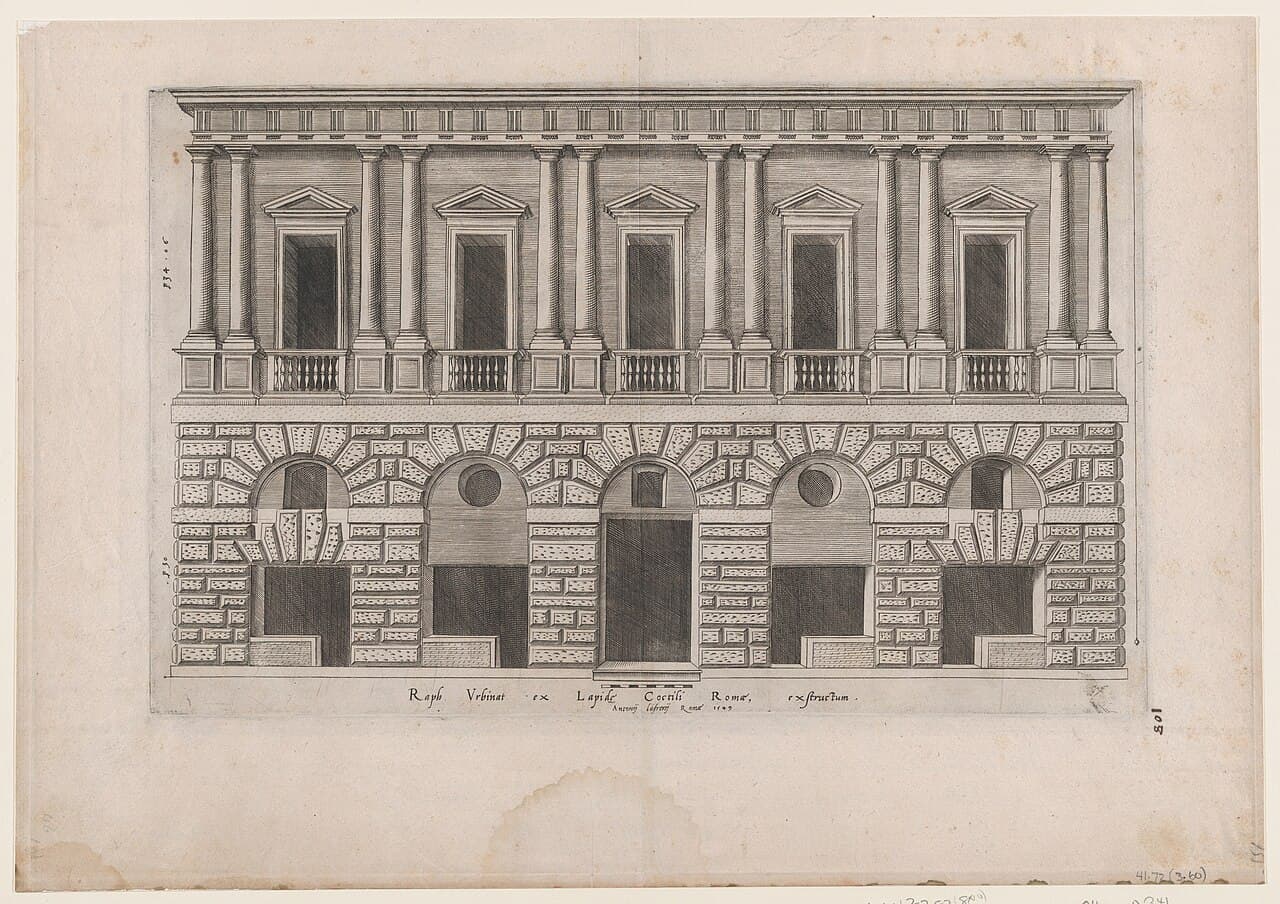
The Palazzo Caprini's facade is documented through an etching by Antoine Lafréry and a partial sketch attributed to Andrea Palladio. The main facade featured five bays across two levels. The ground floor was characterized by rustication executed in stucco, a common technique in Rome that imparted a textured, robust appearance. This lower floor was typically leased to shops, following the Roman tradition of integrating commercial spaces within palatial structures.
The upper floor was notable for its paired Doric columns dividing the windows, supporting a full entablature. This combination of a rusticated base with classical orders above created a harmonious architectural composition that became highly influential. The design blended the strength and solidity of the rusticated ground floor with the elegance and refinement of the classical Doric order on the upper level.
One distinctive feature was the use of large rusticated voussoirs and keystones over the flat-topped rectangular openings of the lower shop fronts, replacing traditional lintels. This created the visual effect of a blind arched arcade, lending a sense of structural support and aesthetic unity to the facade. The architectural language of Palazzo Caprini set a precedent for palatial design, influencing many later buildings such as Somerset House in London and the Louvre Colonnade.
Historical context and transformations
By the late 16th century, the original Palazzo Caprini had fallen into a state of decay. It underwent a comprehensive renovation and was incorporated as the core of the much larger Palazzo dei Convertendi. This transformation significantly altered the original structure, although the garden house associated with Palazzo Caprini survived until 1848.
The palazzo's location in the Borgo district placed it in a historically significant area near the Vatican, which influenced its architectural and cultural importance. The building's association with Raphael added artistic prestige, as he was one of the leading figures of the Italian Renaissance.
Legacy and architectural influence
Palazzo Caprini is considered a pioneering example of Renaissance palatial architecture, especially in its integration of rusticated bases with classical orders above. Bramante's design introduced a model that balanced strength and elegance, combining functional commercial space with refined residential quarters.
The palazzo's facade became a template for many subsequent Renaissance and later buildings, inspiring architects across Europe. Its influence is evident in the design of Somerset House in London, which adopted similar rustication and column arrangements, as well as in the Louvre Colonnade, a hallmark of French classical architecture.
Although the original palazzo no longer exists in its entirety and survives only as archaeological ruins, its architectural principles continue to be studied and admired for their innovation and impact on Western architectural heritage.
Archaeological remains and current status
Today, Palazzo Caprini exists primarily as archaeological ruins within the modern urban fabric of Rome's Borgo district. The site offers valuable insights into early Renaissance architecture and urban development in Rome. Despite the loss of much of the original structure, the surviving documentation and partial remains allow historians and architects to reconstruct its significance.
The palazzo's ruins contribute to the understanding of Donato Bramante's architectural legacy and the evolution of Renaissance palatial design. Visitors and scholars interested in Renaissance architecture regard Palazzo Caprini as a key reference point for the period's stylistic and structural innovations.
Frequently asked questions (FAQ)
- What is the historical significance of Palazzo Caprini?
- Palazzo Caprini, designed by the renowned architect Bramante in the early 16th century, is significant as an exemplar of Renaissance architecture. It served as a residence for Pope Julius II's court and reflects the artistic and cultural advancements of the era.
- When was Palazzo Caprini constructed?
- Construction of Palazzo Caprini began in 1501 and was completed in 1511. This timeframe marks a crucial period in the Renaissance, showcasing the architectural innovations that emerged during this time.
- How do I get to Palazzo Caprini?
- Palazzo Caprini is located in the heart of Rome and is easily accessible by public transportation. The nearest metro station is Lepanto, and numerous bus lines serve the area, making it convenient for visitors to reach.
- What are the opening hours for Palazzo Caprini?
- Palazzo Caprini is typically open to the public from 10 AM to 6 PM, Tuesday through Sunday. It is advisable to check the official website for any changes in hours or special closures before planning your visit.
- Can I take photographs inside Palazzo Caprini?
- Yes, visitors are allowed to take photographs inside Palazzo Caprini, but flash photography and tripods are typically prohibited. It's a great opportunity to capture the stunning architecture and intricate details of this historic site.
- Is it possible to access Palazzo Caprini for visitors with mobility challenges?
- Palazzo Caprini has made efforts to be accessible to visitors with mobility challenges, including ramps and designated pathways. However, it is recommended to contact the site in advance to confirm specific accessibility features.
- What is the best time to visit Palazzo Caprini?
- The best time to visit Palazzo Caprini is during the spring (April to June) and fall (September to October) when the weather is mild and the tourist crowds are relatively smaller. Early mornings or late afternoons on weekdays are also ideal for a more peaceful experience.
- What are the ticket prices for Palazzo Caprini?
- Tickets for Palazzo Caprini generally cost around €10 for adults, with discounts available for students and seniors. Children under a certain age may enter for free, but it's best to check the official site for the most current pricing information.
- Are there any nearby attractions to explore after visiting Palazzo Caprini?
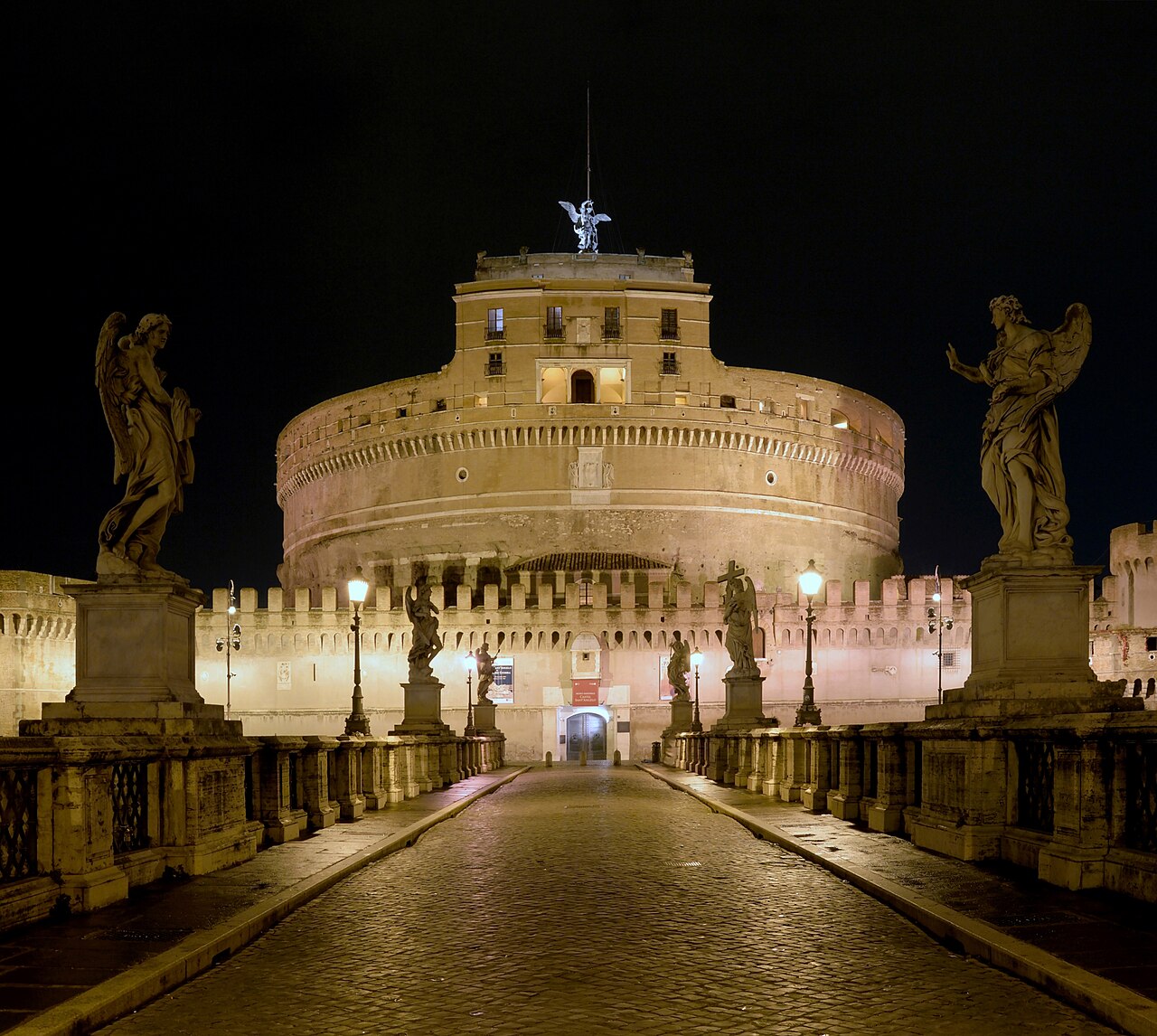
- Yes, after visiting Palazzo Caprini, you can explore several nearby attractions, including the Vatican Museums and St. Peter's Basilica. The picturesque Piazza Navona and the historic Castel Sant'Angelo are also just a short walk away, making for a full day of sightseeing.

Information
Address
Borgo rione, between Piazza Scossacavalli and via Alessandrina, Rome, Italy
Loading map...
Visitor reviews
No reviews yet. Been here? Write the first review and help other travelers!
Write the first reviewVisited this castle? Share your experience
Your review helps other travelers and adds first-hand knowledge to our encyclopedia.