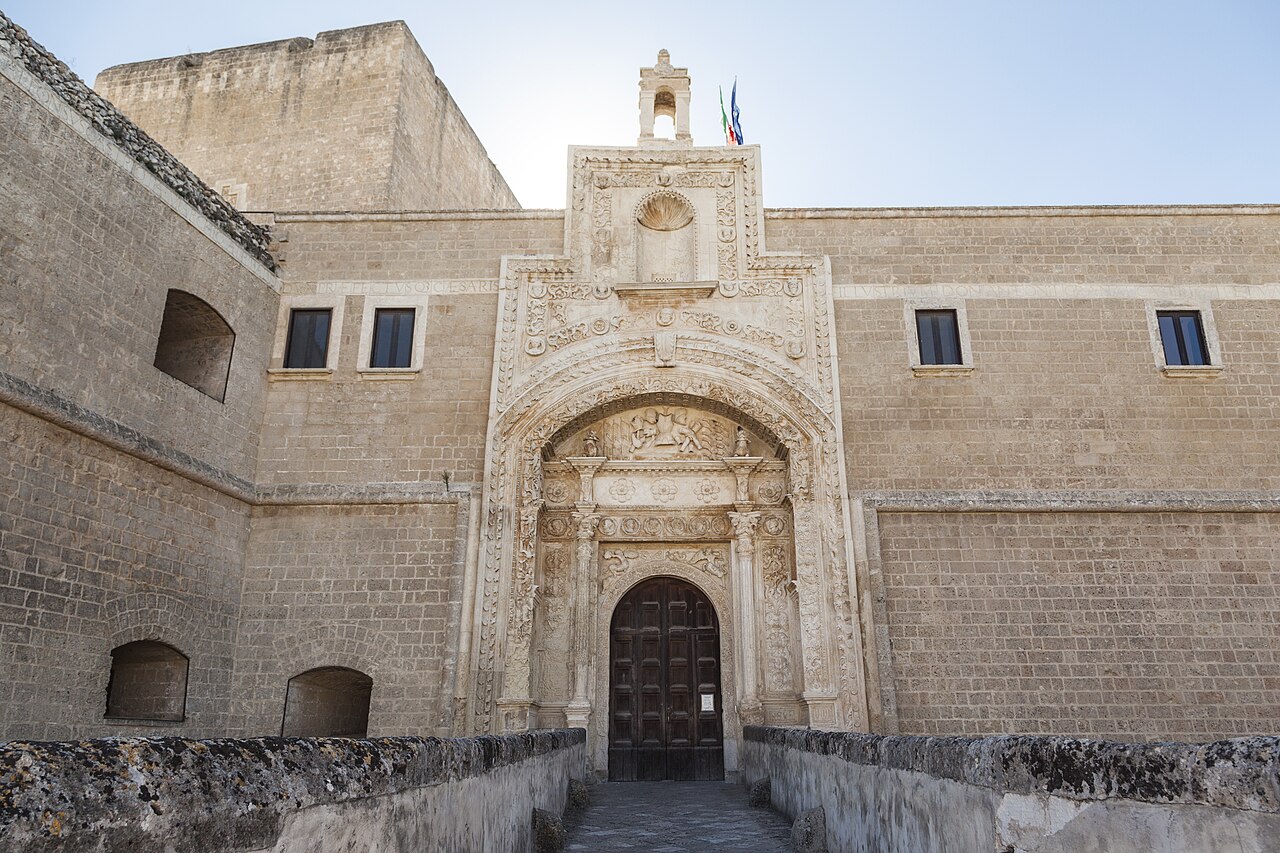
Castello Monaci
Castello Monaci stands as a remarkable example of a 16th-century hill castle deeply intertwined with the religious and cultural history of the Salice Salentino area in Italy. Originally constructed during the Renaissance period, this castle not only served as a fortified noble residence but also holds profound connections to the earlier monastic traditions of the region. Its enduring presence offers insight into the architectural evolution from monastic refuge to noble estate, reflecting centuries of social and historical change.
Monastic origins and early history
The roots of Castello Monaci trace back to the 10th and 11th centuries, when the Salento region became a sanctuary for Basilian monks. These monks, followers of the Eastern Orthodox tradition, sought refuge from Byzantine persecution and established themselves in natural caves and rock-cut shelters scattered throughout the area, particularly near what is today known as San Pancrazio Salentino. These shelters were not merely places of rest but were adapted into sacred spaces for worship and meditation.
Among the earliest tangible evidence of this monastic presence is a small church dedicated to Saint Pancras, documented in 1063. This church likely emerged from the monastic community's efforts to create a permanent spiritual center, marking the beginning of a religious landscape that would influence the area for centuries. The monks' lifestyle, centered on solitude, prayer, and self-sufficiency, shaped the cultural fabric of the region and laid the groundwork for future developments.
Construction and architectural evolution
The castle itself was constructed in the 16th century, during a period when the region experienced significant social and political transformations. Initially, Castello Monaci functioned as a spiritual retreat for the monks, offering a fortified haven amidst the turbulent times. Its architecture reflects the practical needs of defense combined with the contemplative atmosphere required by its religious occupants.
Over time, the castle transitioned from a monastic refuge to a noble residence. Prominent families such as the Martino, Parry, and Grainger clans took ownership, adapting the structure to suit residential and representational purposes. This shift is notably marked by the 19th-century façade renovation, which introduced stylistic elements aligned with contemporary tastes, signaling the castle's evolving role within the local aristocracy.
While detailed architectural plans of the castle remain scarce, the surviving structure showcases typical Renaissance construction techniques and materials, including robust stone walls and strategically placed defensive features. The castle's location at a strategic crossroads in the Salento region underscores its historical importance in controlling local routes and asserting noble presence.
Archaeological and artistic heritage
The surroundings of Castello Monaci are rich in archaeological significance, preserving the legacy of the Basilian monks through numerous rock-cut shelters and caves. These spaces, carved into the soft friable rock, served multiple purposes ranging from living quarters to chapels. Among these, the Grotta dell’Angelo in the Torrevecchia district stands out for its exquisite frescoes depicting saints in the distinctive Byzantine style. These artworks provide valuable insight into the religious iconography and artistic traditions brought by the monks.
Other nearby caves contain altars, beds, and wells, indicating their multifunctional use as places of worship, habitation, and refuge. This network of rock-cut environments enriches the historical narrative of the castle, linking its physical presence to a broader spiritual and cultural landscape.
Modern use and cultural significance
Today, Castello Monaci embraces an adaptive reuse strategy that preserves its historical essence while contributing to the local economy and cultural life. The castle now functions as a venue for events, a winery, and a wine museum, integrating its architectural heritage with contemporary activities. This transformation allows visitors to engage with the castle's layered history in a dynamic setting.
The preservation of the castle and its surrounding archaeological sites ensures that the memory of the Basilian monks and the noble families who shaped the region endures. Castello Monaci thus remains a vital cultural landmark, embodying the intersection of religious devotion, noble power, and regional identity in the heart of Salice Salentino.
Frequently asked questions (FAQ)
- How do I get to Castello Monaci?
- Castello Monaci is located in Salice Salentino, Italy, easily accessible by car or public transport. If you're traveling by car, you can follow the signs from the main highways leading to the town. Public transport options may include local buses or trains to nearby stations, followed by a short taxi ride.
- What is the historical significance of Castello Monaci?
- Castello Monaci dates back to the 16th century and is known for its rich history linked to the noble families of the region. It has served various purposes over the centuries, from a fortified residence to a wine estate. The castle is a testament to the architectural and cultural heritage of Salento.
- When was Castello Monaci built?
- Castello Monaci was constructed in the late 1500s, reflecting the architectural styles of that era. It has undergone several renovations to preserve its historical integrity while adapting to modern needs. Visitors can appreciate its historical layers during their visit.
- Can I take guided tours of Castello Monaci?
- Yes, guided tours are available at Castello Monaci, providing visitors with in-depth knowledge of its history and architecture. The tours typically include access to various rooms and outdoor areas, allowing you to explore the castle's fascinating past. It's advisable to check the schedule and book in advance during peak tourist seasons.
- Why is Castello Monaci a popular destination for visitors?
- Castello Monaci is popular for its stunning architecture and picturesque surroundings, making it a perfect spot for photography and relaxation. Additionally, its rich history and association with local wine production attract both history enthusiasts and wine lovers. The castle also hosts events and tastings that enhance the visitor experience.
- Is it possible to host events at Castello Monaci?
- Yes, Castello Monaci offers facilities for hosting various events, including weddings, corporate gatherings, and private celebrations. The picturesque setting and historical ambiance make it a unique venue for special occasions. Interested parties should contact the castle's management for availability and booking details.
- What are the opening hours of Castello Monaci?
- Castello Monaci typically opens to visitors from Wednesday to Sunday, with varying hours throughout the day. During peak season, extended hours may be offered to accommodate more visitors. It's recommended to check the official website or contact them for the most current opening times before your visit.
- What are the ticket prices for visiting Castello Monaci?
- Ticket prices for Castello Monaci vary depending on the type of tour and any special events being held. Generally, adult tickets are reasonably priced, with discounts available for students and seniors. Be sure to check the official website for the latest pricing information and any promotional offers.
- When is the best time to visit Castello Monaci?
- The best time to visit Castello Monaci is during the spring and fall months when the weather is mild and pleasant. These seasons also see fewer crowds compared to the summer months, allowing for a more enjoyable experience. Additionally, visiting during local festivals can provide a unique cultural insight into the region.
- Are there any nearby attractions to visit along with Castello Monaci?
- Yes, there are several nearby attractions worth exploring, including the charming towns of Lecce and Ostuni. Both towns are renowned for their Baroque architecture and vibrant local culture. Additionally, the beautiful beaches of Salento are just a short drive away, making it easy to combine your visit to the castle with a beach day.
Information
Website
Visit websiteSources & official resources
Verify the information above using these authoritative references.
Loading map...
Visitor reviews
No reviews yet. Been here? Write the first review and help other travelers!
Write the first reviewVisited this castle? Share your experience
Your review helps other travelers and adds first-hand knowledge to our encyclopedia.