Castello Manservisi
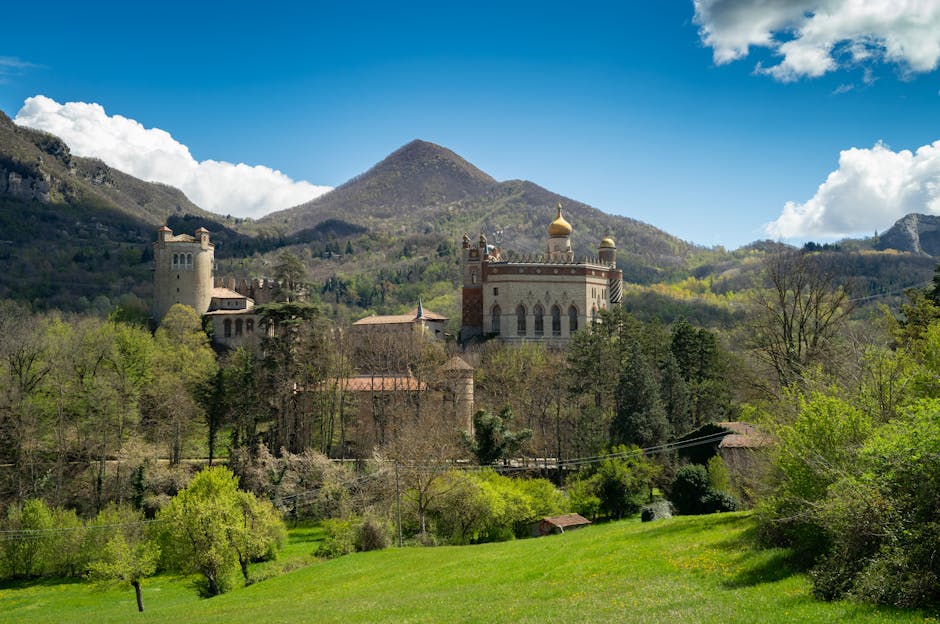
Castello Manservisi stands as a remarkable example of neo-Gothic architecture in the village of Castelluccio, within the municipality of Alto Reno Terme, Italy. Unlike medieval castles, this estate was constructed in the late 19th century during the romantic revival movement, which sought to evoke the grandeur and mystique of medieval castles through stylistic reinterpretation rather than authentic medieval origins. The castle's history reflects the evolution of aristocratic residences in Italy during this period, blending historical romanticism with practical adaptations over time.
Historical background and ownership
The estate originally belonged to the noble Nanni-Levera family, whose prominence rose through service to Cardinal Lambertini, later Pope Benedict XIV. The Nanni family’s original residence on the site predated the castle and was later converted into stabling facilities, demonstrating the adaptive reuse of older structures within the estate. In 1886, the property was acquired by Alessandro Manservisi and three partners, who initiated a comprehensive renovation project that transformed the existing buildings into a cohesive neo-Gothic complex.
Under Manservisi’s ownership, the castle became a favored summer retreat and social hub for Bologna’s high bourgeoisie, nobility, and artistic circles. Notable visitors included the playwright Alfredo Testoni, reflecting the castle’s cultural significance during this era. Following Alessandro Manservisi’s death in 1912, the estate was repurposed for educational use, including modifications such as terraces and expanded spaces to accommodate a school colony.
Architectural features and design
The castle exemplifies the romantic neo-Gothic style popular in the late 19th century, characterized by towers, pointed arches, porticos, and decorative wrought ironwork. These elements collectively create a medieval castle-like aesthetic, although the structure is a product of revivalist design rather than medieval construction. The complex’s imposing proportions and stylistic details reflect the era’s fascination with medieval motifs and craftsmanship.
Inside, visitors can admire a richly decorated interior featuring a frescoed staircase, furnished salons, and colorful majolica stoves that served both functional and ornamental purposes. Beneath the main floors, a network of caves extends underground, though their original function remains undocumented. The presence of these subterranean spaces adds an element of mystery and complexity to the estate’s layout.
Access to the castle is marked by a monumental staircase culminating in a bust honoring Alessandro Manservisi, underscoring his pivotal role in the castle’s transformation. The wrought ironwork throughout the estate, including grates, lamps, brackets, horse-tying rings, and wooden fixtures, was crafted by skilled artisans, highlighting the craftsmanship integral to the castle’s aesthetic.
LabOrantes ethnographic museum and cultural heritage
One wing of Castello Manservisi houses the LabOrantes Ethnographic Museum, which preserves and exhibits the traditional mountain culture of the region. The museum spans 26 rooms and features a reconstructed kitchen environment, collections of tools used for chestnut gathering, period clothing, and historical lighting devices, providing a comprehensive view of rural life and domestic technology in the area.
The museum’s second section is dedicated to sacred furniture and liturgical objects sourced from the parish oratory of Castelluccio and the sanctuaries of Madonna del Faggio and Madonna del Ponte. This collection includes votive tablets, ex-votos, ceremonial garments, and a well-preserved 17th-century nativity scene. These artifacts offer valuable insight into the religious practices and artistic heritage of the local community, enhancing the cultural significance of the castle complex.
Preservation and current condition
Today, Castello Manservisi remains a well-preserved example of late 19th-century neo-Gothic revival architecture. The estate’s structural integrity and decorative elements have been maintained, allowing visitors to experience the elegance and historical ambiance of the period. The adaptive reuse of the castle as a museum and cultural site ensures ongoing preservation and public engagement with the region’s heritage.
The castle’s location on a hillside offers commanding views of the surrounding landscape, reinforcing its designation as a hill castle. Its romantic design and historical associations make it a notable landmark within the Emilia-Romagna region, attracting visitors interested in architectural history, cultural heritage, and ethnographic studies.
Frequently asked questions (FAQ)
- What is the historical significance of Castello Manservisi?
- Castello Manservisi is significant as a late 19th-century neo-Gothic estate in Italy, reflecting the romantic revival of medieval architecture and serving as a cultural hub for local nobility and artists.
- Can I visit the LabOrantes Ethnographic Museum at Castello Manservisi?
- Yes, one wing of Castello Manservisi houses the LabOrantes Ethnographic Museum, which showcases traditional mountain culture and religious artifacts from the region.
- What architectural features characterize Castello Manservisi?
- The castle features neo-Gothic elements such as towers, pointed arches, porticos, frescoed staircases, and decorative wrought ironwork crafted by skilled artisans.
- Is Castello Manservisi well preserved?
- Yes, the castle is well preserved with maintained structural and decorative elements, allowing visitors to experience its historical and architectural significance.
- Where is Castello Manservisi located?
- Castello Manservisi is located in the village of Castelluccio within the municipality of Alto Reno Terme, in the Emilia-Romagna region of Italy.
Information
Website
Visit websiteSources & official resources
Verify the information above using these authoritative references.
Loading map...
Visitor reviews
No reviews yet. Been here? Write the first review and help other travelers!
Write the first reviewVisited this castle? Share your experience
Your review helps other travelers and adds first-hand knowledge to our encyclopedia.