Castello Gizzi — Italy castle

Castello Gizzi

Castello Gizzi: historic hill castle in Torre de' Passeri
Italy, Italy
Post-Renaissance (17th–18th c.)

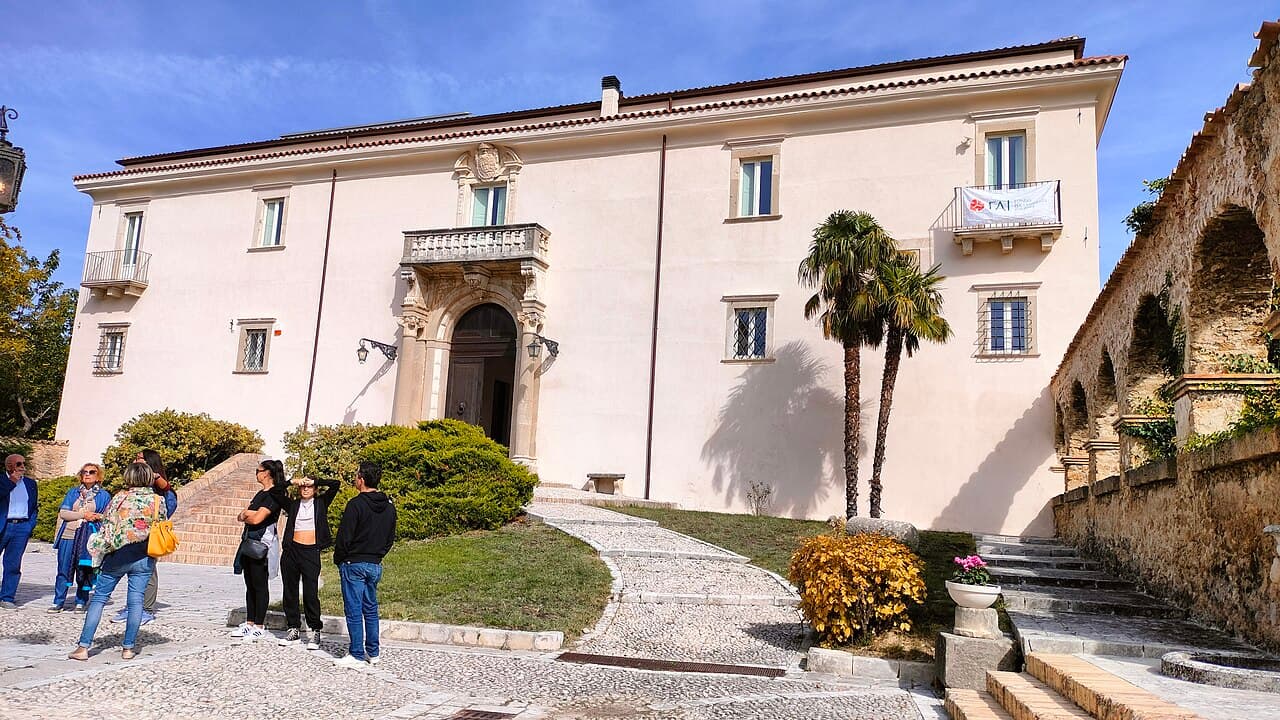
Castello Gizzi stands prominently in Torre de' Passeri, a town in the Province of Pescara within the Abruzzo region of Italy. This hill castle is a remarkable example of architectural evolution, combining elements from the medieval period with an 18th-century reconstruction that reflects the post-Renaissance style. Its layered history spans from ancient Roman times through the Middle Ages to modern cultural uses, making it a unique monument of historical and architectural significance.

Medieval origins and early history

The site of Castello Gizzi originally hosted a defensive tower constructed in the 12th century. This tower was under the ownership of the Abbey of San Clemente a Casauria, a powerful religious institution that exercised considerable influence in the region during the Middle Ages. The tower served as a strategic fortification within the landscape, controlling the surrounding territory and protecting local routes.

Although the original medieval tower no longer stands in its entirety, several architectural remnants survive. Notably, five medieval arches are integrated into the current castle façade, offering visible evidence of the site's longstanding defensive role and architectural continuity.

18th-century reconstruction and architectural features

In 1719, Marquise Smeralda Mazara di Sulmona commissioned the construction of the present-day castle, building upon the foundations of the earlier tower. This reconstruction transformed the site into a fortified palace that combined residential comfort with defensive capabilities, characteristic of post-Renaissance aristocratic architecture in Italy.

The castle is primarily built of stone, featuring a main four-story building with a prominent stone portal on its façade. Above the portal, a balcony supports the Mazara family coat of arms, symbolizing the noble lineage of the original owners. The castle complex also includes a dépendance, a cellar, and an extensive eight-hectare park, which enhances the estate's grandeur and historical ambiance.

Medieval architectural integration

The incorporation of the medieval arches into the castle's façade is a distinctive feature, linking the 18th-century structure with its medieval predecessor. These arches are not merely decorative but serve as a tangible connection to the site's defensive origins and the architectural styles of the Middle Ages.

Archaeological significance and ancient artifacts

Within the courtyard of Castello Gizzi lies an important archaeological ensemble, which includes a 4th-century BC stone sarcophagus. This funerary monument attests to the area's significance long before the medieval period, indicating continuous human presence and cultural activity.

Alongside the sarcophagus are fragments of imperial Roman columns, which suggest that classical materials were either preserved or repurposed during the castle's construction phases. These artifacts offer insight into the region's ancient history and the layering of civilizations over time.

Modern history and cultural role

The castle remained under the ownership of the Mazara family for over two centuries until 1967, when it was acquired by the Gizzi family. This transition marked the beginning of a new cultural chapter for the castle.

In 1979, Castello Gizzi became the headquarters of the Institute of Studies and Research "Casa di Dante in Abruzzo", founded by Corrado Gizzi. The institute is dedicated to the study and promotion of Dante Alighieri's works and legacy. It houses the Dante Museum "F. Bellonzi" and the library "M. A. Caldora", serving as a center for scholarly research and cultural events.

The foundation maintains active connections with key cities associated with Dante, including Florence, Ravenna, and Rome. It organizes conferences and seminars, such as the inaugural 1980 conference featuring Giorgio Petrocchi and the 1981 event on "Dante e il Rossettismo." The foundation was officially recognized as a moral entity in 2005, reinforcing its cultural mission.

Restoration and preservation efforts

In 2009, Castello Gizzi sustained damage that necessitated comprehensive restoration. These efforts focused on preserving the castle's historical and architectural integrity, ensuring that both its medieval and post-Renaissance elements were maintained.

The restoration was completed by 2019, allowing the castle to reopen as a well-preserved monument. It continues to operate under the oversight of the Italian Ministry of Cultural Heritage and Activities, maintaining its dual role as a historical site and a center for cultural and scholarly activities.

Architectural conservation

The restoration preserved key features such as the stone portal, the medieval arches, and the extensive park grounds. The castle's condition today reflects careful stewardship that balances public accessibility with the protection of its layered historical fabric.

Visitor experience and cultural significance

Castello Gizzi offers visitors an opportunity to explore a site that embodies multiple historical layers, from ancient Roman artifacts to medieval fortifications and 18th-century aristocratic architecture. The presence of the Dante Museum and the associated institute enriches the cultural experience, attracting scholars and tourists interested in Italy's literary heritage.

The castle's setting on a hill provides panoramic views of the surrounding Abruzzo landscape, enhancing its appeal as a destination for both history enthusiasts and casual visitors. The extensive park and well-maintained grounds offer a serene environment for cultural events and educational activities.

Frequently asked questions (FAQ)

What is the historical significance of Castello Gizzi?
Castello Gizzi is a prominent historical landmark in Italy, known for its rich heritage dating back to the medieval era. It played a vital role in the region's defense and governance, showcasing the architectural styles and cultural influences of its time.
When was Castello Gizzi built?
Castello Gizzi was constructed in the 12th century, reflecting the architectural trends of the Middle Ages. Over the centuries, it has undergone various renovations, preserving its historical essence while adapting to changing needs.
What are the opening hours for Castello Gizzi?
Castello Gizzi is typically open to visitors from 10 AM to 6 PM, with extended hours during the summer months. It is advisable to check the official website or contact the castle for any seasonal changes or special events that may affect visiting hours.
Can I purchase tickets online for Castello Gizzi?
Yes, tickets for Castello Gizzi can be purchased online through the official website or authorized ticket vendors. This option allows you to secure your visit in advance and often provides access to exclusive guided tours.
Is it possible to access Castello Gizzi with a wheelchair?
While efforts have been made to improve accessibility at Castello Gizzi, some areas may still present challenges due to the castle's historic architecture. It is recommended to contact the castle staff ahead of your visit to inquire about specific accessibility options available.
What is the best time to visit Castello Gizzi?
The best time to visit Castello Gizzi is during the spring and early autumn when the weather is mild and pleasant. These seasons offer beautiful scenery and fewer crowds, allowing for a more enjoyable exploration of the castle and its surroundings.
What nearby attractions can I visit while at Castello Gizzi?
In addition to Castello Gizzi, visitors can explore the charming village nearby, as well as several beautiful vineyards and historical sites. The region is known for its picturesque landscapes, making it an ideal spot for hiking and enjoying Italian cuisine.
How do I get to Castello Gizzi from the nearest city?
To reach Castello Gizzi from the nearest city, you can take a local bus or drive, as the castle is well-signposted. The journey typically takes around 30 minutes, offering scenic views of the Italian countryside along the way.
What are the ticket prices for visiting Castello Gizzi?
Ticket prices for Castello Gizzi vary based on the type of tour and age group, with discounts available for children and seniors. It is best to check the official website for the most up-to-date pricing information and any special promotions that may be available.

Photo gallery

Castello Gizzi
Click to view

Photo by Pietro•CC BY-SA 4.0

1 photo • Click any image to view in full screen

Information

Hill Castle

Loading map...

Visitor reviews

No reviews yet. Been here? Write the first review and help other travelers!

Write the first review

Visited this castle? Share your experience

Your review helps other travelers and adds first-hand knowledge to our encyclopedia.
Write a review

(5/5)

0/2000 characters

Your review will be visible after admin approval

Nearby castles

8.9 km
Castello di Salle — Italy castle

Castello di Salle

Salle, Italy

Castello di Salle is a notable medieval hill castle located in the municipality of Salle, within the Province of Pescara, Abruzzo, Italy. Established before the 11th century, this fortress was originally part of a monastic defensive system linked to the Abbey of San Clemente a Casauria. Its primary function during the early medieval period was to serve as a strategic military stronghold safeguarding the abbey’s extensive territories. Historical significance and ownership The castle’s earliest documented role was as a fortification under the control of the abbey. This is evidenced by an inscription on one of the bronze panels of the abbey’s portal, which refers to the fortress as "Sallis Castrum". This name highlights the castle’s integral position within the abbey’s network of defenses during the 10th and 11th centuries. Over the centuries, Castello di Salle passed through the hands of several noble families, each leaving their mark on its structure and function. Among the most prominent were the Colonna, Gonzaga, and d’Aquino families. These aristocratic lineages contributed to the castle’s management and gradual evolution from a purely military fortress to a noble residence. In 1646, the castle was acquired by Baron Giacinto de Genua (Di Genova) from Vasto. Under his stewardship, the fortress underwent significant transformation, shifting its purpose from defense to aristocratic residence. Baron Giacinto extensively remodeled the castle, converting it into a palatial home suitable for noble living, reflecting the architectural and social trends of the 17th century. Architectural features and layout Castello di Salle is constructed on an irregular L-shaped plan, crowned by a terrace roof that functions as a chemin de ronde. This walkway along the battlements was historically used for patrol and defense. The terrace is bordered by crenellated merlons, which provided protection to defenders stationed on the walls. The castle’s silhouette is defined by three prominent towers, which served both defensive and observational purposes. The primary building material is Maiella stone, a durable regional limestone that contributes to the fortress’s robust appearance. The main northern façade features three doorways, each surmounted by loopholes—narrow vertical slits used for firing cannons and other projectile weapons. This façade also grants access to the medieval museum housed within the castle, which displays artifacts related to the region’s history. The northeast wing is the oldest part of the fortress, partially incorporating a church dedicated to Blessed Roberto da Salle. This church has two entrances and is closely connected to the castle’s earliest architectural phases. The wing also contains two additional doorways that reflect different construction stages and adaptations over time. The inner courtyard and gardens Within the castle’s inner courtyard lies an Italian garden, offering a cultivated green space that contrasts with the fortress’s defensive character. Near the main entrance stands a 16th-century stone fountain, showcasing Renaissance influences in its design and craftsmanship. Heraldry and cultural heritage Heraldic symbols are prominently displayed throughout Castello di Salle. Above one entrance is the coat of arms of the Di Genova family, commemorating the baron who transformed the fortress into a noble residence in the 17th century. The d’Aquino family’s arms are visible above the ravelin, a defensive outwork that once protected the castle’s main gate. The castle also hosts the Bourbon Medieval Museum, which exhibits a diverse collection of historical artifacts. These include fabrics, weapons, torture devices, paintings, maps, sacred vestments, and images spanning ancient to modern times. The museum provides insight into the castle’s multifaceted history, from its origins as a military stronghold to its later role as a noble residence and cultural monument. Geographical context and preservation Castello di Salle is situated near the ruins of the old village of Salle, which was destroyed by the 1915 Avezzano earthquake followed by a landslide. These ruins remain visible, serving as a poignant reminder of the region’s seismic activity and historical upheavals. Today, the castle belongs to the Mechi family and is recognized as a national monument within the Riserva Regionale Valle dell’Orta, a protected natural reserve dedicated to preserving the area’s historical and architectural heritage. Visitor experience and significance Visitors to Castello di Salle can explore its well-preserved defensive architecture, including the towers, battlements, and chemin de ronde. The presence of the medieval museum enriches the experience by offering a tangible connection to the region’s past through its extensive collection of artifacts. The castle’s transformation from a monastic fortress to a noble residence is evident in its architectural layers, blending military functionality with Renaissance and Baroque elements introduced during the 17th century renovations. The Italian garden and stone fountain add a refined aesthetic dimension, contrasting with the fortress’s martial origins. Overall, Castello di Salle stands as a significant example of early medieval hill castle architecture in Italy, reflecting centuries of historical change and adaptation. Its preservation within a natural reserve ensures ongoing protection and public appreciation of this cultural landmark.

Early Medieval (5th–10th c.)
Details
10.7 km
Castello di Popoli — Italy castle

Castello di Popoli

Popoli, Italy

Castello di Popoli, also known as Castello ducale Cantelmo, is a prominent hill castle located in the town of Popoli within the Province of Pescara in the Abruzzo region of Italy. This medieval fortress dates back to the 10th century and is a significant example of early medieval military architecture in the area. Historical background and significance The castle was originally constructed in the early medieval period as a defensive stronghold to control the strategic valley connecting the Adriatic coast to the interior Apennine mountains. It played an important role in the territorial disputes and power struggles typical of medieval Italy. The fortress became closely associated with the Cantelmo family, a noble lineage that rose to prominence in the region during the late Middle Ages. The Cantelmos used the castle as a ducal residence, which is why it is often referred to as the Castello ducale Cantelmo. Throughout its history, the castle witnessed several sieges and modifications reflecting the evolving military technologies and political changes. It was part of the defensive network protecting the Abruzzo region from invasions and local conflicts. Architectural features and layout The Castello di Popoli is characteristic of hill castles built during the early medieval period, featuring robust stone walls adapted to the natural terrain. The castle's location on a rocky outcrop provided a commanding view of the surrounding landscape, crucial for surveillance and defense. The fortress includes towers and battlements typical of the period, designed to resist attacks and provide vantage points for archers. The main entrance was fortified with a gatehouse and defensive mechanisms such as a portcullis and arrow slits. Inside, the castle contained living quarters, storage rooms, and a courtyard that served as the heart of the complex. Over the centuries, the castle underwent renovations that introduced elements from later architectural styles, but its core layout remains a testament to its early medieval origins. The Cantelmo family's influence The Cantelmo family were influential feudal lords in Abruzzo from the 14th to the 16th centuries. Their stewardship of the castle marked a period of relative stability and development for the fortress. The family expanded the castle's residential areas and enhanced its defensive capabilities to adapt to the changing political landscape of Renaissance Italy. The ducal title associated with the Cantelmos elevated the castle's status from a purely military installation to a noble residence, blending fortification with elements of comfort and prestige. Current condition and cultural importance Today, Castello di Popoli stands as a partially preserved medieval castle, retaining significant portions of its original walls and towers. Although some areas have suffered from neglect and natural decay, restoration efforts have been undertaken to preserve its historical and architectural heritage. The castle is an important cultural landmark in Abruzzo, attracting visitors interested in medieval history and architecture. It offers insights into the military strategies and noble lifestyles of early medieval Italy, as well as the region's feudal history. Visiting information The castle is accessible to the public, with guided tours available that explore its history, architecture, and the Cantelmo family's legacy. Visitors can enjoy panoramic views of the surrounding landscape from the castle's elevated position. The site often hosts cultural events that celebrate the medieval heritage of Popoli and the Abruzzo region.

Early Medieval (5th–10th c.)
Details
11 km
Castello De Sterlich-Aliprandi — Italy castle

Castello De Sterlich-Aliprandi

Nocciano, Italy

Castello De Sterlich-Aliprandi is a notable example of a hill castle located in Nocciano, within the Province of Pescara in the Abruzzo region of Italy. This castle, also known as the De Sterlich-Aliprandi Castle, stands as a fortified palace that reflects the architectural and defensive needs of the early medieval period, having been constructed in the 10th century. Historical context and origins The 10th century was a time marked by frequent conflicts and territorial disputes in Italy, which necessitated the construction of fortified structures such as hill castles to provide protection and assert control over strategic locations. Castello De Sterlich-Aliprandi was built during this period as a defensive stronghold, combining military utility with residential functions, which was typical of many castles of this era. Located in the rugged landscape of Abruzzo, the castle’s position on elevated terrain provided natural defense advantages, allowing its inhabitants to monitor the surrounding area effectively. The castle’s ownership historically belonged to the noble De Sterlich-Aliprandi family, who played a significant role in the local governance and defense of the region. Architectural features and design The architecture of Castello De Sterlich-Aliprandi reflects the characteristics of early medieval hill castles in Italy. The castle is constructed primarily from local stone, which was a common building material due to its availability and durability. The structure includes fortified walls designed to withstand sieges and attacks, with battlements and defensive towers that enhance its protective capabilities. The castle’s layout integrates both defensive and residential elements, with a central keep or main tower that served as the last line of defense and as the living quarters for the lord and his family. Surrounding the keep, there are additional buildings and courtyards that supported the daily life and administrative functions of the castle. While detailed architectural plans are scarce, the castle’s preservation state allows for the observation of typical features such as narrow windows or arrow slits for archers, thick walls, and possibly a gatehouse that controlled access to the interior. The integration of these elements demonstrates the castle’s dual role as a fortress and noble residence. Role in regional history and significance Castello De Sterlich-Aliprandi has witnessed various historical phases, including periods of conflict and peace in the Abruzzo region. Its strategic location made it a valuable asset during medieval times for controlling trade routes and defending against invasions. The castle’s noble owners, the De Sterlich-Aliprandi family, contributed to the political and social development of Nocciano and the surrounding areas. Over centuries, the castle adapted to changing military technologies and political circumstances, which is reflected in modifications and restorations carried out over time. Current condition and cultural heritage Today, Castello De Sterlich-Aliprandi is recognized for its historical and architectural value. It is partially preserved, allowing visitors and scholars to appreciate its medieval construction techniques and defensive features. The castle is an important cultural landmark in the Abruzzo region, contributing to the understanding of early medieval fortifications in Italy. Efforts to maintain and restore the castle have helped preserve its structural integrity, although some parts remain in ruins or have undergone significant changes. The castle is accessible to the public, offering a glimpse into the medieval past and the lifestyle of the noble families who once inhabited it. Visiting information and nearby attractions Visitors to Castello De Sterlich-Aliprandi can explore its historic walls and enjoy panoramic views of the surrounding Abruzzo countryside. The castle’s location near Nocciano makes it a convenient destination for those interested in medieval architecture and Italian history. The region around the castle also features other historical sites, natural parks, and cultural attractions, making it an enriching area for tourists seeking to experience the heritage of Abruzzo.

Early Medieval (5th–10th c.)
Details