Castello di Salle
Castello di Salle is a notable medieval hill castle located in the municipality of Salle, within the Province of Pescara, Abruzzo, Italy. Established before the 11th century, this fortress was originally part of a monastic defensive system linked to the Abbey of San Clemente a Casauria. Its primary function during the early medieval period was to serve as a strategic military stronghold safeguarding the abbey’s extensive territories.
Historical significance and ownership
The castle’s earliest documented role was as a fortification under the control of the abbey. This is evidenced by an inscription on one of the bronze panels of the abbey’s portal, which refers to the fortress as "Sallis Castrum". This name highlights the castle’s integral position within the abbey’s network of defenses during the 10th and 11th centuries.
Over the centuries, Castello di Salle passed through the hands of several noble families, each leaving their mark on its structure and function. Among the most prominent were the Colonna, Gonzaga, and d’Aquino families. These aristocratic lineages contributed to the castle’s management and gradual evolution from a purely military fortress to a noble residence.
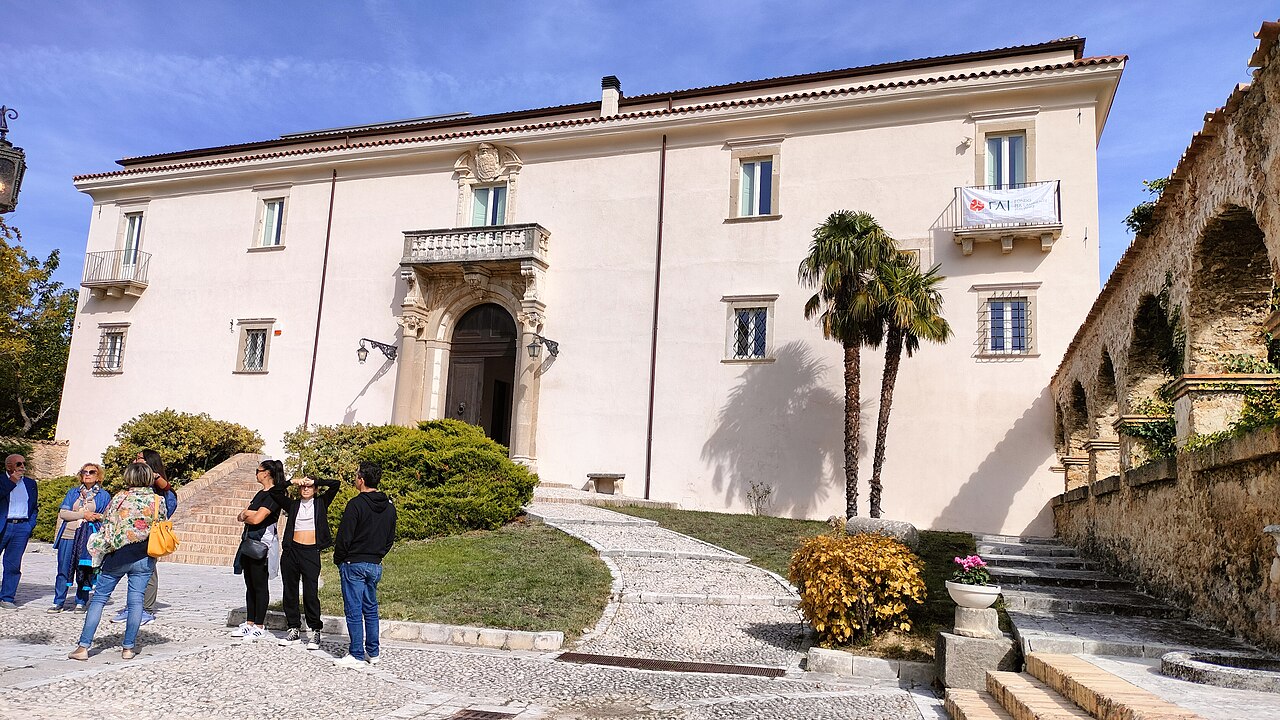
In 1646, the castle was acquired by Baron Giacinto de Genua (Di Genova) from Vasto. Under his stewardship, the fortress underwent significant transformation, shifting its purpose from defense to aristocratic residence. Baron Giacinto extensively remodeled the castle, converting it into a palatial home suitable for noble living, reflecting the architectural and social trends of the 17th century.
Architectural features and layout
Castello di Salle is constructed on an irregular L-shaped plan, crowned by a terrace roof that functions as a chemin de ronde. This walkway along the battlements was historically used for patrol and defense. The terrace is bordered by crenellated merlons, which provided protection to defenders stationed on the walls.
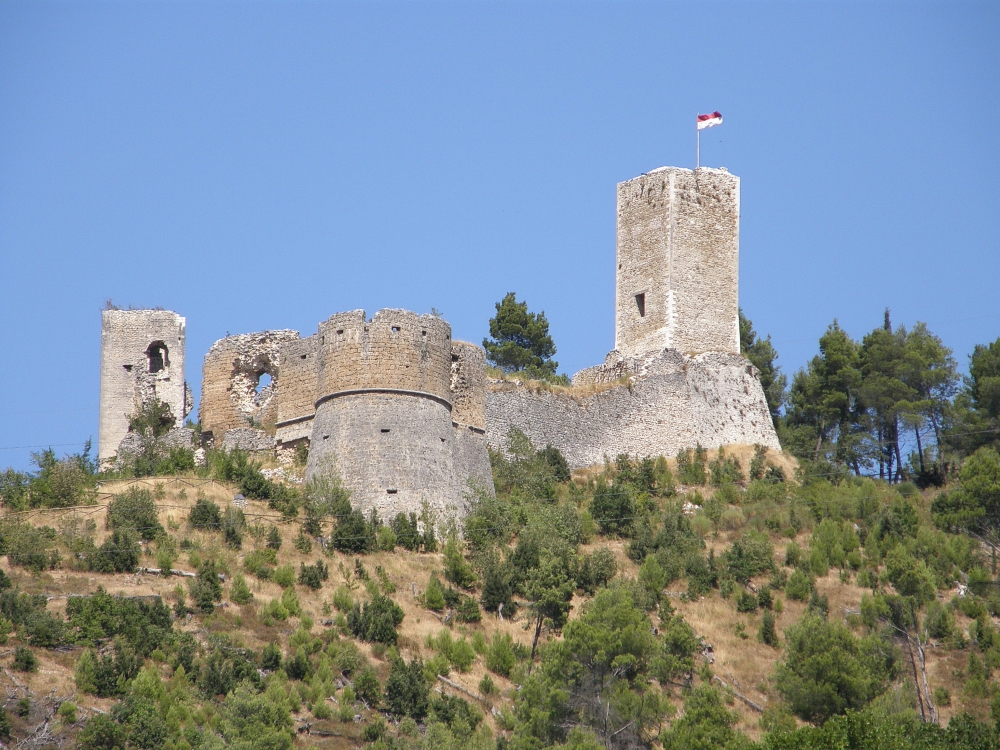
The castle’s silhouette is defined by three prominent towers, which served both defensive and observational purposes. The primary building material is Maiella stone, a durable regional limestone that contributes to the fortress’s robust appearance.
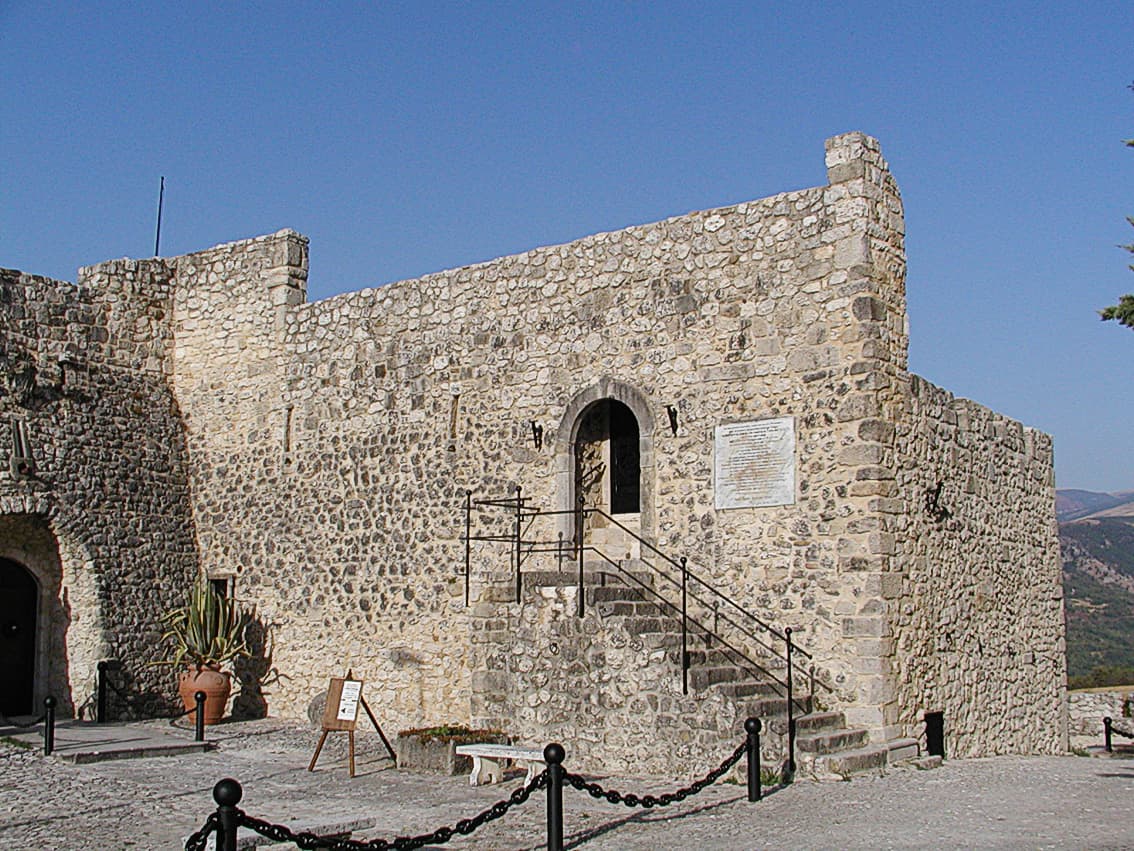
The main northern façade features three doorways, each surmounted by loopholes—narrow vertical slits used for firing cannons and other projectile weapons. This façade also grants access to the medieval museum housed within the castle, which displays artifacts related to the region’s history.
The northeast wing is the oldest part of the fortress, partially incorporating a church dedicated to Blessed Roberto da Salle. This church has two entrances and is closely connected to the castle’s earliest architectural phases. The wing also contains two additional doorways that reflect different construction stages and adaptations over time.
The inner courtyard and gardens
Within the castle’s inner courtyard lies an Italian garden, offering a cultivated green space that contrasts with the fortress’s defensive character. Near the main entrance stands a 16th-century stone fountain, showcasing Renaissance influences in its design and craftsmanship.
Heraldry and cultural heritage
Heraldic symbols are prominently displayed throughout Castello di Salle. Above one entrance is the coat of arms of the Di Genova family, commemorating the baron who transformed the fortress into a noble residence in the 17th century. The d’Aquino family’s arms are visible above the ravelin, a defensive outwork that once protected the castle’s main gate.
The castle also hosts the Bourbon Medieval Museum, which exhibits a diverse collection of historical artifacts. These include fabrics, weapons, torture devices, paintings, maps, sacred vestments, and images spanning ancient to modern times. The museum provides insight into the castle’s multifaceted history, from its origins as a military stronghold to its later role as a noble residence and cultural monument.
Geographical context and preservation
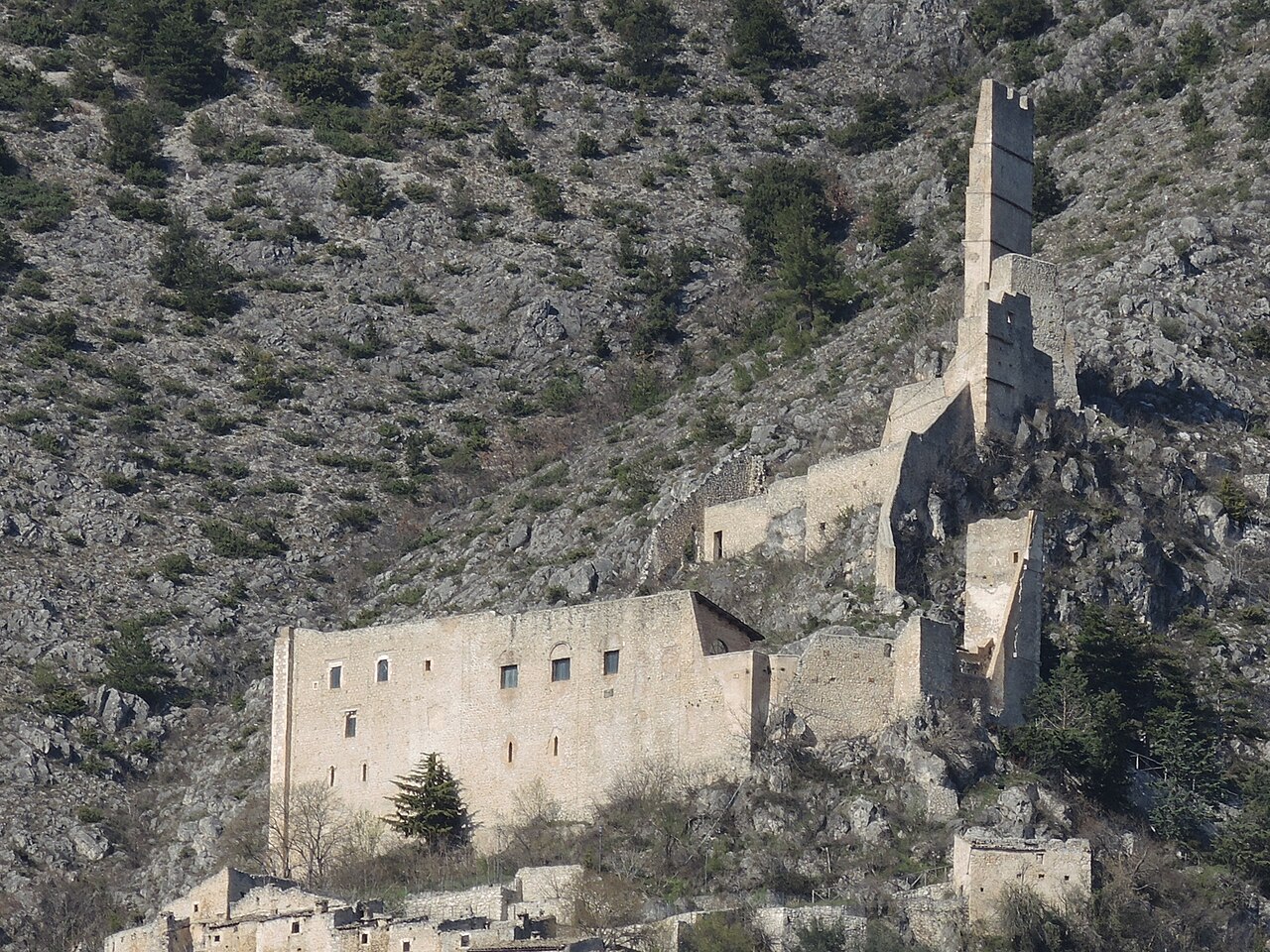
Castello di Salle is situated near the ruins of the old village of Salle, which was destroyed by the 1915 Avezzano earthquake followed by a landslide. These ruins remain visible, serving as a poignant reminder of the region’s seismic activity and historical upheavals.
Today, the castle belongs to the Mechi family and is recognized as a national monument within the Riserva Regionale Valle dell’Orta, a protected natural reserve dedicated to preserving the area’s historical and architectural heritage.
Visitor experience and significance
Visitors to Castello di Salle can explore its well-preserved defensive architecture, including the towers, battlements, and chemin de ronde. The presence of the medieval museum enriches the experience by offering a tangible connection to the region’s past through its extensive collection of artifacts.
The castle’s transformation from a monastic fortress to a noble residence is evident in its architectural layers, blending military functionality with Renaissance and Baroque elements introduced during the 17th century renovations. The Italian garden and stone fountain add a refined aesthetic dimension, contrasting with the fortress’s martial origins.
Overall, Castello di Salle stands as a significant example of early medieval hill castle architecture in Italy, reflecting centuries of historical change and adaptation. Its preservation within a natural reserve ensures ongoing protection and public appreciation of this cultural landmark.
Frequently asked questions (FAQ)
- When was Castello di Salle built?
- Castello di Salle was established before the 11th century, with construction dating back to the 10th century during the early medieval period.
- What architectural style characterizes Castello di Salle?
- The castle primarily reflects early medieval defensive architecture with later Renaissance and Baroque modifications introduced in the 17th century.
- Can visitors access a museum inside the castle?
- Yes, the castle houses the Bourbon Medieval Museum, featuring artifacts such as weapons, fabrics, paintings, and historical documents related to the region.
- Is Castello di Salle open to the public?
- The castle is accessible to visitors, with parts adapted for cultural and museum use. It is recommended to check local visiting hours before planning a visit.
- What is the significance of the nearby ruins?
- The ruins near the castle are from the old village of Salle, destroyed by the 1915 Avezzano earthquake and subsequent landslide, highlighting the area's seismic history.
Photo gallery

Information
Sources & official resources
Verify the information above using these authoritative references.
Loading map...
Visitor reviews
No reviews yet. Been here? Write the first review and help other travelers!
Write the first reviewVisited this castle? Share your experience
Your review helps other travelers and adds first-hand knowledge to our encyclopedia.