Castello Franceschelli
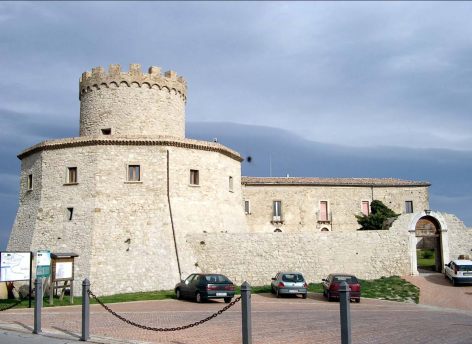
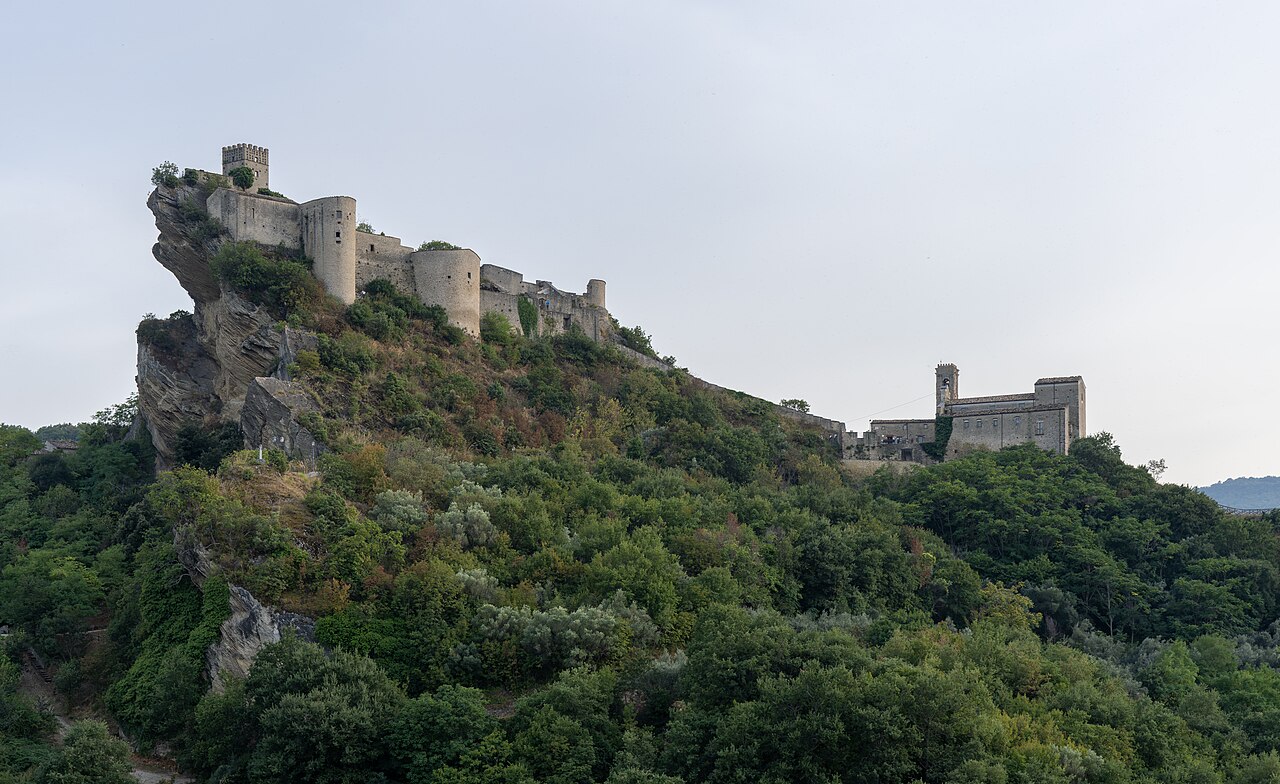
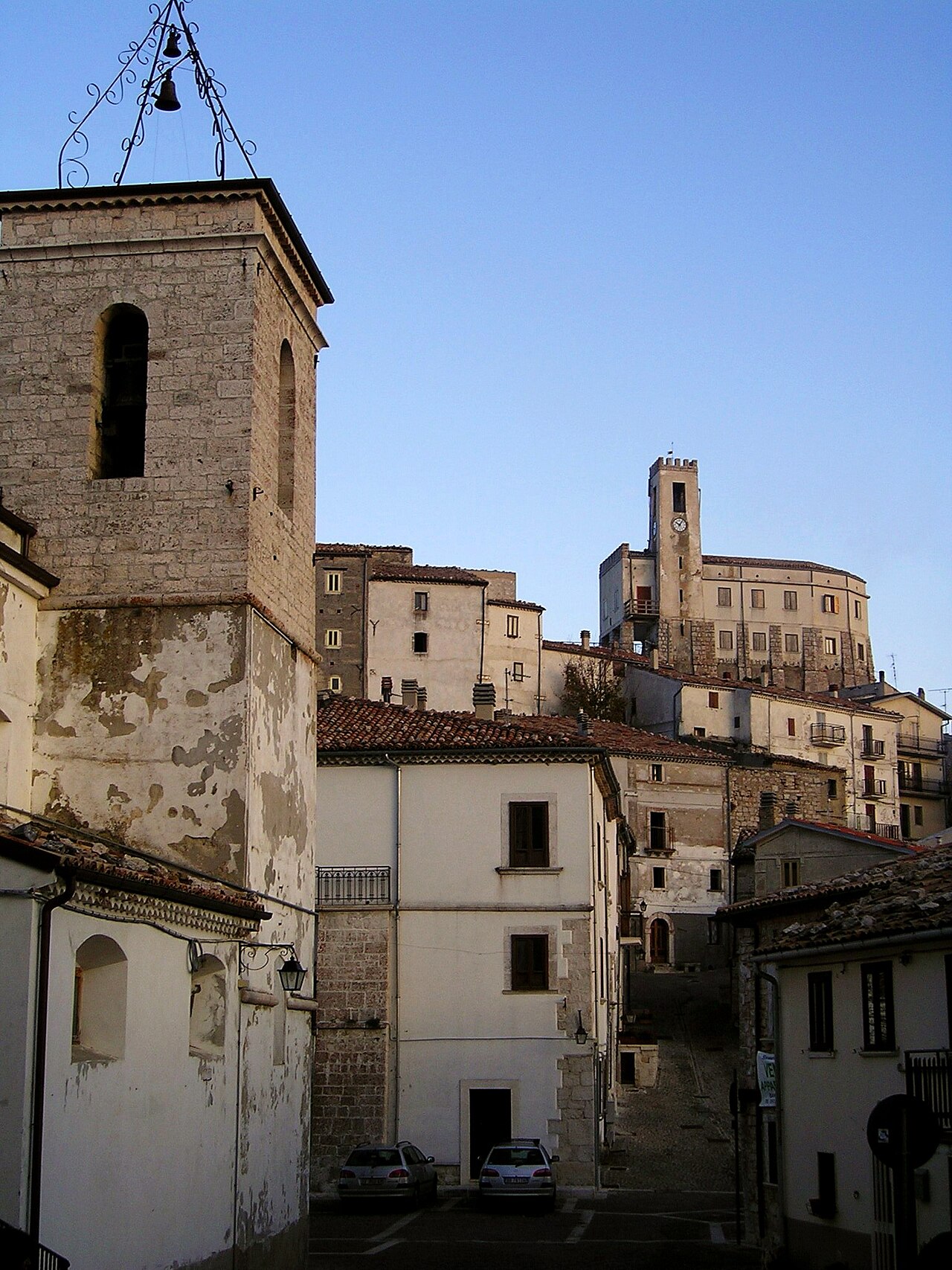
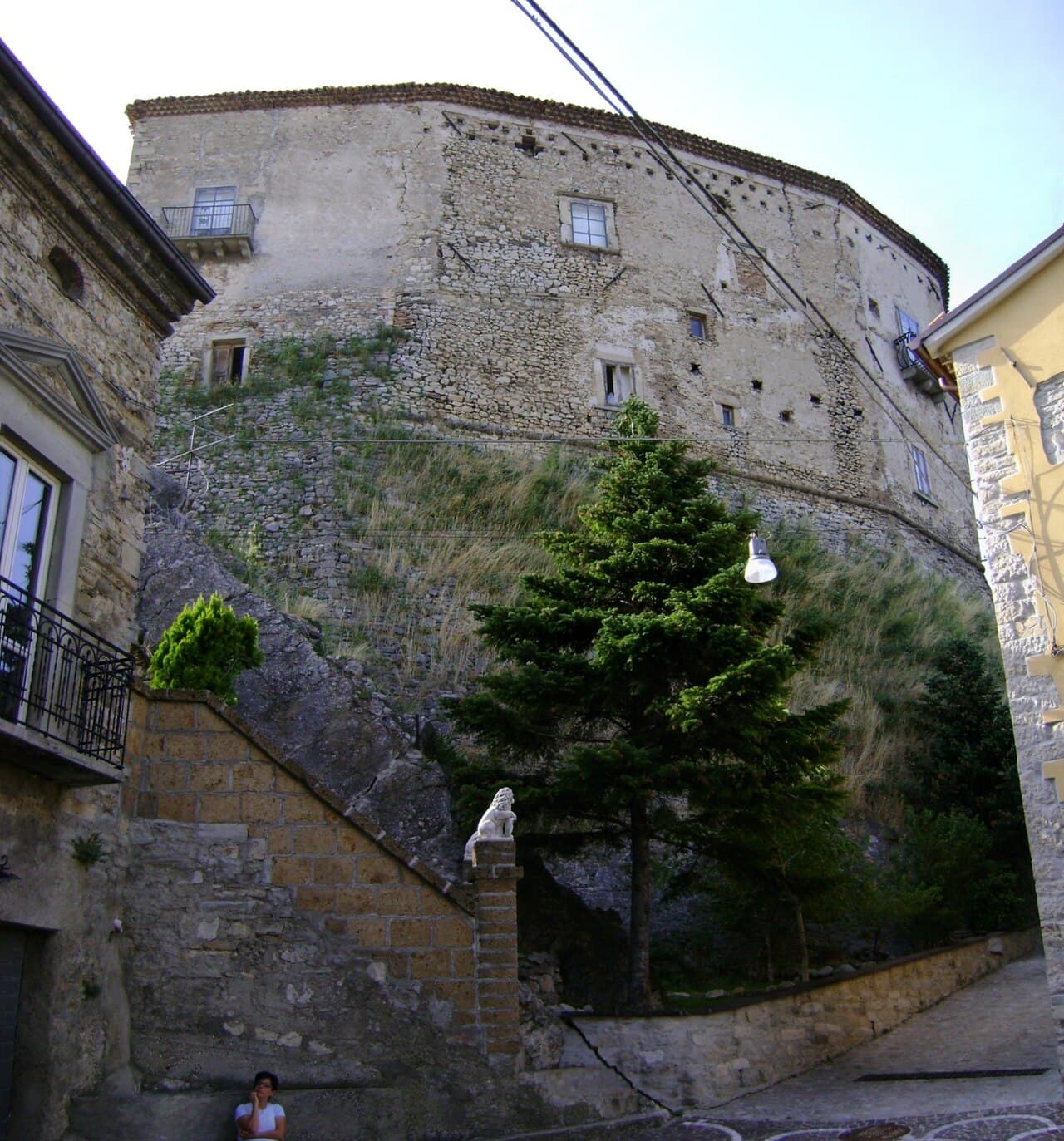
Castello Franceschelli stands prominently on a hill in the town of Montazzoli, located in the Province of Chieti within the Abruzzo region of Italy. This hill castle traces its origins to the 11th century during the High Medieval period, a time when the Norman conquerors established a network of fortifications across southern Italy to secure their new holdings. Its strategic position atop Colle Ripa hill allowed it to command the northern approaches and oversee the surrounding landscape, making it a key military asset in the region.
Norman origins and medieval military function
The castle was initially constructed as a military fortress during the Norman era, reflecting typical defensive architecture of the time. The core of the structure likely began as a square tower on the northern side near the inner courtyard, serving as a lookout and stronghold. This tower formed the heart of the castle's defenses, providing surveillance over the terrain and control of access routes.
Surrounding this central tower was a complex of defensive walls and an external courtyard to the east, which housed essential facilities such as a mill and an oil mill used for processing grain and olives, vital resources for the castle's inhabitants. The courtyard also contained storage spaces for provisions, integral to sustaining the garrison during sieges or prolonged isolation.
Access to the castle was carefully controlled. Two roads led into the external courtyard: an older, now disused path near former factory buildings and warehouses, and a southern carriage road accessed via a drawbridge. This drawbridge spanned a defensive moat or barrier, enhancing the castle's security. Visitors would cross the drawbridge and ascend a cobbled staircase to a panoramic platform, offering commanding views of the surrounding region.
Transition from fortress to noble residence
By the 15th century, the castle's military importance waned, and it was largely abandoned as a fortress. This decline reflected broader changes in military technology and political circumstances that rendered many medieval fortifications obsolete. However, in the 16th and 17th centuries, the castle underwent a significant transformation when it was adapted for residential use.
In 1686, the castle and the surrounding fiefdom of Montazzoli came into the possession of the noble Franceschelli family. This acquisition included thousands of hectares of land and various estates. Under the Franceschelli ownership, the castle was repurposed into a baronial residence, blending elements of noble comfort with its earlier defensive character. The modifications reflected the changing needs of the aristocracy, emphasizing habitation and estate management over military defense.
Further alterations occurred after a devastating earthquake in 1907, which severely damaged the castle's north façade. Reconstruction efforts altered parts of the exterior while preserving key original features such as a buttressed foundation and a section of the corner tower. In the early 20th century, the last Franceschelli descendants converted former service areas—including stables and servant quarters—into habitable apartments, marking the castle's full transition to a domestic residence.
Architectural features and layout
The castle's layout reflects its layered history and adaptation to the hillside terrain of Colle Ripa. The irregular shape of the inner courtyard and surrounding structures demonstrates numerous additions and alterations over centuries, fitting the natural contours of the hill and evolving functional requirements.
Visitors entering through a portal made of sandstone and limestone reach the inner courtyard, which is covered by a barrel vault featuring lunettes—arched openings that allow natural light into the space. This vaulted area conceals the wooden beam mechanism once used to operate the drawbridge, a rare surviving example of medieval engineering.
From the courtyard, one can access rooms that were formerly stables and servant quarters, now converted into living spaces. The courtyard also provides entry to the kitchens, wine cellars, and the old prison cells. Notably, within the detention area is a sandstone block engraved with the Latin phrase “Nolite Nocere”, meaning “Do not do harm,” serving as a moral reminder in a space once used for confinement.
A masonry ramp extends from the courtyard to the nobility’s living quarters, which are divided into several private apartments. Today, only one apartment remains occupied by descendants of the original feudal lords, preserving a direct link to the castle's aristocratic past.
Ownership and current status
The castle remains under private ownership, controlled by the descendants of the Franceschelli family. Access is limited and granted only during specific periods, reflecting the owners' efforts to maintain the property while preserving its historical integrity.
Despite the changes over centuries, Castello Franceschelli retains significant architectural and historical value as a testament to the region's medieval military architecture and its later adaptation as a noble residence. Its combination of defensive features, residential modifications, and post-earthquake restorations illustrate the dynamic history of castles in southern Italy.
Historical context and regional significance
Situated in Abruzzo, a region rich with medieval fortifications, Castello Franceschelli exemplifies the Norman influence on Italian castle construction. The Normans introduced robust military architecture that shaped the defensive landscape of southern Italy. Castello Franceschelli's evolution from a stronghold to a noble residence mirrors broader socio-political shifts from feudal warfare to aristocratic estate management.
The castle's location on Colle Ripa hill provided strategic advantages for surveillance and defense, controlling important routes and local resources. Its associated mills and storage facilities highlight the self-sustaining nature of medieval castles, which functioned as centers of economic as well as military power.
Architectural style and materials
The castle's architecture primarily reflects High Medieval military design principles, characterized by sturdy stone construction and functional defensive elements such as battlements, towers, and drawbridges. The use of local sandstone and limestone not only provided durability but also integrated the castle aesthetically with its natural surroundings.
Later residential adaptations introduced elements of comfort and domesticity, though the overall style remains utilitarian. The post-1907 earthquake reconstruction respected the original materials and structural forms, preserving the castle’s historical character.
Visitor experience and accessibility
Currently, Castello Franceschelli is not widely open to the public due to its private ownership. Visits are typically arranged during limited times, offering a glimpse into a castle that has transitioned from medieval fortress to noble home. The panoramic views from the castle’s elevated position provide visitors with scenic vistas of the Abruzzo countryside.
The castle's complex layout, including its vaulted courtyards, historic prison cells, and noble apartments, offers insight into the daily life and social hierarchy of its past inhabitants. The preserved architectural features and inscriptions like "Nolite Nocere" add depth to the visitor experience, connecting present-day guests with the castle’s layered history.
Frequently asked questions (FAQ)
- How do I get to Castello Franceschelli?
- You can reach Castello Franceschelli by car, as it is located in the picturesque countryside of Italy. The nearest major city is approximately a 30-minute drive away, and there are also public transportation options available, including buses that connect to nearby towns.
- What is the historical significance of Castello Franceschelli?
- Castello Franceschelli dates back to the medieval period and has played a crucial role in the defense of the region. Its well-preserved architecture and historical artifacts provide insight into the life and times of the nobility who resided there.
- When was Castello Franceschelli built?
- Construction of Castello Franceschelli began in the late 12th century and continued into the 13th century. This period marked a significant evolution in military architecture, which is evident in the castle's design and fortifications.
- Can I take photographs inside Castello Franceschelli?
- Yes, visitors are welcome to take photographs inside and outside the castle, but it is advisable to respect any specific restrictions in certain areas. Ensure that you capture the stunning architecture and beautiful views from the castle's vantage points.
- Why is Castello Franceschelli a popular tourist destination?
- Castello Franceschelli is popular due to its rich history, stunning architecture, and breathtaking views of the surrounding landscape. Visitors also enjoy guided tours that delve into the castle's past and its significance in Italian history.
- Is it possible to host events at Castello Franceschelli?
- Yes, Castello Franceschelli offers facilities for hosting events such as weddings and private gatherings. The unique historical setting provides a memorable backdrop for any occasion.
- What are the opening hours for Castello Franceschelli?
- Castello Franceschelli is open to visitors from 10 AM to 5 PM, Tuesday through Sunday. It's closed on Mondays, so plan your visit accordingly to ensure you have ample time to explore.
- What are the ticket prices for visiting Castello Franceschelli?
- Ticket prices for Castello Franceschelli are generally around €10 for adults, with reduced rates available for children and seniors. Special family packages and group rates may also be available, so be sure to check ahead for the best options.
- What is the best time to visit Castello Franceschelli?
- The best time to visit Castello Franceschelli is during the spring and fall when the weather is mild and the landscape is particularly beautiful. These seasons also tend to draw fewer crowds, allowing for a more enjoyable experience.
- Are there any nearby attractions to visit while at Castello Franceschelli?
- Yes, there are several nearby attractions, including charming villages, scenic hiking trails, and other historical sites. Visitors can explore the local culture and enjoy authentic Italian cuisine in the surrounding area.
Photo gallery

Photo by Zitumassin•Public domain
Information
Loading map...
Visitor reviews
No reviews yet. Been here? Write the first review and help other travelers!
Write the first reviewVisited this castle? Share your experience
Your review helps other travelers and adds first-hand knowledge to our encyclopedia.