Castello di Roccascalegna
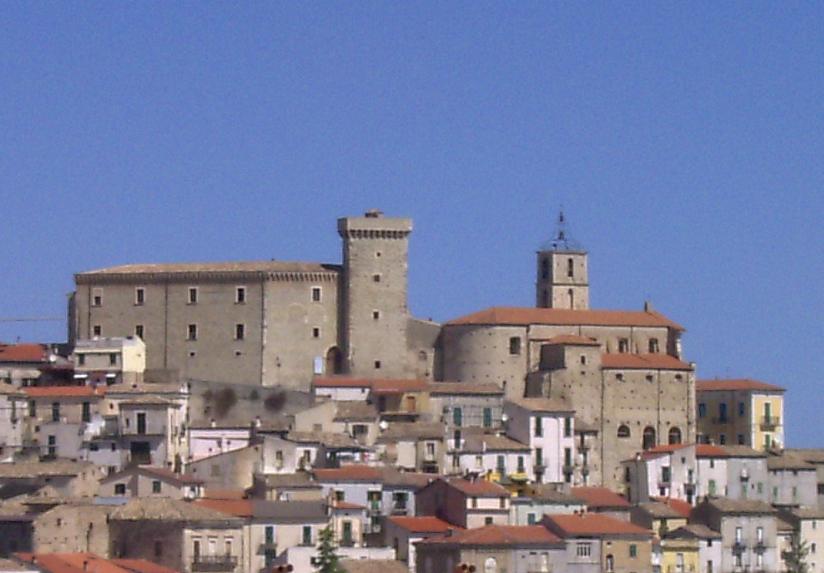
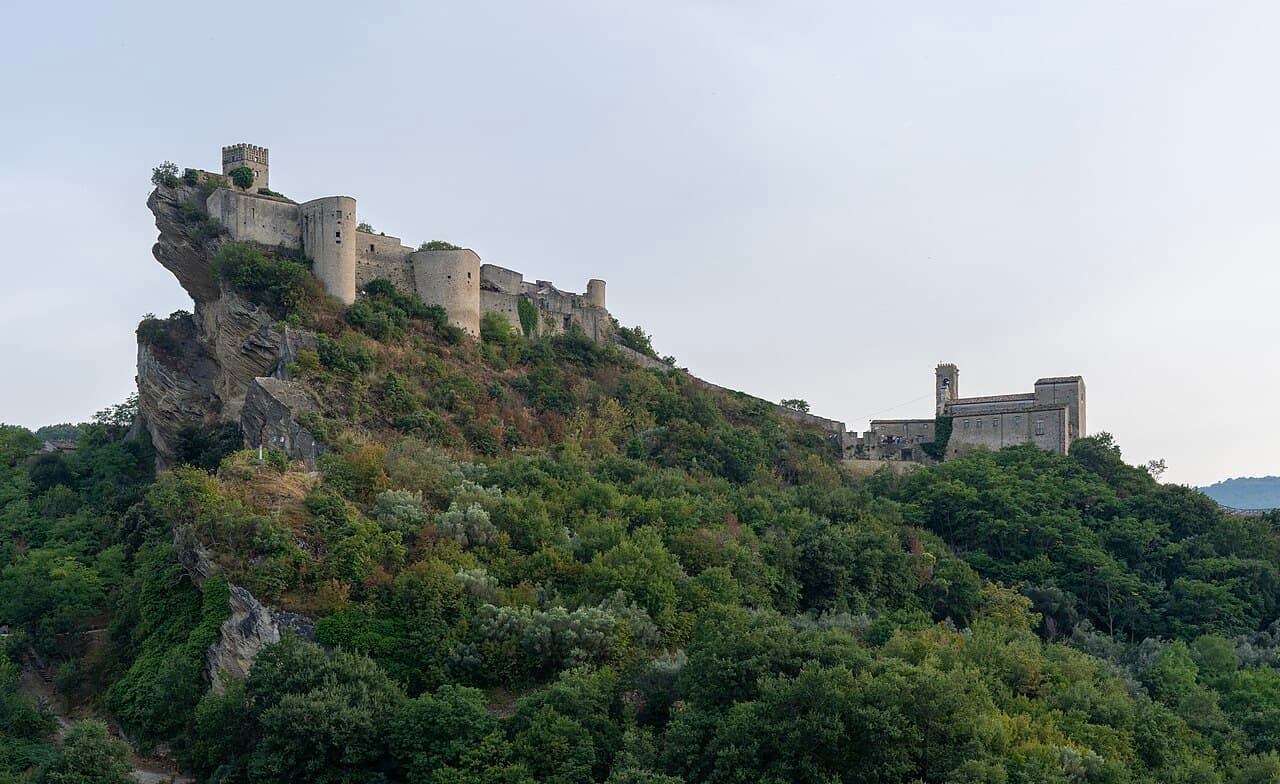
Castello di Roccascalegna stands as a striking example of medieval military architecture perched atop a massive basalt cliff overlooking the small town of Roccascalegna in the Abruzzo region of central Italy. This high medieval fortress, originally built in the 12th century, occupies a commanding position over the Secco Valley, a strategic location that shaped its historical role as a defensive stronghold.
The castle's origins trace back to the Lombard period around the 7th century, when a simple watchtower was first established on this rocky promontory to monitor the surrounding territory. Over the centuries, this initial structure evolved through multiple phases of expansion and fortification, reflecting the changing military technologies and political dynamics of the region.
Throughout its history, Castello di Roccascalegna witnessed the influence of several noble families, including the Annecchino, Carafa, and Corvi lineages, each contributing to its architectural and functional development. The castle's fortifications were notably enhanced in the 16th century to adapt to the advent of firearms, with the raising of walls and addition of new towers, although battlements were removed during this period.
Architectural features and defensive design
Strategic location and structure
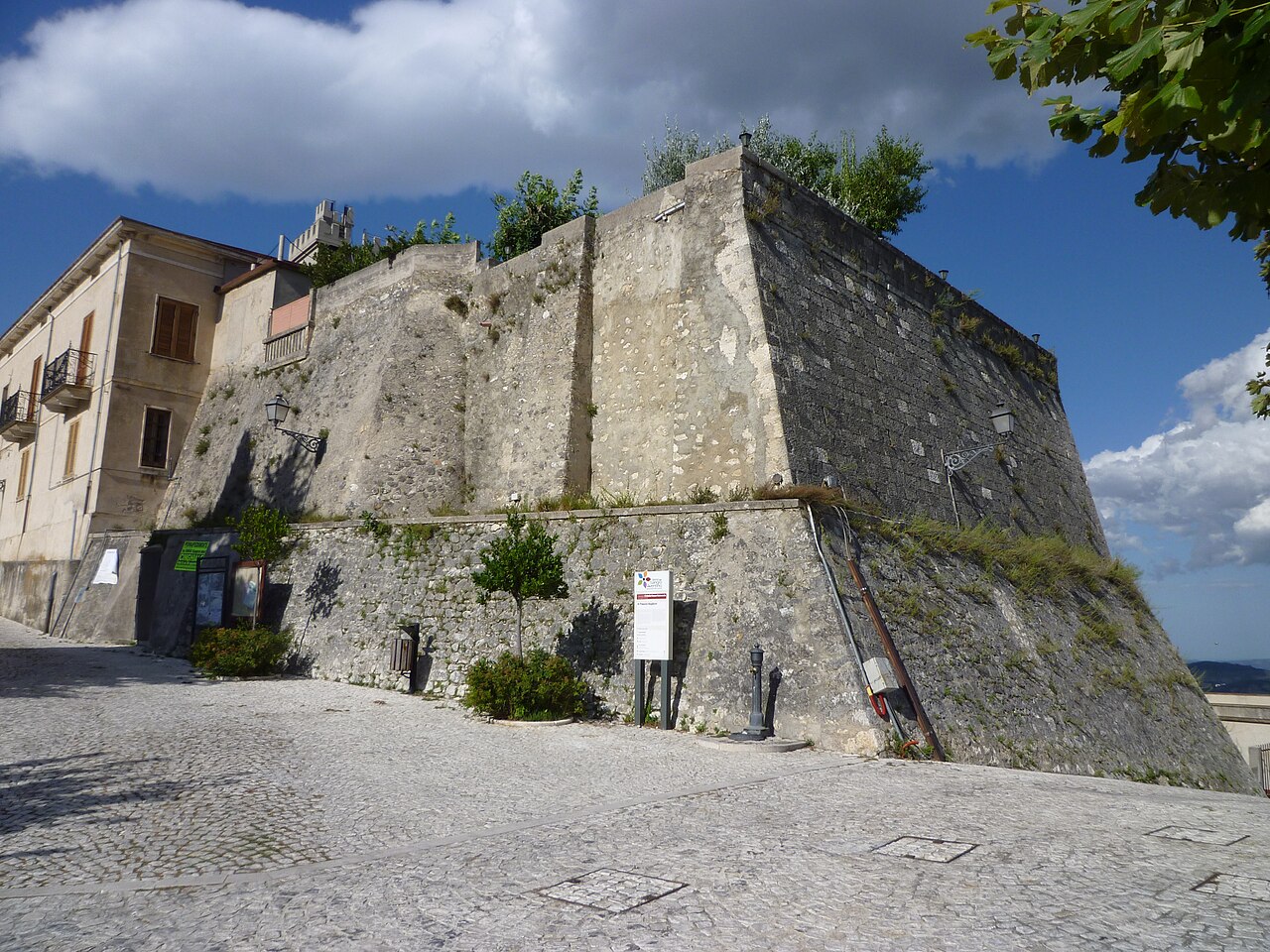
The castle is uniquely integrated with the natural basalt rock outcrop, with its walls and towers rising directly from the steep slopes. This natural foundation provided formidable defense and control over the surrounding landscape. The defensive walls are constructed from roughly cut stone blocks, pebbles, and brick fragments, materials sourced locally and assembled to maximize strength and durability.
Entrance and towers
Access to the castle is gained by ascending a steep staircase carved into the rock, beginning from the San Pietro plain. This stairway leads visitors over terraced platforms to the main gate, where remnants of the original drawbridge can still be seen. Adjacent to the entrance stands the Torre di Sentinella (Sentinel Tower), which functioned as an early warning post to detect approaching enemies.
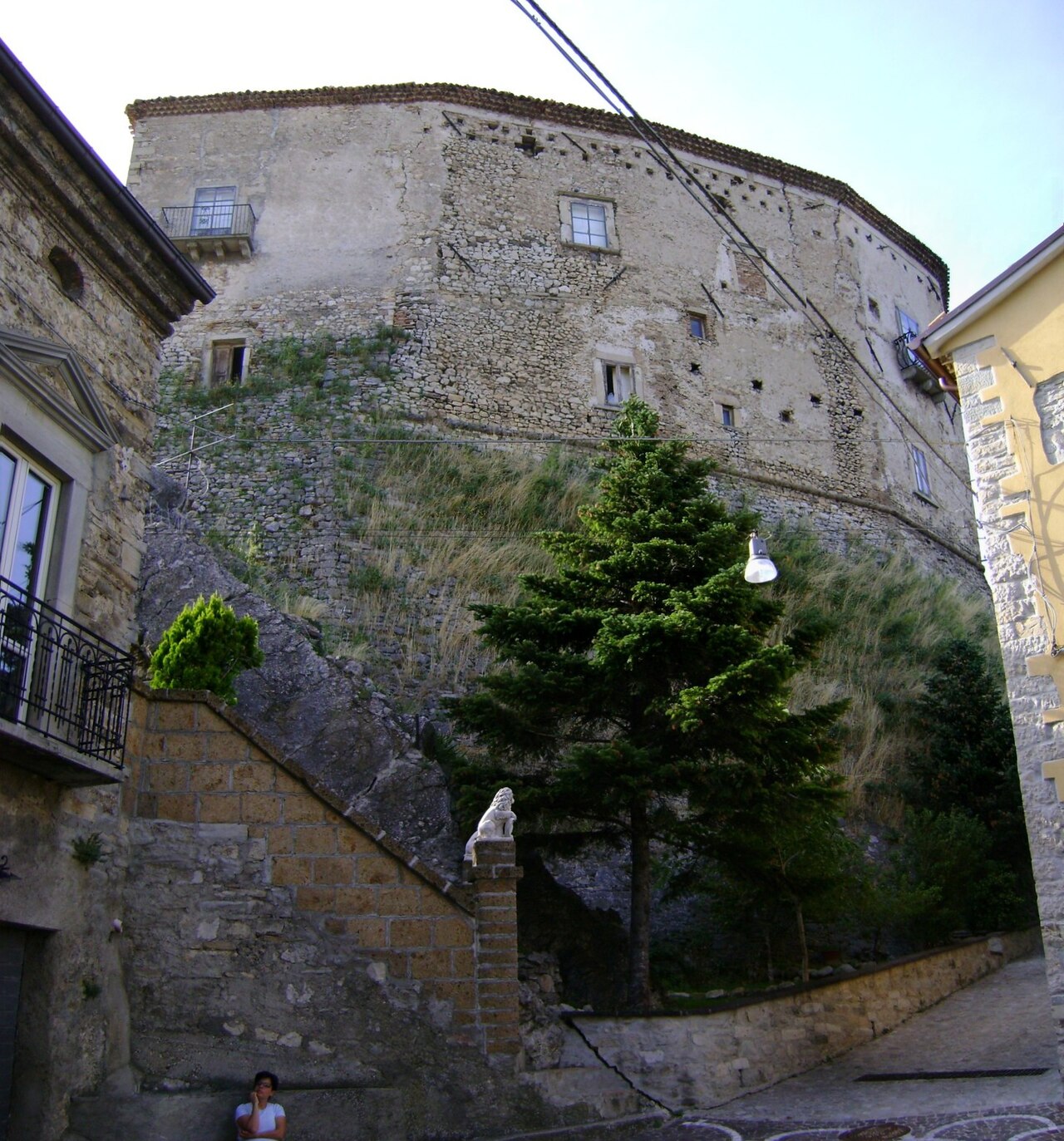
Within the castle courtyard, several towers are connected, including the prison tower and the Angevin tower, named after the Angevin dynasty that once ruled the region. A notable addition during the Annecchino lordship was a new round tower to bolster the castle's defenses.
Water management and chapel
Recognizing the critical importance of water supply during sieges, the castle features an ingenious rainwater collection system that channels water via gutters into a large cistern constructed from rubble materials. This system was improved notably during the Carafa family's tenure in the late 16th century.
The castle also contains a modest single-nave chapel, built in 1577 and dedicated to the Santissimo Rosario. This chapel reflects the dual military and religious functions of the fortress, serving the spiritual needs of its inhabitants while maintaining a simple architectural style devoid of elaborate decoration.
Historical context and ownership
Lombard origins and medieval expansion
Founded likely by the Lombards around the 7th century, the site began as a watchtower to monitor the Adriatic coastal approaches and the surrounding valleys. This early defensive role was critical during the period of frequent conflicts between the Lombards and the Byzantine forces stationed along the coast.
The castle's first documented mention dates to 1525, coinciding with a significant restoration phase that adapted the fortress to the emerging threats posed by firearms. During this time, the walls were heightened and reconfigured, and the castle saw the strengthening of existing towers.
The annecchino, carafa, and corvi families
Under the Annecchino family, the castle's fortifications were enhanced with the addition of a round tower, and the defensive walls were raised, although battlements were removed, possibly reflecting changes in military tactics. The Carafa family, who controlled the castle from 1531 to 1600, contributed the construction of the chapel of Santissimo Rosario and improved the water collection systems, emphasizing both spiritual and practical aspects of castle life.
The Corvi family governed the castle from 1600 until 1717. During their tenure, a 1705 document records the destruction of the original drawbridge and the construction of a guardhouse with a protective wall near the entrance ramp, reflecting adaptations to evolving defensive needs. However, after this period, the castle's military importance declined.
Decline and restoration
Following the 18th century, Castello di Roccascalegna suffered centuries of neglect, exposed to the ravages of weather and looting by locals. The collapse of the Torre del Cuore in 1940 exemplifies the deterioration that afflicted the fortress.
In 1985, the last private owners, the Croce Nannis family, donated the castle to the municipality of Roccascalegna. This act initiated a comprehensive restoration project that lasted over a decade, culminating in 1996 with the castle reopened to the public, preserving its historical and architectural legacy.
Cultural significance and local legend
Beyond its architectural and military importance, Castello di Roccascalegna is steeped in local folklore. A notable legend from 1646 involves Baron Corvo de Corvis, who allegedly exercised the feudal right of ius primae noctis, claiming the first night with brides under his domain. According to the tale, this abuse led to his assassination by a bride or her husband, and his bloodied handprint mysteriously reappeared on a nearby rock despite repeated attempts to wash it away. This haunting story adds a dramatic human dimension to the castle's history and remains a poignant symbol in local culture.
Adjacent religious architecture
Close to the castle lies the medieval Church of San Pietro, an important religious site that complements the fortress. Although completed around 1568, the church may have origins dating back to the 13th century or earlier. It was originally the baron's chapel, reinforcing the connection between secular and spiritual power.
The church features a Romanesque round-arched portal dated 1461 and a simple Baroque façade adorned with a fresco in the lunette above the entrance. Inside, the church is organized into three Baroque-style naves ending in a slightly rotated semicircular apse. Side altars dedicated to Saints Anthony and Louis were added in the mid-18th century.
The church's bell tower, dated 1805, is believed to be a restoration of an older medieval tower and is topped with battlements similar to those found on defensive structures, symbolizing the intertwining of religious and military architectural elements in the region.
Visitor experience and preservation
Today, Castello di Roccascalegna stands as a well-preserved testament to medieval military architecture and regional history. Visitors can explore its steep stairways, fortified towers, and the atmospheric courtyard, gaining insight into the castle’s strategic importance and the lives of its former inhabitants.
The castle’s restoration has preserved many original features while making the site accessible for educational and cultural tourism. The dramatic setting on a basalt cliff offers breathtaking views over the surrounding Abruzzo landscape, enhancing the visitor experience.
Interpretive signage and guided tours provide historical context, detailing the castle’s architectural evolution, its noble owners, and the legends that enrich its story. The nearby Church of San Pietro adds a complementary dimension, illustrating the blend of military and religious life in this historic area.
Overall, Castello di Roccascalegna remains a significant cultural landmark, embodying centuries of history, architecture, and local tradition in the heart of Abruzzo.
Frequently asked questions (FAQ)
- What is the historical significance of Castello di Roccascalegna?
- Castello di Roccascalegna is a medieval castle that dates back to the 10th century, showcasing the architectural styles and defensive strategies of its time. It played a crucial role in the region's history, serving as a stronghold for various noble families. Today, it stands as a testament to the rich cultural heritage of Italy.
- When is the best time to visit Castello di Roccascalegna?
- The best time to visit Castello di Roccascalegna is during the spring and fall months when the weather is mild and ideal for exploring the castle grounds. Additionally, these seasons offer vibrant natural scenery that enhances the beauty of the castle. Summer can be quite warm, while winter may present challenging weather conditions.
- Can I take guided tours of Castello di Roccascalegna?
- Yes, guided tours are available at Castello di Roccascalegna, providing visitors with in-depth insights into the castle's history and architecture. These tours are typically conducted by knowledgeable guides who can share fascinating stories and facts about the site. It is advisable to check the official website for tour schedules and availability.
- What are the opening hours for Castello di Roccascalegna?
- Castello di Roccascalegna is generally open to the public from 9 AM to 7 PM during the peak season. Opening hours may vary during the off-peak season, so it is recommended to verify the current hours before your visit. Special events may also affect opening times.
- Is it possible to access Castello di Roccascalegna with a wheelchair?
- While Castello di Roccascalegna is a historical site with some challenging terrain, efforts have been made to improve accessibility for visitors with mobility impairments. However, due to the castle's medieval architecture, certain areas may still be difficult to navigate. It is best to contact the castle administration for specific accessibility information before your visit.
- What are the ticket prices for visiting Castello di Roccascalegna?
- Ticket prices for Castello di Roccascalegna are generally affordable, with discounts available for students and seniors. Children under a certain age may enter for free. Prices can vary based on guided tour options or special events, so checking the official website for the latest information is recommended.
- Are there any nearby attractions to visit after Castello di Roccascalegna?
- Yes, there are several nearby attractions worth exploring after visiting Castello di Roccascalegna, including the picturesque village of Roccascalegna itself and the beautiful landscapes of the Abruzzo region. Nature enthusiasts can enjoy hiking trails and scenic views in the surrounding areas. Additionally, local eateries offer a taste of authentic Italian cuisine.
Photo gallery

Information
Website
Visit websiteSources & official resources
Verify the information above using these authoritative references.
Loading map...
Visitor reviews
No reviews yet. Been here? Write the first review and help other travelers!
Write the first reviewVisited this castle? Share your experience
Your review helps other travelers and adds first-hand knowledge to our encyclopedia.