Castello ducale di Palena
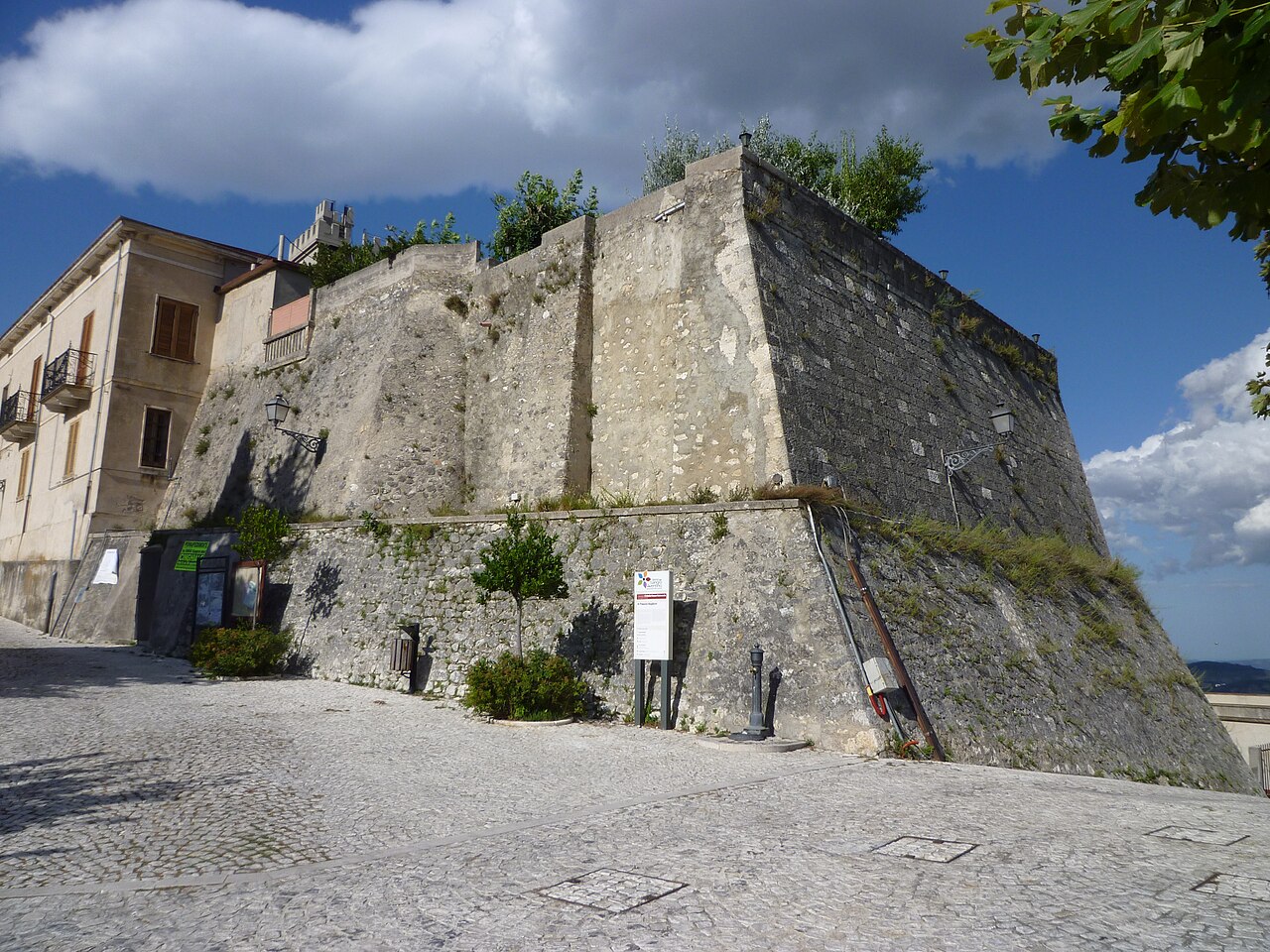
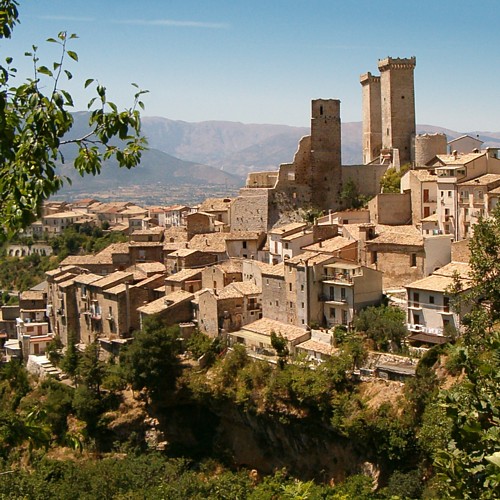
The Castello ducale di Palena stands as a compelling example of medieval military architecture in the town of Palena, Italy. Originally constructed in the 11th century by the Normans, this hill castle began as a strategic control tower before evolving into a formidable fortress by the 12th century. Its elevated position provided commanding views over the surrounding territory, allowing it to serve as a crucial military outpost designed to monitor and secure the region.
Early origins and feudal transitions
The castle's foundation is closely tied to the Norman expansion into southern Italy, a period marked by the establishment of numerous fortifications to consolidate control. By the 12th century, the initial tower had been expanded into a full defensive complex, reflecting the growing importance of the site in regional power dynamics.
In 1269, the castle entered a significant phase of feudal ownership when Charles I of Anjou granted it to Sordello da Goito, a notable feudal lord and poet immortalized in Dante Alighieri’s Purgatorio. This transfer marked the beginning of a century-long period during which the castle passed through several noble families, including the dukes of Manoppello, the Caldora, and the Di Sangro families. These transitions reflect the castle’s role not only as a military stronghold but also as a symbol of feudal authority.
Architectural features and layout
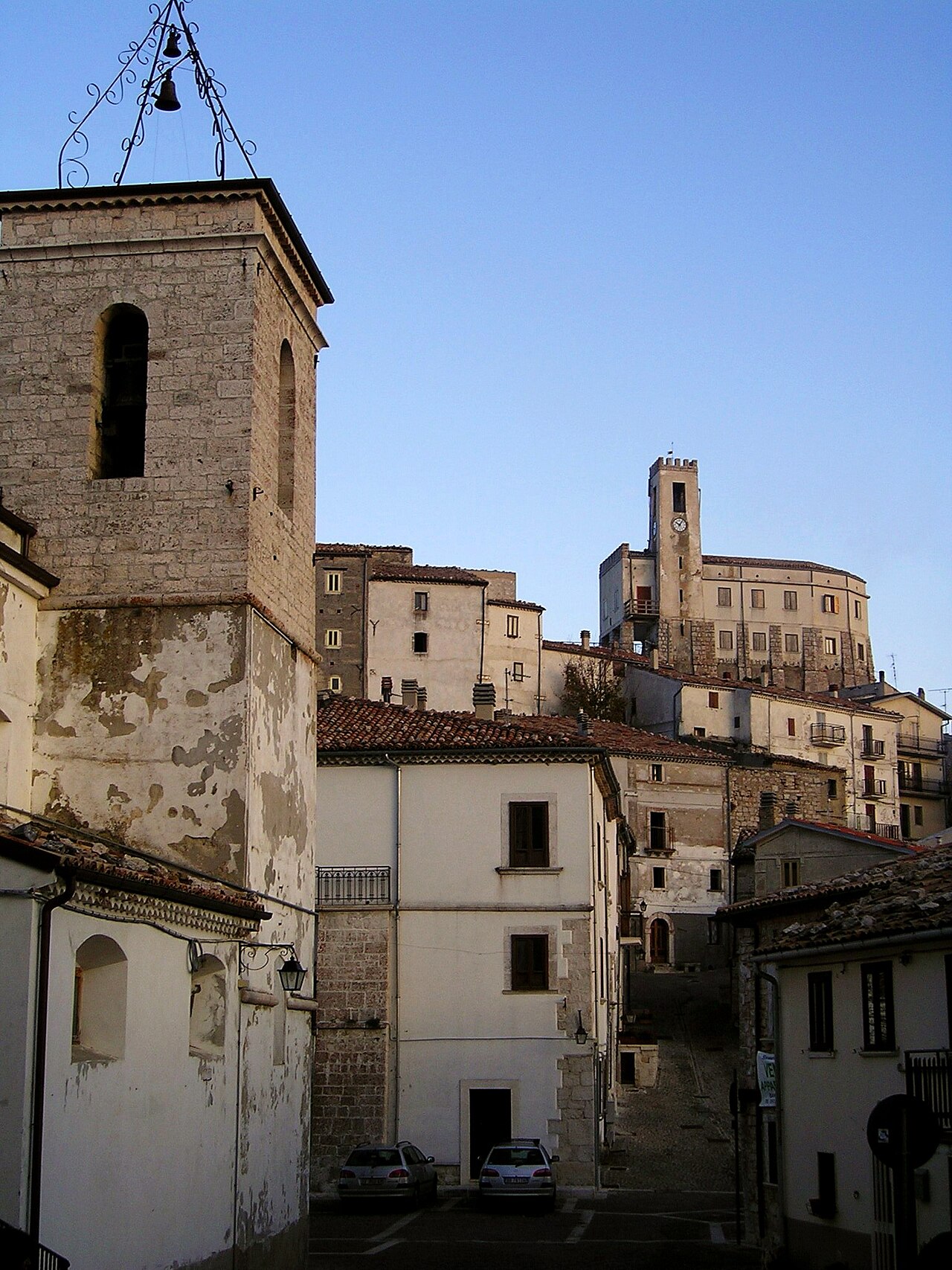
The castle today is characterized by a rectangular layout formed by the joining of multiple buildings, each capped with traditional double-pitched roofs covered in terracotta tiles known locally as coppi. The roofline is adorned with distinctive cornices featuring three rows of overlapping Roman tiles, or romanelle, which add to the fortress’s medieval aesthetic.
The exterior walls feature two levels of rectangular windows that balance natural light with defensive considerations. One of the longer facades includes a loggia—an open gallery with four arches—providing a sheltered walkway. Opposite this, a series of four smaller arches punctuates the wall, contributing to the architectural rhythm of the structure.
The main entrance is accessed through a city gate with a single rounded arch, known as a fornice ad arco a tutto sesto, a typical medieval Italian fortification feature. Opposite this entrance is an architraved portal embellished with molded cornices and geometric motifs, highlighting the attention to ornamental detail within the castle’s design.
Interior and courtyard features
Inside, the castle’s courtyard hosts a control tower reconstructed in 1956 to replace an earlier guard tower damaged during World War II. This tower is designed in a medieval style, featuring battlements along its roofline, four clocks—one on each side—and a bell chamber at the top historically used to announce the hours. This addition reflects efforts to maintain the castle’s historical character while adapting it for modern use.
The castle’s subterranean spaces, historically rumored to include torture chambers, contribute to its mystique, although archaeological findings about these areas remain limited. These underground sections underscore the fortress’s darker history, particularly during periods of conflict and repression.
Historical roles and later uses
Throughout the 18th and 19th centuries, the castle was repurposed primarily as a prison for political rebels, earning the nickname Castel Forte in recognition of its strength and role in suppressing dissent. This period marked a shift from purely military functions to administrative and penal uses, reflecting broader changes in governance and social control.
Ownership eventually passed to the barons of Colledimacine, who maintained the castle until its abandonment in the 20th century. The fortress suffered significant damage from an earthquake in 1933 and further destruction during Nazi military actions in 1944. These events resulted in the loss of key structural elements, including the turrets, the main keep, and the belvedere.
Restoration and cultural significance
Mid-20th-century restoration efforts focused on reconstructing the castle’s original form, although some features, notably the turrets, were not replaced. The renovated structure was adapted for cultural purposes and now houses a museum dedicated to the Alto Aventino geopaleontological collection. This museum preserves both the castle’s historical legacy and the region’s rich natural history, making the site a valuable cultural and educational resource.
The castle today stands as a testament to the layered history of medieval and early modern fortifications in Italy. Its combination of architectural features, historical roles, and ongoing preservation efforts make it a significant landmark within the Abruzzo region and a point of interest for visitors interested in military history, architecture, and regional heritage.
Frequently asked questions (FAQ)
- When was Castello ducale di Palena originally built?
- The castle was originally established by the Normans in the 11th century, initially as a control tower before evolving into a full fortress by the 12th century.
- What architectural features characterize Castello ducale di Palena?
- The castle features a rectangular layout with double-pitched terracotta tile roofs, a loggia with arches, a city gate with a rounded arch, and a reconstructed control tower with battlements and clocks.
- What historical roles did the castle serve?
- Initially a military outpost, it later became a feudal residence, a prison for political rebels in the 18th and 19th centuries, and now serves as a museum housing a geopaleontological collection.
- Is the castle accessible to visitors?
- The castle has been restored and adapted for cultural use, including a museum, making it accessible to visitors interested in history and regional heritage.
- What damage did the castle sustain in the 20th century?
- The castle suffered significant damage from a 1933 earthquake and further destruction during Nazi military actions in 1944, leading to the loss of turrets, the main keep, and the belvedere.
Information
Website
Visit websiteSources & official resources
Verify the information above using these authoritative references.
Loading map...
Visitor reviews
No reviews yet. Been here? Write the first review and help other travelers!
Write the first reviewVisited this castle? Share your experience
Your review helps other travelers and adds first-hand knowledge to our encyclopedia.