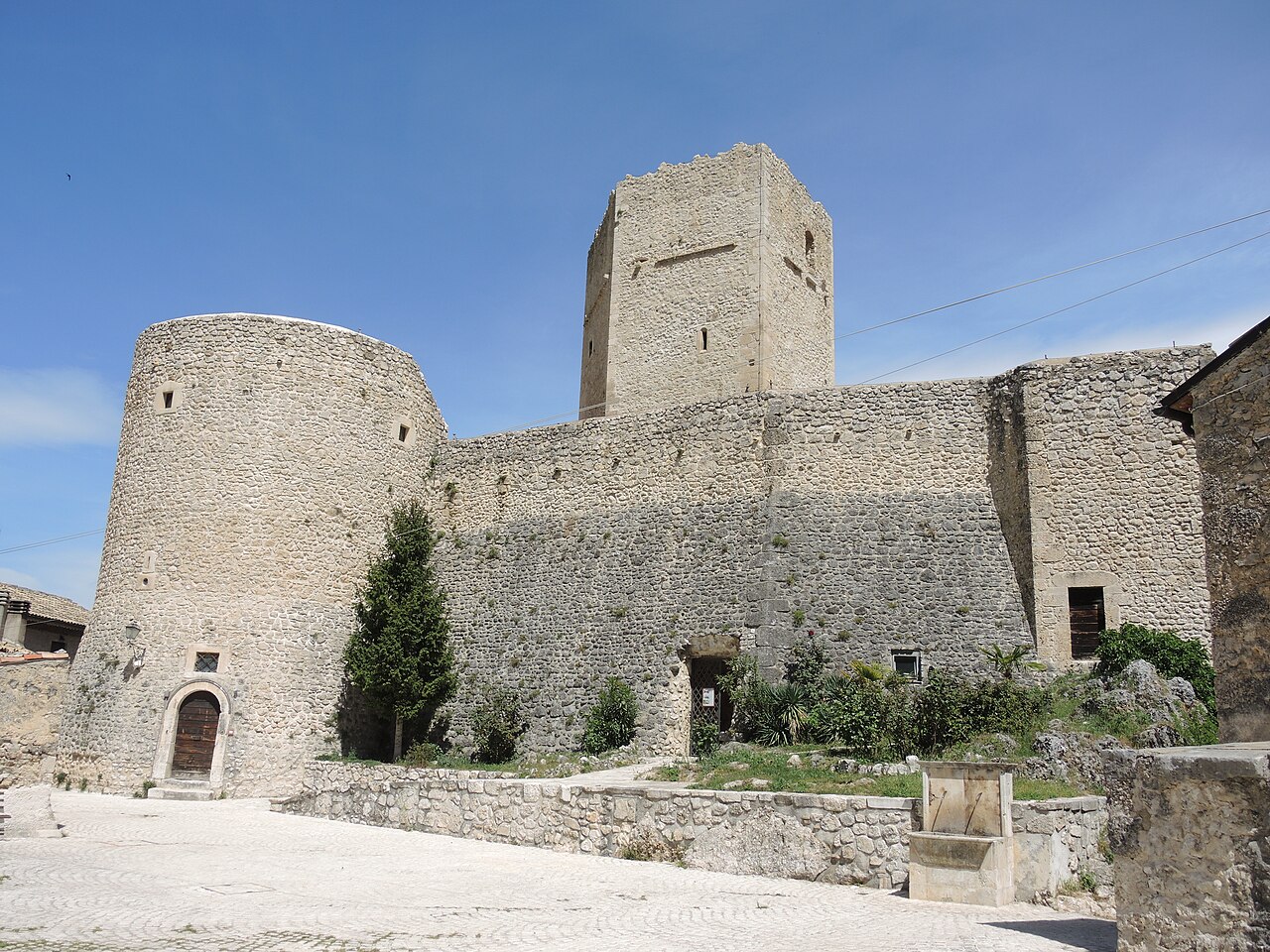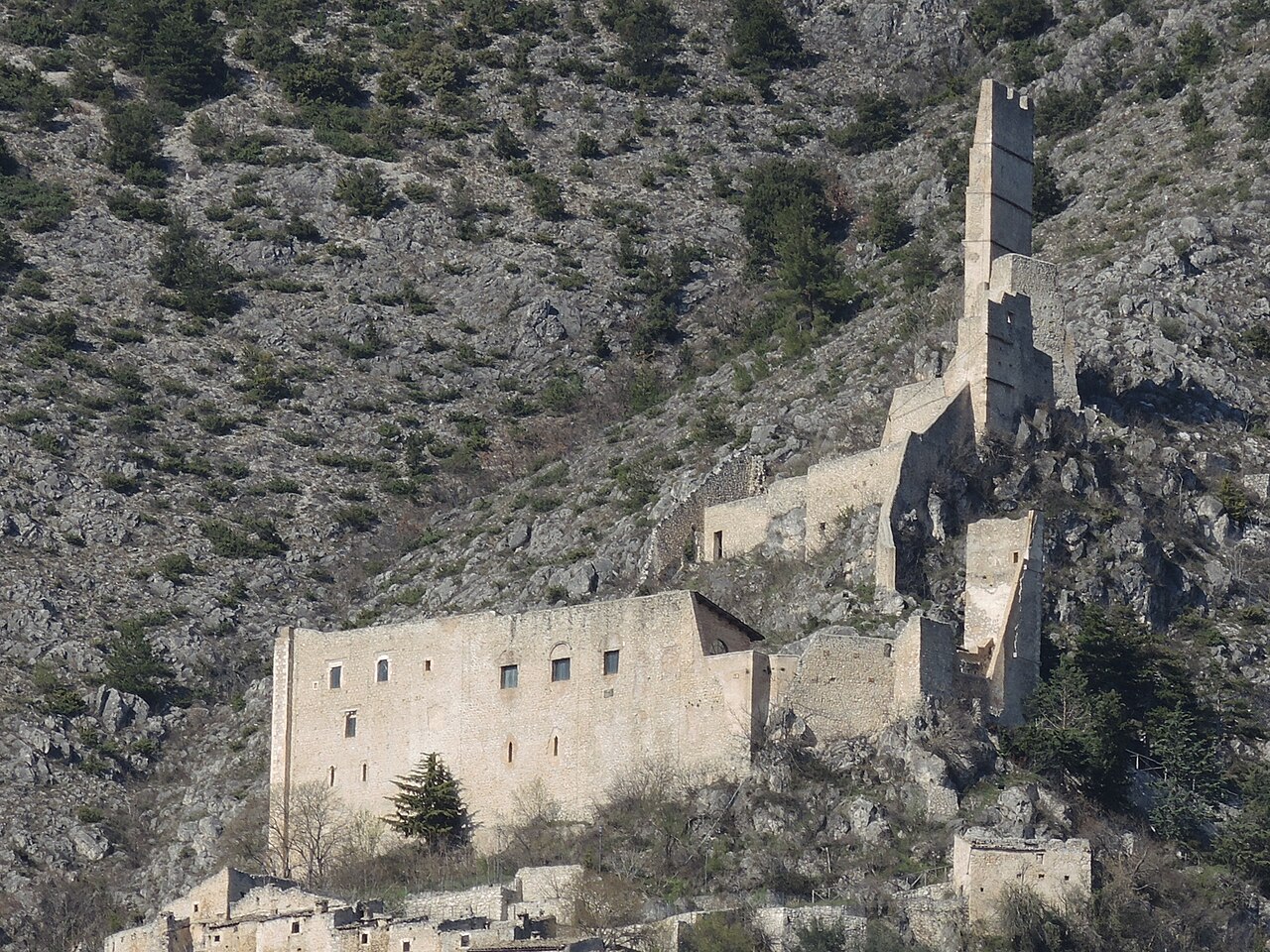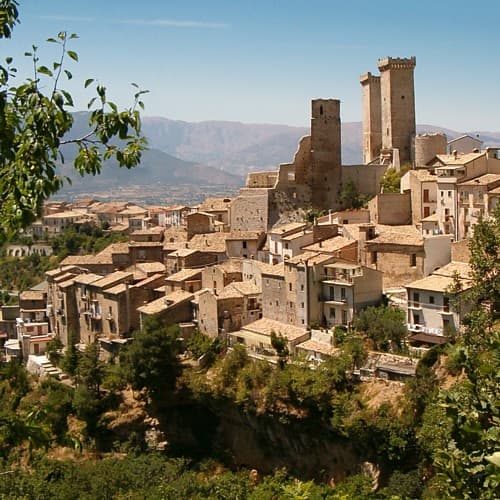
Caldora-Cantelmo Castle stands prominently in the historic center of Pacentro, Italy, commanding a strategic hilltop position that has witnessed centuries of military, political, and architectural evolution. This hill castle was constructed during the Middle Ages, with its origins likely tracing back to between the 10th and 13th centuries. The fortress exemplifies the defensive ingenuity and noble ambitions of medieval European civilizations in the Abruzzo region.
Historical development and noble ownership
The castle's initial construction phase established it as a vital stronghold within the region, designed to oversee and control the surrounding Valle Peligna. Throughout the High and Late Medieval periods, Caldora-Cantelmo Castle underwent significant transformations reflecting the shifting dynamics of warfare and governance.
In the transition from the 14th to the 15th century, the castle was extensively renovated, including the addition of a distinctive truncated tower on its northeast corner. This modification corresponded to evolving military technologies and the need to reinforce the fortress against new threats.
Ownership of the castle passed through influential noble families, notably the Caldora family in the 15th century, followed by the powerful Orsini family in 1483. The Orsini's tenure marked a period of substantial fortification enhancements, including the construction of large, rounded bastions and a trapezoidal outer wall, specifically designed to withstand the emerging threat of firearms and cannon warfare.
The castle's military significance is underscored by its involvement in regional conflicts, such as the 1230 assault by forces loyal to Emperor Frederick II, which damaged one of its key towers. Over time, the fortress evolved beyond a military bastion to become a symbol of noble lineage and local authority, with certain towers serving ceremonial functions for feudal lords.
Architectural features and defensive structures
Layout and walls
The trapezoidal layout of Caldora-Cantelmo Castle is defined by two concentric sets of defensive walls. The innermost enclosure represents the original medieval fortification line, while the outer wall, constructed during the Cantelmo period, forms a second protective ring enhancing the castle's resilience.
This dual-wall system illustrates the castle's adaptation to increasing military pressures and the need for layered defense mechanisms.
Towers and bastions
The fortress originally featured four square towers at its corners, typical of the medieval architectural style prevalent in the Valle Peligna region. Today, three of these towers remain visible, preserving their historical presence and architectural character.
Complementing these are three large rounded bastions built in the 15th century by the Orsini family. Their rounded design was a strategic innovation aimed at better deflecting cannonballs and adapting to the era's evolving artillery technology.
Among the towers, the Torre del Re (King's Tower) on the northwest side is particularly notable. Rising approximately 25 meters, this five-sided tower was the ceremonial site where feudal lords formally assumed possession of the castle, highlighting its importance beyond mere defense.
The Torre Fantasma (Ghost Tower), standing 27 meters tall on the northeast side, retains much of its medieval character from the 14th century. It is steeped in local legend, associated with Baron Roberto de Luczinardo and his wife Margherita, whose sculpted portrait is believed to adorn the tower, intertwining personal history with the castle's fabric.
The oldest tower, known as the Torre d’Assedio (Siege Tower), occupies the southeast corner. This approximately 12-meter-high tower features a truncated upper section, a direct consequence of damage sustained during the 1230 attack by Frederick II’s troops. It stands as tangible evidence of the castle's active role in medieval military conflicts.
Decorative elements and heraldry
The castle's façade, facing the main square opposite the church of Santa Maria Maggiore, dates from the 17th century and exhibits Renaissance influences. Decorative elements on the façade echo the stylistic features of the adjacent church bell tower, blending military architecture with artistic refinement.
Despite Renaissance additions, many doorways retain their original pointed Gothic arches, preserving the castle's medieval architectural heritage.
Throughout the fortress, numerous coats of arms remain visible on towers and near entrances. These heraldic symbols identify the noble families associated with the castle, with the Orsini family's emblems being the most prominent and well-preserved.
Modern history and restoration efforts
In the 20th century, the castle transitioned from private noble ownership to public stewardship when the Gravina-Avolio family donated it to the town of Pacentro. The family faced financial challenges in maintaining the extensive fortress, prompting this transfer.
Restoration efforts initially incorporated reinforced concrete techniques, reflecting mid-century conservation practices. However, these methods were later reconsidered in favor of approaches that better respected the castle’s original materials and architectural integrity.
Today, Caldora-Cantelmo Castle is well preserved and accessible to the public, serving as a cultural landmark and a testament to the region's rich medieval heritage.
Legends and cultural significance
The castle is entwined with local folklore, most notably the legend of the Torre Fantasma or Ghost Tower. This tale involves Baron Roberto de Luczinardo and his wife Margherita, whose story is immortalized in the sculpted portrait on the tower. These narratives enrich the castle’s historical aura and attract visitors interested in both history and legend.
Visiting caldora-cantelmo castle
Visitors to Caldora-Cantelmo Castle can explore its extensive fortifications, towers, and courtyards, gaining insight into medieval military architecture and noble life in Abruzzo. The castle's hilltop location offers panoramic views of Pacentro and the surrounding landscape, enhancing the visitor experience.
The castle’s combination of medieval defensive structures and Renaissance decorative elements provides a unique architectural narrative spanning several centuries. Its preservation allows for educational tours and cultural events that celebrate the region’s history.
Frequently asked questions (FAQ)
- What is the historical significance of Caldora-Cantelmo Castle?
- Caldora-Cantelmo Castle is a remarkable example of medieval architecture in Italy, showcasing the strategic military designs of the time. Built in the 15th century, it played a crucial role in the defense of the region and offers insights into the feudal system and noble life during that era.
- When was Caldora-Cantelmo Castle built?
- Caldora-Cantelmo Castle was constructed in the 15th century, specifically around the year 1423. Its design reflects the architectural style of the period, emphasizing both functionality and aesthetics, which has captivated visitors for centuries.
- Can I visit Caldora-Cantelmo Castle?
- Yes, visitors are welcome to explore Caldora-Cantelmo Castle. It offers guided tours that provide detailed information about its history, architecture, and the surrounding area, making it a great destination for history enthusiasts.
- What are the opening hours for Caldora-Cantelmo Castle?
- Caldora-Cantelmo Castle is typically open to visitors from 9 AM to 5 PM, but hours may vary seasonally. It is advisable to check the official website or contact local tourism information for the most accurate and up-to-date opening times.
- Is it possible to access Caldora-Cantelmo Castle with limited mobility?
- Caldora-Cantelmo Castle has made efforts to improve accessibility for visitors with limited mobility, but some areas may still pose challenges due to the castle's historical architecture. It is recommended to contact the castle staff in advance to inquire about specific accessibility options available during your visit.
- When is the best time to visit Caldora-Cantelmo Castle?
- The best time to visit Caldora-Cantelmo Castle is during the spring and early autumn months when the weather is mild and pleasant. This allows for a comfortable exploration of the castle grounds and the surrounding landscape, enhancing your overall experience.
- What are the ticket prices for Caldora-Cantelmo Castle?
- Ticket prices for Caldora-Cantelmo Castle vary based on age and group size, with discounts often available for children, students, and seniors. It's best to check the official website for the most current pricing and any special offers that may be available during your visit.
- Are there any nearby attractions to visit while at Caldora-Cantelmo Castle?
- Yes, there are several nearby attractions worth exploring, including the picturesque village of Barrea and the stunning natural landscapes of the Abruzzo National Park. These sites offer a perfect complement to your visit to the castle, allowing for a full day of historical and natural exploration.
Photo gallery

Information
Loading map...
Visitor reviews
No reviews yet. Been here? Write the first review and help other travelers!
Write the first reviewVisited this castle? Share your experience
Your review helps other travelers and adds first-hand knowledge to our encyclopedia.