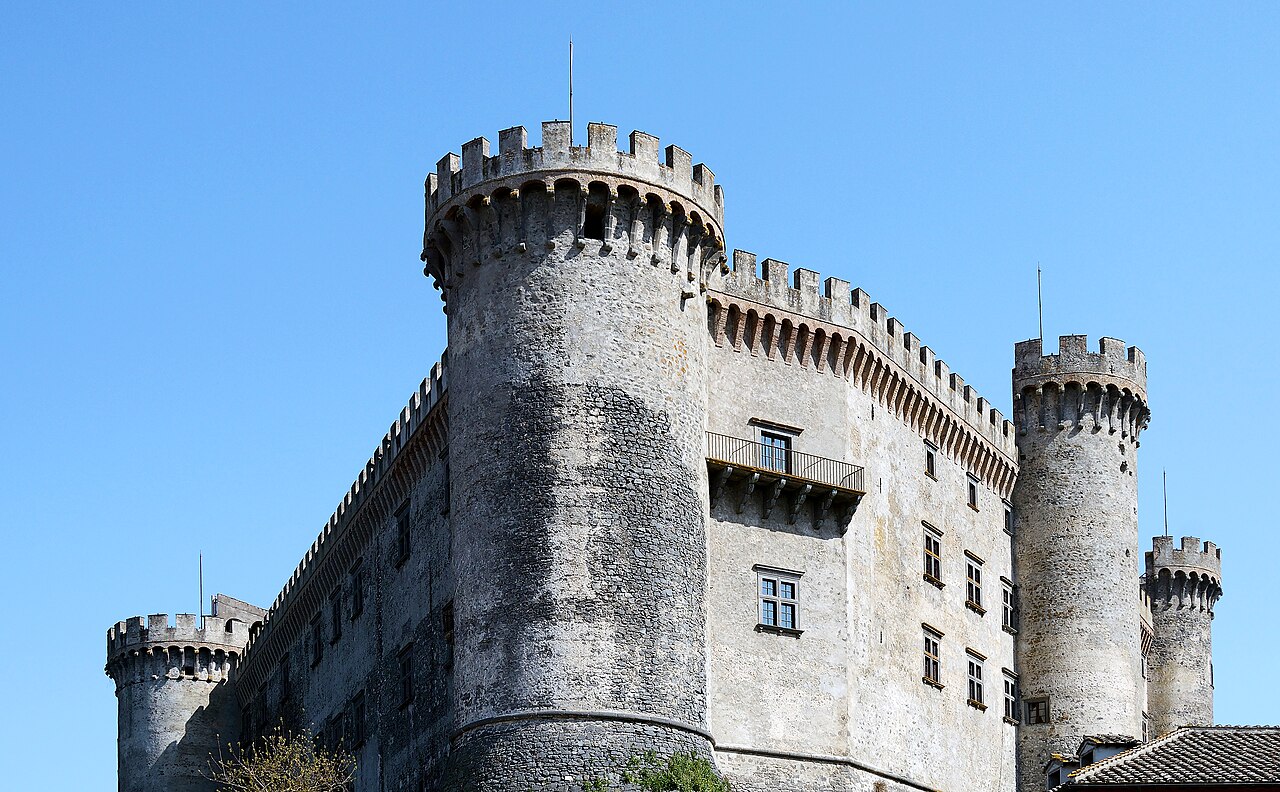
Castello di Torre in Pietra
The Castello di Torre in Pietra is a remarkable example of a hill castle located in the municipality of Torrimpietra, Italy. This fortified complex has a rich history dating back to the medieval period, originally constructed as a castrum—a defensive settlement designed to protect its inhabitants with robust towers and strong walls. The castle’s strategic location and architectural evolution reflect its importance as a noble residence and defensive stronghold over several centuries.
Medieval origins and noble ownership
The castle first appears in historical records in the mid-13th century, notably owned by the Normanni family in 1254. This family expanded their influence over neighboring lands including Pruniano (historically known as Leprignana) and Castel Lombardo, consolidating regional power. The ownership later passed to the Anguillara family, a significant noble lineage in the area, likely through inheritance. A key transaction occurred in 1457 when Lorenzo and Felice Anguillara sold the estate for 3000 gold ducats to Massimo di Lello di Cecco dei Massimo, marking a shift in stewardship. Subsequent transfer to the Peretti family introduced new phases of aristocratic management and estate development.
Baroque transformation under the Falconieri family
In 1639, the castle was acquired by the Falconieri princes, who initiated significant architectural enhancements. They commissioned the renowned architect Ferdinando Fuga to redesign important elements, including the church and the grand staircase leading to the noble floor. This period saw the castle’s interiors enriched by the frescoes of Pier Leone Ghezzi, painted in 1725 to celebrate the Jubilee year, a major religious event in the Catholic calendar. The Falconieri era marked the castle’s transformation into a refined noble residence with elegant Baroque features.
Architectural features and interior spaces
The castle is set within gardens featuring large pine trees, blending natural and built environments. The central courtyard is notable for its portico supported by columns with lowered arches, providing sheltered walkways and connecting various parts of the complex. The ground floor houses the Sala Peretti, a spacious 220-square-meter room distinguished by a large fireplace and a barrel-vaulted ceiling with window spandrels, which enhance both the structural rhythm and natural lighting.
Access to the noble floor is via the historic staircase designed by Ferdinando Fuga. This upper level contains several frescoed rooms originally decorated by Pier Leone Ghezzi, including the main hall with its lowered vault ceiling and window spandrels. Other notable rooms are the Falconieri rooms, the stanza del bosco (forest room), the green room, and a gallery corridor with a vaulted full-arch ceiling. These spaces feature painted wooded landscapes, creating immersive naturalistic environments within the castle.
The baroque chapel of sant’antonio abate
A prominent architectural feature on the grounds is the octagonal Baroque chapel dedicated to Sant’Antonio Abate. The chapel has a single nave with a round-arched main entrance topped by a triangular pediment. Its facade is framed by four pilaster lesenes, two on each side, which are flat rectangular columns integrated into the wall surface. Inside, the altar houses a painting of the Madonna and Child. The chapel remains in use for wedding ceremonies, maintaining its religious and cultural significance.
Historic wine cellars and archaeological significance
Beneath the castle lies an extensive wine cellar carved into a hill of tuff, a volcanic rock from the nearby Bracciano area. This cellar has been used for wine production since the 1600s and was notably expanded in 1938. During these expansions, remains of the prehistoric elephant species Elephas Europeus were discovered, highlighting the site’s unique geological and paleontological importance alongside its historical functions.
Modern stewardship and cultural legacy
After the extinction of the Falconieri family in the late 19th century, the castle experienced decline until its purchase in 1926 by Senator Luigi Albertini. Albertini modernized the estate with a focus on agriculture and livestock farming, establishing its reputation as a prominent agricultural property. In 1941, ownership passed to his daughter Elena Albertini and her husband, Count Nicolò Carandini, whose descendants continue to own and inhabit the castle.
Today, the Albertini-Carandini family maintains the castle as a living historical residence, offering exclusive hospitality services such as private events and wine tastings. This blend of heritage preservation and contemporary cultural engagement ensures the castle remains a vibrant part of Italy’s noble architectural legacy.
Frequently asked questions (FAQ)
- What is the historical significance of Castello di Torre in Pietra?
- Castello di Torre in Pietra is a medieval hill castle with a rich history of noble ownership, Baroque architectural transformations, and cultural heritage spanning centuries.
- Can visitors see the frescoes inside the castle?
- Yes, the castle features several frescoed rooms on the noble floor, including works by Pier Leone Ghezzi from 1725, which commemorate the Jubilee year.
- Is the castle open to the public for tours?
- The castle is privately owned and primarily used for exclusive events and wine tastings, so public tours are limited and typically by appointment only.
- What architectural styles are represented in the castle?
- The castle combines medieval defensive architecture with Baroque interior renovations, especially notable in the chapel and frescoed noble rooms.
- Are there any unique features or archaeological finds at the castle?
- Beneath the castle is a historic wine cellar carved into tuff rock, where prehistoric elephant remains were discovered during 20th-century expansions.
Information
Sources & official resources
Verify the information above using these authoritative references.
Loading map...
Visitor reviews
No reviews yet. Been here? Write the first review and help other travelers!
Write the first reviewVisited this castle? Share your experience
Your review helps other travelers and adds first-hand knowledge to our encyclopedia.