Castello di Roccacasale
The Castello di Roccacasale is a remarkable example of a hill castle situated in the municipality of Roccacasale, Italy. Established originally by the Counts of Spoleto in the early medieval period, it stands as a testament to the strategic military and administrative practices of the time. The castle's foundation dates back to 925 AD, when it was constructed to control vital routes through the Val di Sangro and the Altopiano delle Cinquemiglia, demonstrating its importance in regional defense and governance.
Strategic location and early history
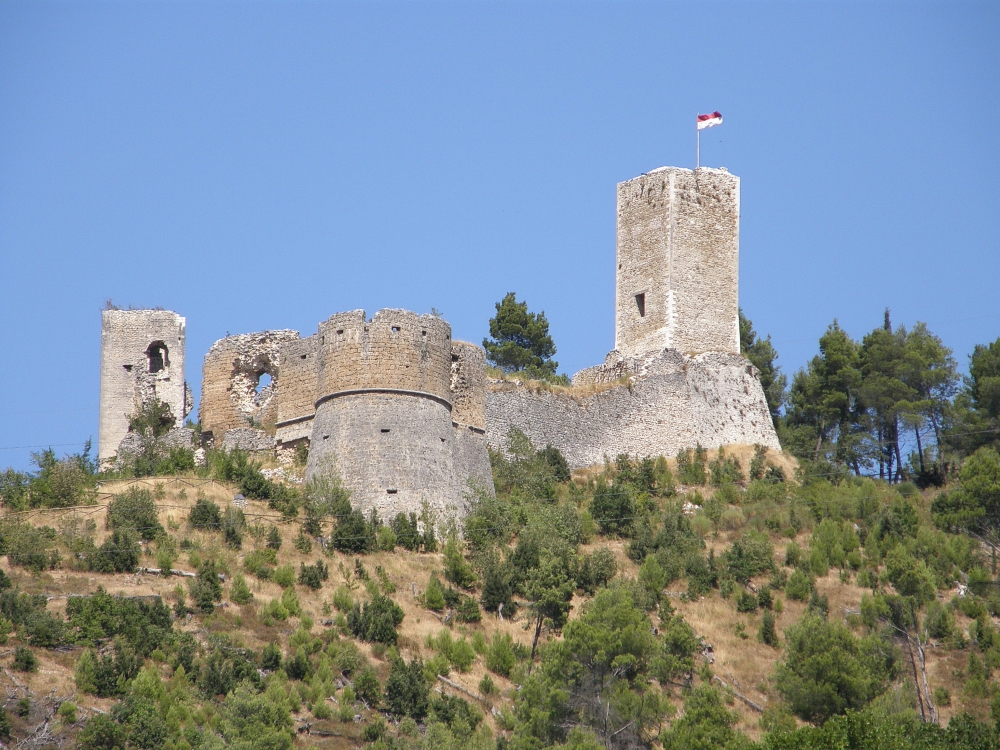
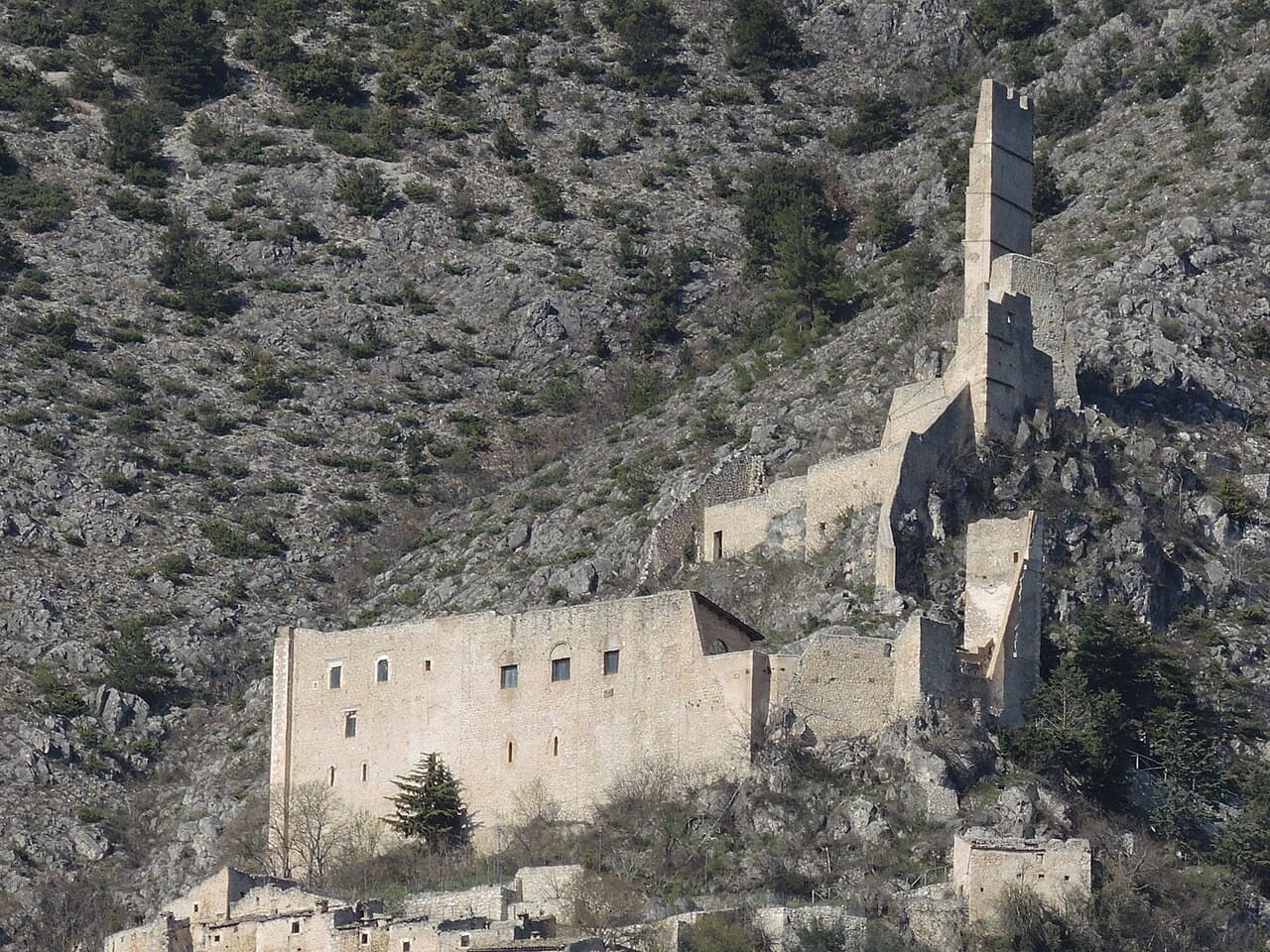
Perched on the slopes of Monte Morrone, the castle overlooks a significant road that connects Popoli Terme to Sulmona. This vantage point allowed the castle's occupants to monitor and regulate movement through the region effectively. The castle's triangular layout is characteristic of an enclosure-type fortress, with walls forming a defensive perimeter adapted to the natural terrain.
The highest point of the triangle features a trapezoidal spur projecting outward, which, despite partial collapse, illustrates the castle's defensive design aimed at maximizing surveillance and protection. The main entrance is located on the downhill side facing the village, marked by a prominent square tower above the gate. This tower is architecturally unique in that it lacks an interior side, a design likely intended to strengthen its defensive capabilities by limiting vulnerable access points.
Medieval and renaissance ownership
Throughout the Middle Ages and the Renaissance, the castle was under the control of the Cantelmo family, a noble lineage that maintained the site for several centuries. Their stewardship ensured that the castle remained a key center for local governance and military defense. Towards the end of the 16th century, ownership passed to the Barons De Sanctis, who held the castle until the early 19th century.
The castle's military significance waned over time, culminating in a critical event in 1803 when French forces attacked and destroyed the fortress. This marked the end of its active defensive role and led to a period of decline and abandonment.
Architectural features and residential elements
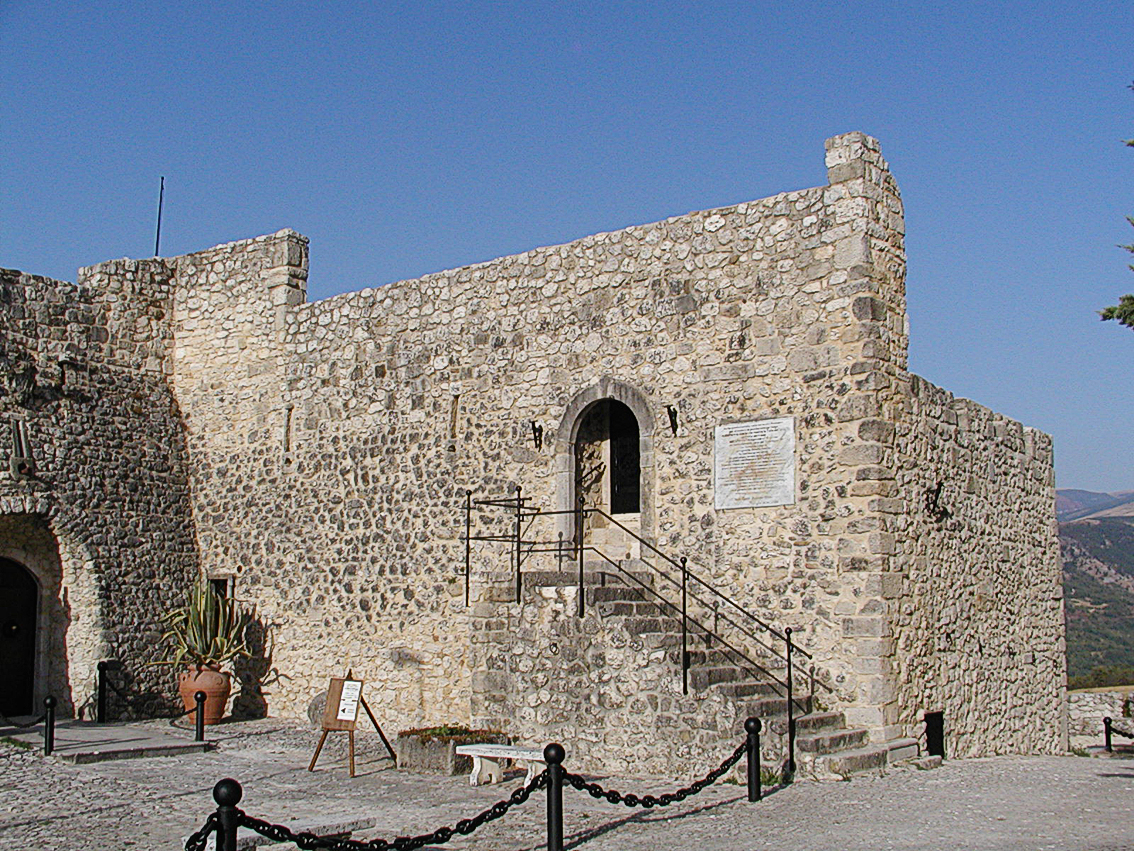
Unlike many enclosure castles in the L’Aquila province that served purely defensive functions, the Castello di Roccacasale also housed a baronial palace within its walls. This indicates the castle's dual role as both a military stronghold and a noble residence. The remains of this palace provide valuable insight into the lifestyle and status of its medieval inhabitants.
Additional features within the castle include a cistern for water storage, essential for sustaining the castle's occupants during sieges or droughts, and the foundations of several other residential buildings scattered within the perimeter. These structures highlight the castle's continuous adaptation to meet domestic needs over centuries.
Restoration and cultural significance
After many years of neglect, the castle underwent restoration efforts initiated by the Municipality of Roccacasale in the 1990s. Between 1994 and 1996, significant work was undertaken to preserve the ruins and improve visitor access. In 2004, a new building was constructed within the restored area to house the Museum of Documentation and Popular Traditions. This museum plays a crucial role in preserving and showcasing the cultural heritage associated with the castle and the surrounding region.
Today, the Castello di Roccacasale stands as a partially preserved monument reflecting centuries of military, residential, and cultural history. Its unique architectural features and strategic location continue to attract historians, architects, and visitors interested in medieval fortifications and Italian heritage.
Archaeological remains and layout
The castle's triangular enclosure is defined by robust walls that adapt to the natural contours of Monte Morrone. The trapezoidal spur at the highest point served as a lookout and defensive bastion, although it is now partially collapsed. The main gate's square tower, lacking an interior side, exemplifies medieval defensive ingenuity, limiting access and enhancing protection.
Within the enclosure, the remains of the baronial palace and other residential foundations reveal a complex that was not solely military but also domestic. The presence of a cistern underscores the importance of self-sufficiency in water supply for the castle's inhabitants.
Frequently asked questions (FAQ)
- When was Castello di Roccacasale built and by whom?
- Castello di Roccacasale was built in 925 AD by the Counts of Spoleto to control strategic routes in the region.
- What is the architectural layout of Castello di Roccacasale?
- The castle has a triangular enclosure layout with robust walls and a trapezoidal spur at the highest point for defense and surveillance.
- Who controlled the castle during the Middle Ages and Renaissance?
- The Cantelmo family controlled the castle for several centuries during the Middle Ages and Renaissance, followed by the Barons De Sanctis until the early 19th century.
- What happened to the castle in 1803?
- In 1803, French forces destroyed Castello di Roccacasale, ending its active defensive use and leading to its decline.
- Is Castello di Roccacasale open to visitors today?
- The castle is partially preserved and accessible to visitors, with restoration efforts by the Municipality of Roccacasale and a museum on site.
Photo gallery

Information
Sources & official resources
Verify the information above using these authoritative references.
Loading map...
Visitor reviews
No reviews yet. Been here? Write the first review and help other travelers!
Write the first reviewVisited this castle? Share your experience
Your review helps other travelers and adds first-hand knowledge to our encyclopedia.