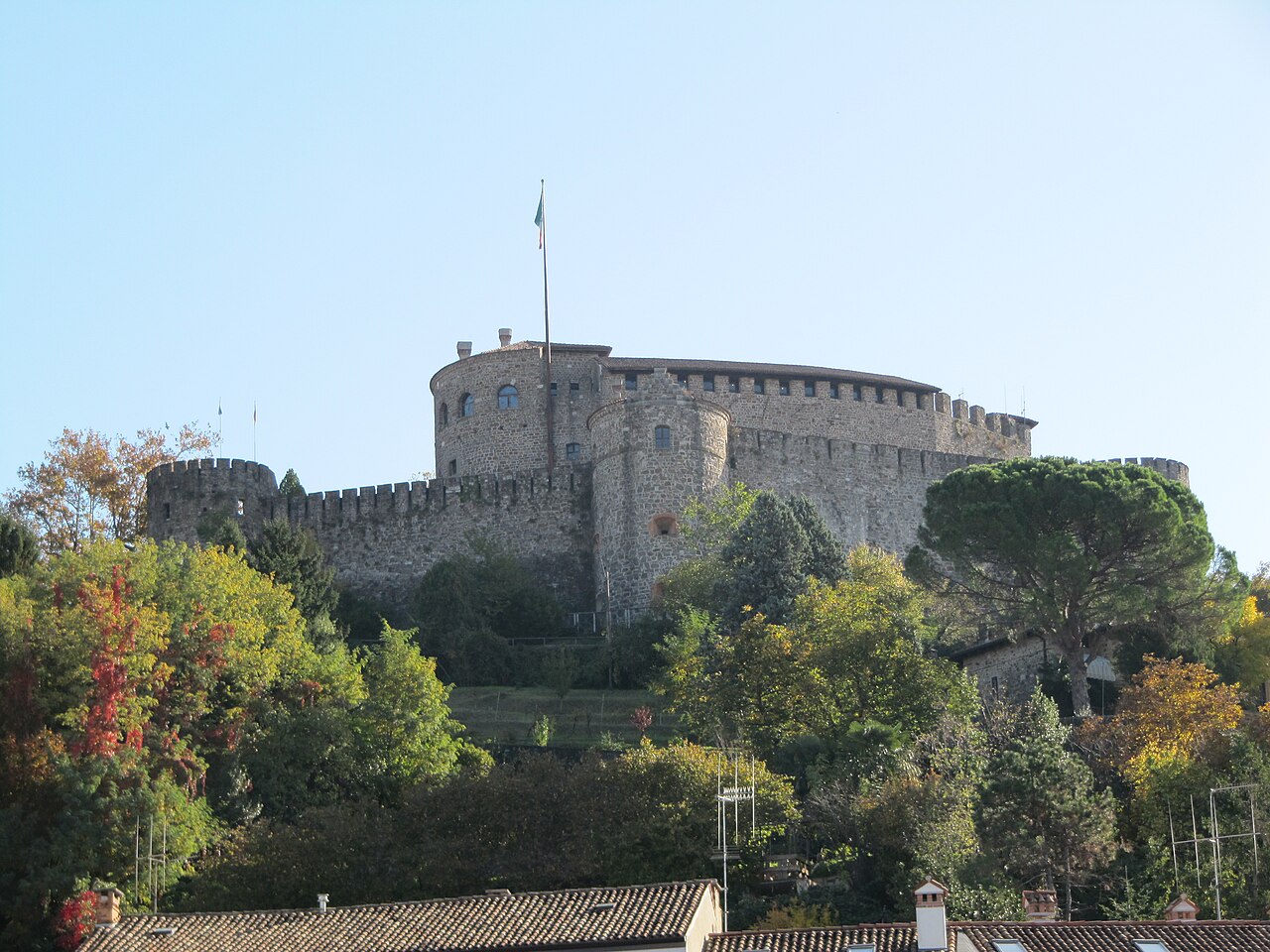
Castello di Rubbia
Castello di Rubbia stands as a remarkable historical monument near the confluence of the Vipava and Soča rivers, within the municipality of Savogna d’Isonzo in Italy. This castle's origins are deeply rooted in antiquity, with archaeological and architectural evidence suggesting a fortification existed on this strategic site since Roman times. The location was pivotal for controlling important routes through the Vipava Valley, serving as a military and administrative post overseeing passage between the Venetian Plain and the Danube Plain.
Historical development and ownership
The earliest known phase of the castle likely involved a Roman military outpost, whose foundations were later repurposed. The current structure primarily dates from the 15th and 16th centuries, embodying the Renaissance architectural style that replaced earlier medieval fortifications. This manor was constructed atop the remains of previous defensive works, reflecting the layered history of the site.
The castle's documented ownership began with Count Egg, followed in the early 1500s by the noble Torre-Valsassina family. Later, the estate passed to Angelo Giacomo Edling before coming into the possession of the Coronini family, specifically Cipriano Coronini Kromberg, who retained it for several centuries. This lineage of ownership highlights the castle's importance as a noble residence and strategic stronghold.
Military significance and conflicts
The Gradisca Wars and artillery damage
In the early 17th century, Castello di Rubbia gained renewed military relevance during the Gradisca Wars (1616-1617). Serving as a headquarters for military operations, the castle endured heavy artillery bombardment led by General Adem Trautmannsdorff. This assault inflicted severe structural damage, particularly to the castle's defensive walls and towers, underscoring its strategic importance in regional conflicts.
World War I impact
The castle's military role extended into the 20th century, where it again suffered significant destruction during World War I. The proximity to front lines meant the castle was exposed to artillery fire and combat operations, resulting in partial ruin before modern restoration efforts commenced.
Religious refuge and cultural heritage
A notable episode in the castle’s history occurred in 1563 when Primož Trubar, a prominent Protestant Slovene preacher, sought refuge within its walls. Fleeing the pressures of the Counter-Reformation, Trubar used the castle as a sanctuary to preach and conduct baptisms. This event marks the castle as a site of significant religious and cultural importance during a turbulent period in European history.
Architectural features and restoration
Structural composition and Roman elements
The castle today mainly comprises a Renaissance manor built upon 15th-century foundations, which themselves incorporate remnants from earlier periods. The defensive walls, still visible, reveal the castle’s original military purpose alongside its residential function. A distinctive feature is the presence of Roman quarrying notches on one of the tower’s corner stones, indicating the reuse of Roman materials or the survival of Roman-built foundations beneath the medieval structure.
Damage and restoration efforts
Following the extensive damage from the Gradisca Wars and World War I, parts of the castle were left in a state of partial ruin. However, restoration work beginning in the early 21st century, guided by historical documentation, has revived the structure and preserved its historical integrity. These efforts have allowed the castle to function once again as a winery, continuing a tradition established in the late 19th century.
Modern usage and visitor experience
In 1872, the castle entered a new chapter when Leonardo Bianchi di Casalanza purchased and restored it, establishing vineyards and a winery on the estate. This agricultural heritage remains active, with the castle’s winery still operating under private ownership. The property occasionally opens to the public during special events, offering visitors a glimpse into its rich history and architectural splendor.
A commemorative bust of Primož Trubar near the entrance honors his historical refuge at the castle, linking visitors directly to its religious and cultural legacy. The preservation of the defensive walls and the Roman-styled corner stones provides tangible connections to the castle’s multifaceted past, making Castello di Rubbia a unique destination for those interested in history, architecture, and viticulture.
Frequently asked questions (FAQ)
- When was Castello di Rubbia originally built?
- The castle's origins trace back to Roman times, but the current Renaissance manor was constructed in the 15th or 16th century atop earlier foundations.
- What architectural styles are present at Castello di Rubbia?
- The castle primarily exhibits Renaissance architectural style with foundations and some elements dating back to Roman and medieval periods.
- What role did Castello di Rubbia play in military history?
- It served as a strategic stronghold during the Gradisca Wars in the early 17th century and suffered damage in World War I due to its military significance.
- Is it possible to visit Castello di Rubbia?
- The castle is privately owned and occasionally opens to the public on special occasions, offering a chance to explore its historical and architectural features.
- Who was Primož Trubar and what is his connection to the castle?
- Primož Trubar was a Protestant Slovene preacher who found refuge at the castle in 1563 during the Counter-Reformation, using it as a place to preach and baptize.
Information
Current owner
Private owner
Loading map...
Visitor reviews
No reviews yet. Been here? Write the first review and help other travelers!
Write the first reviewVisited this castle? Share your experience
Your review helps other travelers and adds first-hand knowledge to our encyclopedia.