Castello Caldora
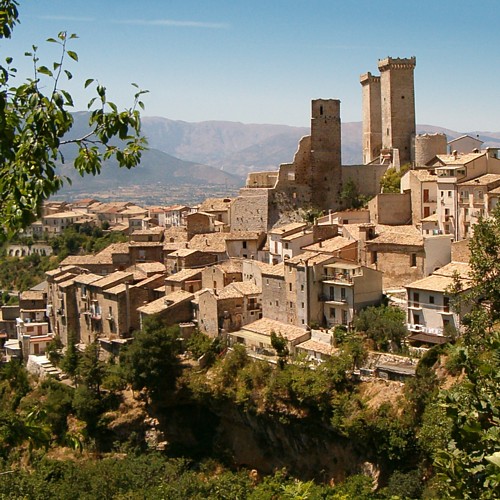
Castello Caldora stands as a remarkable example of medieval military architecture nestled in the historic center of Pacentro, a picturesque town in the Abruzzo region of Italy. This hill castle occupies a strategic position atop a prominent hill, commanding views over the surrounding landscape and serving as a formidable defensive stronghold since its earliest days. Its origins date back to the 11th century, with some structural elements possibly reaching as far back as the late 10th century, marking it as one of the enduring fortifications from the high medieval period in the region.
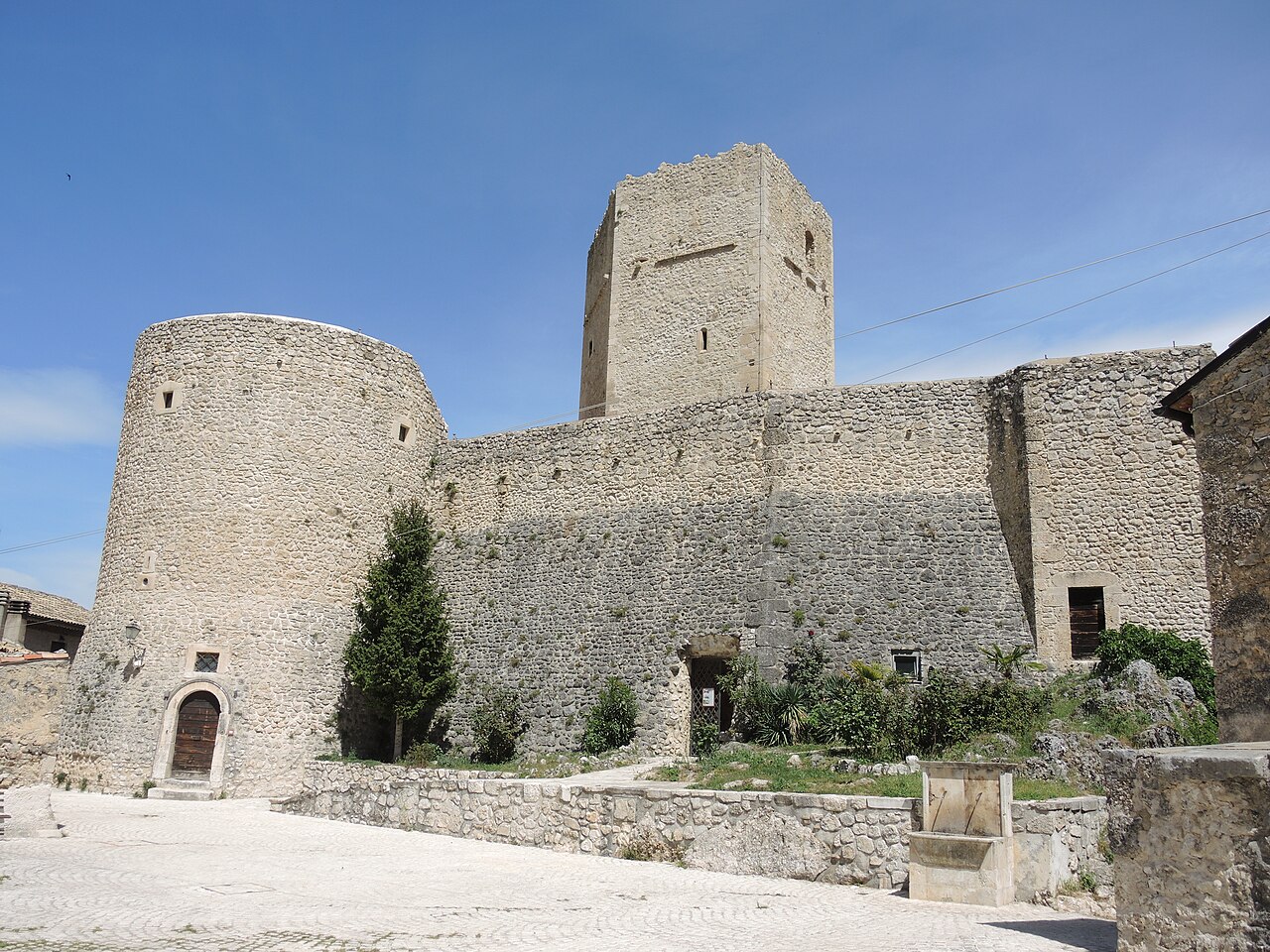
The castle’s distinctive trapezoidal layout, with its robust walls and towers, reflects both its defensive purpose and the architectural evolution it underwent through centuries of conflict and changing military technology. The base of the fortress is trapezoidal in shape, a design that was enhanced during later modifications to improve its resilience against siege warfare. Originally, the castle featured four square towers at its corners, typical of the defensive style prevalent in the Valle Peligna area. Today, three of these square towers remain intact, offering a glimpse into the original medieval fortification.
Architectural evolution and defensive features
Early construction and medieval foundations
The northeastern tower, known as the Torre Fantasma or Ghost Tower, is believed to date between the 11th and 13th centuries, making it one of the oldest surviving parts of the castle. This tower, with its imposing height of 27 meters, has become a symbol of the castle’s medieval heritage. The castle’s initial construction phase established a fortified complex designed to control the surrounding territory and protect against regional conflicts common in the high medieval era.
15th-century enhancements by the Orsini family
During the second half of the 15th century, the powerful Orsini family undertook significant renovations to adapt the castle to the evolving demands of warfare, particularly the increasing use of gunpowder and artillery. They added three large circular bastions, a hallmark of late medieval military architecture intended to deflect cannon fire and improve defensive coverage. Additionally, they constructed an outer trapezoidal wall, creating a concentric defensive system with two rings of walls—the inner older wall and the newer outer wall from the Cantelmo period.
The Orsini’s modifications reflect the transition from traditional medieval fortresses to more modern bastioned fortifications designed to withstand artillery sieges. The integration of rounded towers alongside the older square ones demonstrates a blend of architectural styles responding to new military challenges.
Notable towers and structural elements
The torre del re (king’s tower)
The Torre del Re, or King’s Tower, is a five-sided tower located in the northwest section of the castle, behind the original drawbridge. Standing 25 meters tall, this tower holds historical significance as the ceremonial site where feudal lords announced their possession of the castle. Its unique pentagonal shape and commanding height made it a key defensive and symbolic feature of the fortress.
The torre fantasma (ghost tower)
The Torre Fantasma is renowned not only for its height but also for the intriguing legends associated with it. Local lore suggests that the tower houses a carved portrait commemorating Baron Roberto de Luczinardo and his wife Margherita. Another interpretation links the sculpture to Rita Cantelmo, mother of the famous condottiero Jacopo Caldora, intertwining the castle’s history with prominent noble families of the region.
The torre d’assedio (siege tower)
Located in the southeast corner, the Torre d’Assedio is the oldest tower of the castle, standing 12 meters tall but truncated at the top due to damage sustained during an assault by Frederick II’s troops in 1230. This tower’s name, meaning Siege Tower, reflects its role in the castle’s defensive strategy during medieval conflicts.
Historical context and ownership
Castello Caldora has witnessed a complex history of ownership and military significance. Initially constructed in the high medieval period, the castle was a key stronghold in the Abruzzo region, controlling access and asserting feudal power. Throughout the 14th and 15th centuries, it underwent various renovations to adapt to shifting political and military landscapes.
The castle passed through the hands of several noble families, most notably the Orsini and Caldora families. Ownership transferred to the Caldora family during the 15th century before returning to the Orsini in 1483. The Orsini family’s enhancements were crucial in preparing the fortress for the era of gunpowder warfare, reflecting broader trends in Italian castle fortifications at the time.
In the 20th century, the castle was owned by the Gravina-Avolio family, who eventually donated it to the municipality of Pacentro due to the financial burden of maintenance. This transfer ensured the preservation and public accessibility of the historic site.
Restoration efforts and preservation status
The castle underwent restoration in the 1960s, which initially involved the use of reinforced concrete. This approach, while stabilizing the structure, was later criticized for its impact on the castle’s original medieval fabric. Subsequent restoration projects have aimed to recover the fortress’s authentic appearance and structural integrity, emphasizing traditional materials and techniques.
Today, Castello Caldora is recognized as one of the most masterfully constructed fortifications in the Abruzzo region, comparable to other significant castles such as Castello Piccolomini in Celano and Forte Spagnolo in L’Aquila. Its well-preserved walls, towers, and defensive features make it a valuable cultural and historical landmark.
Architectural details and artistic features
The castle’s façade, facing the square opposite the church of Santa Maria Maggiore, dates from the 17th century. It exhibits decorative elements influenced by the Renaissance style, including ornamental cornices similar to those on the church’s bell tower. Despite these later additions, the doorways retain their original pointed arches, preserving a Gothic architectural element within the façade.
Throughout the castle, numerous coats of arms adorn the walls and towers, with the most prominent belonging to the Orsini family. These heraldic symbols serve as visual testimonies to the castle’s historical affiliations and the noble families who shaped its legacy.
Construction techniques
The construction of Castello Caldora demonstrates advanced masonry skills characteristic of medieval fortifications in Abruzzo. The walls are composed of carefully cut stone blocks, assembled to create robust defensive structures capable of withstanding sieges. The combination of square and rounded towers reflects an adaptation to evolving military technology, balancing traditional medieval design with innovations suited to artillery defense.
Cultural significance and visitor experience
Today, Castello Caldora is a prominent cultural landmark in Pacentro, attracting visitors interested in medieval history, architecture, and regional heritage. Its strategic hilltop location offers panoramic views, while the castle itself provides insight into the military and feudal history of Abruzzo.
Visitors can explore the remaining towers, walls, and courtyards, experiencing the architectural evolution from early medieval fortifications to late medieval bastioned defenses. The castle’s legends, such as those surrounding the Torre Fantasma, add a layer of local folklore that enriches the visitor experience.
The municipality of Pacentro manages the site, which is accessible to the public. Efforts continue to preserve the castle’s structural integrity and historical authenticity, ensuring that Castello Caldora remains a vital link to Italy’s medieval past.
Frequently asked questions (FAQ)
- How do I get to Castello Caldora in Pacentro?
- Castello Caldora is located in the historic center of Pacentro, easily accessible by foot from the town’s main square. Visitors can reach Pacentro by regional bus or car from L’Aquila or other nearby cities.
- What are the visiting hours for Castello Caldora?
- Visiting hours vary seasonally, but the castle is generally open to the public during daytime hours. It is recommended to check with the Municipality of Pacentro for the latest opening times before planning your visit.
- Is there an entrance fee to visit Castello Caldora?
- Entrance fees may apply, often modest, to support maintenance and preservation. Visitors should verify current ticket prices with local tourism offices or the castle’s official website.
- What is the historical significance of Castello Caldora?
- Castello Caldora is a key medieval fortress in Abruzzo, representing centuries of military architecture evolution and noble family histories, including the Orsini and Caldora families.
- Can I explore the castle towers and walls?
- Yes, visitors can explore the remaining towers, walls, and courtyards, gaining insight into medieval defensive structures and architectural styles.
Information
Sources & official resources
Verify the information above using these authoritative references.
Loading map...
Visitor reviews
No reviews yet. Been here? Write the first review and help other travelers!
Write the first reviewVisited this castle? Share your experience
Your review helps other travelers and adds first-hand knowledge to our encyclopedia.