Castello di Neviano
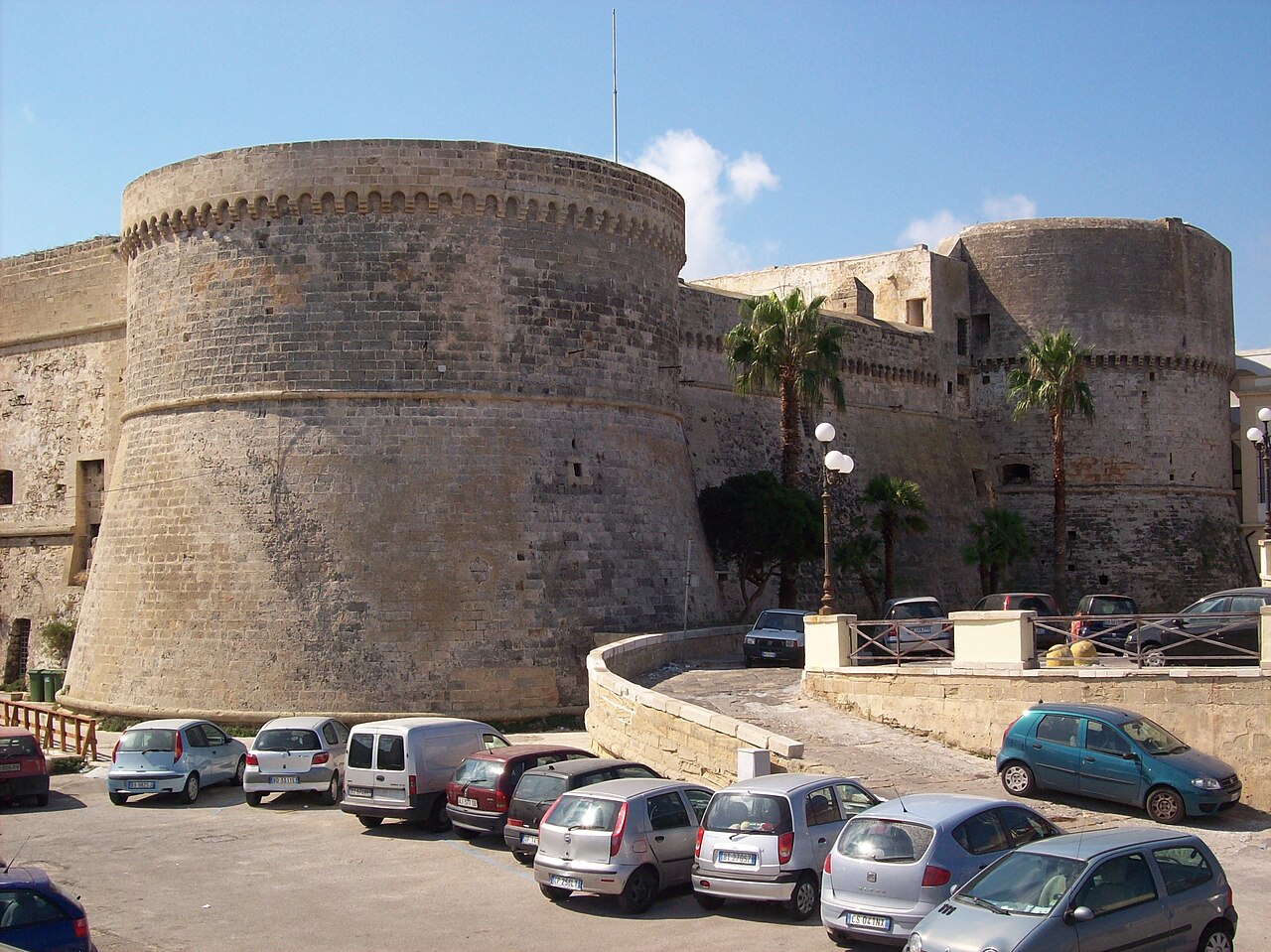
The Castello di Neviano stands as a notable example of a 15th-century hill castle located in the town of Neviano, in the Apulia region of southern Italy. Constructed in the latter half of the 15th century by Giovanni Antonio Orsini del Balzo, a nobleman from the influential Orsini del Balzo family, the castle was originally designed as a military stronghold to guard the surrounding territory against maritime incursions. Its strategic position on elevated terrain allowed for surveillance over the nearby coastline and inland routes, making it a critical defensive installation during a period marked by frequent conflicts and territorial disputes.
Historical context and construction
The castle's foundation in the late medieval period reflects the broader trend of fortification building in Italy during the 15th century, when noble families sought to consolidate power and protect their domains amid shifting political landscapes. Giovanni Antonio Orsini del Balzo, a member of one of the most powerful aristocratic families in the Kingdom of Naples, commissioned the castle to serve both as a military bastion and a symbol of his family's dominance in the region.
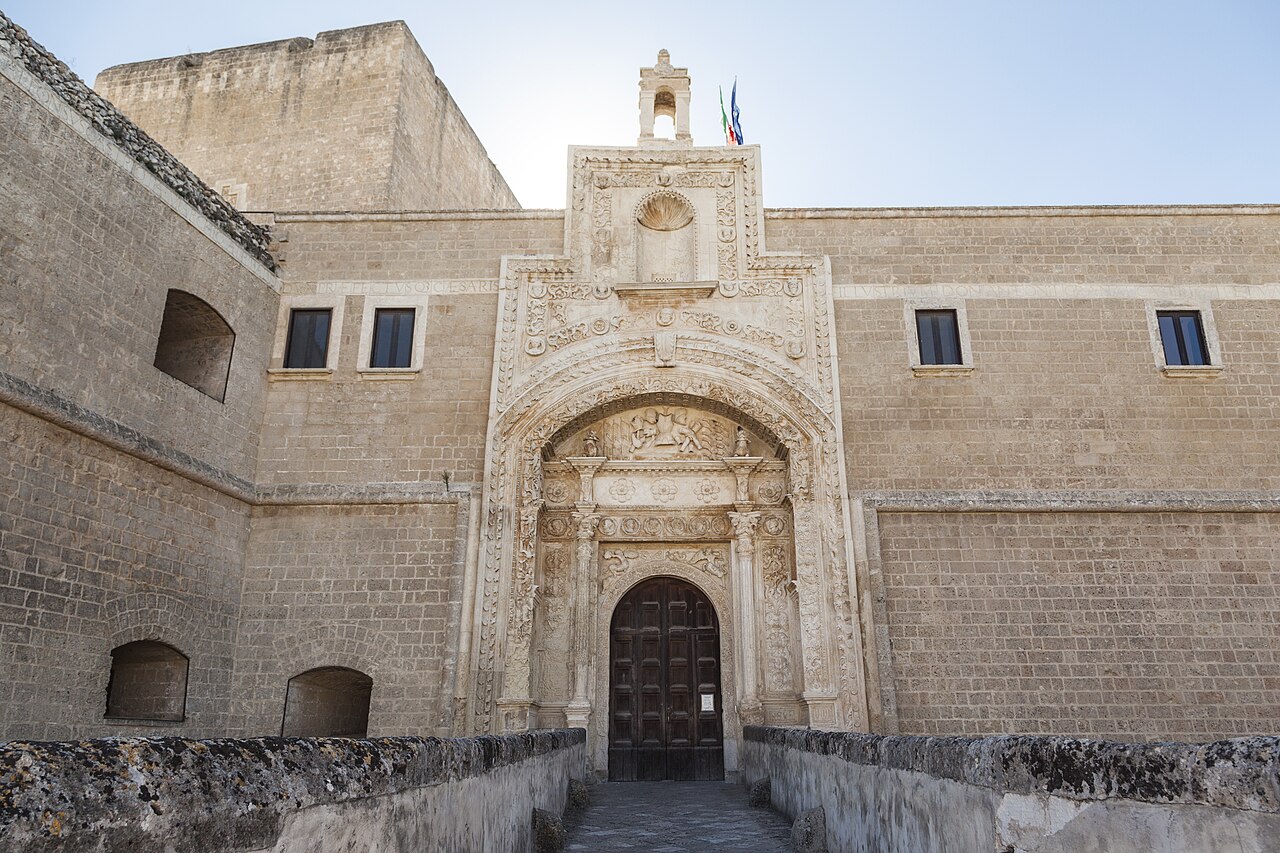
Its quadrangular layout with a rectangular base plan was typical of the era, combining practicality with defensive efficiency. The castle was surrounded by a moat, which added a significant obstacle to attackers, and access was controlled by a drawbridge, now lost but documented in historical records. The castle's design incorporated machicolations (piombatoi)—openings in the parapets for dropping projectiles on attackers—and arrow slits (feritoie), which allowed defenders to shoot while remaining protected. A terminal cornice supported by corbels (beccatelli) runs along the upper edges of the walls, serving both structural and defensive purposes.
Architectural features and defensive elements
The surviving two floors of the original fortress provide valuable insight into the castle's defensive architecture. The machicolations are particularly notable, as they demonstrate the medieval military engineering techniques used to repel invaders. These features allowed defenders to target enemies attempting to scale the walls or breach the gates with boiling oil, stones, or other deterrents.
The arrow slits were narrow vertical openings that enabled archers to fire arrows at attackers while minimizing their exposure. The beccatelli corbels supporting the cornice not only strengthened the walls but also created a platform for defenders to patrol and launch counterattacks.
Although much of the original defensive moat and drawbridge have been lost to time, their presence is well documented, emphasizing the castle's role as a fortified residence designed to withstand sieges and assaults, particularly from the sea.
Later modifications and decline
Approximately two centuries after its initial construction, the Castello di Neviano underwent significant expansions and modifications. These changes reflected the evolving military technologies and architectural styles of the 17th century, adapting the fortress to new defensive needs. The expansions likely included reinforcement of walls and internal restructuring to accommodate changing functions.
Despite these adaptations, the castle's strategic importance diminished over time, especially as advances in artillery rendered traditional fortifications less effective. By the mid-20th century, the castle had fallen into disrepair and was largely abandoned. Structural instability led to the demolition of unsafe sections to prevent hazards, leaving only partial remains that survive today.
For a period, the castle was used sporadically for local events, including Christmas celebrations, maintaining a modest cultural connection to the community despite its deteriorated state.
Archaeological significance and restoration efforts
Excavations and archaeological findings around the castle site have revealed evidence of human occupation dating back to the Neolithic era and the medieval period. These discoveries highlight the long-standing importance of the location, which served as a strategic and inhabited site long before the castle's construction.
Since 2018, restoration efforts have been underway to preserve and stabilize the remaining structures of the Castello di Neviano. These initiatives aim to recover the castle's historical fabric and protect its architectural heritage for future generations. The restoration work focuses on conserving the surviving defensive elements and improving the site's accessibility and educational value.
Cultural and architectural importance
The Castello di Neviano is a valuable example of late medieval military architecture in southern Italy. Its combination of defensive features such as machicolations, arrow slits, moats, and drawbridges illustrates the practical considerations of fortress design during a turbulent historical era. The castle also reflects the social and political ambitions of the Orsini del Balzo family, who played a significant role in the region's history.
Today, the castle remains an important cultural landmark in Neviano, attracting scholars, historians, and visitors interested in medieval fortifications and Italian heritage. The ongoing preservation efforts contribute to a broader understanding of the region's past and the architectural evolution of military structures.
Frequently asked questions (FAQ)
- How do I visit Castello di Neviano?
- The castle is located in the town of Neviano in Apulia, Italy. Visitors should check local tourism resources for current access and visiting hours as the site is under restoration and may have limited public access.
- What is the historical significance of Castello di Neviano?
- Built in the 15th century by Giovanni Antonio Orsini del Balzo, the castle served as a military stronghold to protect the territory from sea attacks, reflecting the strategic importance of the region during the late medieval period.
- What architectural features does Castello di Neviano have?
- The castle features a quadrangular layout with defensive elements such as machicolations, arrow slits, a moat, and a drawbridge, showcasing typical late medieval military architecture.
- Is the castle accessible for visitors with mobility issues?
- Due to ongoing restoration and the castle's partially preserved condition, accessibility may be limited. Visitors with mobility concerns should inquire locally before planning their visit.
- When is the best time to visit Castello di Neviano?
- The best time to visit is during the warmer months when local events may be held, but visitors should verify opening times and restoration schedules in advance.
Information
Loading map...
Visitor reviews
No reviews yet. Been here? Write the first review and help other travelers!
Write the first reviewVisited this castle? Share your experience
Your review helps other travelers and adds first-hand knowledge to our encyclopedia.