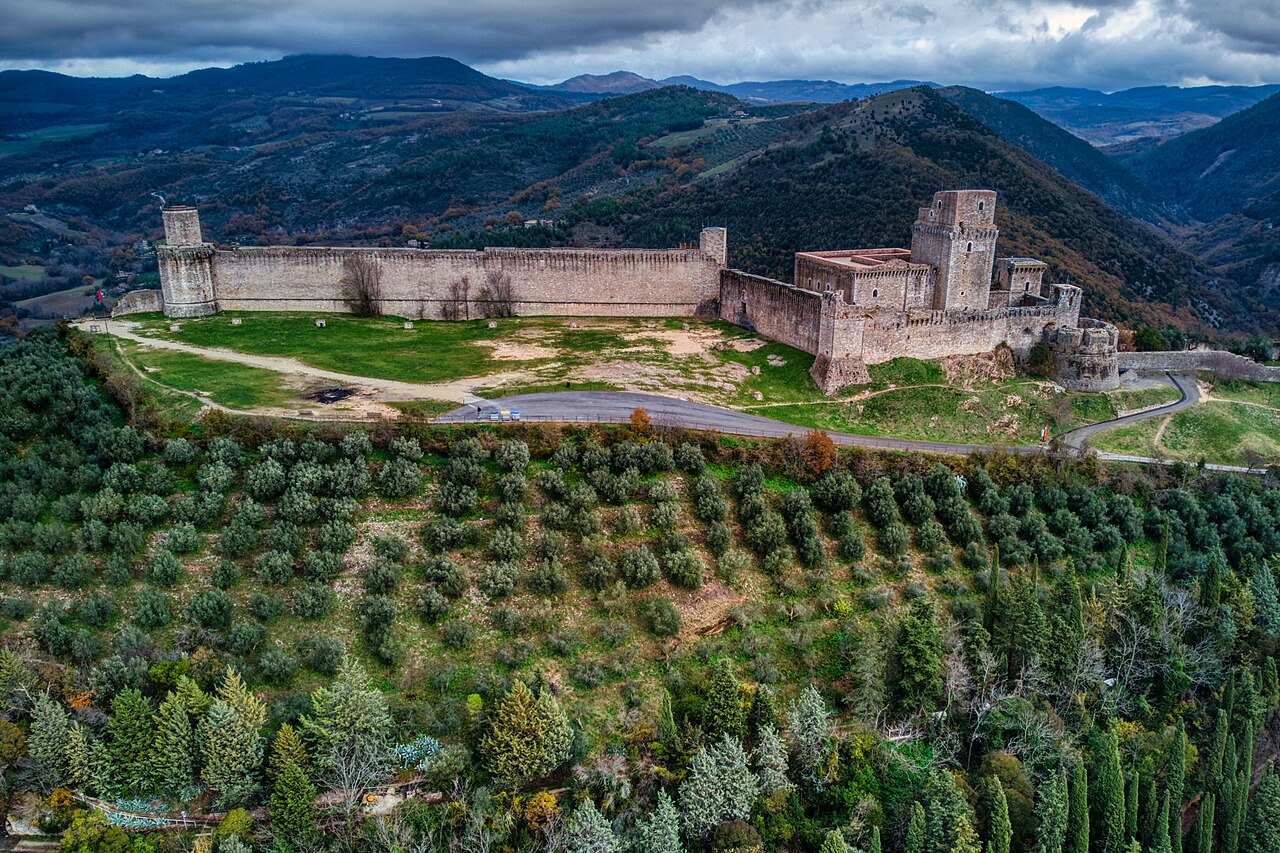
Castello di Castelleone
The Castello di Castelleone stands as a remarkable example of a medieval hill castle in the municipality of Castelleone, Italy. Originally constructed in the 12th century by local feudal lords, this stone fortress was strategically designed to secure the surrounding territory and assert control over the region. Known initially as Castrum Leonis, the castle played a pivotal role within the medieval defensive network, reflecting the turbulent nature of feudal rivalries and territorial disputes that shaped northern Italy during the Middle Ages.
The castle's location atop a hill provided a commanding vantage point over the surrounding landscape, enhancing its military effectiveness. Its robust stone walls and towers were engineered to withstand sieges and assaults, a testament to the strategic foresight of its builders. Over the centuries, the castle's architecture evolved, mirroring broader historical and cultural shifts from the High Medieval period through the Renaissance and into the 19th century.
Medieval origins and military significance
The core structure of Castello di Castelleone dates back to the 12th and 13th centuries, characterized by massive stone towers and thick defensive walls that formed a formidable protective ring around the complex. These walls, measuring over three meters in thickness, were fortified with barbicans—outer defensive works designed to shield vulnerable gateways and enhance the castle's defensive capabilities.
One of the most notable medieval features is the Lombard Tower, an imposing stone tower emblematic of early medieval military architecture. This tower not only served as a lookout and stronghold but also symbolizes the castle's origins as a feudal fortress.
The castle's military importance is underscored by historical sieges and assaults, including the 13th-century siege by the Todini family, reflecting the intense feudal conflicts of the era. Later, in around 1410, the renowned condottiero Andrea Fortebraccio, also known as Braccio da Montone, attempted to capture and burn the fortress but was unsuccessful. This episode highlights the strong defensive design and strategic significance of Castello di Castelleone during the late medieval period.
Renaissance transformation and architectural evolution
During the 15th and 16th centuries, the castle underwent significant architectural modifications that reflected the changing needs and tastes of its inhabitants. The addition of the Mastio, also known as the Torre degli Sposi, exemplifies this evolution. This Renaissance tower was physically integrated into the main castle structure, marking a transition from purely military functions to a combination of defense, residence, and formal representation.
The Renaissance influence extended to the castle's interiors, where frescoes and wall paintings from this period remain visible, offering valuable insights into the artistic and cultural milieu of the time. These decorative elements demonstrate the castle's role not only as a fortress but also as a noble residence that embraced contemporary aesthetic trends.
19th-century additions and neo-gothic revival
In the 19th century, the castle saw the construction of the Torre Belvedere, a neo-Gothic tower that overlooks the village of Castelleone. This addition reflects the 19th-century romantic revival of medieval architectural forms, as well as a shift in the castle's function toward symbolic and aesthetic purposes rather than military defense.
The neo-Gothic tower serves as a visual landmark and enhances the castle's picturesque silhouette, blending historical authenticity with 19th-century stylistic reinterpretation. This period also coincides with the castle's association with prominent families and cultural figures, further enriching its historical narrative.
Notable ownership and cultural connections
Throughout its history, Castello di Castelleone has been linked to several notable figures and noble families. In the late 15th century, Pope Alexander VI Borgia visited the castle, underscoring its significance within religious and political spheres of influence. Ownership passed to the Del Buon Tromboni counts in the early 19th century, who maintained possession until the late 20th century.
Following this period, the castle came under the stewardship of the Morsiani counts, who initiated a comprehensive restoration program between 2006 and 2009. This effort focused on structural stabilization and the recovery of historical artistic elements, ensuring the preservation of the castle's multifaceted heritage.
The castle also attracted cultural figures such as the poet Gabriele D’Annunzio in the early 20th century, who praised the local olive oil, linking the estate to the region's agricultural and cultural traditions. This connection highlights the castle's role as a center of local identity beyond its architectural and military importance.
Architectural features and interior treasures
Castello di Castelleone preserves a well-defined medieval fortress layout, with its most ancient components—the walls and towers—largely intact. The barbicans and thick defensive walls continue to convey the castle's original military purpose, while the Lombard Tower remains a dominant architectural feature.
The Renaissance Mastio or Torre degli Sposi integrates residential and ceremonial functions, reflecting the castle's adaptation over time. Inside, visitors can admire a remarkable collection of furnishings and artworks, including pieces attributed to or inspired by masters such as Annibale Carracci, Guercino, and Dürer. The presence of antique Murano glass chandeliers and other aristocratic decorative objects further enriches the castle's cultural ambiance.
The recent restoration led by the Morsiani family emphasized both structural preservation and the recovery of these artistic treasures, allowing the castle to serve as a repository of regional history and art.
Current status and visitor experience
Today, Castello di Castelleone is well preserved and benefits from ongoing conservation efforts that respect its layered historical narrative. The castle stands as a testament to the architectural and cultural evolution from the High Medieval through the Renaissance and into the 19th century, offering visitors a unique opportunity to explore a complex that embodies centuries of Italian history.
Its combination of military fortification, noble residence, and artistic heritage makes it a significant cultural landmark in the region. Visitors can appreciate the castle's imposing defensive structures alongside its refined interiors and artistic collections, gaining insight into the multifaceted roles castles played in Italian history.
Frequently asked questions (FAQ)
- When was Castello di Castelleone originally built?
- Castello di Castelleone was originally constructed in the 12th century by local feudal lords as a stone fortress to secure the surrounding territory.
- What architectural styles are present in Castello di Castelleone?
- The castle features a mix of architectural styles, including medieval stone fortifications, Renaissance additions like the Mastio tower, and a 19th-century neo-Gothic tower called Torre Belvedere.
- Who were some notable historical figures associated with the castle?
- Notable figures include Pope Alexander VI Borgia, who visited in the late 15th century, the condottiero Andrea Fortebraccio who attempted a siege around 1410, and the poet Gabriele D’Annunzio who praised the local olive oil in the early 20th century.
- What are the main defensive features of the castle?
- Key defensive features include thick stone walls over three meters thick, fortified with barbicans, and the imposing Lombard Tower, which exemplifies early medieval military architecture.
- What can visitors see inside the castle?
- Visitors can admire Renaissance frescoes, a collection of artworks inspired by Annibale Carracci, Guercino, and Dürer, as well as antique Murano glass chandeliers and other aristocratic furnishings.
Information
Sources & official resources
Verify the information above using these authoritative references.
Loading map...
Visitor reviews
No reviews yet. Been here? Write the first review and help other travelers!
Write the first reviewVisited this castle? Share your experience
Your review helps other travelers and adds first-hand knowledge to our encyclopedia.