Castello della Cecchignola
Castello della Cecchignola stands as a remarkable example of a historic hill castle in the modern Giuliano-Dalmata district of Rome, Italy. Its origins trace back to ancient Roman times, when the area lay outside the original city walls and functioned as a rural villa zone for affluent Roman families during the Republican period (2nd to 1st centuries BCE). This early phase is evidenced by archaeological remains such as a Republican-era domus discovered nearby, which contained a mosaic now preserved in the National Roman Museum at Palazzo Massimo. The castle's foundations incorporate Roman road layers, likely linked to the Via Ardeatina, illustrating a continuous occupation and reuse of ancient materials.
Medieval origins and ownership transitions
The first documented mention of the property dates to 1217 in a papal decree by Pope Honorius III, referring to the site as "Cicomola," an early form of the name Cecchignola. Throughout the Middle Ages, the estate passed through the hands of notable families and religious entities. The Capizucchi family were among the early owners, followed by Cardinal Basilio Bessarione in the mid-15th century. Later, the property was associated with the chapel of Sant’Eugenia before being acquired by Pietro Margani by the late 1400s.
Early modern period developments
In the early 17th century, the estate came under the stewardship of the Gran Priorato di Roma, a branch of the Sovereign Military Order of Malta. Subsequently, prominent Roman families such as the Barberini took possession. Notably, Cardinal Scipione Caffarelli-Borghese, nephew of Pope Paul V, managed the estate between 1618 and 1619, initiating significant land reclamation projects and establishing a park. Later in the century, ownership transferred to the Pamphili family.
18th and 19th century transitions
The Lepri family held the castle during the 18th century before it reverted to the Order of Malta in 1770. Pope Leo XII later purchased the estate for Vatican use, overseeing decorative enhancements and restoration efforts. However, many of these embellishments were removed by Pope Pius VIII, who relocated some features to Castel Gandolfo, the papal summer residence.
In 1832, the castle was acquired by Alessandro Torlonia, whose family maintained it for many years. The Torlonia influence is evident in the main gate and surrounding walls, which bear carved initials "AT" and the family coat of arms, marking the 19th-century phase of the estate.
Architectural features and structural evolution
The castle complex comprises multiple structures reflecting its long history of construction and remodeling. The main tower remains the dominant feature, retaining approximately two-thirds of its original height. Its foundations incorporate Roman materials, including road base layers from the ancient period. Architectural details reveal construction phases from the 13th, 18th, and 19th centuries, illustrating continuous adaptation over time.
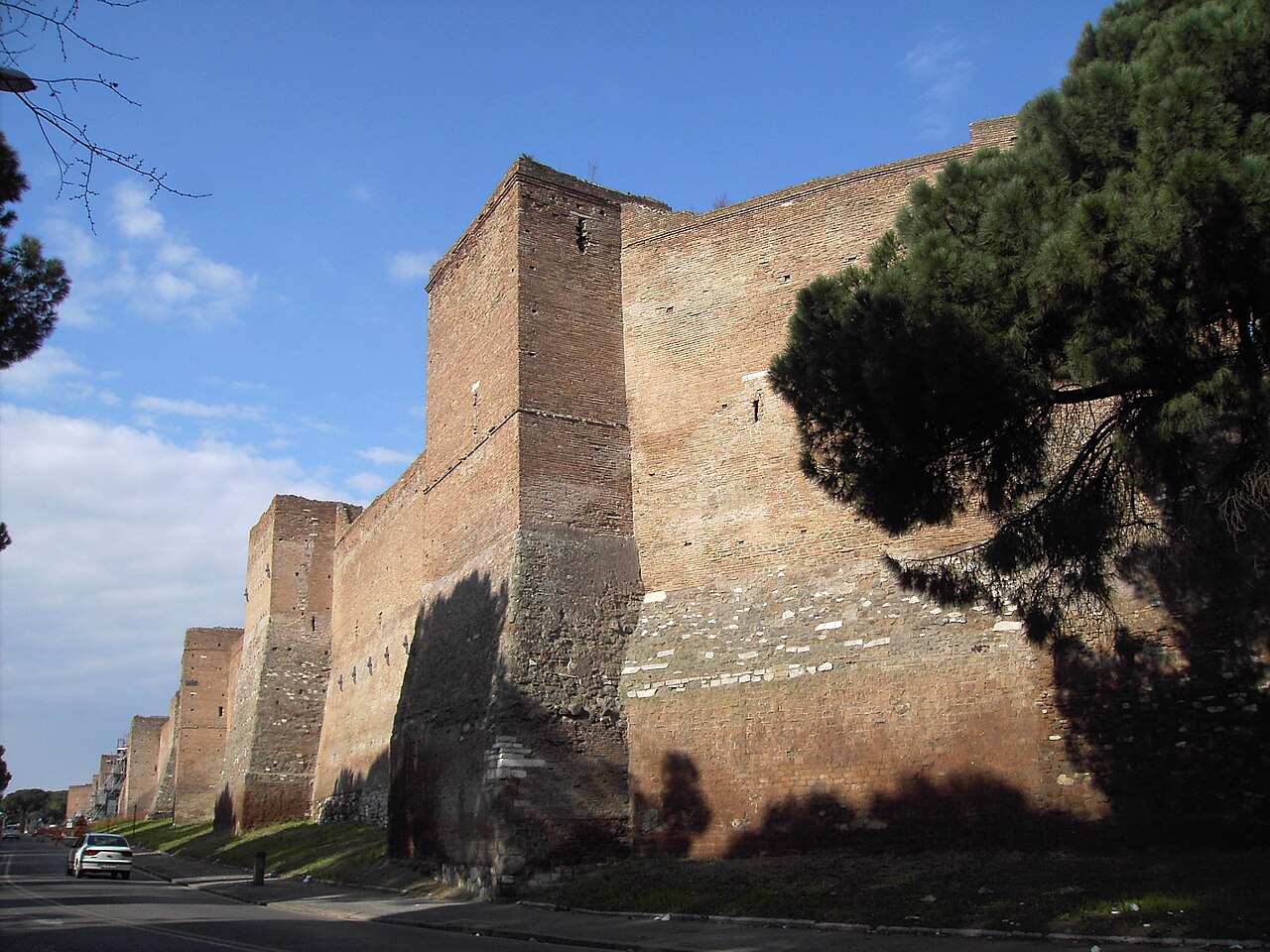
The castle walls integrate fragments of ancient pavement, likely related to the nearby Via Ardeatina. This reuse of Roman materials within medieval and later masonry demonstrates practical adaptation and a tangible link to the area's Roman heritage.
The main entrance gate, dating to the Torlonia period after 1832, features a monumental design with the initials "AT" and multiple displays of the Torlonia coat of arms. This gate exemplifies the 19th-century restoration and the family's lasting mark on the estate.
Cultural significance and contemporary use
Today, Castello della Cecchignola serves as a cultural and educational center. It houses the University of Roman Marmorari, an institution dedicated to the study and craft of ancient marble and stone arts. The castle grounds include a specialized library supporting this field, emphasizing the site's enduring connection to Rome's rich tradition of stone-working and craftsmanship.
The castle's layered history, from its Roman foundations through medieval and early modern transformations to its current role in heritage preservation, makes it a significant monument. Its architecture and adaptive reuse reflect the complex narrative of Rome's urban and cultural development over more than two millennia.
Frequently asked questions (FAQ)
- How do I get to Castello della Cecchignola?
- You can reach Castello della Cecchignola by taking public transport from central Rome. The closest metro station is Laurentina, followed by a short bus ride or taxi. If you prefer driving, there is parking available near the castle.
- What is the historical significance of Castello della Cecchignola?
- Castello della Cecchignola dates back to the medieval period and played a crucial role in the defense of Rome. It has witnessed numerous historical events and changes in architecture over the centuries, reflecting the evolution of military fortifications in Italy.
- When was Castello della Cecchignola built?
- The construction of Castello della Cecchignola began in the 15th century, although it has undergone various renovations and expansions over the years. Its architectural style incorporates elements from different periods, showcasing a blend of medieval and Renaissance influences.
- Can I visit Castello della Cecchignola?
- Yes, Castello della Cecchignola is open to visitors, but it is recommended to check the official website for specific visiting hours and any special events. Guided tours may also be available, providing deeper insights into its history and architecture.
- Why is Castello della Cecchignola a popular attraction?
- Castello della Cecchignola is popular for its rich history and stunning architecture, making it a fascinating destination for history enthusiasts and tourists alike. Its picturesque setting and well-preserved structures offer a glimpse into Italy's past, attracting visitors who appreciate cultural heritage.
- Is it possible to host events at Castello della Cecchignola?
- Yes, Castello della Cecchignola offers the opportunity to host private events and functions. Its beautiful surroundings and historical ambiance make it an ideal venue for weddings, corporate events, and other special occasions.
- What are the opening hours for Castello della Cecchignola?
- The opening hours for Castello della Cecchignola vary depending on the season and special events. Generally, it is open from 9 AM to 6 PM, but it is advisable to check the official website for the most current information before planning your visit.
- What are the ticket prices for visiting Castello della Cecchignola?
- Ticket prices for Castello della Cecchignola are typically affordable, with discounts available for students and seniors. Children under a certain age may enter for free, but it’s best to confirm the latest pricing on the official website or at the entrance before your visit.
- What nearby attractions can I visit after Castello della Cecchignola?
- After visiting Castello della Cecchignola, you can explore nearby attractions such as the Parco degli Acquedotti, known for its ancient aqueducts, and the historic neighborhood of EUR, which features impressive architecture and museums. These sites offer a great way to continue your exploration of Rome's rich history and culture.
Information
Website
Visit websiteSources & official resources
Verify the information above using these authoritative references.
Loading map...
Visitor reviews
No reviews yet. Been here? Write the first review and help other travelers!
Write the first reviewVisited this castle? Share your experience
Your review helps other travelers and adds first-hand knowledge to our encyclopedia.