Castello Cova
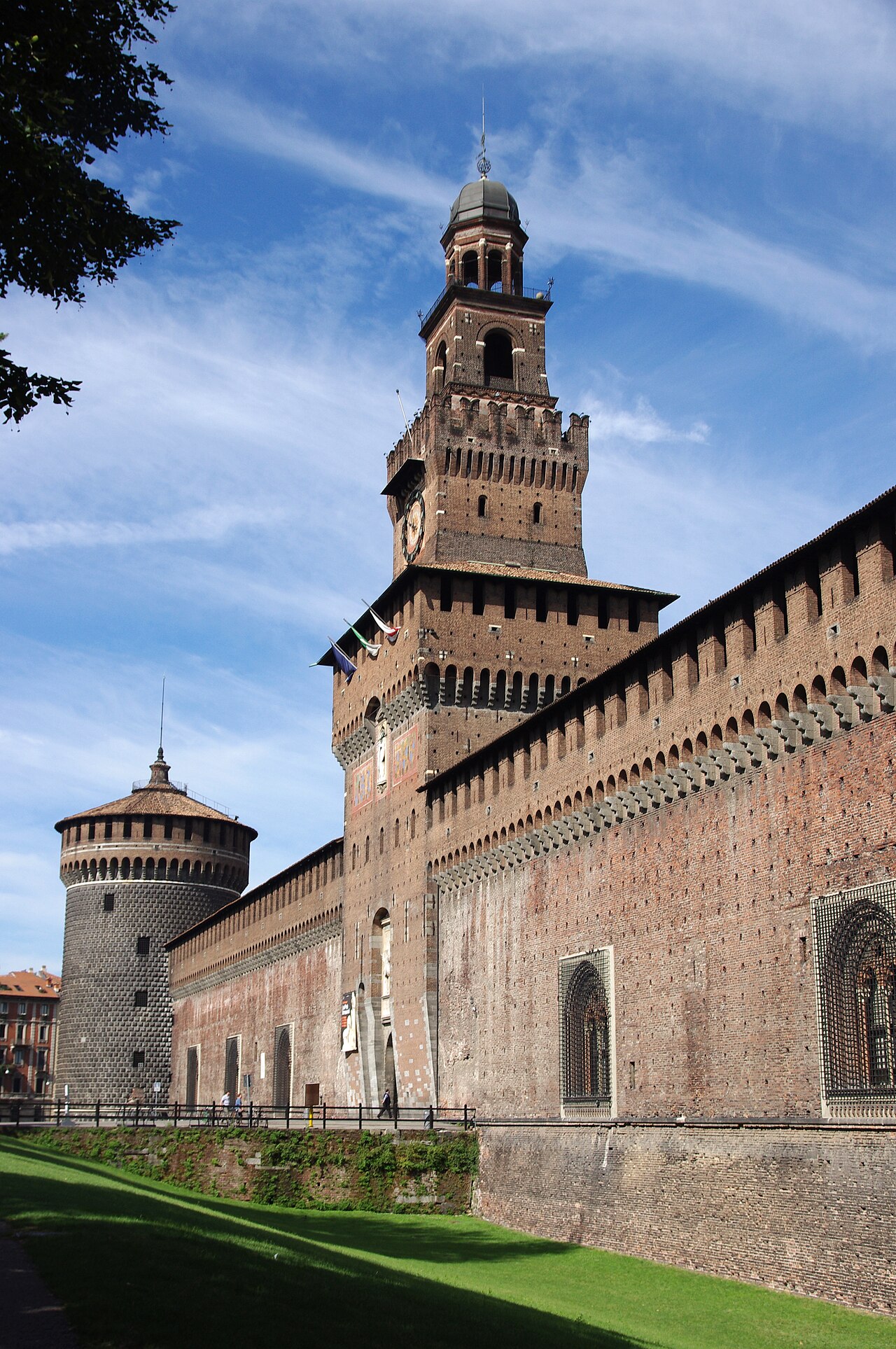
Castello Cova is a striking example of Gothic Revival architecture located in the heart of Milan, Italy. Constructed between 1910 and 1915, the castle was designed by the architect Adolfo Coppedè, brother of the renowned Gino Coppedè. This building stands out for its deliberate evocation of medieval architectural elements, blending historical styles with early 20th-century design principles.
Architectural design and style
The castle's design prominently features guelph-style merlons crowning the rusticated exterior walls, a hallmark of medieval defensive architecture. These battlements give the castle a fortified appearance reminiscent of Italian medieval fortresses. The use of rustication on the walls adds texture and visual weight, emphasizing the castle's robust character.
A defining feature of Castello Cova is its medieval-style tower, which rises prominently above the rest of the structure. This tower is not only an architectural focal point but also served as an inspiration for the architects of the Velasca Tower, one of Milan's iconic skyscrapers known for its brutalist and historicist design elements. The tower's design integrates elements typical of medieval military architecture, including narrow windows and crenellations, which enhance the castle's historic ambiance.
Historical and cultural context
Built during the early 20th century, Castello Cova reflects the broader European trend of revivalist architecture, where architects sought to reimagine and celebrate historical styles. The castle's construction period coincided with Milan's rapid urban development, and it represents a unique architectural statement amidst the city's modernizing landscape.
Adjacent to Castello Cova is the Pusterla di Sant'Ambrogio, an ancient postern gate originally part of Milan's medieval walls. The postern was reconstructed in the late 1930s to complement the castle's revivalist aesthetic, further enriching the historical atmosphere of the area. This deliberate pairing of the castle with a recreated medieval gate underscores the intent to create a cohesive historic environment within a modern city.
Architectural features and details
Beyond the tower and merlons, Castello Cova includes several other characteristic features of Gothic Revival architecture. The castle's windows are designed with pointed arches, a signature element of Gothic style, lending vertical emphasis and elegance to the facade. Decorative stonework and sculptural details adorn the exterior, enhancing the building's historicist character.
The interior of the castle, while less documented, is known to maintain stylistic coherence with the exterior, incorporating medieval motifs and rich craftsmanship typical of the Coppedè family's architectural approach. The use of intricate woodwork, wrought iron, and stained glass elements likely contribute to the castle's ambiance.
Influence and legacy
Castello Cova's architectural significance extends beyond its immediate visual impact. Its tower notably influenced the design of the Velasca Tower, a landmark of Milanese architecture completed in the 1950s. This connection highlights the castle's role in shaping Milan's architectural identity during the 20th century.
Today, Castello Cova stands as a well-preserved example of early 20th-century revivalist architecture in Milan. It offers insight into the period's fascination with medieval forms and the ways architects like Adolfo Coppedè adapted historic styles for modern urban contexts.
Visiting and cultural importance
While primarily a private structure, Castello Cova remains an important cultural landmark within Milan. Its distinctive silhouette and detailed craftsmanship attract architectural enthusiasts and historians interested in the Gothic Revival movement and Milan's architectural evolution.
The castle's proximity to the recreated Pusterla di Sant'Ambrogio provides visitors with a unique opportunity to experience a slice of Milanese medieval heritage, albeit through 20th-century interpretations. This juxtaposition enriches the urban fabric and offers a tangible link between Milan's past and its 20th-century architectural ambitions.
Frequently asked questions (FAQ)
- How do I get to Castello Cova?
- You can reach Castello Cova by taking public transportation to Milan's city center. The castle is conveniently located near several metro and tram stations, making it easily accessible for visitors.
- What is the historical significance of Castello Cova?
- Castello Cova is known for its rich history, dating back to the 15th century. It played a crucial role in the defense of Milan during various conflicts and has been a symbol of the city's resilience.
- When was Castello Cova built?
- Construction of Castello Cova began in 1450 and was completed in the late 15th century. Over the centuries, it has undergone various renovations, preserving its architectural integrity while adapting to modern needs.
- Can I take guided tours of Castello Cova?
- Yes, guided tours of Castello Cova are available and provide an in-depth look at its history and architecture. These tours are a great way to enhance your visit and learn more about the castle's significance.
- Why is Castello Cova an important architectural site?
- Castello Cova showcases a blend of Gothic and Renaissance architectural styles, making it a significant example of the period's craftsmanship. Its unique design and historical features attract architecture enthusiasts from around the world.
- Is it possible to host events at Castello Cova?
- Yes, Castello Cova is available for private events and functions. The castle offers a stunning backdrop for weddings, corporate meetings, and cultural events, providing a unique experience in a historic setting.
- What are the opening hours for Castello Cova?
- Castello Cova is typically open to visitors from 9 AM to 6 PM, Tuesday through Sunday. However, it is advisable to check the official website for any seasonal changes or special events that may affect opening hours.
- What are the ticket prices for visiting Castello Cova?
- Ticket prices for Castello Cova vary depending on age and type of tour. Generally, adult tickets are around €10, while reduced prices are available for students and seniors; children under 12 may enter for free.
- When is the best time to visit Castello Cova?
- The best time to visit Castello Cova is during the spring and fall when the weather is mild, and tourist crowds are smaller. This allows for a more enjoyable experience as you explore the castle and its surroundings.
- Are there any nearby attractions to Castello Cova?
- Yes, nearby attractions include the stunning Duomo di Milano and the vibrant Galleria Vittorio Emanuele II. These iconic sites are just a short walk away, making it easy to plan a full day of sightseeing in Milan.
Information
Loading map...
Visitor reviews
No reviews yet. Been here? Write the first review and help other travelers!
Write the first reviewVisited this castle? Share your experience
Your review helps other travelers and adds first-hand knowledge to our encyclopedia.