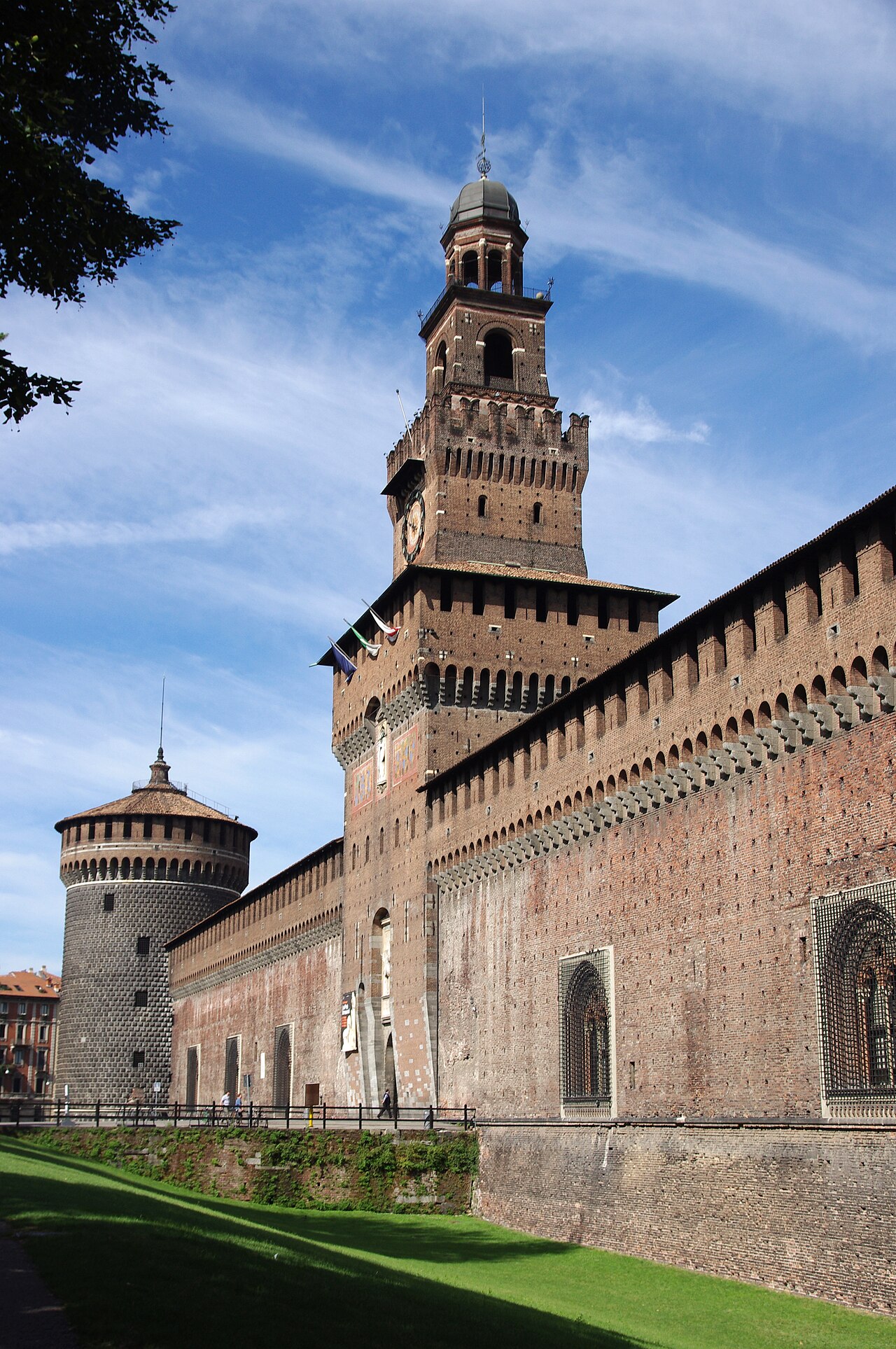
Peschiera Castle
Peschiera Castle, also known as Castello Borromeo di Peschiera, is a remarkable Renaissance fortified residence located in the village of Peschiera Borromeo, within the Milan province of the Lombardy region in Italy. This castle stands as a testament to the historical prominence and architectural evolution of the Borromeo family, one of Lombardy's most influential noble houses. The castle's origins trace back to a fortified farmhouse of uncertain age, which was transformed into a defensive stronghold in the early 15th century.
Early history and transformation into a castle
The site initially functioned as a fortified farmhouse or cascina, owned by the Milanese hospital institution Ospedale Nuovo since the 13th century. In 1432, Vitaliano I Borromeo, a banker to Duke Filippo Maria Visconti of Milan, obtained official permission to fortify this farmhouse. This ducal privilege allowed Vitaliano to enhance the structure with defensive features such as bastions, a moat, drawbridges, and towers, thus converting it into a small castle. This transformation marked the beginning of the Borromeo family's long-standing association with the property.
During the 15th century, the castle served as both a symbol of the Borromeo family's rising status and a modest military stronghold. It endured military action, including an attempted assault by Gascon troops in 1502. The castle also hosted significant historical figures, such as Francesco Sforza, who became Duke of Milan and granted the Borromeo family feudal rights, including the countship of Peschiera in 1461.
Architectural evolution and renaissance renovations
Following the Spanish occupation of Milan, the castle's defensive importance declined. The four corner towers were lowered, likely to prevent their use in uprisings. Ownership remained within the Borromeo family, including a period when Saint Carlo Borromeo, Archbishop of Milan, held the castle from 1562 to 1567 before transferring it to his uncle Giulio Cesare Borromeo.
In the late 16th century, Renato Borromeo, cousin to Cardinal Federico Borromeo, undertook an extensive renovation that transformed the fortress into a residential palace. This renovation introduced elaborate interior decorations and frescoes, reflecting the Renaissance shift from military utility to noble residence. The castle's quadrangular plan features three main wings framing a central courtyard and a fourth wing with a sloping scarpa wall descending into the surrounding moat, which remains filled with water from a natural spring, preserving the original defensive and aesthetic function.
Defensive features and layout
The castle is surrounded by a moat that echoes the original fish pond, or "peschiera," from which the locality derives its name. The main western entrance is marked by a prominent square tower projecting beyond the building line, which originally housed a drawbridge system supported by timber beams, some still visible today. This tower served multiple defensive roles including lookout, alarm station, and gatehouse.
Four detached, low round corner towers with truncated conical shapes rise over the moat. These towers, once militarily functional, were lowered during the Spanish period and have since been adapted into belvederes with stone staircases and iron railings. The northeastern tower uniquely features a small covered dock accessible via descending steps.
A former ravelin, a detached triangular fortification typical of medieval castles, once stood in front of the main tower and was accessed by a covered bridge over the moat. Although it was lost by the 17th century, its foundations remain visible at ground level.
Interior decoration and artistic heritage
The castle's interiors are richly decorated with frescoes and architectural details from the late Renaissance and Baroque periods. The Hall of Armors vestibule features a coffered ceiling with lobed floral designs in white, red, and blue, alongside a large stone fireplace and stone slab flooring.
The main staircase is adorned with late 16th-century grotesque frescoes attributed to Cesare Baglione, incorporating symbolic imagery such as fire, vases, universal animal emblems, and astrological signs. The principal hall, or Salone, contains extensive frescoes with allegorical themes and Latin inscriptions dating from approximately 1580 to 1596, highlighting the castle's rich artistic heritage.
Notable fresco cycles and rooms
- The First Mill Room and Second Mill Room display 17th-century landscapes featuring hydraulic mill wheels, symbolizing technological and economic themes of the period.
- The San Carlo Room commemorates Saint Carlo Borromeo's association with the castle, containing 16th-century grotesques and landscape frescoes with later 19th-century additions.
- The Lakes Room showcases Baroque paintings depicting water, boats, and foliage.
- The Borromeo Properties Room presents mid-17th-century views of family possessions, including Isola Bella, Arona, and Villa Borromeo at Cesano Maderno.
- The Sea Room features marine-themed paintings surrounding a fireplace.
- The Castle Room contains a 1763 fresco portraying the castle itself, providing valuable historical visual documentation.
- The Landscape Room exhibits large pastoral scenes consistent with 17th-century landscape painting traditions.
Private chapel dedicated to san carlo borromeo
The castle includes a private chapel dedicated to San Carlo Borromeo, constructed or adapted between the late 16th and early 17th centuries. The chapel walls and vaulted ceiling are decorated with grotesque frescoes, putti, and images of liturgical and musical instruments, attributed stylistically to Cesare Baglione. Additional frescoes depict the Baptism of Christ and St. Francis receiving the stigmata, created by a lesser-known artist. The altar houses a 17th-century painting of the Madonna with Child and saints.
Exterior features and grounds
The castle's exterior brick walls display heraldic decorations such as the Borromeo family coat of arms, known as Humilitas, and mullioned windows with pointed arches. Above the main entrance is a marble relief engraved with the initials CO.I.B., referring to Count Giovanni Borromeo.
The spacious courtyard is lined by a portico of nine arches supported by ten columns and features grass, plants, and flowers. Beyond the courtyard lies an Italian-style garden with terraces, centuries-old trees, flower beds, fountains, and water basins, blending the castle's military origins with its noble residential character.
Historical significance and preservation
Peschiera Castle is the oldest possession of the Borromeo family in Lombardy and reflects the family's commercial and financial prominence since the 15th century. The castle's continuous occupation and renovations illustrate the transition from medieval fortification to Renaissance residence. Its moat, corner towers, and layout preserve elements of its defensive past, while its interiors showcase significant artistic achievements.
Today, the castle remains private property, limiting public access to special occasions and events. The 20th-century restoration efforts, notably after Count Giancarlo Borromeo reacquired the property in 1926, have preserved its architectural and cultural heritage for future generations.
Frequently asked questions (FAQ)
- What is the historical significance of Peschiera Castle?
- Peschiera Castle, located in Peschiera Borromeo, Italy, dates back to the late 15th century and was built as a defensive fortification. Its strategic position allowed it to control important trade routes and protect the region during various conflicts, making it a vital part of Italy's military history.
- When was Peschiera Castle constructed?
- Construction of Peschiera Castle began in 1480 under the direction of the Duke of Milan, Ludovico Sforza. The castle was completed in 1490 and played a key role in the defense of the Melchiorre area throughout its history.
- Can I visit Peschiera Castle?
- Yes, Peschiera Castle is open to visitors who wish to explore its historic architecture and scenic surroundings. Guided tours are often available, providing insights into the castle's rich history and architectural features.
- What are the opening hours for Peschiera Castle?
- Peschiera Castle typically opens to visitors from 9 AM to 5 PM, but hours may vary depending on the season. It is advisable to check the official website or contact the castle administration for the most current information before your visit.
- Is it possible to access Peschiera Castle with mobility aids?
- Yes, Peschiera Castle is designed to accommodate visitors with mobility challenges. There are accessible paths and facilities to ensure that everyone can enjoy the historical site comfortably.
- What is the best time to visit Peschiera Castle?
- The best time to visit Peschiera Castle is during the spring and early autumn when the weather is mild, and the gardens are in full bloom. Additionally, visiting during weekdays can help you avoid larger crowds.
- Are there any nearby attractions to Peschiera Castle?
- Yes, nearby attractions include the beautiful Parco della Preistoria and the picturesque town of Peschiera Borromeo, which offers charming shops and restaurants. The area also features several lakes and parks, perfect for a relaxing day out.
- What are the ticket prices for visiting Peschiera Castle?
- Ticket prices for Peschiera Castle are generally affordable, with discounts available for students and seniors. Check the official website for the latest pricing information and any special offers that may be available during your visit.
Information
Sources & official resources
Verify the information above using these authoritative references.
Loading map...
Visitor reviews
No reviews yet. Been here? Write the first review and help other travelers!
Write the first reviewVisited this castle? Share your experience
Your review helps other travelers and adds first-hand knowledge to our encyclopedia.