Castell del Puig
Castell del Puig is a significant historic fortress perched on a prominent hill above the town of El Puig in the Valencia region of Spain. This hill castle was originally constructed in the 11th century during the period of Muslim rule, serving as a strategic military stronghold to defend the northern route leading to the important city of Valencia. Its commanding position atop the hill provided extensive visibility and control over the surrounding fertile plains, making it a vital defensive site throughout the medieval era.
The castle's name reflects its complex and layered history. It derives from the Roman term "Podium," meaning hill, which evolved through Arabic forms such as "Gabol" or "Jubal·la" during Muslim control. Later, as the region transitioned to Christian rule, the name was adapted into medieval spellings like Juballa, Cepullam, and eventually Cebolla. During the Muslim period, the fortress was known as Yubayla or Jubal·la, highlighting its role as a protective barrier against incursions from northern territories.
Early history and strategic importance
The castle's foundation in the 11th century coincided with the period of Muslim expansion and consolidation in the Iberian Peninsula. Its location on the hill, known locally as Muntanya del Castell or Cerro del Puig, allowed for effective surveillance and defense against Christian forces advancing from the north. The fortress's design incorporated typical Muslim military architectural features, including rectangular and square towers, robust defensive walls, and a surrounding moat.
El Cid's conquest and reconstruction
In 1093, the renowned Castilian knight Rodrigo Díaz de Vivar, famously known as El Cid, captured the fortress during his campaigns in the region. Following its conquest, El Cid undertook significant reconstruction efforts, fortifying the castle with materials sourced from a nearby sacked Valencian suburb. He established a walled settlement around the castle, which laid the foundation for the modern town of El Puig. This period marked a transition in the castle's architecture, blending Muslim fortification techniques with Christian military adaptations.
Medieval conflicts and ownership changes
The castle experienced frequent changes in control between Muslim and Christian forces throughout the 12th and 13th centuries. Muslim defenders often demolished parts of the fortress during retreats to prevent its use by enemy armies. In 1237, Jaime I of Aragón reconquered the site, renaming it El Puig de la Cebolla. Jaime I initiated extensive rebuilding efforts and founded a Mercedarian monastery near the castle, fostering the development of the surrounding town.
Around 1240, portions of the territory were granted to Arnau de Cardona, a knight recognized for his role in the conquest. In the mid-14th century, King Pedro IV of Aragón donated the town and castle to the neighboring area of Jérica. The castle's strategic importance continued during the Castilian-Aragonese War (1356–1369), when Pedro IV ordered its destruction in 1365 to prevent its use by opposing forces.
Later historical events
During the War of Spanish Succession in the early 18th century, the town of El Puig supported Archduke Charles. Following Philip V's victory, punitive measures were taken against the town and its fortifications. Throughout its history, Castell del Puig has been referenced in several medieval chronicles, including the Crónica del Cid, Crónica de San Juan de la Peña, and the Gestas del Rey Don Jayme de Aragón. The 16th-century historian Jerónimo Zurita referred to the site as Pueyo de Cebolla in his detailed annals of the Crown of Aragon.
Architectural features and remains
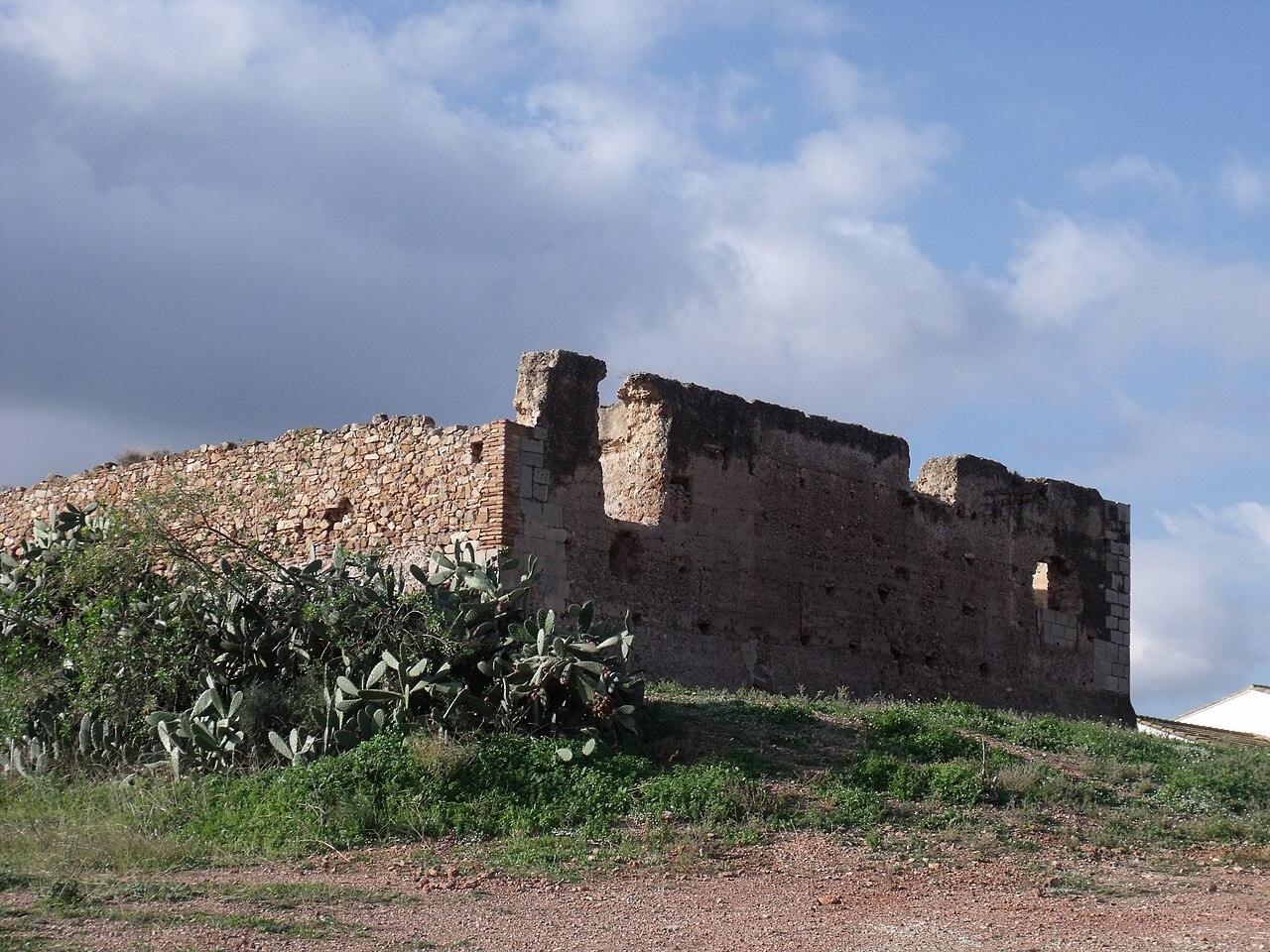
Castell del Puig is constructed primarily of mortar and rodeno stone, a dense reddish sandstone typical of the region. Despite significant deterioration over the centuries, many sections of the original defensive walls remain visible, preserving the outline of the fortress's layout.
Towers and defensive structures
The surviving towers reflect the castle's Muslim military design, characterized by rectangular and square shapes. A notable feature is the quadrangular albarrana tower situated approximately 70 meters northwest of the main fortress on a lower hillside. This tower was connected to the main castle by a bridge, whose permanence is uncertain, and served to extend the defensive coverage of the entrance area. It allowed defenders to fire upon attackers from multiple angles, enhancing the fortress's defensive capabilities.
The keep, or torre del homenaje, is identifiable by its remaining walls. On the southern slope near the approach path, walls constructed from rodeno stone slabs bonded with earth remain intact. These construction methods demonstrate the resourcefulness and typical fortification techniques of medieval builders in the region.
Moat and defensive landscape
Surrounding much of the fortress was a once deep and dry moat, designed to obstruct enemy advances and prevent tunneling beneath the walls. This feature underscores the castle's strategic military importance and the defensive thinking of its medieval occupants.
Archaeological significance and later military use
Archaeological excavations in the vicinity have uncovered Iberian and Roman pottery, indicating the area's significance long before the medieval period. These findings suggest that the site was a focal point of human activity and strategic interest for centuries.
In the 20th century, traces of trenches carved into the hillside during the Spanish Civil War reveal the castle's continued military relevance. Although now in a ruined state, Castell del Puig remains one of the most important fortifications in the northern Valencia plains.
Today, visitors can explore the remains of the walls, towers, and moat, gaining insight into the castle's layered history and architectural evolution from Muslim origins through Christian reconquest and beyond. The castle's materials, location, and surviving structures continue to tell the story of a fortress that played a pivotal role in the region's turbulent medieval history.
Frequently asked questions (FAQ)
- How do I get to Castell del Puig?
- Castell del Puig is located in El Puig, Spain, easily accessible by car or public transport from Valencia. If you're driving, take the A-7 motorway and follow signs to El Puig. For public transport, you can take a train from Valencia to El Puig station, followed by a short walk to the castle.
- What is the historical significance of Castell del Puig?
- Castell del Puig dates back to the 13th century and played a vital role during the Reconquista, serving as a strategic military stronghold. It has witnessed numerous battles and changes in power, reflecting the rich history of the region. Today, it stands as a testament to medieval architecture and the cultural heritage of Spain.
- When was Castell del Puig built?
- Construction of Castell del Puig began in the early 13th century, shortly after the Christian conquest of Valencia. It was completed in subsequent decades, showcasing a blend of Romanesque and Gothic architectural styles. The castle has undergone various renovations over the centuries, preserving its historical essence.
- Can I visit Castell del Puig year-round?
- Yes, Castell del Puig is open to visitors year-round, though specific opening hours may vary seasonally. It's advisable to check the official website or contact the visitor center for the most current information before your visit. The castle offers guided tours, providing insights into its fascinating history.
- Why is Castell del Puig a popular tourist attraction?
- Castell del Puig attracts visitors for its stunning views of the surrounding landscape and its rich historical context. The castle's well-preserved architecture and the opportunity to learn about Spain's medieval past make it a favorite among history enthusiasts. Additionally, the picturesque setting and nearby amenities enhance the overall visitor experience.
- Is it possible to access Castell del Puig with a wheelchair?
- While Castell del Puig welcomes visitors of all abilities, the terrain can be challenging due to steep paths and uneven surfaces. Efforts have been made to improve accessibility, but it is recommended to check with the visitor center for specific accessibility options and any assistance that may be available during your visit.
- What are the best times to visit Castell del Puig?
- The best times to visit Castell del Puig are during the spring and fall when the weather is mild and comfortable for exploring. Summer can be hot, making it less ideal for outdoor activities, while winter may see fewer visitors. Planning your visit during weekdays can also help avoid crowds.
- Are there any nearby attractions to Castell del Puig?
- Yes, nearby attractions include the picturesque town of El Puig, with its charming streets and local cuisine. Additionally, visitors can explore the beautiful beaches along the Mediterranean coast, just a short drive away. The area also offers hiking trails and natural parks for outdoor enthusiasts.
- What are the ticket prices for Castell del Puig?
- Ticket prices for Castell del Puig may vary depending on age and any special exhibitions. Generally, adult tickets are affordably priced, with discounts available for children, students, and seniors. It's best to check the official website for the most up-to-date pricing and any special offers.
- What are the opening hours of Castell del Puig?
- Castell del Puig typically opens at 10 AM and closes at 6 PM, but these hours can change based on the season. It is closed on certain holidays, so it's wise to verify the schedule before your visit. Guided tours are available at specific times throughout the day, enhancing your experience at the castle.
Information
Loading map...
Visitor reviews
No reviews yet. Been here? Write the first review and help other travelers!
Write the first reviewVisited this castle? Share your experience
Your review helps other travelers and adds first-hand knowledge to our encyclopedia.