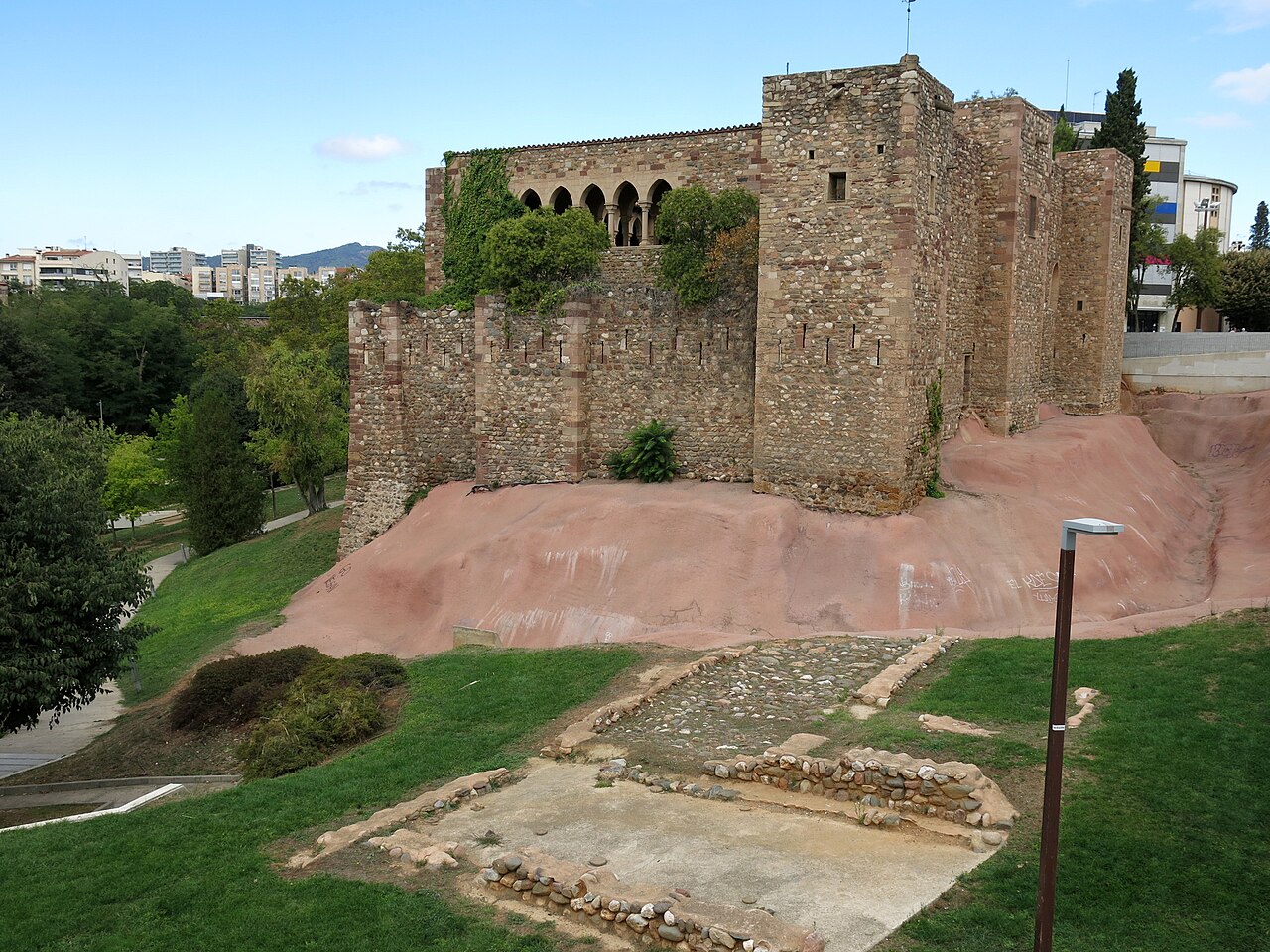
The Castell de Voltrera is a notable example of a medieval hill castle located in the municipality of Abrera, within the region of Catalonia, Spain. This fortress, constructed during the medieval period, served as a noble residence and strategic stronghold under the early Catalan feudal system. Its origins and architectural features reflect the complex socio-political landscape of medieval Catalonia and the evolution of castle-building techniques adapted to local materials and defensive needs.
Historical context and ownership lineage
The earliest documented reference to the Castell de Voltrera dates back to 1027, when it was held as a fief by Ramon Guillem de Voltrera. This grant was made by his brother, the lord of Castellví, placing the castle initially within the barony of Castellví de Rosanes. The castle remained under the control of the Voltrera family for several decades, marking it as their familial seat and a center of local power.
Subsequent holders included Arbert in 1058 and Pere de Voltrera, mentioned in documents from 1110. By 1176, control returned to the main Castellví family through Guillem Ramon III, who transferred ownership to his son Gombau. The castle later passed to the influential Montcada family through marriage, linking it to one of the prominent noble lineages in Catalonia.
In the 16th century, the castle became known as Castell de Vilalba, reflecting changes in local nomenclature or ownership identities. The War of Spanish Succession in the early 18th century marked a turning point, as the castle’s lords abandoned the fortress due to safety concerns amid the conflict’s aftermath. They relocated to the nearby Casa Vilalba, situated below the castle hill, signaling the decline of the castle as a primary noble residence.
Architectural features and construction techniques
The surviving remains of Castell de Voltrera consist primarily of fragmented walls forming an approximate triangular enclosure. These walls would have enclosed multiple interior rooms and defensive spaces. The lower sections are constructed from small rounded stones set in rubble masonry, a common medieval technique that provided sturdy foundations. The upper portions utilize rammed earth construction, where layers of compacted soil were used to create solid, thick walls, demonstrating adaptation to available local materials and defensive strategies.
The Romanesque chapel of Sant Pere
Adjacent to the western side of the castle’s main enclosure lie the ruins of the Romanesque chapel of Sant Pere, the oldest surviving element of the complex, dating from around the 11th century. This small ecclesiastical building features a single nave ending in a semicircular apse, characteristic of early Romanesque architecture. It also includes two apsidioles, or small secondary chapels, carved into the side walls near the apse, indicating a modest yet carefully planned religious space.
The chapel’s exterior is decorated with Lombard-style ornamentation, including blind arches and stripes primarily on the north-facing façade. This decorative motif was widespread in medieval Catalonia and reflects the cultural and architectural influences circulating during that period. Nearby, a heavily blocked passage arch dating to the 16th century suggests later modifications, possibly serving as a connecting corridor or gate between the chapel and other parts of the castle complex.
Military and religious functions
The combination of the castle’s defensive walls and the adjacent Romanesque chapel illustrates the dual military and religious roles of the site. The fortress functioned as a noble residence and stronghold, while the chapel provided a dedicated place for worship and religious ceremonies for the castle inhabitants and local community.
Throughout its history, Castell de Voltrera adapted to changing political and social circumstances, reflected in its architectural evolution and ownership transitions. The castle’s decline in the 18th century marked the end of its active use, but its ruins remain a valuable cultural and historical site.
Preservation and current condition
Today, the castle is classified as ruins, with only partial walls and structural fragments surviving. The use of rubble masonry and rammed earth has influenced the preservation state, as rammed earth is particularly vulnerable to erosion over time. The chapel of Sant Pere remains a significant architectural relic, offering insight into early Romanesque ecclesiastical design in the region.
Efforts to study and preserve the site focus on maintaining its historical integrity and facilitating public access to this important medieval heritage landmark in Catalonia.
Visiting information and cultural significance
Located in the municipality of Abrera, the Castell de Voltrera is accessible to visitors interested in medieval history and Catalan heritage. While the site consists mainly of ruins, it offers a tangible connection to the feudal past and architectural traditions of the region. The nearby Casa Vilalba and surrounding landscape provide additional context for understanding the castle’s historical environment.
Visitors can explore the remains and appreciate the blend of military and religious architecture, as well as the castle’s role within the broader narrative of Catalonia’s medieval nobility and territorial organization.
Frequently asked questions (FAQ)
- When was Castell de Voltrera originally built?
- The earliest records date the castle to at least 1027, indicating its construction occurred in the early medieval period, likely in the 11th century.
- What architectural styles are present at Castell de Voltrera?
- The castle features medieval military architecture with rubble masonry and rammed earth walls, and the adjacent chapel is an example of early Romanesque style with Lombard ornamentation.
- Can visitors access Castell de Voltrera?
- The castle remains are ruins accessible to the public, though facilities may be limited. Visitors should check local sources for access details and opening times.
- Why did the castle lose its importance?
- The castle was abandoned after the War of Spanish Succession in the early 18th century when its lords moved to the nearby Casa Vilalba for safety, leading to its decline as a noble residence.
- What is the significance of the chapel of Sant Pere?
- The chapel of Sant Pere is the oldest surviving structure on the site, showcasing early Romanesque architecture and Lombard decorative motifs, reflecting the religious aspect of the castle complex.
Information
Website
Visit websiteSources & official resources
Verify the information above using these authoritative references.
Loading map...
Visitor reviews
No reviews yet. Been here? Write the first review and help other travelers!
Write the first reviewVisited this castle? Share your experience
Your review helps other travelers and adds first-hand knowledge to our encyclopedia.