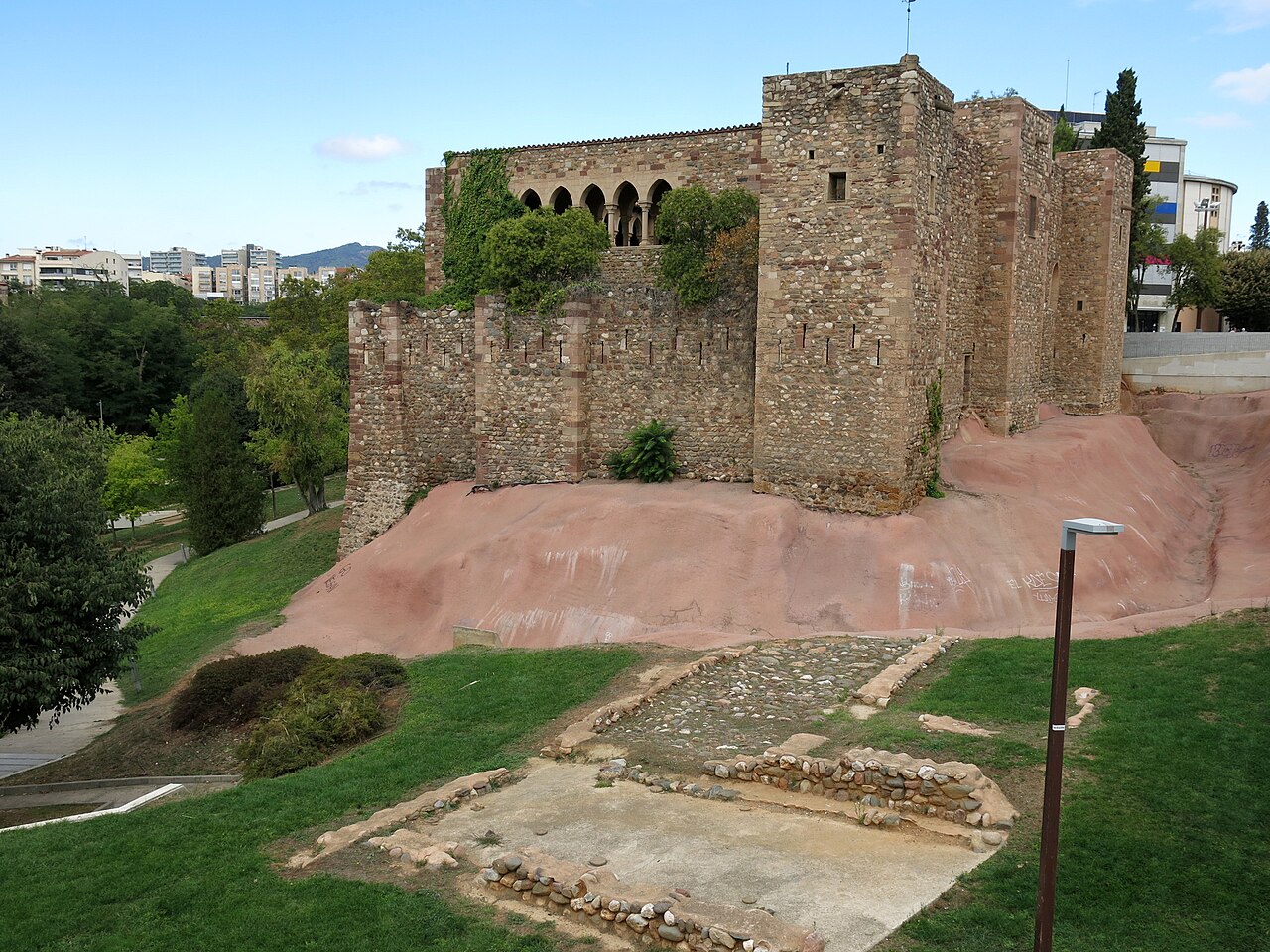
Castell de Vacarisses
Castell de Vacarisses stands as a remarkable example of a medieval hill castle in the municipality of Vacarisses, Catalonia, Spain. Its origins trace back to the early medieval period, with the earliest documented reference dating to the year 1001. This castle has witnessed centuries of historical transformations, evolving from a strategic fortress to a noble farmhouse, reflecting the changing socio-political landscape of the region.
Early history and medieval significance
The castle’s first known mention appears in a document recording the donation of lands and control over regions including Osona and Manresa by Count Borrell to his wife, Ermessenda of Carcassonne, in 1001. By 1023, Ermessenda pledged multiple castles to her son Berenguer Ramon I, among them Vacarisses, underscoring its importance within the noble territorial holdings of the time.
Throughout the 11th century, ownership of Castell de Vacarisses transferred to the influential Montcada family, a prominent noble lineage in Catalonia. The Montcadas appointed castellans to oversee the castle, maintaining control for over two centuries. The castle’s role as a feudal stronghold is evidenced by its inclusion in a 1291 marriage settlement involving Guilleuma de Montcada and the infant Pere, marking the last Montcada ownership before Guilleuma’s death in 1309.
Fortifications and military role in the late medieval period
In 1358, King Pere el Cerimoniós sold Castell de Vacarisses along with neighboring parishes to Jaume Desfar for 4,000 sous, a currency of that era. The castle’s military significance grew during the late 14th century, particularly around 1396 during conflicts involving the Count of Foix. Fortifications were enhanced to strengthen defenses, as reflected in the surviving remnants of defensive walls and access ramps.
By the mid-15th century, the castle continued to serve a central role in local administration and defense. A 1359 inventory listing weapons and belongings highlights its ongoing strategic importance within the parish community.
Transition to noble residence and agricultural estate
The late 16th century marked a significant transition when Isabel Desfar became Lady of Vacarisses, Rellinars, and Castellbell through marriage to Francesc Amat. This alliance brought the castle into the hands of the Amat family, who rose in prominence over subsequent centuries. In 1702, Josep Amat was granted the hereditary title Marquis of Castellbell, further elevating the family’s status.
Notably, Manuel Amat i Junyent, born in 1707, served as Governor of Chile and later as Viceroy of Peru from 1761 to 1776 during the reign of King Ferdinand VI of Spain, illustrating the family’s colonial influence.
By the late 18th century, the castle’s function shifted from military and noble residence to an agricultural center focused on land rent collection and farming activities. This shift is evident in the addition of agricultural installations, including granaries, cellars, and traditional stone wine vats, reflecting the castle’s adaptation to economic changes.
Architectural evolution and structural features
Medieval foundations and fortifications
The current structure of Castell de Vacarisses primarily dates from the 17th and 18th centuries, built on a rectangular plan characteristic of a noble farmhouse. However, beneath this later construction lie earlier foundations from the 11th century onward. Visible remnants include red sandstone retaining walls from the 13th and 14th centuries, fragments of defensive walls, and original access ramps that hint at the castle’s fortified past.
A notable feature is a small prison area created by inserting a dividing wall into an older vaulted chamber, indicating changing uses over time. The presence of a specialized horse post within the structure further illustrates the castle’s role in supporting mounted occupants and cavalry operations.
Later additions and modifications
The castle’s main façade features a slightly projecting section with an entrance door framed by large wedge-shaped stones called voussoirs. Above the door, three rectangular windows with iron railings provide light to the upper floor. The exterior walls are plastered but reveal masonry details at the corners and around window lintels. A modest cornice decorated with two rows of tile heads runs below the roofline, adding subtle decorative interest.
The roof is gabled and covered with traditional Arabic tiles, with a horizontal ridge along the main façade. The 18th-century western wing and adjoining structures were added to accommodate agricultural functions, including three large wine vats used for grape processing, reflecting the castle’s transformation into a center for wine production.
In the 19th century, parts of the castle were repurposed to house a school and the town hall, necessitating interior alterations to suit these civic functions. After these institutions relocated in 1974, the castle experienced a period of abandonment until municipal acquisition in 1985 prompted restoration and archaeological investigations that clarified its architectural phases and historical development.
Archaeological insights and preservation efforts
Archaeological studies conducted in 2003 supported the hypothesis that the original castle may have been located nearby at a site called "Torrota," with the current castle representing a relocation during the 14th or 15th centuries. Excavations uncovered walls built with regularly cut sandstone blocks arranged in even rows, dating to the medieval period, which form part of the castle’s fortifications.
Today, Castell de Vacarisses stands as a layered historical monument combining medieval foundations with later noble and agricultural adaptations. The castle’s preservation as a well-preserved hill castle offers valuable insights into the architectural evolution and socio-economic transformations of Catalonia from the early medieval period through the modern era.
Cultural significance and community role
Beyond its architectural and historical importance, Castell de Vacarisses has played a vital role in the local community for centuries. Its use as a school and town hall in the 19th and 20th centuries demonstrates its integration into civic life. The castle’s agricultural installations highlight its economic contributions, particularly in wine production, which remains a significant cultural heritage of the region.
Current restoration and conservation efforts aim to preserve the castle’s unique character and promote its historical narrative, making it a valuable cultural landmark in Catalonia. Visitors can appreciate the castle’s blend of medieval fortifications and later noble farmhouse features, providing a tangible connection to the region’s rich past.
Frequently asked questions (FAQ)
- How do I get to Castell de Vacarisses?
- You can reach Castell de Vacarisses by taking the train from Barcelona to Vacarisses station, followed by a short hike or taxi ride to the castle. If you're driving, the castle is accessible via the C-58 motorway, with parking available nearby.
- What is the historical significance of Castell de Vacarisses?
- Castell de Vacarisses dates back to the 10th century and served as a defensive fortress during medieval times. It played a crucial role in the region's history, reflecting the architectural style and military strategies of the era.
- When was Castell de Vacarisses built?
- Construction of Castell de Vacarisses began in the 10th century, with several modifications made over the centuries. The castle's evolution showcases the changes in defensive architecture from the medieval period to the Renaissance.
- Can I take a guided tour of Castell de Vacarisses?
- Yes, guided tours are available and provide valuable insights into the castle's history and architecture. It's recommended to book in advance, especially during peak tourist seasons, to ensure availability.
- Why is Castell de Vacarisses a popular tourist destination?
- Castell de Vacarisses is popular for its stunning views, rich history, and unique architectural features. Visitors enjoy exploring the castle's grounds and learning about its historical significance in the region.
- Is it possible to access Castel de Vacarisses with limited mobility?
- While the castle's location on a hill may pose challenges, efforts have been made to improve accessibility. It is advisable to contact the castle administration prior to your visit to inquire about specific accommodations.
- What are the opening hours for Castell de Vacarisses?
- Castell de Vacarisses is typically open to visitors from 10 AM to 6 PM, but hours may vary by season. It's best to check the official website or call ahead for the most current information before planning your visit.
- What is the ticket price for visiting Castell de Vacarisses?
- Ticket prices for Castell de Vacarisses are generally affordable, with discounts available for children and seniors. Be sure to check the official website for the latest pricing and any special offers that may be available during your visit.
- When is the best time to visit Castell de Vacarisses?
- The best time to visit Castell de Vacarisses is during the spring and early fall when the weather is mild and pleasant. These seasons also tend to have fewer tourists, allowing for a more enjoyable experience while exploring the castle.
- Are there any nearby attractions to visit while at Castell de Vacarisses?
- Yes, nearby attractions include the charming village of Vacarisses and the scenic Montserrat mountain range. Both locations offer additional opportunities for hiking, sightseeing, and experiencing local culture.
Information
Loading map...
Visitor reviews
No reviews yet. Been here? Write the first review and help other travelers!
Write the first reviewVisited this castle? Share your experience
Your review helps other travelers and adds first-hand knowledge to our encyclopedia.