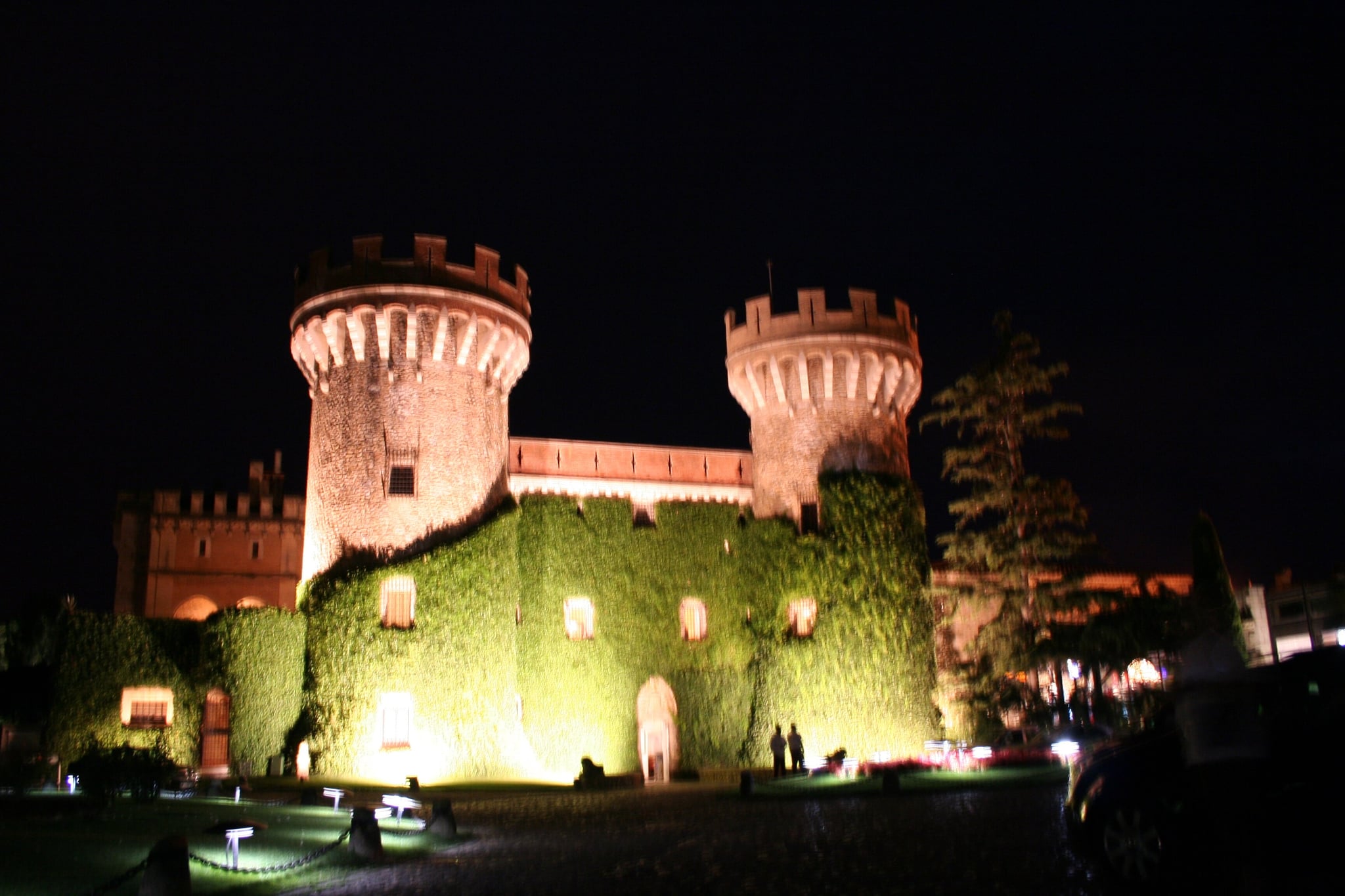
Castell de Vilajoan
Castell de Vilajoan stands as a notable example of a medieval hill castle located in the village of Vilajoan, within the municipality of Garrigàs in Catalonia, Spain. This castle-palace primarily dates from the early 15th century and represents the architectural legacy of the Catalan feudal era, reflecting the socio-political dynamics of the region during the late Middle Ages.
The castle's origins are closely tied to the Pontós family, an ancient noble lineage influential in the area. The first documented mention of Castell de Vilajoan appears in 1406, confirming its existence and importance as a fortified noble residence at that time. It is likely that the castle's construction in its present form was undertaken during the lordship of Galceran de Pontós, whose tenure coincides with the early 15th century. Although the castle served as the center of a small lordship, it did not possess full jurisdictional authority but was part of the broader administrative territory known as the vegueria of Besalú, specifically within the boundaries referred to as "in termini castri de Ciurana."
Historical ownership and significance
In 1493, ownership of Castell de Vilajoan passed to the Rocabruna family, who maintained control until the late 16th century. During their tenure, the castle continued to function as a noble residence, adapting to the evolving social and political landscape of Catalonia. After the 1500s, the castle's direct involvement in local governance or military affairs diminished, and it transitioned primarily into a residential role. Today, the castle remains privately owned and serves as a secondary home for a family based in Girona.
Architectural features and layout
The castle is constructed as a substantial rectangular building using cobblestones, characteristic of medieval fortifications in the region. It includes a modest central courtyard and faces north towards the village of Vilajoan and the nearby Fluvià river, which lies just south of the castle. This strategic placement near waterways was typical for medieval castles, providing both defense and access to resources.
Entrance and defensive elements
The main entrance is set within a rectangular tower integrated into the castle walls, notable for not projecting outward from the main structure. The doorway features a semicircular arch framed by finely cut wedge-shaped stones called voussoirs, which support the arch's curve. Above the entrance, a well-preserved machicolation stands out. This defensive platform, constructed from squared ashlar blocks, was historically used to drop objects or boiling substances on attackers attempting to breach the gate.
Battlements and windows
The castle's walls are topped with battlements featuring rectangular crenellations, designed to provide cover for defenders. Narrow vertical slits known as arrow slits or loopholes are embedded within these battlements, allowing archers to defend the castle effectively. Over time, many of these battlements have been filled with masonry and covered by a roof, indicating modifications that shifted the castle's defensive posture.
On the northern façade, two twin Gothic windows with trilobed arches add elegant medieval detailing. These arches consist of three rounded lobes arranged in a cloverleaf pattern, a decorative element typical of Gothic architecture in Catalonia.
Towers and walls
Along the western wall, which parallels the river, a rectangular corner tower stands at the northern end. Like the entrance tower, it features battlements, although these too have been filled with masonry. The castle's overall austere construction and defensive features reflect its role as a fortified noble residence intended to protect inhabitants and assert local authority in the region.
Surrounding historical context and architectural environment
The village of Vilajoan surrounding the castle contains other structures dating from the 16th century, including door lintels and Renaissance-style windows inscribed with dates such as 1559 and 1563. While these architectural details belong to nearby buildings rather than the castle itself, they provide valuable context for understanding the regional development during the late medieval and early modern periods.
The castle's location near the Fluvià river and its integration within the landscape of Garrigàs highlight the strategic importance of waterways and natural features in the placement and design of medieval fortifications in Catalonia. The modest scale of Castell de Vilajoan, combined with its defensive elements, exemplifies the typical fortified noble residences of the Catalan countryside during the late medieval period.
Frequently asked questions (FAQ)
- What is the historical significance of Castell de Vilajoan?
- Castell de Vilajoan is a significant historical site that dates back to the medieval period. It played a crucial role in the defense of the region and showcases the architectural styles of its time, making it an important landmark in Spanish history.
- When was Castell de Vilajoan built?
- The construction of Castell de Vilajoan began in the 12th century, during a time of territorial conflicts in Spain. Over the centuries, it has undergone various renovations, reflecting the architectural evolution of the region.
- Can I visit Castell de Vilajoan?
- Yes, Castell de Vilajoan is open to visitors who wish to explore its rich history and stunning architecture. It is advisable to check the official website for any specific visitor guidelines or access restrictions.
- What are the opening hours for Castell de Vilajoan?
- Castell de Vilajoan typically opens its doors to visitors from 10 AM to 6 PM, but hours may vary based on the season or special events. It is recommended to confirm the current opening hours before planning your visit.
- Is Castell de Vilajoan accessible for people with disabilities?
- Yes, efforts have been made to ensure that Castell de Vilajoan is accessible to all visitors, including those with disabilities. However, some areas may still present challenges due to the castle's historical structure, so it's best to inquire in advance for specific accessibility options.
- What is the best time to visit Castell de Vilajoan?
- The best time to visit Castell de Vilajoan is during the spring and fall months when the weather is mild and pleasant. These seasons provide an optimal experience for exploring the castle and enjoying the surrounding landscapes.
- Are there any nearby attractions to Castell de Vilajoan?
- Yes, there are several attractions near Castell de Vilajoan, including picturesque hiking trails and other historical sites. Visitors can also explore the charming village of Garrigàs, which offers local dining and cultural experiences.
- What are the ticket prices for Castell de Vilajoan?
- Ticket prices for Castell de Vilajoan are generally affordable, with discounts available for students and seniors. It's advisable to check the official website for the most current pricing information and any special promotions.
Information
Sources & official resources
Verify the information above using these authoritative references.
Loading map...
Visitor reviews
No reviews yet. Been here? Write the first review and help other travelers!
Write the first reviewVisited this castle? Share your experience
Your review helps other travelers and adds first-hand knowledge to our encyclopedia.