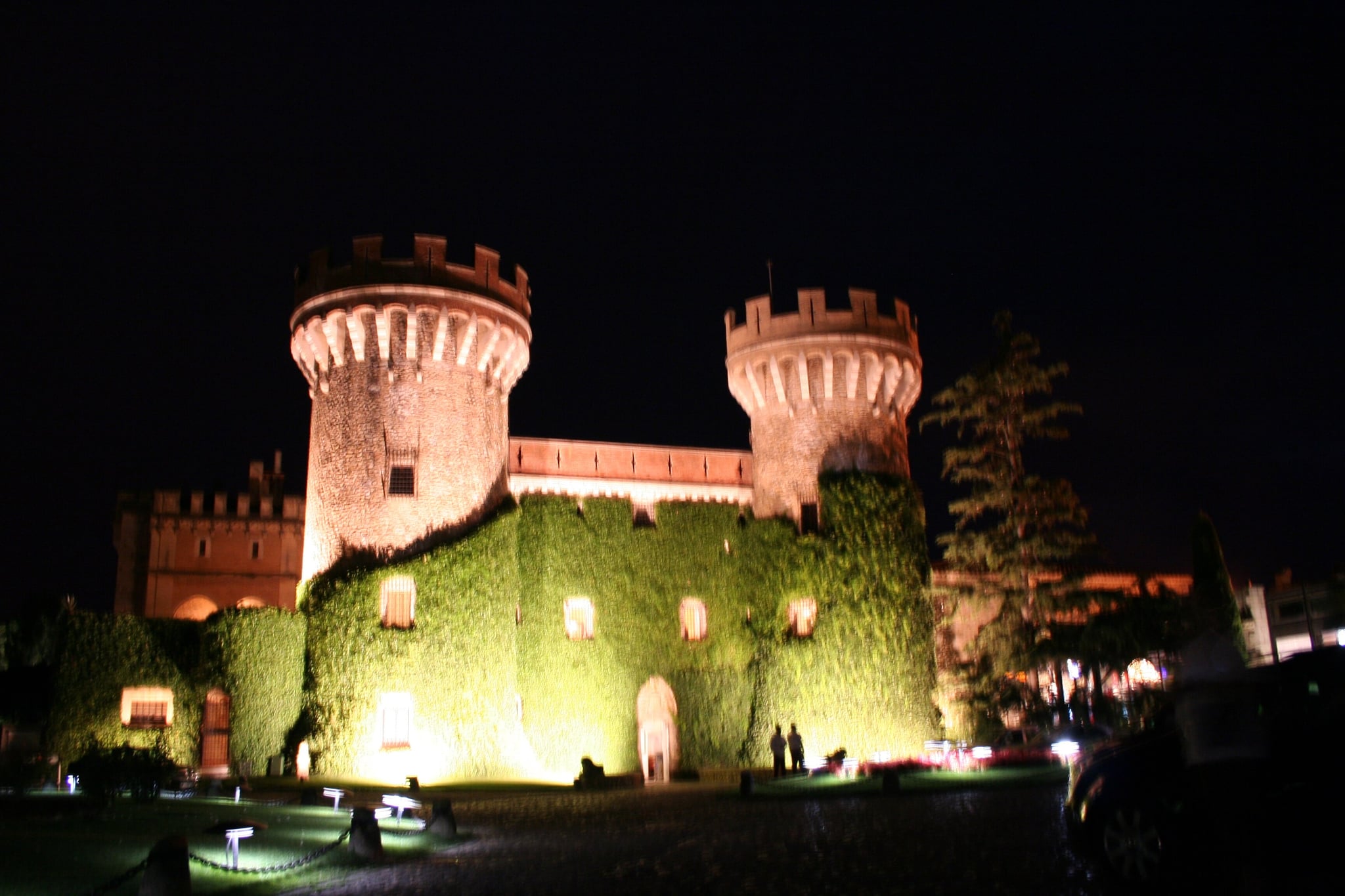
Castell de Bàscara
The Castell de Bàscara is a significant medieval hill castle located in the town of Bàscara in Catalonia, Spain. Perched on the highest northern point of the town, it commands a strategic position overlooking a critical crossing of the Fluvià river. This location was crucial for controlling access and defense in the region during the medieval period. The castle's origins trace back to the 13th century, with its earliest documented mention dating to 1241, when King James I of Aragon authorized Bishop Guillem de Cabanelles of Girona to fortify the area.
The castle formed the third enclosure within the defensive walls of Bàscara, designed primarily to protect private residences within its bounds. Its fortifications were intricately integrated with the town's earlier defenses: the southern and western walls aligned with the second town barrier, while the eastern wall followed the perimeter of the original first wall. An internal east-west street structured the settlement's layout, reflecting thoughtful urban planning within the fortified enclosure.
Medieval fortifications and architectural features
Between 1369 and 1380, the castle underwent significant strengthening of its defenses in response to heightened threats of invasion, as recorded in contemporary documents. A notable feature from this period is the 1407 coat of arms of Bishop and Cardinal Berenguer d’Anglesola, prominently placed above the new gate of the fortifications. This heraldic emblem, carved by the artisan Pere Oller at the cost of 107 sous, underscores the castle's ongoing religious and political significance.
The castle originally featured three towers, as depicted in a 1711 French map: two circular towers and one square tower. However, during the Napoleonic Wars, the castle suffered severe damage when two towers were destroyed by gunpowder explosions. The only surviving tower, known as the Prison Tower, remains a key architectural and historical element of the site. Following the conflict, Marshal Suchet ordered the dismantling of the remaining fortifications, marking the end of the castle's military role and initiating its decline into ruin.
Structural remains and defensive design
The visible remains of Castell de Bàscara reveal an irregular arrangement of adjoining sections covered with sloping tiled roofs. The structure is organized across three levels: a ground floor, first floor, and attic. The eastern façade connects directly with a thick, angled battered defensive wall, which originally protected the castle and serves as its main frontage. Entry is marked by a lowered arch doorway framed in stone, while the first floor features two altered windows with similar lowered arches constructed in brick. Narrow vertical loopholes remain in the upper walls, highlighting the castle's defensive purpose.
Inside, the entrance vestibule is covered by a lowered vault made of flat-laid bricks, a technique also present in the vaulted ceilings of the ground floor rooms. The main hall on the first floor boasts a more complex lowered vault with lunettes and decorative moldings, demonstrating a level of craftsmanship in the interior design. The castle walls are primarily constructed from unshaped cobblestones and stones bound with lime mortar, with some sections protected by plaster.
To the north of the main building lies a detached segment of the original enclosing wall, featuring a semicircular arched gate formed with wedge-shaped voussoirs. Above this gate is the carved coat of arms of Bishop Berenguer d’Anglesola, linking this entrance to the early 15th-century fortification phase.
The Prison Tower, located at the northeast corner connecting the two wall sections, is the only surviving tower of the original three. This circular tower features a sloping base designed to strengthen its foundation and resist attacks. A modern door at ground level provides access, and a brick window is present on the southern side. The tower's upper battlements retain remnants of brick-built loopholes, underscoring its military function.
Historical context and significance
Castell de Bàscara played a vital role in the medieval defense system of the region, reflecting the political and religious influence of the medieval Catalan civilization. The castle's integration with the town's fortifications illustrates the layered defensive strategies employed during the High and Late Middle Ages. Its association with notable figures such as King James I and Bishop Berenguer d’Anglesola highlights its importance within the ecclesiastical and royal power structures of the time.
The damage sustained during the Napoleonic Wars and the subsequent dismantling ordered by Marshal Suchet reflect the shifting military tactics and political changes in the early 19th century. The castle's decline into ruin coincided with the reduced strategic value of such fortifications in modern warfare.
Current status and cultural heritage
Today, Castell de Bàscara is privately owned and not open to public access. Despite its ruined condition, it is officially recognized as a cultural heritage site of national importance within Catalonia and Spain, registered under the reference number RI-51-0005798. The site remains an important testament to the region's medieval military architecture and history.
While the castle is not accessible for tourism, its visible remains provide valuable insights into medieval defensive construction techniques and urban fortification planning. The surviving Prison Tower and the remnants of the enclosing walls offer a tangible connection to the past and the complex history of Catalonia's fortified settlements.
Architectural features in detail
Vaulting and masonry
The use of lowered vaults with flat-laid bricks in the entrance vestibule and ground floor rooms demonstrates the technical skills of medieval builders in the region. The main hall's vaulted ceiling with lunettes and decorative moldings indicates an attention to both structural integrity and aesthetic detail.
The castle's walls, composed of unshaped cobblestones and stones bonded with lime mortar, reflect typical medieval construction methods. The application of plaster in some areas suggests attempts at preservation or adaptation over time.
Defensive elements
The battered wall on the eastern façade provided enhanced resistance against siege engines and undermining attempts. The narrow loopholes allowed defenders to observe and fire upon attackers while minimizing exposure. The circular Prison Tower with its sloping base and battlements was a critical defensive feature, offering both observation and protection.
Frequently asked questions (FAQ)
- How do I visit Castell de Bàscara?
- Castell de Bàscara is privately owned and not open to the public, so visits are not permitted. Visitors can view the castle's exterior remains from nearby public areas in Bàscara.
- What is the historical significance of Castell de Bàscara?
- The castle was a key medieval fortification controlling the Fluvià river crossing and reflects the military and ecclesiastical power of medieval Catalonia.
- When was Castell de Bàscara built?
- The earliest known reference to Castell de Bàscara dates to 1241, during the 13th century, under the authority of King James I of Aragon.
- What architectural style characterizes Castell de Bàscara?
- Castell de Bàscara features Gothic architectural elements, including vaulted ceilings with lunettes and defensive structures like battered walls and loopholes.
- Are there any towers still standing at Castell de Bàscara?
- Only the Prison Tower remains intact today; the other two towers were destroyed during the Napoleonic Wars.
- Is Castell de Bàscara recognized as a cultural heritage site?
- Yes, it is officially registered as a cultural heritage site of national importance in Catalonia and Spain under reference RI-51-0005798.
Information
Sources & official resources
Verify the information above using these authoritative references.
Loading map...
Visitor reviews
No reviews yet. Been here? Write the first review and help other travelers!
Write the first reviewVisited this castle? Share your experience
Your review helps other travelers and adds first-hand knowledge to our encyclopedia.