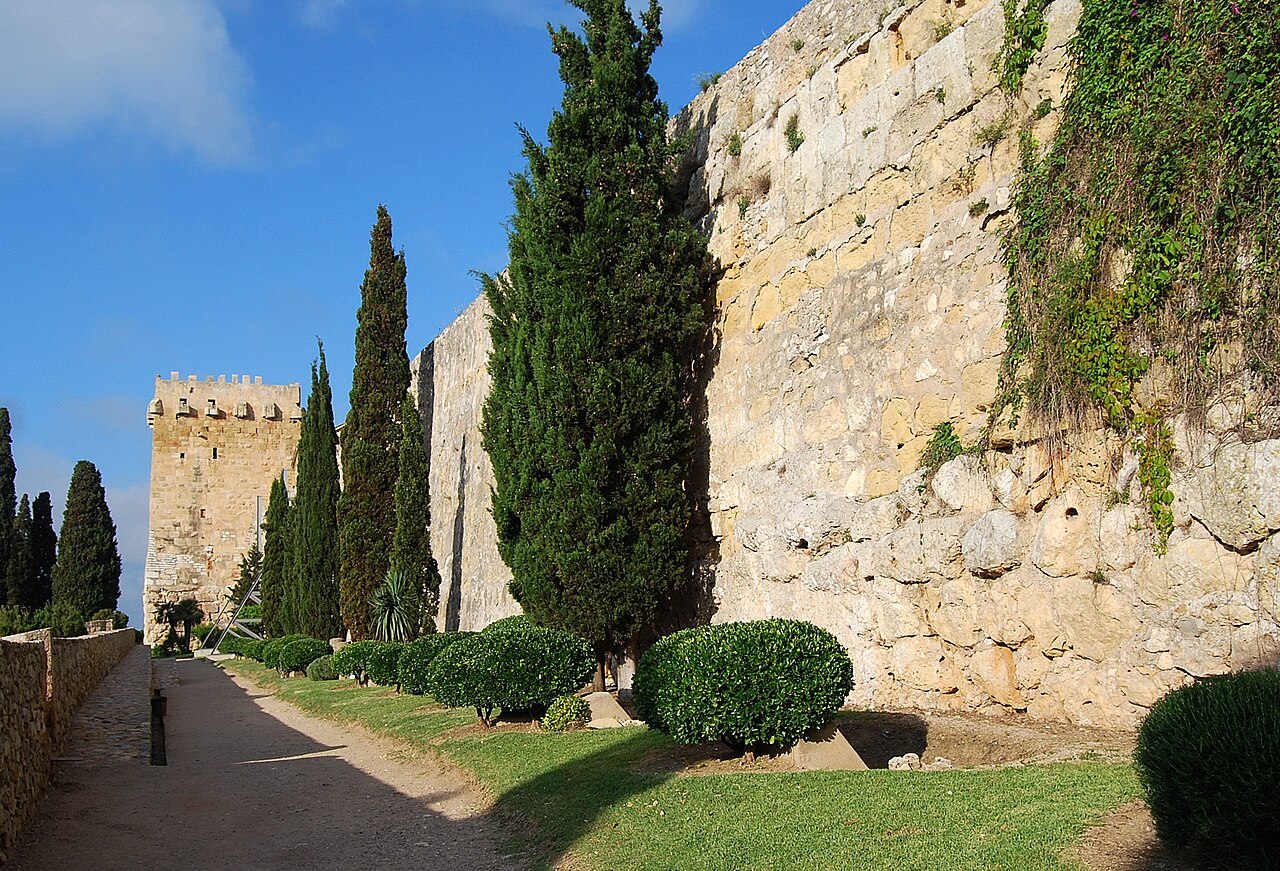
Castell de Vilafortuny
The Castell de Vilafortuny stands as a remarkable example of a hill castle with a rich history stretching back to ancient times in Cambrils, Spain. Originally established by the Iberian tribe known as the Cossetans, the castle occupies the highest point of a small fortified Iberian settlement, reflecting its strategic importance long before the medieval period. Archaeological excavations in 2019 confirmed the presence of this early walled city beneath the castle, believed to have suffered during the Second Punic War, highlighting the site's deep historical roots.
First documented in 1152, the castle was associated with Guillem de Fortuny, who acknowledged the Count of Barcelona as his feudal lord by 1154. This early medieval period marked the castle's integration into the feudal system of Catalonia. By the late 12th century, the presence of a local church serving the surrounding community was already established, underscoring the castle's role as a center of both defense and local administration.
Medieval ownership and religious influence
In the early 13th century, the castle's ownership shifted notably when Bernat de Benaiges and his wife, Maria, renounced worldly possessions and donated the castle along with its assets to religious institutions, including monasteries and the Archbishop of Tarragona. This transfer reflects the common medieval practice of endowing religious bodies with land and fortifications, which often resulted in complex overlapping secular and ecclesiastical control.
Throughout the 14th century, control of the castle alternated between secular lords and ecclesiastical authorities. Among the notable figures were Arnau Roger de Pallars, who held rights in 1341, and Ènnec de Vallterra, the Archbishop of Tarragona in 1391. These shifts illustrate the castle's strategic and economic significance in the region during the late medieval period.
Decline and destruction in the early modern period
The 15th and 16th centuries brought increasing challenges for Vilafortuny, primarily due to repeated pirate raids along the Mediterranean coast. These attacks destabilized the settlement and culminated in the castle's destruction in 1582 by Saracen galleys. Following this devastation, the castle was largely abandoned for nearly two centuries, marking a significant decline in its defensive and residential functions.
Restoration and modern history
By the mid-18th century, the castle remained deserted until it was purchased by Salvador de March, a merchant from Reus, who undertook restoration efforts to revive the property. Despite these efforts, Vilafortuny remained a small settlement with a population of around 40 before its incorporation into Cambrils.
Throughout the 19th and 20th centuries, the castle passed through various private owners, including descendants of Salvador de March and prominent families such as the Miró, Castellarnau, and the Marquesa de la Mesa de Asta. During the Spanish Civil War, the castle was occupied by Republican militias and International Brigades, who constructed wooden trenches nearby. The site itself avoided bombardment, and the area was reclaimed by Nationalist forces in January 1939.
In the late 20th century, ownership changed hands again, with the castle acquired by the Curt group (Rumasa) and later by the Aparici family in 2000, who conducted further restoration. Today, the Castell de Vilafortuny is recognized as a Cultural Asset of Local Interest, preserving its historical and architectural legacy.
Architectural features and layout
The castle presents a rectangular layout composed of two floors surrounding an interior courtyard. Central to this courtyard is a small chapel distinguished by a bell-gable, a structure designed to hold one or more bells, signifying the castle's religious function for its inhabitants. The roof slopes down on two sides, a practical design to facilitate rainwater runoff.
Originally, the castle's façades were coated in cement, but recent restoration works by the current owners have removed this layer to reveal the traditional stone masonry beneath. The building includes two attached sections and a prominent square tower topped with battlements, characteristic of medieval military architecture designed for defense and surveillance.
Several original medieval details remain visible, including windows with lintels decorated with arabesque patterns and ogee arches, which are pointed arches featuring a double curve. The castle conserves its principal tower and the original access bridge leading to the fortified enclosure.
Agricultural and domestic facilities
The estate surrounding the castle historically contained facilities essential for sustaining its inhabitants. These included an oil press for extracting olive oil, a wine press for grape processing, and a cellar for storage. A water well with a basin provided vital resources, while large pigsties and pastures supported livestock farming, indicating a self-sufficient manorial economy.
Religious and defensive functions
The chapel within the castle served as a private space for covenant or mass when the owners or their guests were present, emphasizing the castle's dual role as a manorial residence and religious center. Despite multiple restorations over the centuries, some medieval features survive, preserving the historical character of the castle despite the damage it sustained during the 1582 Saracen attack.
Archaeological significance
The 2019 archaeological investigations have been crucial in understanding the castle's origins atop an ancient Iberian settlement. The findings suggest that the site was part of a small walled city attributed to the Cossetans, an Iberian tribe known for their fortified settlements. Further excavations are anticipated to shed more light on the extent and nature of this early occupation and its fate during the Second Punic War.
Today, the Castell de Vilafortuny stands not only as a monument to medieval military architecture but also as a testament to the layered history of human settlement in the region, from ancient Iberian times through medieval feudalism to modern restoration efforts.
Frequently asked questions (FAQ)
- How do I get to Castell de Vilafortuny?
- Castell de Vilafortuny is located in Cambrils, Spain, and is easily accessible by car or public transport. If you're driving, follow the signs to Cambrils and look for parking nearby. Alternatively, local buses connect to major towns, making it convenient for visitors.
- What is the historical significance of Castell de Vilafortuny?
- Castell de Vilafortuny dates back to the 12th century and holds great historical importance as a defensive structure during the medieval period. It served as a strategic lookout point to protect the surrounding territory from invasions. Today, it stands as a symbol of the region's rich history and heritage.
- When was Castell de Vilafortuny built?
- Construction of Castell de Vilafortuny began in the 12th century, with various modifications made over the centuries. Its architecture reflects different styles influenced by the eras it has endured. The castle's historical layers provide insight into the region's evolving architectural trends.
- Can I take guided tours of Castell de Vilafortuny?
- Yes, guided tours are available for visitors interested in a deeper understanding of the castle's history and architecture. These tours typically offer insights into the castle's strategic significance and architectural features. It's advisable to check the schedule and book in advance, especially during peak tourist seasons.
- Why is Castell de Vilafortuny a popular tourist destination?
- Castell de Vilafortuny is popular due to its stunning architecture, rich history, and picturesque surroundings. Visitors are drawn to its historical significance and scenic views of the surrounding landscape. Additionally, the castle hosts various events and activities that enhance the visitor experience.
- Is it possible to visit Castell de Vilafortuny with children?
- Absolutely, Castell de Vilafortuny is a family-friendly destination that welcomes visitors of all ages. Children can enjoy exploring the castle grounds and learning about its history through interactive exhibits. The open spaces around the castle also provide a great area for children to play and explore.
- What are the opening hours for Castell de Vilafortuny?
- Castell de Vilafortuny typically opens to the public from 10 AM to 6 PM, with extended hours during the summer months. It's recommended to check the official website or contact the castle for the most current hours and any seasonal changes. Planning your visit during these hours ensures you have enough time to explore.
- What are the ticket prices for Castell de Vilafortuny?
- Ticket prices for Castell de Vilafortuny are generally affordable, with discounts available for children, seniors, and families. Admission fees may vary depending on whether you choose a guided tour or self-exploration. Be sure to check the official website for the latest pricing information and any special offers.
- What nearby attractions should I visit while in Cambrils?
- While visiting Castell de Vilafortuny, you can also explore nearby attractions such as the beautiful beaches of Cambrils, the vibrant local markets, and other historical sites like the Church of Santa Maria. The area is known for its rich culinary scene, so don't miss out on trying local seafood dishes. Enjoying the picturesque waterfront and exploring the charming old town adds to the overall experience.
Information
Website
Visit websiteSources & official resources
Verify the information above using these authoritative references.
Loading map...
Visitor reviews
No reviews yet. Been here? Write the first review and help other travelers!
Write the first reviewVisited this castle? Share your experience
Your review helps other travelers and adds first-hand knowledge to our encyclopedia.