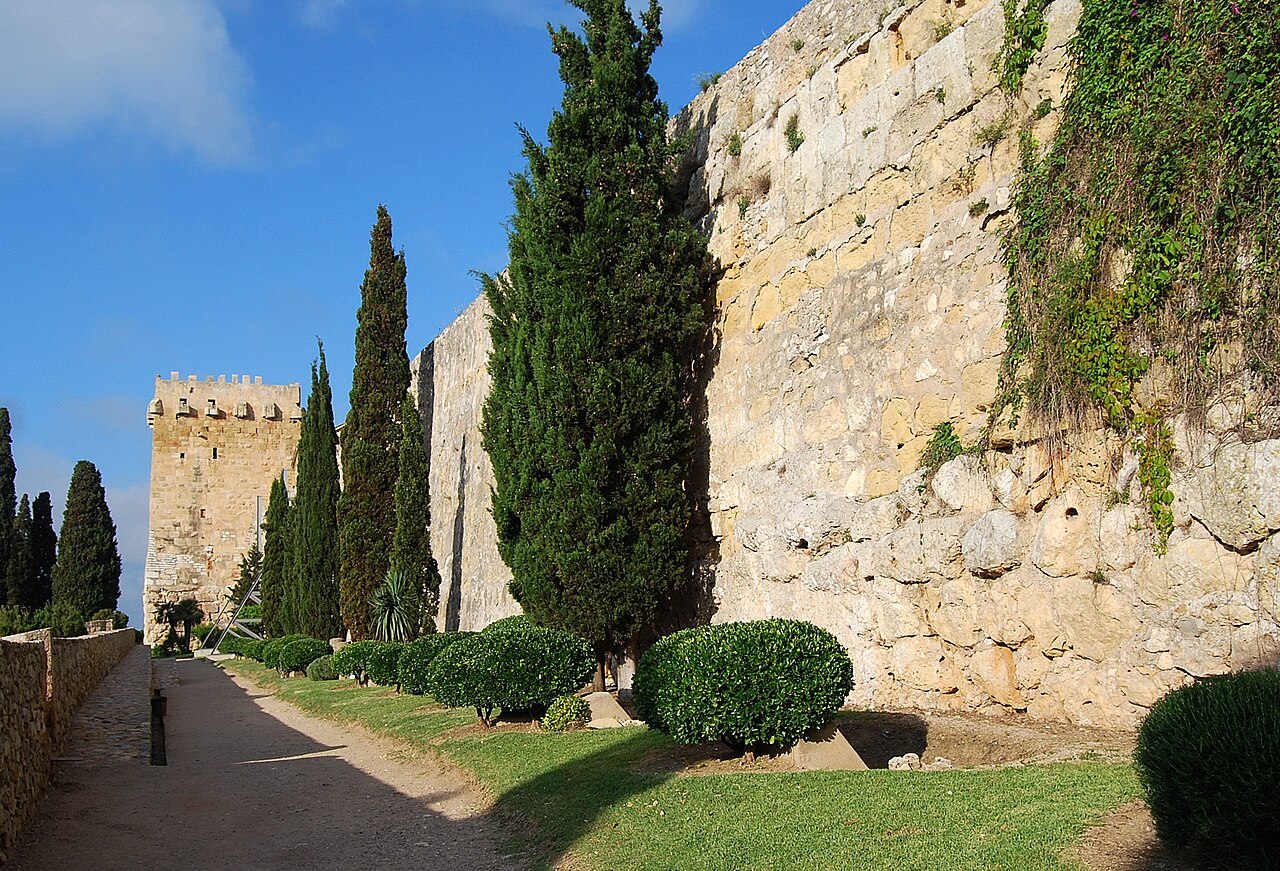
Castell de Vila-seca
Castell de Vila-seca is a historic castle located in the town of Vila-seca in the region of Tarragona, Spain. Its origins trace back to the medieval period, with the earliest documented references dating between 1162 and 1168. The castle's site was initially a fortified structure established by the knight Ramon d’Olzina following a fief grant from prominent authorities including King Alfons el Cast, Archbishop Bernat Tort, and noble Guillem d’Aguiló. This early fortification was part of the Christian repopulation efforts in the Camp de Tarragona area, designed to secure the territory during a turbulent period marked by feudal conflicts and external threats.
Throughout the 12th and 13th centuries, Vila-seca evolved into two distinct lordships: Vila-seca del Comú and Vila-seca de Solcina, controlled respectively by local secular and ecclesiastical authorities. The division led to intermittent disputes, notably around 1340, involving the noble families of Olzinelles and Olzina. By the late 14th century, both territories came under ecclesiastical control, culminating in King Joan I's sale of rights to Archbishop Ènnec de Vallterra in 1390.
Medieval ownership and feudal dynamics
The 15th century saw the castle under the lordship of the Olzinelles family, with records from 1417 identifying Joannes de Ulsinelles as the knight and lord of the fortress. Later, the Saportella family took control, with Bernat de Saportella playing a notable role during the Catalan civil war by supporting King Joan II. This family maintained jurisdiction until the early 16th century.
In 1525, a significant unification occurred when Archbishop Pere de Cardona purchased both lordships, merging the two Vila-secas under the name Vila-seca de Solcina. This period was marked by increased defensive measures, particularly in response to frequent Barbary corsair raids, which led to the construction of protective walls around the town.
Architectural evolution and transformations
The castle's architecture reflects its layered history, beginning as a medieval fortress and later adapting to residential and stylistic changes. The most ancient part is the Torre d’Olzina, a robust tower constructed with Roman-period ashlar masonry. Its walls, nearly two meters thick, and a ground floor covered by a Lombard vault demonstrate defensive and architectural techniques from the medieval era.
The tower's original entrance, located high on the upper level, and narrow loopholes on the east and west sides, were designed for defense and observation. These loopholes were later modified during the 19th-century neo-Gothic renovations into decorative windows, reflecting the romanticized medieval revival popular at the time.
The main castle building is a rectangular two-level structure. The ground floor historically served practical functions such as stables and storage, while the upper noble floor features a gallery-like arrangement of windows known locally as a llotja. This floor incorporates small turrets with Nordic architectural motifs, introduced during the 19th century.
The roof terrace is adorned with defensive elements like machicolations and battlements, which serve as stylistic revivals of medieval fortifications rather than functional defenses. The exterior walls, originally rubble stone masonry with limited openings, were clad with uniform ashlar blocks during the 19th-century remodeling to provide a refined appearance. Large windows replaced smaller medieval openings to enhance light and comfort.
19th-century neo-Gothic remodeling and later history
In 1683, the castle was acquired by Joan Kies Noë, the Dutch consul, who transformed it into a rural house with Dutch architectural influences, preserving mainly the main tower from the medieval structure. Later, in 1899, Isidre Sicart i Torrents, Count of Sicart, purchased the castle and commissioned architect Enric Fatjó i Torras to extensively remodel it in the neo-Gothic style. This renovation embraced the historicist trends from central and northern Europe, blending medieval defensive features with romantic residential aesthetics.
The remodeling added decorative turrets, battlements, and machicolations, enhancing the castle's visual appeal while maintaining its historical character. The castle thus became a unique example of a medieval fortress adapted into a noble residence reflecting 19th-century tastes.
Modern ownership and preservation
Since 2005, the Vila-seca City Council has owned the castle and its gardens. Restoration efforts have focused on preserving the castle's historical layers while adapting the site for cultural and community use. Today, Castell de Vila-seca operates as an exhibition space, highlighting its rich history from medieval fortress to neo-Gothic residence.
Architectural highlights
- Torre d’Olzina: the oldest surviving element featuring Roman-period masonry and medieval defensive design.
- Lombard vault: a medieval stone ceiling technique visible in the tower's ground floor.
- Gallery windows (llotja): distinctive upper floor windows arranged in a gallery style.
- Neo-Gothic turrets and battlements: 19th-century additions reflecting romantic medieval revival.
- Machicolations: defensive openings on the roof terrace used decoratively in modern renovations.
Historical significance
The castle embodies the complex feudal history of the Camp de Tarragona, illustrating the transition from medieval military architecture to residential and stylistic adaptations influenced by European historicism. Its layered ownership, from knights and noble families to ecclesiastical authorities and foreign consuls, reflects the political and social dynamics of the region over several centuries.
Visitor experience
Visitors to Castell de Vila-seca can explore the castle's architectural evolution and appreciate its blend of medieval and neo-Gothic elements. The site offers insights into feudal history, defensive architecture, and 19th-century historicist aesthetics, all set within the cultural landscape of Tarragona.
Frequently asked questions (FAQ)
- What are the opening hours of Castell de Vila-seca?
- Castell de Vila-seca is open to visitors from 10 AM to 6 PM daily, with extended hours during the summer months. It is advisable to check the official website for any seasonal changes or special holiday hours.
- How do I get to Castell de Vila-seca?
- You can reach Castell de Vila-seca by car, public transport, or on foot. The castle is located in the town of Vila-seca, which is well connected by local trains and buses from nearby cities.
- What is the historical significance of Castell de Vila-seca?
- Castell de Vila-seca dates back to the 12th century and has played a crucial role in the region's defense and governance. Its rich history reflects the evolution of medieval architecture and the cultural heritage of Catalonia.
- Is it possible to access Castell de Vila-seca with a wheelchair?
- Yes, Castell de Vila-seca is committed to accessibility and provides facilities for visitors with limited mobility. However, some areas of the castle may have uneven surfaces, so it's best to check in advance for the most accessible routes.
- When is the best time to visit Castell de Vila-seca?
- The best time to visit Castell de Vila-seca is during the spring and autumn months when the weather is mild and pleasant. Additionally, these seasons are less crowded, allowing for a more enjoyable exploration of the castle and its surroundings.
- Can I purchase tickets in advance for Castell de Vila-seca?
- Yes, tickets for Castell de Vila-seca can be purchased in advance through the official website. This is highly recommended, especially during peak tourist seasons, to ensure your entry and avoid long queues.
- What are the ticket prices for visiting Castell de Vila-seca?
- Ticket prices for Castell de Vila-seca are generally affordable, with discounts available for children, students, and seniors. Family packages are also offered, making it a great option for family outings.
- Are there any nearby attractions to visit after Castell de Vila-seca?
- Yes, nearby attractions include the picturesque town of Salou and the beautiful beaches along the Costa Dorada. Additionally, the famous PortAventura World theme park is just a short drive away, offering fun for all ages.
Information
Website
Visit websiteSources & official resources
Verify the information above using these authoritative references.
Loading map...
Visitor reviews
No reviews yet. Been here? Write the first review and help other travelers!
Write the first reviewVisited this castle? Share your experience
Your review helps other travelers and adds first-hand knowledge to our encyclopedia.