Castell del Rei, Tarragona
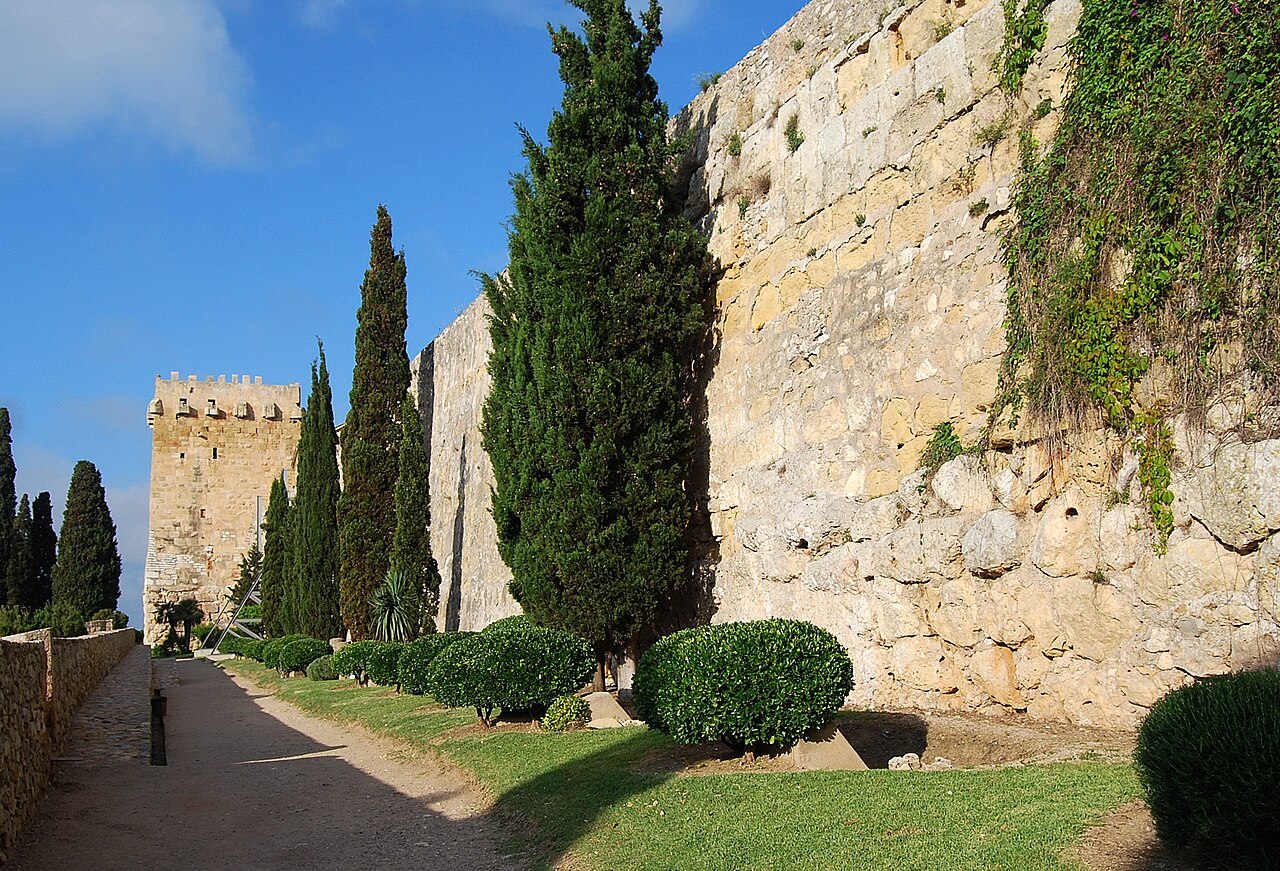
The Castell del Rei in Tarragona, Spain, stands as a remarkable testament to the architectural and historical transformation from a Roman provincial forum building into a medieval castle. Originally constructed during the Roman period as part of Tarragona's administrative and public infrastructure, this site evolved significantly over the centuries, reflecting the changing political and military needs of the region. The castle's history is deeply intertwined with the royal authority and governance of Tarragona, serving as a royal seat and administrative center distinct from ecclesiastical power.
The castle's origins lie in a substantial Roman building that formed a crucial part of the city's forum complex. This structure was initially designed for public and administrative functions, showcasing the Roman emphasis on urban planning and civic architecture. Over time, the building underwent substantial modifications, especially during the Middle Ages, when it was transformed into a fortified castle exhibiting Romanesque and later Gothic architectural elements. This transformation illustrates the adaptive reuse of Roman structures in medieval Catalonia, where ancient foundations were preserved and incorporated into new defensive and residential functions.
Historical significance and royal connections
In the early 12th century, specifically in 1118, Count Ramon Berenguer IV granted the city of Tarragona to the crown but notably excluded the "palatium," a term believed to refer to the building now known as Castell del Rei. This exclusion highlights the castle's role as the royal residence and the seat of the vegueria, the office of the royal governor. The vegueria operated independently of the local archbishop's jurisdiction, emphasizing the castle's importance as a center of royal authority within the city.
Throughout the 13th and 14th centuries, the castle was a focal point of both conflict and development. In 1282, an uprising by residents from nearby La Selva del Camp targeted the castle, protesting royal taxation and the seizure of livestock. This event underscores the castle's role in enforcing royal fiscal policies. Subsequent rulers, including kings Jaume II, Pere III, and Joan II, invested in the castle's expansion and renovation between 1295 and 1317. Notably, during the reign of Pere III (1383-1386), significant interior adaptations were made while preserving much of the original Roman exterior, demonstrating a respect for the site's ancient heritage alongside medieval enhancements.
Architectural features and structural evolution
Roman foundations and medieval additions
The Castell del Rei is architecturally complex, comprising two adjoining rectangular structures connected by medieval arches. The western section contains the most significant medieval remains, built upon important Roman foundations. This fusion of styles and periods is evident throughout the castle, with the medieval construction resting atop and integrating the Roman forum's vaulted ceilings and walls.
The castle rises three floors, with spacious rooms beneath a terrace. The upper floor's north façade features a doorway framed by an external semicircular arch and an internal lowered arch, a flatter curve typical of medieval architecture. Above this entrance is a twin window embedded within the wall, flanked on the west side by two Gothic windows each with three arches, illustrating the blend of Romanesque and Gothic styles.
On the eastern wall, visitors can observe a door, several narrow arrow slits used for defense, and traces of an older opening. The medieval walls on the north and west façades bear the distinctive marks of stonemasons, offering insight into the craftsmanship of the period.
Interior spaces and structural details
Inside, the upper floor contains a large hall divided by five diaphragm arches, transverse arches that provide structural support and segment the space. This hall represents a medieval adaptation of the Roman structural layout. The middle floor reveals mostly medieval features on its west wall, including another twin window and a large arrow slit, while the rest of the walls retain their Roman origin. A vaulted ceiling from the Roman phase covers much of this floor, underscoring the continuity of the original forum architecture beneath the medieval modifications.
The ground floor is dominated by Roman walls, punctuated by various arches, including a lowered arch compatible with medieval construction, a pointed Gothic arch, and a now-lost ogival arch, characteristic of medieval design. The southern wall includes a door set within a semicircular arch made of ten wedge-shaped stones called voussoirs, topped by a relieving arch that distributes weight and reduces pressure on the doorway below. These vaults were integral parts of the Roman forum complex, preserved within the castle's medieval fabric.
Later history and changing functions
By the 15th century, the castle's role as a royal residence diminished as the royal family favored the neighboring archbishop's castle. Despite this, Castell del Rei maintained its administrative functions for the crown. In the 16th century, the castle was decommissioned militarily but found new uses in subsequent centuries.
During the 17th century, it served as a military depot and barracks, reflecting its continued strategic importance. In the 18th century, the castle was repurposed as a prison. A significant event occurred on August 19, 1813, during the Peninsular War, when Marshal Suchet ordered the demolition of fortifications including Castell del Rei. This caused extensive damage and loss of life, marking a dramatic chapter in the castle's history.
Restoration efforts in the mid-19th century converted the castle into a provincial prison, a role it fulfilled until 1953. During this time, it also served as a station for the optical telegraph system connecting Madrid and Jonquera, highlighting its ongoing strategic significance.
Modern preservation and cultural use
From 1971 onwards, Castell del Rei entered a new phase focused on preservation and cultural engagement. It was adapted to house museum facilities, initially becoming part of the National Archaeological Museum of Tarragona. In 1986, it was incorporated into the Museum of History of Tarragona, where it remains a vital site showcasing Tarragona's layered history from Roman times through the modern era.
The castle today offers visitors a unique opportunity to explore the architectural evolution from its Roman foundations through medieval fortifications to its later uses. Its combination of Roman vaults, medieval arches, Gothic windows, and historical significance as a royal and administrative center make it a compelling destination for those interested in Spanish history and castle architecture.
Frequently asked questions (FAQ)
- When was Castell del Rei originally built and how did it evolve?
- Castell del Rei originated as a Roman building in Tarragona's provincial forum and was transformed into a medieval castle primarily during the 12th and 13th centuries.
- What architectural styles are visible at Castell del Rei?
- The castle exhibits a mix of Roman foundations with Romanesque and Gothic medieval architectural elements, including arches, vaulted ceilings, and windows.
- Can visitors explore the interior of Castell del Rei?
- Yes, visitors can explore the castle's interior, including its medieval halls, Roman vaults, and defensive features such as arrow slits and battlements.
- What was the castle's role in the Peninsular War?
- During the Peninsular War, Castell del Rei was partially demolished on orders from Marshal Suchet in 1813, causing significant damage to the structure.
- Is Castell del Rei accessible to the public today?
- Yes, the castle is open to the public as part of the Museum of History of Tarragona, offering exhibitions and historical interpretation.
Information
Sources & official resources
Verify the information above using these authoritative references.
Loading map...
Visitor reviews
No reviews yet. Been here? Write the first review and help other travelers!
Write the first reviewVisited this castle? Share your experience
Your review helps other travelers and adds first-hand knowledge to our encyclopedia.