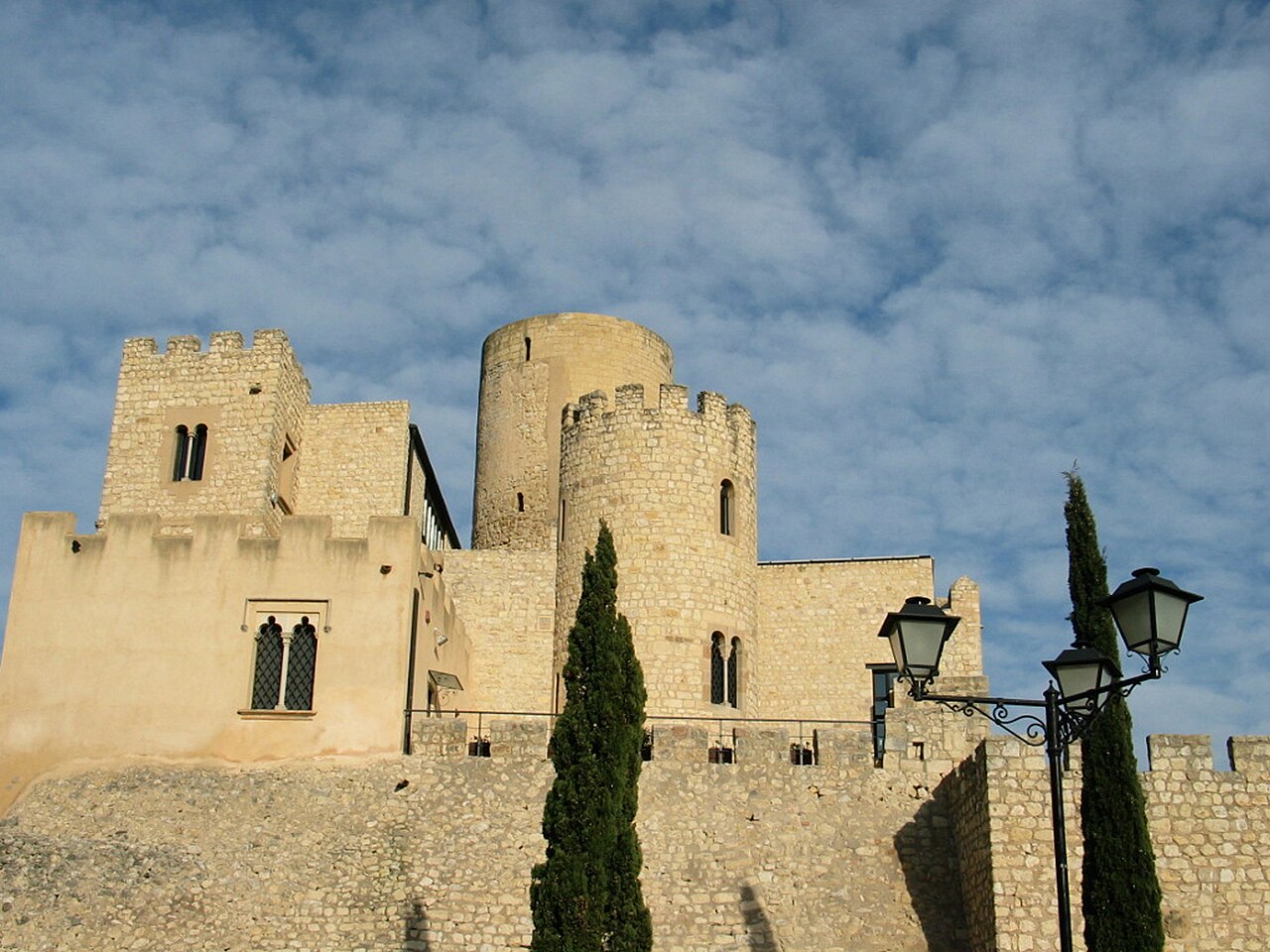
Castell de Ribes stands as a remarkable example of an early medieval hill castle located in the municipality of Sant Pere de Ribes, within the Catalonia region of Spain. Constructed during the late 10th century, this fortress played a crucial role in the Christian reconquest and repopulation efforts led by the Bishopric of Barcelona. Its strategic position atop a steep hill near the old parish church of Sant Pere de Ribes allowed it to oversee and control the surrounding territory, forming part of the historic neighborhood known as Sota-Ribes, which preserves much of its medieval character.
Historical background and significance
The first documented mention of Castell de Ribes dates to May 6, 990, when Bishop Vives of Barcelona issued a charter granting settlement privileges. The fortress was referred to as “castrum nuncupatum Bello loco qui vocitantur Ribas,” linking it to the nearby area called Bell-lloc or Sota-Ribes. This early record highlights the castle's importance as a center for repopulation and defense during a turbulent period marked by ongoing conflicts between Christian and Muslim forces in the Iberian Peninsula.
During the late 10th century, the castle suffered significant damage from the military campaigns of Almanzor, the powerful Muslim leader known for his raids into Christian territories. Following this devastation, the bishop entrusted the fortress to the Ribes family with the responsibility of rebuilding and encouraging settlers to repopulate the area, thereby securing Christian control and stabilizing the region.
The castle's ownership became a focal point of contention between ecclesiastical and secular authorities. The Bishopric of Barcelona and Geribert, the regent viscount of Barcelona, both laid claim to the fortress. Geribert was initially granted possession, but this led to a protracted struggle. The bishop sought papal intervention, obtaining bulls that threatened Geribert with excommunication should he refuse to relinquish control, underscoring the castle's ecclesiastical significance.
By 1039, Folc Geribert returned the castle to the bishopric, which then granted it to Mir Geribert in 1041. Mir Geribert’s son, Ramon Mir, established the enduring lineage of the Ribes family, who maintained possession and local feudal authority over the castle and its surrounding lands for several centuries.
In the late 14th century, the castle underwent a significant change in governance when Bishop Ramon d’Escales purchased all rights to the fortress and its jurisdiction between 1389 and 1390. This transaction brought the castle fully under episcopal control until the abolition of feudal privileges in the 19th century. Subsequently, in 1620, ownership passed to the municipality of Ribes, which has since been responsible for the castle's care and preservation.
Architectural features and construction details
The most prominent and best-preserved element of Castell de Ribes today is its cylindrical tower, the sole surviving remnant of the original medieval fortress. Rising approximately 19 meters in height with a diameter of about 7 meters, the tower exhibits a distinctive profile, transitioning from a cylindrical base to a truncated cone shape near the top. Its exterior is uniformly coated in plaster, yet original openings remain visible, including a high entrance door facing south and horseshoe-shaped arched windows near the uppermost floor. A drainage channel is present on the tower’s southwest side, highlighting medieval engineering to manage water runoff.
Constructed from rounded, unhewn limestone blocks arranged in horizontal layers or courses, the tower's walls are notably thick, measuring between 1.5 and 1.8 meters. Such robust masonry was typical of medieval defensive architecture, designed to withstand sieges and attacks. The foundations display a bulbous form and are composed of lime concrete mixed with uncut stone, anchoring the structure securely to the hilltop.
Inside, the tower contains two vaulted floors. The lower chamber, raised on a sturdy plinth nearly 3.5 meters tall, is covered by a lowered brick dome, creating a solid and curved ceiling. The upper room, approximately 7.8 meters in height, features a vault constructed from rubble stone, lime mortar, and reed molds that shaped the concrete as it set. The high entrance door is situated roughly 8 meters above ground level, originally accessible only by a removable wooden ladder or platform for defensive purposes. This door is rectangular, framed by a roughly formed horseshoe arch with large flat stone slabs serving as jambs and lintel. The lintel itself consists of a small arch made of three wedge-shaped stones called voussoirs.
A narrow ledge encircles the tower’s interior about 50 centimeters below the door, with holes indicating where wooden beams once supported a floor. Additional beam holes higher up suggest the existence of a second wooden floor, which was later replaced by a stone vault to enhance durability. These architectural modifications reflect the evolving defensive and functional needs of the fortress over time.
While the castle originally covered a much larger area, today only the tower and two adjoining buildings remain. The absence of Lombard decorative elements in the tower's design suggests it predates the widespread adoption of this style in Catalonia, placing its construction firmly in the late 10th or early 11th century. This architectural dating aligns well with historical records, confirming the castle’s significance in the early medieval landscape of the region.
The castle's role through the centuries
Beyond its initial military and defensive functions, Castell de Ribes has served a variety of civic roles throughout its long history. Over the centuries, it has been adapted for use as storage facilities, a retail shop, an archive, and even a prison. These varied uses reflect the castle’s integration into the social and administrative fabric of the local community.
In modern times, the castle gained cultural significance as the residence of the renowned dancer José de Udaeta, who lived there for more than thirty years. This association added a layer of artistic heritage to the fortress, linking the medieval structure to contemporary cultural history.
Location and preservation status
Located on a steep hill near the historic parish church of Sant Pere de Ribes, the castle remains a prominent landmark within the neighborhood of Sota-Ribes. This area is notable for preserving much of its medieval urban fabric, offering visitors a glimpse into the region's past.
Today, the castle is well preserved, particularly its cylindrical tower, which stands as a testament to the durability and strategic importance of early medieval fortifications in Catalonia. The municipality of Ribes continues to oversee its preservation, ensuring that this historic monument remains accessible and informative for future generations.
Architectural style and historical context
The architectural style of Castell de Ribes is characteristic of early medieval military construction in Catalonia, predating the introduction of Lombard decorative elements that became popular in later Romanesque architecture. Its robust cylindrical tower exemplifies the defensive priorities of the period, emphasizing thick walls, limited openings, and elevated entrances for security.
The castle’s construction during the late 10th to early 11th century places it within the broader context of the Christian reconquest and territorial consolidation in northeastern Spain. As a fortress under ecclesiastical authority, it highlights the significant role that religious institutions played in the military and political landscape of medieval Catalonia.
Frequently asked questions (FAQ)
- How do I get to Castell de Ribes?
- Castell de Ribes is located in the picturesque region of Catalonia, Spain. You can reach the castle by car, and there is ample parking available nearby. Public transport options, including buses, are also available from nearby towns, making it accessible for visitors.
- What is the historical significance of Castell de Ribes?
- Castell de Ribes dates back to the 10th century and played a crucial role in the defense of the region during the Middle Ages. It stands as a testament to the architectural styles of the period and the strategic importance of castles in Catalonia's history. Today, it serves as a cultural heritage site, showcasing the rich history of the area.
- When was Castell de Ribes built?
- Construction of Castell de Ribes began in the late 10th century, with various renovations and expansions occurring over the centuries. The castle has undergone significant changes, reflecting the architectural styles of different periods. Its enduring presence offers a glimpse into the historical evolution of defense structures in Spain.
- Can I visit Castell de Ribes year-round?
- Yes, Castell de Ribes is open to visitors throughout the year, although opening hours may vary by season. It is advisable to check the official website or local tourism information for specific visiting hours. This flexibility allows guests to explore the castle in various seasons, each offering a unique experience.
- Why is Castell de Ribes a popular tourist attraction?
- Castell de Ribes attracts visitors due to its rich history, stunning architecture, and breathtaking views of the surrounding landscapes. The castle's well-preserved structure and informative exhibitions provide a captivating insight into medieval life. Additionally, its location near other attractions makes it a convenient stop for tourists exploring Catalonia.
- Is it possible to take guided tours of Castell de Ribes?
- Yes, guided tours are available at Castell de Ribes, providing a more in-depth understanding of its history and architecture. These tours are led by knowledgeable guides who share fascinating stories and insights about the castle. It's recommended to book in advance, especially during peak tourist seasons, to ensure availability.
- What are the ticket prices for visiting Castell de Ribes?
- Ticket prices for Castell de Ribes vary depending on age and group size, with discounts available for students and seniors. Children under a certain age may enter for free, making it an affordable outing for families. Check the official website for the most current pricing and any special offers that may be available.
- What are the opening hours for Castell de Ribes?
- Opening hours for Castell de Ribes can vary throughout the year, typically being open from morning until late afternoon. During peak tourist season, the hours may be extended to accommodate visitors. It's best to verify the current schedule before your visit to ensure you have ample time to explore.
- What nearby attractions can I visit while at Castell de Ribes?
- While visiting Castell de Ribes, you can also explore the charming town of Ribes de Freser, known for its beautiful landscapes and hiking trails. Additionally, nearby attractions include the stunning natural parks and other historical sites in the region. This makes Castell de Ribes an excellent starting point for a day of exploration in Catalonia.
Information
Website
Visit websiteSources & official resources
Verify the information above using these authoritative references.
Loading map...
Visitor reviews
No reviews yet. Been here? Write the first review and help other travelers!
Write the first reviewVisited this castle? Share your experience
Your review helps other travelers and adds first-hand knowledge to our encyclopedia.