Castell de Miravet
Castell de Miravet is a remarkable hill castle perched on a rocky promontory overlooking the Ebro River in southern Catalonia, Spain. Its strategic location at 220 meters above sea level provided commanding views of the surrounding landscape and control over the river valley, making it a key defensive stronghold throughout its long history. The castle's origins trace back to the 11th century during the period of Islamic rule in the Iberian Peninsula, when the Moors constructed the initial fortress to secure their territory in the region.
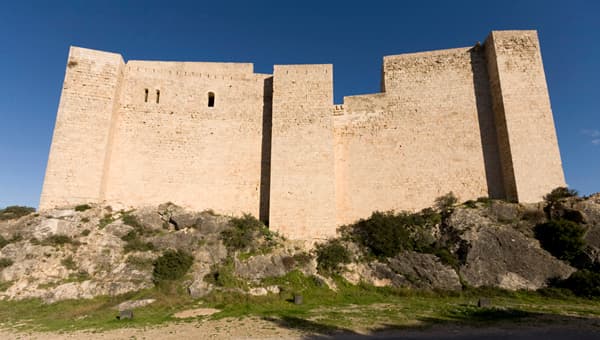
Following the Christian Reconquista, the castle came under the control of the Knights Templar in 1154, who transformed it into a formidable military and administrative center. The Templars undertook extensive building campaigns, reinforcing the walls with finely cut white stone blocks and adding key defensive features such as machicolations and robust towers. Their work established the castle as a critical bastion for Christian forces in Catalonia, enabling them to project power and secure the surrounding lands.
Medieval origins and templar fortifications
The initial fortress, built by the Moors, incorporated natural defenses such as the steep rocky hill and proximity to the river, which was further enhanced by a deep moat cut directly into the rock. This moat, now part of the modern parking area, was a sophisticated defensive measure designed to prevent undermining of the walls. The Templars retained and expanded upon these features, constructing thick curtain walls with minimal openings to maximize defense.
One of the castle's most significant architectural elements is the central tower or keep, which served as the last refuge during sieges. The Templars' use of rectangular white stone blocks laid in tight rows is particularly notable, demonstrating advanced masonry techniques of the 13th century. The western wall near this tower still preserves traces of a machicolation, a projecting stone gallery with openings through which defenders could drop projectiles or boiling liquids on attackers attempting to scale the walls.
The treasure tower and northern defenses
The "Treasure Tower", positioned above an older Andalusian wall, was a vital part of the northern defenses. It earned its name because it housed the Templar order's valuable correspondence and treasures in the regions of Catalonia and Aragon. When the Templars surrendered the castle in 1308 after a prolonged siege, it reportedly contained a significant cache of gold and silver coins from various contemporary currencies, underscoring its importance as a stronghold and administrative center.
The northern perimeter is fortified by five towers spaced to provide overlapping fields of fire, creating a nearly impenetrable defense line. These towers and walls were later remodeled in the 17th and 18th centuries to withstand the increasing threat of artillery, employing a combination of masonry, rammed earth, and wooden formwork. Although this later construction appears less solid than the original medieval stonework, the walls remain impressively thick and resilient against cannon fire.
Later historical conflicts and modifications
After the Templars' surrender, the castle passed to the Knights Hospitaller until 1385, after which it became a royal possession under the Crown of Aragon. Throughout the 17th and 18th centuries, Castell de Miravet was embroiled in regional conflicts such as the Segador Revolt and the War of the Spanish Succession. The castle sustained damage during these turbulent times but was adapted to the evolving military technology of the era, including the addition of a 17th-century main gate fortified with towers and a barbican. This gate, the fortress's weakest point, was designed with a winding approach to expose attackers to defensive gunfire from multiple angles.
In the 19th century, the castle played a strategic role during the Carlist Wars, changing hands between liberal and absolutist forces. It was notably a Carlist stronghold during the Third Carlist War until recaptured by liberal troops in 1875. The castle's military significance declined thereafter, leading to its eventual privatization in the 20th century.
The spanish civil war and restoration
During the Spanish Civil War (1936–1939), Castell de Miravet was occupied by Francoist forces in April 1938 but briefly retaken by Republican troops during the Battle of the Ebro in July. Control shifted back to Francoist hands later that year. Following the war, the castle underwent extensive restoration efforts, culminating in 1994. It was officially recognized as a cultural heritage site in 1995, ensuring its preservation for future generations.
Architectural layout and surviving structures
The castle's layout reflects its layered history, combining Andalusian foundations with medieval Christian modifications and later adaptations for artillery defense. The fortress is encircled by a defensive wall reaching up to 25 meters in height, enclosing the upper castle and a large lower courtyard, or albacar, which covers approximately 12,000 square meters.
The albacar originally contained essential support buildings such as warehouses, stables, workshops, pens, a water reservoir, and gardens, vital for sustaining the castle's inhabitants during sieges. Although these structures have not survived, historical records provide detailed accounts of their functions and layout. The courtyard's perimeter walls correspond to the original Andalusian fortifications, designed to shelter civilians during attacks, and have remained largely intact despite centuries of military evolution.
Within the lower courtyard, the Templar-era stable is a significant surviving building. Its stone masonry and decorative lower walls identify it as a structure from the 14th to 17th centuries. Architectural modifications during this period included replacing stairs with a ramp and leveling the floor to facilitate animal care. The vaulted ceiling has partially collapsed, and a second floor was added later as a hayloft.
Defensive features and walls
The castle's defensive walls are a testament to its military importance. The northern wall of the albacar is protected by four towers guarding the entrances, while the eastern wall features narrow openings adapted in the 18th century for artillery fire. The southern side benefits from natural defenses provided by cliffs and the adjacent river, forming a strong natural barrier.
Extending beyond the lower terraces, the medieval walls descend the mountain slope. These walls are thinner than other sections but remain high enough to deter attackers. They feature crenellated battlements and a narrow walkway atop, allowing defenders to patrol and defend the perimeter effectively.
Cultural significance and tourism today
Today, Castell de Miravet stands as a well-preserved monument reflecting the complex history of Catalonia and the Iberian Peninsula. Its association with the Knights Templar and later military orders adds to its cultural mystique and historical allure. Visitors can explore the castle's imposing walls, towers, and courtyards, gaining insight into medieval military architecture and the turbulent history of the region.
The castle's location offers panoramic views of the Ebro River and the surrounding countryside, enhancing the visitor experience. Its restoration and status as a cultural heritage site ensure ongoing preservation and public access, making Castell de Miravet a significant destination for history enthusiasts and tourists interested in medieval fortifications.
Guided tours and informational displays provide context on the castle's architectural evolution, historical events, and the lives of its inhabitants over centuries. The site also hosts cultural events that celebrate Catalan heritage, further cementing its role as a living monument within the region.
Frequently asked questions (FAQ)
- What is the historical significance of Castell de Miravet?
- Castell de Miravet is a significant medieval castle that showcases the unique blend of Moorish and Romanesque architecture, reflecting the region's complex history. Built in the 12th century by the Knights Templar, it played a crucial role during the Reconquista and provides insight into the military strategies of its time.
- When was Castell de Miravet built?
- The construction of Castell de Miravet began in the 12th century, specifically around 1153, under the control of the Knights Templar. The castle was strategically positioned overlooking the Ebro River, serving both defensive and residential purposes.
- Can I visit Castell de Miravet?
- Yes, Castell de Miravet is open to visitors year-round, allowing you to explore its impressive structures and panoramic views of the surrounding landscape. Guided tours are available, providing detailed insights into the castle's history and architecture.
- What are the opening hours of Castell de Miravet?
- The castle typically opens to the public from 10 AM to 6 PM, but hours may vary seasonally. It's advisable to check the official website or local tourist information for the most current opening hours before your visit.
- Is it possible to access Castell de Miravet with reduced mobility?
- While Castell de Miravet features some accessible paths, the overall terrain can be challenging due to its historical and rugged nature. Visitors with reduced mobility may want to contact the castle administration in advance to inquire about specific accommodations and accessibility options.
- What is the best time to visit Castell de Miravet?
- The best time to visit Castell de Miravet is during the spring and fall months when temperatures are mild, and the tourist crowds are smaller. This allows for a more enjoyable exploration of the castle and its beautiful surroundings.
- Are there nearby attractions to visit after Castell de Miravet?
- Yes, after visiting Castell de Miravet, you can explore the charming village of Miravet, known for its picturesque streets and traditional pottery. Additionally, the nearby Ebro River offers opportunities for kayaking and hiking, making it a perfect complement to your castle experience.
- What are the ticket prices for Castell de Miravet?
- Ticket prices for Castell de Miravet are generally affordable, with discounts available for children, seniors, and groups. It's best to check the official website for the latest pricing and any special offers that may be available during your visit.
Photo gallery

Information
Loading map...
Visitor reviews
No reviews yet. Been here? Write the first review and help other travelers!
Write the first reviewVisited this castle? Share your experience
Your review helps other travelers and adds first-hand knowledge to our encyclopedia.