Castell de Móra
Castell de Móra stands as a significant hill castle with deep historical roots tracing back to its Islamic origins in the Iberian Peninsula. Located in the municipality of Móra d’Ebre in Catalonia, Spain, this fortress has witnessed pivotal moments throughout the medieval and early modern periods, reflecting the region's turbulent history marked by conquest, feudal power struggles, and military conflicts.
The early history and Islamic origins
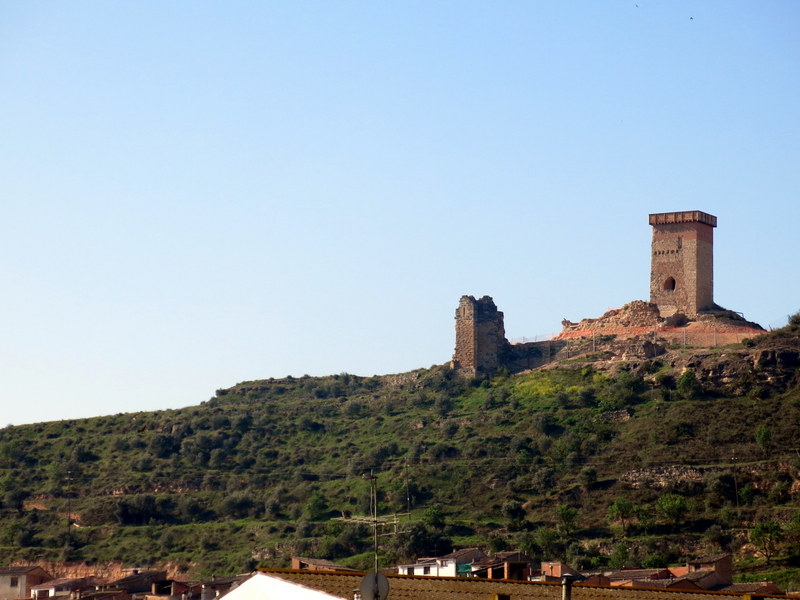
The earliest documentary evidence of Castell de Móra dates to the year 1060, when it was attacked by the prince of Olèrdola. This event underscores the castle's strategic importance during the period of Muslim control over parts of the Iberian Peninsula. The fortress was originally constructed as a defensive stronghold typical of Islamic military architecture of the era, positioned to oversee and control the surrounding territory near the Ebre River. Its location on a hill provided natural defensive advantages, including steep slopes on the eastern side overlooking the river.
Christian reconquest and feudal lordship
In 1153, the castle was captured by the forces of Count Ramon Berenguer IV of Barcelona, marking a significant milestone in the Christian Reconquest (Reconquista) of Catalonia. After this conquest, Castell de Móra became part of the Barony of Entença from 1174 until the mid-19th century. This feudal domain encompassed multiple surrounding municipalities and was governed by a succession of noble families, including the Castellvell, Entença, Prades, Cardona, Medinaceli, and Fernández de Córdoba lineages. These families maintained control until the abolition of feudal lordships in Spain between 1837 and 1841.
Architectural features and fortifications
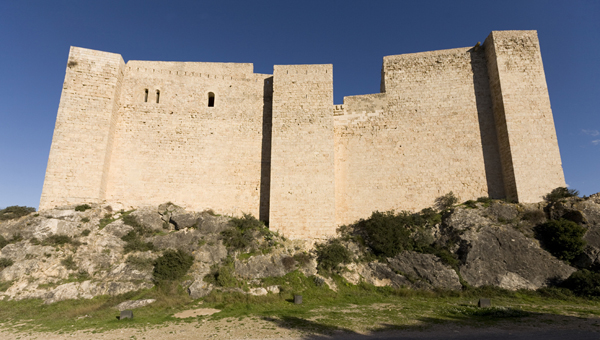
The castle's remains reveal a large, irregularly shaped walled enclosure approximately 110 meters from north to south and about 35 meters from east to west. The enclosure is built on two distinct levels, with the eastern section situated lower than the northern part, which likely housed the primary defensive structures. The eastern boundary benefits from a natural steep slope overlooking the Ebre River, while the western and southern sides are level with the surrounding terrain.
The western and southern walls feature a thick curtain wall connecting two substantial circular towers and the main entrance gate. One of these towers has a battered base, where the lower walls slope outward to resist attacks and erosion. The other tower, extensively restored, is identified as a fusillade tower, characterized by narrow vertical loopholes designed for firearm defense. Several loopholes have been carefully reconstructed to illustrate their original defensive function.
The main entrance gate is formed by a semicircular arch embedded within a restored section of the wall. Multiple loopholes above the gate indicate layered defensive measures to monitor and protect the castle's approach. Inside the enclosure, a prison carved into the natural terrain highlights the castle's role not only as a military fortress but also as a detention center.
Access to the upper enclosure is via stairways and small vaulted chambers topped with barrel vaults, a roofing technique where a simple curved roof resembles a half-cylinder. The upper enclosure is roughly rectangular and retains old floor pavements and beam sockets that once supported roofing beams. Rows of loopholes here suggest additional defensive positions.
Excavations have uncovered cisterns within the albacar area, the castle's outer ward or courtyard used for protecting livestock or supplies. The construction primarily consists of roughly cut stones bonded with mortar, with some walls preserving plastered coatings, indicating efforts to protect or finish masonry surfaces.
Military history and conflicts
Throughout its history, Castell de Móra played an active role in regional conflicts. In the 15th century, the castle was significantly fortified in preparation for the civil war opposing supporters of King Joan II. The fortress saw further military action during the Reapers’ War in the mid-17th century and the Napoleonic Wars in the early 19th century.
During the First Carlist War, the castle frequently changed hands and suffered considerable damage. By the late 19th century, part of the eastern sector was repurposed as barracks for the Civil Guard. At the outbreak of the Spanish Civil War in 1936, the castle was again fortified to serve as a command and supply center. The conflict left Castell de Móra in a near-ruined state.
Preservation and restoration efforts
Interest in preserving Castell de Móra revived in the 1980s when the Association of Friends of the Castle initiated restoration efforts. During the 1990s, architectural consolidation projects were undertaken, although early interventions lacked rigorous archaeological methodology. More recent stabilization work began in 2015 to prevent landslides threatening both the castle's hillside and nearby residential areas.
Today, the castle stands as an important archaeological site reflecting centuries of military architecture and feudal history. Its remains offer insights into construction techniques, defensive strategies, and the evolving role of fortresses in Catalonia's history.
Frequently asked questions (FAQ)
- How do I get to Castell de Móra?
- Castell de Móra is located in Móra d’Ebre, Spain, and can be easily reached by car or public transport. The nearest train station is in Móra la Nova, from where you can take a short taxi ride to the castle. For visitors driving, there are parking facilities available near the entrance.
- What is the historical significance of Castell de Móra?
- Castell de Móra dates back to the 10th century and played a crucial role in the defense of the region during the Reconquista. It served as a strategic military fortress, overseeing the Ebre River and protecting the surrounding lands. Today, it stands as a symbol of the rich history and cultural heritage of Catalonia.
- When was Castell de Móra built?
- Construction of Castell de Móra began in the 10th century, with various modifications and expansions made over the centuries. Its architecture reflects the military styles of different periods, including Romanesque and Gothic influences. The castle has been preserved as a historical site, showcasing its long-standing significance.
- Can I visit Castell de Móra year-round?
- Yes, Castell de Móra is open to visitors throughout the year, but it is advisable to check the specific opening hours before planning your visit. The castle may have limited access during public holidays or special events. Always confirm any seasonal changes in visiting hours on the official website.
- Why is Castell de Móra an important architectural site?
- Castell de Móra is notable for its impressive stone structure and defensive architecture, which exemplifies medieval military design. Its strategic location and robust features, such as towers and walls, provide insight into the region's historical defense mechanisms. The castle's architectural beauty attracts visitors interested in history and preservation.
- Is it possible to explore the interior of Castell de Móra?
- Yes, visitors can explore certain areas of Castell de Móra's interior, including the main courtyard and some restored sections. Guided tours are often available to provide deeper insights into the castle's history and architecture. However, some areas may be restricted for safety reasons, so always follow the guidelines provided during your visit.
- What are the ticket prices for visiting Castell de Móra?
- Ticket prices for Castell de Móra vary depending on the season and any special events. Generally, adult tickets are reasonably priced, with discounts available for students and seniors. Children under a certain age may enter for free, making it an affordable outing for families.
- What is the best time to visit Castell de Móra?
- The best time to visit Castell de Móra is during the spring and fall when the weather is mild and pleasant. These seasons provide an excellent opportunity to explore the castle and enjoy the surrounding natural beauty. Summer can be quite hot, while winter may limit accessibility due to weather conditions.
- Are there any nearby attractions to Castell de Móra?
- Yes, visitors to Castell de Móra can explore several nearby attractions, including the stunning Ebre River and the charming town of Móra d’Ebre itself. Additionally, the region offers various hiking trails and other historical sites, making it an ideal destination for a day trip. Don't miss the chance to experience local cuisine at nearby restaurants.
Information
Website
Visit websiteSources & official resources
Verify the information above using these authoritative references.
Loading map...
Visitor reviews
No reviews yet. Been here? Write the first review and help other travelers!
Write the first reviewVisited this castle? Share your experience
Your review helps other travelers and adds first-hand knowledge to our encyclopedia.