Castell d’Ascó
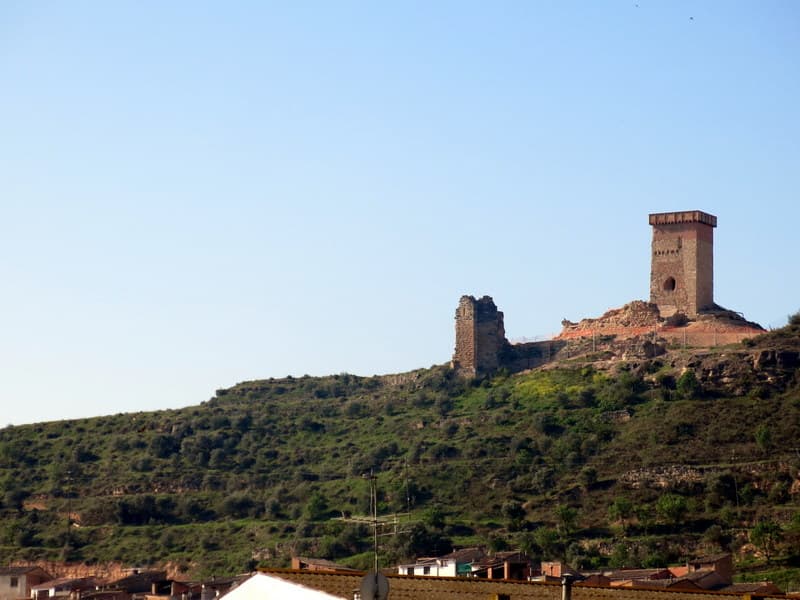
Castell d’Ascó is a notable hill castle located in the municipality of Ascó, in the region of Catalonia, Spain. Its strategic position atop a hill overlooking the Ebro River provided critical control over river traffic and regional communications between the towns of Reus, Tortosa, Casp, and Lleida. The castle's origins date back to the early medieval period, marking it as a significant military and administrative site through successive historical phases.
The fortress initially served as the residence of the valí, or governor, of Siurana during the Muslim rule from the 8th to the 12th centuries. This role underscored the castle’s importance in overseeing a vast territory extending to the foothills of the Montsant mountains. The early Islamic architectural influences and defensive strategies shaped the initial construction and layout of the site.
Medieval conquest and templar control
In 1148, the castle transitioned into Christian hands through a treaty between Ramon Berenguer IV, Count of Barcelona, and Ermengol VI, Count of Urgell. The fortress was granted as a feudal possession to Ermengol VI, initiating a period of Christian consolidation. Between 1167 and 1174, Ramon Berenguer IV negotiated several loans involving the castle, which facilitated the establishment of the Knights Templar presence in Ascó. By 1174, King Alfonso the Chaste declared Ascó as a dowry for his wife, Sancha of Castile, intertwining royal authority with the fortress.
The year 1182 marked a critical moment when the king transferred the castles and towns of Riba-roja and Ascó to the Templars in exchange for a monetary pledge. The Templars likely established their commandery at Ascó at this time, although ownership was shared with the monarch and Queen Sancha. The Templar control lasted until their suppression in 1312, during which they enhanced the fortress's military and residential functions.
Knights hospitaller and later military roles
Following the disbandment of the Templar order, the castle was besieged in 1318 by King James II, who subsequently granted it to the Knights Hospitaller. This military-religious order maintained a presence at Castell d’Ascó for several centuries, up until the 19th century. The Hospitallers continued to adapt and use the castle for defense and administration.
Castell d’Ascó played an active role in multiple conflicts, including the Reapers’ War (1640), during which it sustained significant damage. Later, it was dismantled amid the War of Spanish Succession and the Carlist Wars. Notably, during the Third Carlist War in the 1870s, an optical telegraph tower was constructed on the site, reflecting the modernization of military communications and the castle's ongoing strategic importance.
Architectural features and archaeological remains
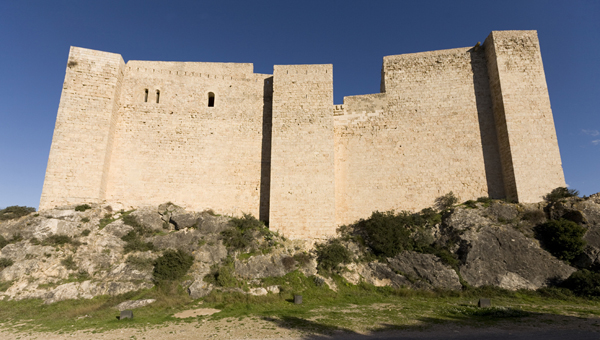
The remains of Castell d’Ascó reveal a complex fortress with a prominent tower perched atop the hill and an extensive enclosure to the southeast. The main tower, approximately fourteen meters tall, exhibits multiple phases of construction and modification. Its robust northeast and southeast walls measure around 3.35 by 2.2 meters and 3.55 by 1.5 meters thick, respectively. A transverse wall of thinner construction likely represents a later addition. The tower's entrance is elevated about 2.5 meters above the ground, with two offset ledges inside corresponding to different floor levels.
The tower's interior combines carefully cut square stone blocks set in mortar in the oldest sections with upper floors constructed using rammed earth, a technique involving compacted earth walls added in a later phase. This mixture of materials reflects the castle's long-term adaptation and repair.
The southeastern enclosure measures roughly 60 meters long and 20 meters wide, enclosed mainly by remnants of a southwestern wall built from regularly sized stones bonded with mortar. Within this enclosure, several finely crafted ashlar structures survive, including a polygonal building with three visible corners southeast of the tower. These elements date to the late medieval period and suggest enhanced defensive and residential functions.
Some wall fragments around the perimeter appear to date back to the Andalusian era, possibly constructed using opus spicatum, a herringbone stonework pattern typical of Roman and Mediterranean architecture. After the Christian reconquest, parts of the older tower walls and inner enclosure were reconstructed, alongside the addition of new buildings such as the polygonal structure, illustrating a layered architectural history.
Excavations and archaeological findings
Archaeological excavations initiated in 2014 near the tower uncovered substantial vestiges of the Templar fortress. These include concentric structural remains reaching up to two meters high, large worked ashlar stones, some precisely dressed, and functional features such as a water cistern and a wine vat. These discoveries highlight the castle’s role not only as a military stronghold but also as a center of economic activity during the Templar period.
Historical significance and cultural heritage
Castell d’Ascó represents a significant example of a medieval hill castle that evolved through multiple cultural and political phases, from Muslim governance to Christian feudal control, and the influence of two major military orders: the Knights Templar and the Knights Hospitaller. Its strategic location on the Ebro River corridor made it a vital military and administrative center for controlling the surrounding territories.
The castle's layered architectural features and archaeological remains provide valuable insights into medieval fortification techniques, including the use of ashlar masonry, rammed earth construction, and opus spicatum stonework. The site also illustrates the transition from Islamic to Christian rule in northeastern Spain and the role of military orders in regional defense.
Today, Castell d’Ascó is under public ownership, with ongoing efforts to preserve and study the site through archaeological research. Its ruins stand as a testament to the complex history of Catalonia's medieval fortifications and the enduring legacy of the military orders that shaped the region.
Frequently asked questions (FAQ)
- What is the historical significance of Castell d’Ascó?
- Castell d’Ascó is a notable example of medieval military architecture in Spain, dating back to the 12th century. It played a crucial role in the defense of the region during various conflicts and has been a witness to significant historical events throughout its existence.
- When was Castell d’Ascó built?
- The construction of Castell d’Ascó began in the 12th century, during the period of the Reconquista. The castle has undergone several modifications and restorations since its original completion, reflecting the architectural styles of different eras.
- What are the opening hours for Castell d’Ascó?
- Castell d’Ascó is typically open to visitors from 10 AM to 6 PM, but these hours may vary seasonally. It is advisable to check the official website or contact local tourism information for the most accurate and up-to-date information before planning your visit.
- Can I visit Castell d’Ascó with a guided tour?
- Yes, guided tours are available at Castell d’Ascó, providing visitors with in-depth knowledge about the castle’s history and architecture. Booking in advance is recommended, especially during peak tourist seasons, to ensure availability.
- Is it possible to access Castell d’Ascó for visitors with mobility challenges?
- While Castell d’Ascó has made efforts to improve accessibility, some areas of the castle may still pose challenges due to its historical architecture and terrain. It is best to contact the castle administration ahead of your visit to inquire about specific accessibility options.
- When is the best time to visit Castell d’Ascó?
- The best time to visit Castell d’Ascó is during the spring and early autumn months when the weather is mild and pleasant. This allows you to enjoy the beautiful surroundings and explore the castle without the extreme heat of summer.
- What are the ticket prices for Castell d’Ascó?
- Ticket prices for Castell d’Ascó are generally affordable, with discounts available for students and seniors. It’s advisable to check the official site for the latest pricing and any available promotions or family packages.
- Are there nearby attractions to visit after Castell d’Ascó?
- Yes, after visiting Castell d’Ascó, you can explore several nearby attractions, including the charming town of Ascó itself and the beautiful Ebro River. Additionally, the region is known for its natural parks and vineyards, offering a variety of activities for visitors.
Photo gallery

Information
Website
Visit websiteSources & official resources
Verify the information above using these authoritative references.
Loading map...
Visitor reviews
No reviews yet. Been here? Write the first review and help other travelers!
Write the first reviewVisited this castle? Share your experience
Your review helps other travelers and adds first-hand knowledge to our encyclopedia.