Castell de Mequinensa
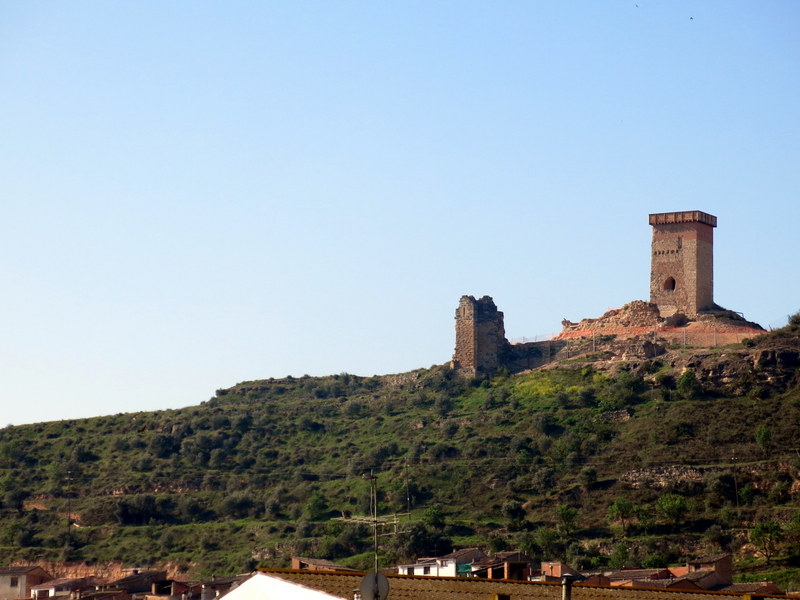
The Castell de Mequinensa is a significant hill castle located in the municipality of Mequinenza, Spain. This fortress-palace complex was constructed primarily during the 14th and 15th centuries by the Moncada family, a noble lineage that played a prominent role in the region's history. Strategically positioned on a hill rising about 185 meters, the castle commands a commanding view over the confluence of three important rivers: the Ebro, Segre, and Cinca. Its location provided both natural defense and control over riverine trade routes, making it a vital military and administrative center through the medieval and early modern periods.
Historical origins and medieval significance
The site of the Castell de Mequinensa has roots extending back to the Muslim period, originally known as Miknasa. This early fortress was described by the Arab geographer Edrisí as a small but strong fortification on the border of Andalus. The castle's strategic importance was recognized early on, and in 1192, Alfonso II of Aragón granted the fortress and surrounding lands to Armengol VII of Urgel. By the 13th century, the castle came under the control of the Moncada family, who would later be titled Marquises of Aytona in 1581.
The castle's military role is well documented. In 1288, it served as a prison for Charles II of Anjou, Prince of Salerno, who was held hostage during disputes over the Sicilian crown. The fortress also played a part in the Catalan revolt against Philip IV in 1644, providing shelter to the royal army. During the Spanish War of Independence (1808-1814), the castle endured multiple assaults by French forces. It was besieged and surrendered to General Suchet in 1810, only to be recaptured by Spanish troops in 1814. The castle's capture was commemorated with an inscription on the Arc de Triomphe in Paris.
Architectural features and defensive structures
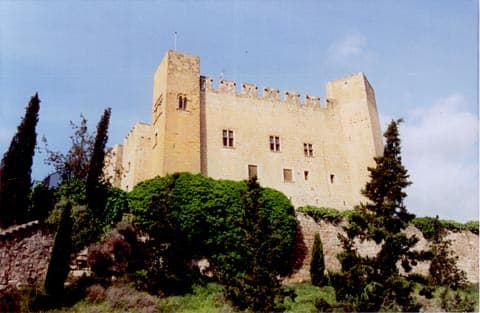
The Castell de Mequinensa is laid out on an irregular quadrangular plan, incorporating six rectangular towers and a distinctive pentagonal tower added during 17th-century renovations. The castle’s southern side benefits from a steep natural slope, providing a formidable natural defense. Remnants of a descending wall towards the river can still be observed. To the north, an artificial moat enhances the defensive perimeter.
Access to the fortress is through a semicircular archway on the southern side, flanked by two towers. Above the gate, visitors can see the Moncada family coat of arms, a testament to the castle's long association with this noble house. The interior is organized around a central courtyard, with rooms arranged along its edges. A notable feature is a rock-carved cistern that served as a water reservoir for the inhabitants.
Interior layout and structural elements
The western wing houses a large hall that once contained the castle’s chapel. This hall is supported by massive diaphragm arches, which are arched walls designed to bear the weight of the roof and support wooden ceiling beams. The southern side features three pointed arches opening onto the courtyard, while the northern wing includes an internal staircase leading to the upper floor.
On the upper floor, the armory stands out with its pointed barrel vault ceiling, a curved architectural element that efficiently distributes structural weight. The castle’s towers, none significantly taller than the others, contribute to a balanced defensive silhouette. The longest side of the castle measures approximately 29.5 meters, the shortest about 23 meters, and the overall height reaches around 7.7 meters.
Military adaptations and historical modifications
Throughout its history, the castle underwent various modifications to meet changing military needs. During the 19th century, particularly under King Ferdinand VII, the castle was incorporated into the royal domain and adapted for use as a military barracks. Modifications included storage facilities for artillery and living quarters for officers. The castle also played a role during the Carlisle Wars, reflecting its continued strategic importance.
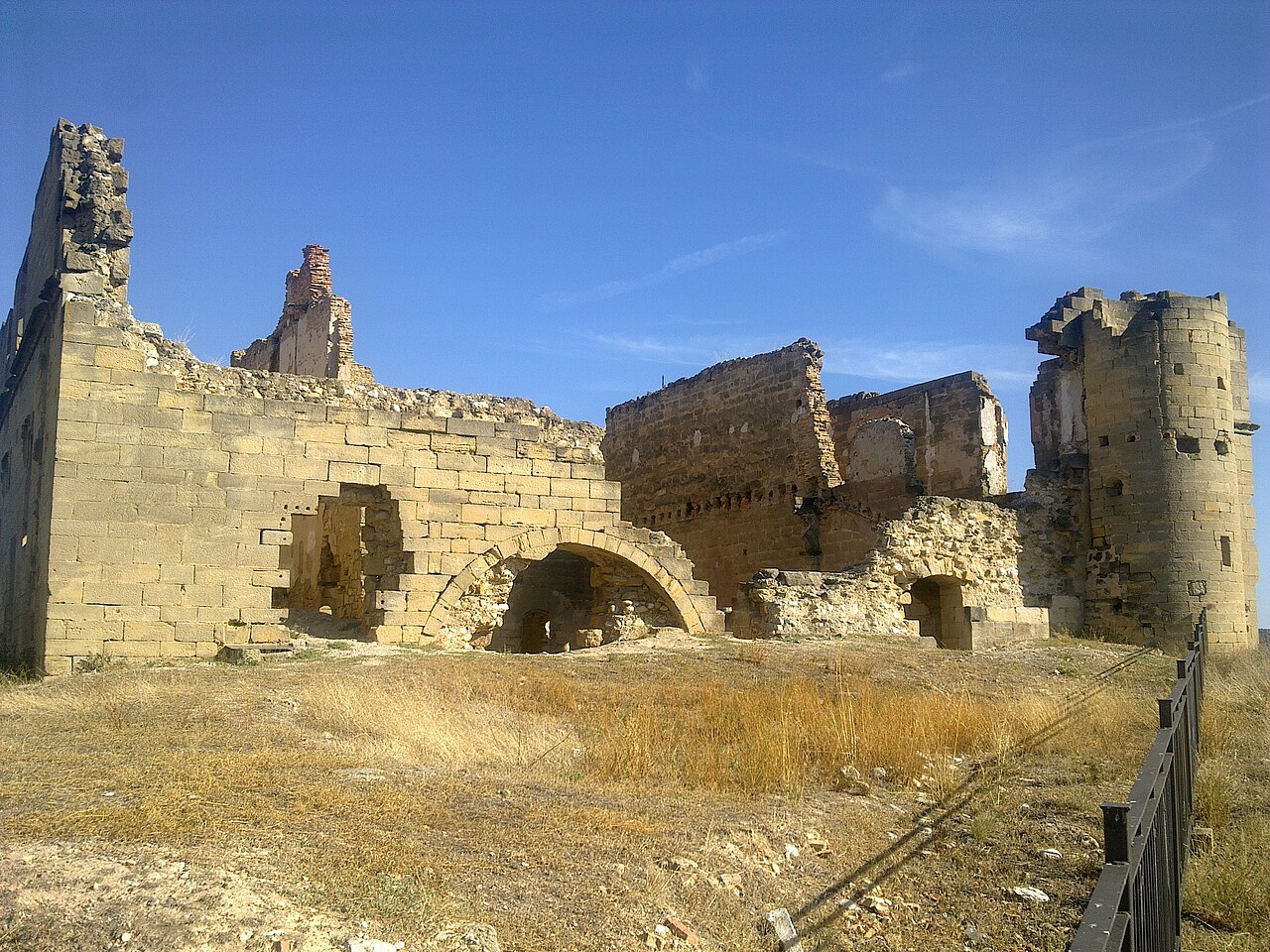
The defensive structures evolved to accommodate early modern military technology, with renovations extending into the early 20th century. Despite these changes, the castle retains much of its medieval character, blending original Gothic and early modern architectural elements.
The castle and the town fortifications
Historically, the castle and the adjacent town formed a unified fortified complex. Defensive walls extended from the castle down the hill to encircle the original settlement. These fortifications were crucial in protecting the town during various conflicts, including Saracen raids and the Spanish War of Independence. Over time, as the town expanded along the riverbanks, the walls were dismantled or disappeared.
Current condition and preservation efforts
After being abandoned following the Spanish Civil War in 1939, the Castell de Mequinensa suffered damage including partial roof and wall collapses. However, restoration efforts have successfully preserved the castle’s medieval and early modern architectural character. Today, it is maintained by the Fundación ENDESA and is considered to be in well-preserved condition, serving as a valuable cultural and historical monument.
The castle remains a prominent landmark in the region, attracting visitors interested in its rich history, architectural features, and strategic location overseeing the confluence of three rivers.
Frequently asked questions (FAQ)
- What is the historical significance of Castell de Mequinensa?
- Castell de Mequinensa is a medieval castle that played a crucial role in the defense of the region during the Reconquista. Its strategic location on a hilltop allowed it to oversee the surrounding areas, making it an important military stronghold throughout its history.
- When was Castell de Mequinensa built?
- The castle was constructed in the 11th century, during a period of significant military and territorial conflict in Spain. Over the centuries, it has undergone various modifications and renovations, reflecting the architectural styles of different eras.
- Can I visit Castell de Mequinensa?
- Yes, Castell de Mequinensa is open to visitors who wish to explore its rich history and stunning architecture. Guided tours are often available, providing insights into the castle's past and its importance in the region.
- What are the opening hours for Castell de Mequinensa?
- The opening hours for Castell de Mequinensa vary depending on the season. Generally, it is open to visitors from 10 AM to 6 PM, but it is advisable to check the official website or contact local tourism offices for the most accurate information before your visit.
- Is it possible to access Castell de Mequinensa with limited mobility?
- Access to Castell de Mequinensa can be challenging for visitors with limited mobility due to its location on a hill and uneven terrain. However, efforts have been made to improve accessibility, so it’s recommended to inquire in advance about specific accommodations.
- What is the best time to visit Castell de Mequinensa?
- The best time to visit Castell de Mequinensa is during the spring and early autumn months when the weather is mild and pleasant. This allows for a more enjoyable experience while exploring the castle and its surroundings.
- Are there any nearby attractions to Castell de Mequinensa?
- Yes, nearby attractions include the scenic Ebro River and the charming town of Mequinenza, known for its history and beautiful landscapes. Additionally, visitors can explore other historical sites and natural parks in the region.
- What are the ticket prices for visiting Castell de Mequinensa?
- Ticket prices for Castell de Mequinensa are generally quite affordable, with discounts often available for students and seniors. It is best to check the official website or local tourist information for the latest pricing details before your visit.
Photo gallery

Photo by Mequinensa•Public domain
Information
Sources & official resources
Verify the information above using these authoritative references.
Loading map...
Visitor reviews
No reviews yet. Been here? Write the first review and help other travelers!
Write the first reviewVisited this castle? Share your experience
Your review helps other travelers and adds first-hand knowledge to our encyclopedia.