Castell de Flix
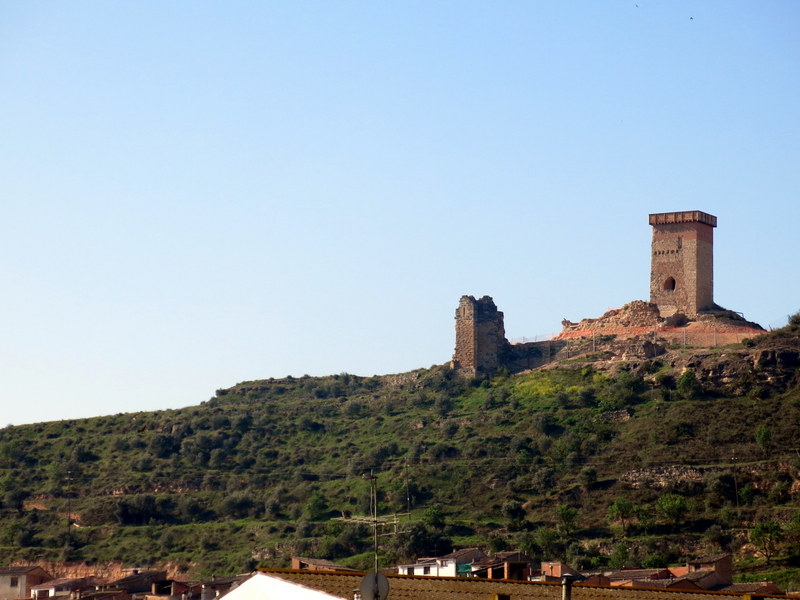
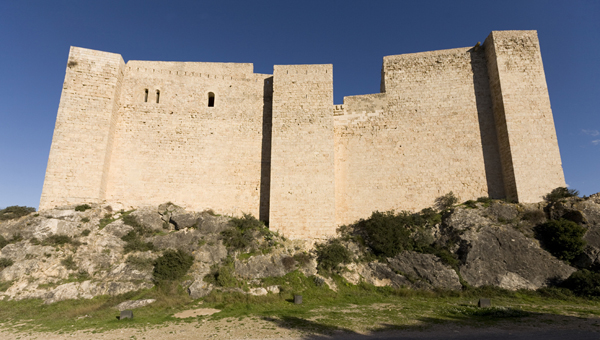
Castell de Flix stands as a significant hill castle located in the municipality of Flix, within the region of Catalonia, Spain. Its strategic position on elevated terrain overlooking the Ebro River has made it a crucial military stronghold throughout centuries of conflict and territorial control. The castle's history spans back to at least the 12th century, with archaeological evidence suggesting even earlier origins linked to Roman, Iberian, and possibly Saracen fortifications.
The earliest documented mention of the castle dates to 1154, when Count Ramon Berenguer IV granted the fortress to Bonifacio de Volta. By 1276, ownership had passed to Arnau de Bosc through a transaction with King James I. This transfer reflects the castle's political and military importance in the Ribera d’Ebre area during the medieval period. The castle's role extended well into later centuries, featuring prominently in the 15th-century civil war, the 17th-century Reapers’ War, and the 18th-century War of Spanish Succession.
Early origins and historical significance
Scholars propose that the site of Castell de Flix may have been fortified even before the medieval period. Beneath the existing structure, remnants of Roman and Iberian watchtowers suggest a long-standing defensive presence. Some theories also point to an initial fortification by Saracen forces, indicating the castle's strategic importance in controlling access along the Ebro River corridor.
Throughout the medieval and early modern periods, the castle was a focal point in regional power struggles. Its elevated position allowed control over key routes and river crossings, making it a coveted asset during numerous conflicts. The castle's fortifications evolved over time to meet changing military technologies and tactical demands.
19th-century reconstruction and military role
The current form of Castell de Flix largely results from extensive rebuilding during the First Carlist War (1833-1840). Under the direction of Count Ramon Cabrera, the fortress was reconstructed in 1837 to protect the right bank of the Ebro River against liberal forces. This phase introduced modernized defensive features adapted to 19th-century warfare.
Further enhancements occurred during the Third Carlist War (1872-1876), including the addition of a substantial round tower and reinforced defensive walls. This tower is a prime example of Vauban-style fortification, characterized by its thick, gently sloping walls known as atalussated walls. The tower's design aimed to deflect artillery fire and provide a commanding field of fire over the surrounding approaches.
In June 1875, the castle was the scene of combat when attacked by forces led by General Eduardo Gamir. After the assault, a liberal garrison occupied the fortress until its abandonment in 1876. Following this period, the castle gradually fell into decay as its military importance waned.
Architectural features and layout
The castle is arranged on an irregular plan defined by three circular towers situated at the vertices of the enclosure. These towers are connected by battlemented walls topped with embrasures—narrow openings designed for defensive firing positions. The primary construction material is brick, which gives the fortress its distinctive reddish appearance.
The main tower
The most prominent feature is the large tower at the southwest corner. This tower exemplifies Vauban-style military architecture with its thick, sloping walls that increase resistance to artillery bombardment. Its broad diameter and relatively low height provide a stable platform for defense. The tower includes a single embrasure oriented toward the access road leading into the town, enabling defenders to control this crucial approach effectively.
Inside, the tower is vaulted with a spherical brick ceiling, and access is gained through three rectangular openings within the castle's enclosure. The upper section features a cornice that once supported a battlement, now partially ruined but still indicative of the tower's defensive purpose.
Secondary towers
The two smaller towers located at the north and northeast corners differ from the main tower by having vertical walls without slopes. These watchtowers feature multiple rows of stone embrasures at varying heights, allowing defenders to cover multiple angles and ranges. The preservation of much of their original stone facing offers valuable insight into the castle's earlier construction phases.
Defensive walls and courtyard
The walls connecting the towers are topped with brick embrasures for defensive firing. Notably, the western wall facing the Ebro River incorporates a sloped base similar to the main tower, enhancing its ability to withstand attacks from the riverbank.
Within the castle courtyard lies a large oval-shaped cistern, an essential feature for storing water during sieges. Remnants of original plaster survive on some inner walls, along with traces of the springing points of vaults that once covered interior rooms, particularly in the southeast section of the enclosure. The masonry throughout the castle consists of roughly cut stones of consistent size arranged in orderly layers and bonded with abundant mortar, reflecting a balance of durability and construction technique.
Modern restoration and cultural significance
After decades of neglect, Castell de Flix was declared a cultural heritage site of national significance in 1988. Restoration efforts commenced in 2009 under the guidance of architect Miquel Orellana and his team. These works focused on stabilizing the structure, preserving its historical character, and making the site accessible to the public.
The restoration was completed around 2010 and received the 2012 Qualitat Ebrenca Award for the best-restored building in the region. Today, the castle stands as a testament to the layered history of military architecture in Catalonia, showcasing elements from medieval fortifications to 19th-century military engineering.
Visitors to Castell de Flix can explore the castle's battlements, towers, and courtyard, gaining insight into its strategic importance and architectural evolution. The site offers panoramic views of the Ebro River valley and surrounding landscape, enhancing its appeal as both a historical monument and a cultural landmark.
Information
Website
Visit websiteSources & official resources
Verify the information above using these authoritative references.
Loading map...
Visitor reviews
No reviews yet. Been here? Write the first review and help other travelers!
Write the first reviewVisited this castle? Share your experience
Your review helps other travelers and adds first-hand knowledge to our encyclopedia.