Castell de Caldes
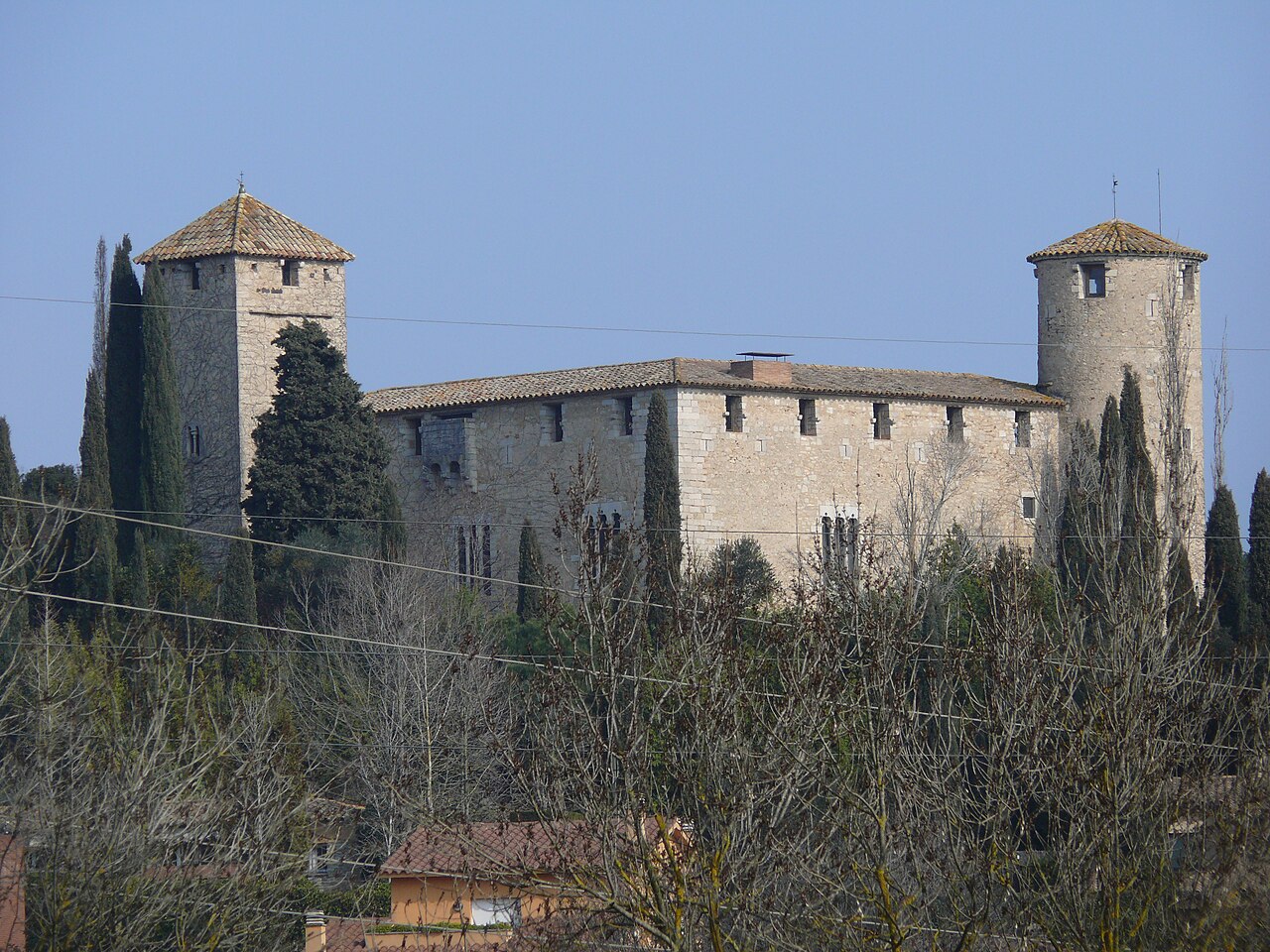
Castell de Caldes stands as a significant medieval hill castle located in the municipality of Caldes de Malavella, in the Catalonia region of Spain. The castle's strategic position atop the Sant Grau hill provided commanding views over the surrounding landscape, emphasizing its defensive and administrative importance during the medieval period. Its history is deeply intertwined with the political and territorial changes that shaped Catalonia from the 11th century onward.
Historical context and origins
The earliest references to the site of Castell de Caldes date back to the mid-11th century, with documents mentioning places called “Castro Vetulo” and “Castro quod dicunt Malavela.” These references are associated with land grants and feudal obligations involving the counts of Girona and their consorts. This indicates the area's strategic significance even before the castle's formal establishment. The first explicit mention of the castle itself appears in 1183 within a legal ruling connected to the local town charter known as the “carta forum de Calidis.”
By the early 13th century, the castle was known as “Malavetula,” and by the 14th century, the locality was referred to as “Calidis de Malaveglia.” Initially, the castle formed part of the viscounty of Cabrera territory, a significant feudal domain in the region. However, starting in 1240, the castle came under the direct royal domain linked to the nearby castle of Llagostera. This transfer was formalized by King James I of Aragon in 1241 when he granted privileges to the inhabitants of both Llagostera and Caldes, marking the castle's integration into the crown's holdings.
In 1375, King Peter IV of Aragon created the barony of Llagostera and granted it to Gastó de Montcada i de Lloria, thereby officially uniting Castell de Caldes with this barony. This feudal arrangement continued until the dissolution of the old feudal system in the late 18th century. By 1831, ownership records show that the castle grounds were held by the Duke of Medinaceli, who also held the title of Viscount of Cabrera. The castle structure itself was demolished during the late 19th century, ending its physical presence but leaving the site with enduring cultural and historical significance.
Architectural features and surviving remains
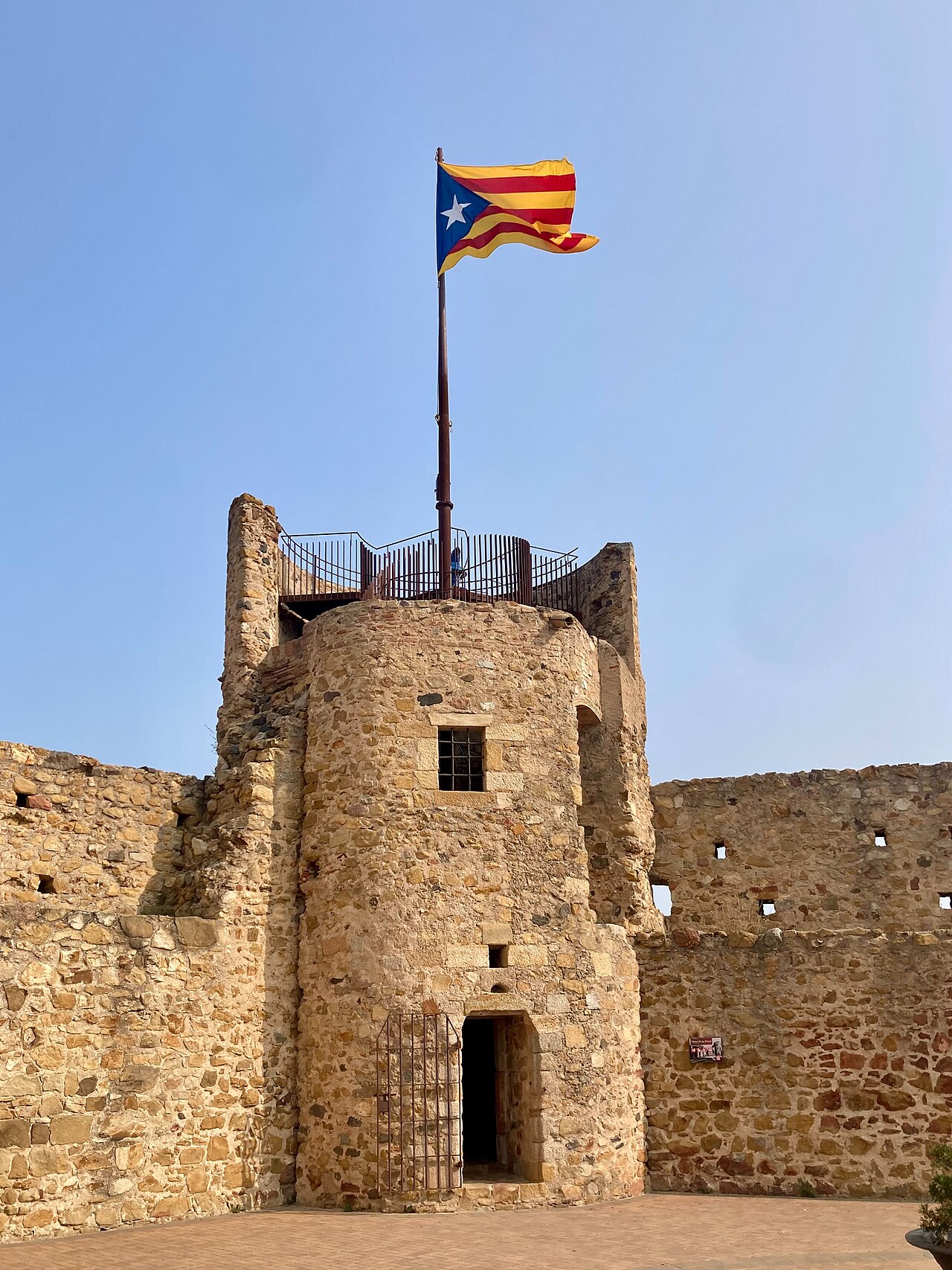
Today, the remnants of Castell de Caldes consist primarily of a section of defensive curtain wall and three distinct towers, all situated on Sant Grau hill overlooking the town. The surviving curtain wall extends approximately 20 meters along a north-south axis. It is constructed from an irregular arrangement of stones bonded with abundant lime mortar. Notably, the wall incorporates horizontal bands of regularly spaced stones, a construction technique likely related to the use of metal or wooden frameworks during building. The style and masonry suggest the wall dates from the 14th century, corresponding with the castle's continued medieval use.
This curtain wall is positioned adjacent to the remains of a nearby Roman thermal bath complex, linking the medieval fortification closely to earlier historical layers of the area and highlighting the site's long-term strategic and cultural importance.
Tower a
Tower A is located next to the Casa Rosa, a building currently serving as a local government office. This tower features a distinctive horseshoe shape, wider at its base and tapering upward, which likely served both structural and defensive functions. It is constructed from local granite blocks with brick used for the arch-shaped voussoirs. The tower is topped with traditional Arabic-style roof tiles, reflecting cultural influences in its design. Tower A is attached to two medieval structures that have undergone significant alterations over the centuries, illustrating the adaptive reuse of the castle precinct's buildings.
Tower b
Tower B has a semicircular design and shows evidence of two distinct construction phases. The lower portion consists of neatly arranged masonry, indicating an earlier building phase. The upper section is built with rustic granite and basalt blocks. Decorative features include three blind semicircular arches with brickwork edges and vaults, topped by a small decorative brick cornice. Today, Tower B adjoins a 20th-century building, demonstrating how the site has been integrated into more recent developments.
Tower c
The oldest tower, Tower C, also semicircular in plan, lies northeast of the Roman thermal bath complex. It is connected to a corner of the main curtain wall and primarily constructed from carefully dressed rectangular granite blocks. This stonework contrasts with the rougher masonry of the adjacent curtain wall, which includes roughly shaped stones interspersed with stone bands for structural stability. The foundations of Tower C may date back to Roman times, placing its origins between the late 12th and mid-13th centuries. This tower was a key defensive feature during the castle's earliest phase.
Cultural significance and preservation
The surviving walls and towers of Castell de Caldes provide a tangible link to the site's layered history, spanning from Roman foundations through medieval fortifications to modern adaptations. The castle's location on Sant Grau hill continues to dominate the local landscape, symbolizing the area's historical and cultural heritage.
Although the original castle was demolished in the late 19th century, the remaining structures have been preserved as important archaeological and cultural landmarks. The proximity of the medieval fortification to the Roman thermal baths underscores the site's long-standing importance as a center of settlement and defense.
Today, Castell de Caldes is valued not only for its architectural remnants but also for its role in illustrating the evolution of territorial control and feudal power in Catalonia. Its connection to notable historical figures such as King James I and King Peter IV, as well as noble families like the Montcada and Medinaceli lineages, enriches its historical narrative.
Visiting castell de caldes
Visitors to Castell de Caldes can explore the remains of the castle's curtain wall and towers while enjoying panoramic views from Sant Grau hill. The site offers insights into medieval military architecture and the complex history of Catalonia's feudal past. Nearby, the Roman thermal baths provide an additional historical attraction, allowing a broader understanding of the area's continuous occupation from antiquity through the Middle Ages.
The castle's proximity to the town center makes it accessible for visitors interested in history, architecture, and cultural heritage. While the castle itself is in ruins, the preserved towers and walls offer a compelling glimpse into medieval fortification techniques and regional history.
Frequently asked questions (FAQ)
- When was Castell de Caldes originally built?
- The earliest references to the site date back to the mid-11th century, with the first explicit mention of the castle in 1183. Its construction and development span the 12th to 14th centuries.
- What remains can I see at Castell de Caldes today?
- Visitors can see a surviving section of curtain wall approximately 20 meters long and three distinct medieval towers, each with unique architectural features.
- How is Castell de Caldes connected to the Roman history of the area?
- The castle site is adjacent to the remains of a Roman thermal bath complex, and some tower foundations may date back to Roman times, highlighting the site's long-term strategic importance.
- Who were the historical owners of Castell de Caldes?
- The castle was initially part of the viscounty of Cabrera, later came under royal domain, and was united with the barony of Llagostera under Gastó de Montcada i de Lloria. By the 19th century, it belonged to the Duke of Medinaceli.
- Is Castell de Caldes accessible to visitors?
- Yes, the castle ruins are accessible to visitors, offering views of the towers and walls on Sant Grau hill, near the town of Caldes de Malavella.
Information
Website
Visit websiteSources & official resources
Verify the information above using these authoritative references.
Loading map...
Visitor reviews
No reviews yet. Been here? Write the first review and help other travelers!
Write the first reviewVisited this castle? Share your experience
Your review helps other travelers and adds first-hand knowledge to our encyclopedia.