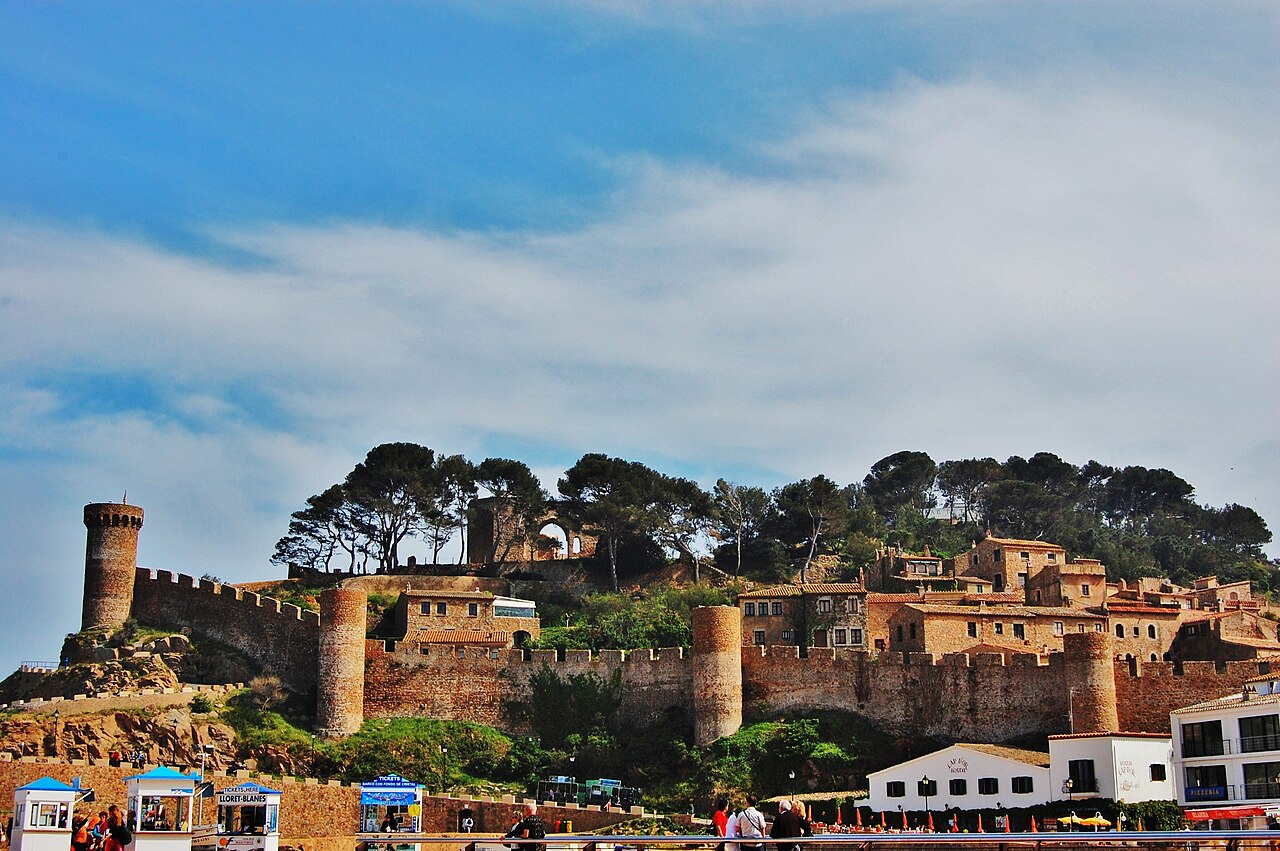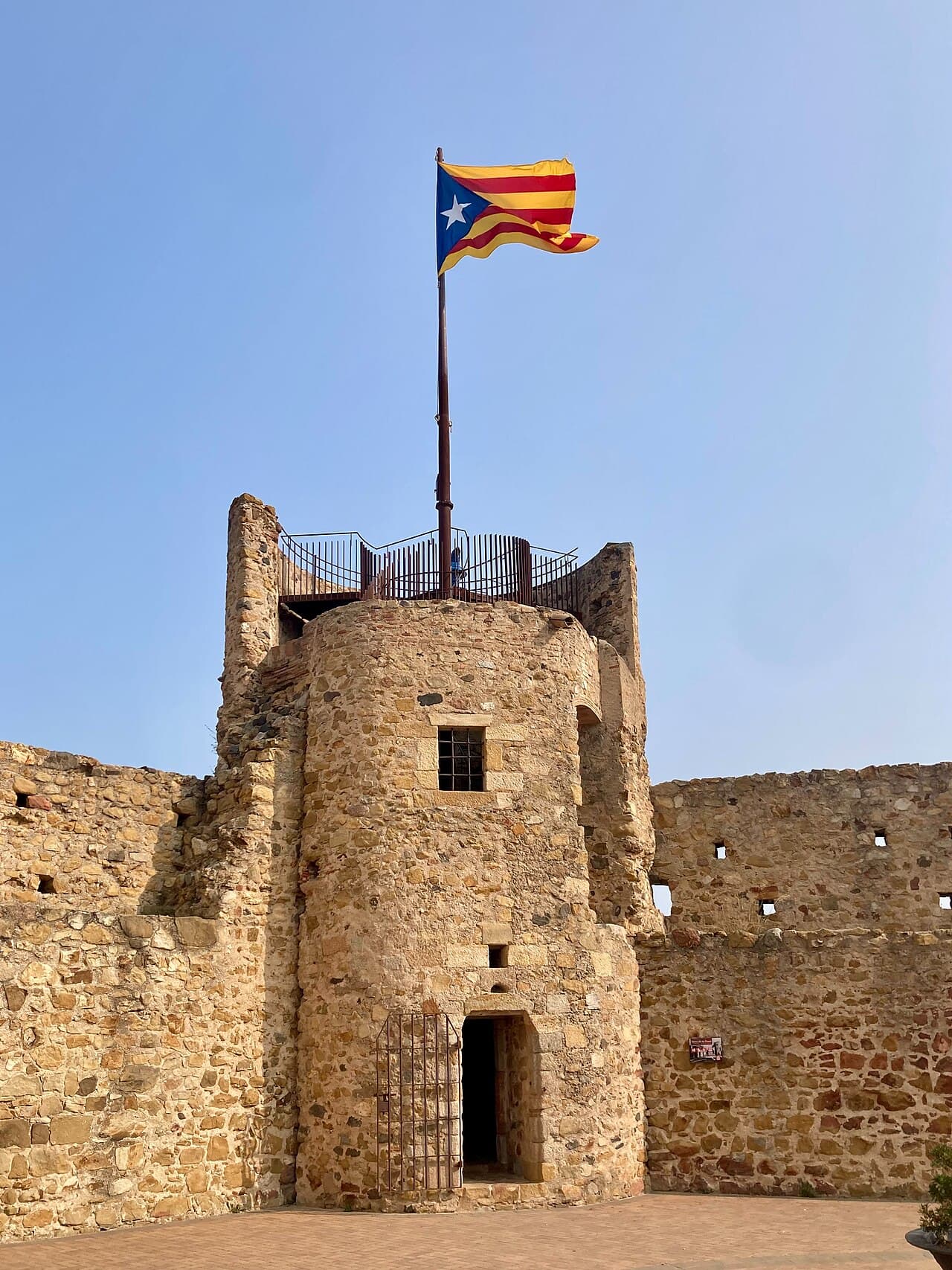
Castell de Llagostera — Spain castle

Castell de Llagostera

Castell de Llagostera
High Medieval (11th–13th c.)
Partially Preserved

Castell de Llagostera is a notable example of a hill castle located in the Catalonia region of Spain. Perched strategically on elevated terrain, this castle was constructed primarily for defensive purposes, leveraging its natural height advantage to oversee the surrounding landscape and protect the local population during the medieval period.

Historical context and significance

The origins of Castell de Llagostera trace back to the High Medieval period, a time marked by the consolidation of feudal territories and the frequent need for fortified structures in the Iberian Peninsula. The castle played a crucial role in regional defense and governance, serving as a stronghold for local lords who exercised control over the surrounding lands. Its position in Catalonia placed it within the sphere of influence of various medieval powers, including the Counts of Barcelona and later the Crown of Aragon.

Architectural features and layout

The castle exhibits characteristics typical of a hill castle, with a focus on robust defensive elements. Its design includes thick stone walls and a compact layout adapted to the contours of the hill. The main fortification likely featured a keep or central tower that provided a final refuge in case of attack, surrounded by a curtain wall incorporating battlements and arrow slits for archers.

Access to the castle was controlled through a fortified gatehouse, possibly equipped with a drawbridge or portcullis to enhance security. The castle's interior would have contained essential facilities such as a great hall, residential chambers, storage rooms, and a chapel, reflecting the multifunctional nature of medieval castles as both military and domestic centers.

Defensive adaptations

Given its elevated position, Castell de Llagostera took advantage of natural slopes and rocky outcrops to strengthen its defenses. The walls were likely reinforced with towers positioned at key points to enable flanking fire against attackers. The castle's layout was designed to maximize visibility and control over the surrounding territory, allowing defenders to detect and respond to threats early.

Later history and preservation

Over the centuries, the castle may have undergone modifications to adapt to changing military technologies and political circumstances. However, like many medieval fortifications, it eventually lost its strategic importance and fell into partial ruin. Today, Castell de Llagostera stands as a partially preserved monument, offering valuable insights into medieval military architecture and regional history.

Preservation efforts have focused on maintaining the remaining structures and preventing further deterioration. The castle is accessible to visitors interested in exploring its historical and architectural significance, with panoramic views of the Catalan landscape enhancing the experience.

Visiting information and cultural importance

Castell de Llagostera is a cultural landmark within Catalonia, attracting historians, architects, and tourists alike. Its location on a hill provides a scenic vantage point, making it a popular destination for hiking and historical tours. The castle's remains serve as a tangible connection to the region's medieval past and feudal heritage.

Visitors are encouraged to explore the site respectfully, as it embodies centuries of history and architectural ingenuity. Interpretive signage and guided tours may be available to enhance understanding of the castle's role and features.

Frequently asked questions (FAQ)

How do I get to Castell de Llagostera?
Castell de Llagostera is conveniently located near the town of Llagostera in Spain. You can reach it by car, and there are parking facilities available nearby. Public transportation options may include local buses that connect to Llagostera from larger cities in the region.
What is the historical significance of Castell de Llagostera?
Castell de Llagostera dates back to the 11th century and played a crucial role in the defense of the region during the Middle Ages. It is a testament to the feudal system and the historical conflicts in Catalonia. The castle has undergone various restorations, preserving its historical essence for future generations.
When was Castell de Llagostera built?
The construction of Castell de Llagostera began in the 11th century, specifically around the year 1079. It was established as a strategic fortress to control the surrounding areas and protect against invasions. Over the centuries, it has evolved, reflecting various architectural styles.
Can I visit Castell de Llagostera year-round?
Yes, Castell de Llagostera is open to visitors throughout the year, although certain areas may be restricted during winter months for preservation. It's best to check the official website or local tourism information for any seasonal changes in accessibility. Guided tours are often available for a more in-depth experience.
Why is Castell de Llagostera a popular tourist attraction?
Castell de Llagostera attracts visitors due to its rich history, stunning views of the surrounding landscape, and impressive medieval architecture. The castle offers a glimpse into the past and allows visitors to explore its ancient walls and towers. Additionally, its location near the Costa Brava enhances its appeal as a cultural and historical site.
Is it possible to take guided tours of Castell de Llagostera?
Yes, guided tours of Castell de Llagostera are available, providing insights into its history and architectural features. These tours are led by knowledgeable guides who can share fascinating stories about the castle and its significance. It's recommended to book in advance, especially during peak tourist seasons.
What are the ticket prices for visiting Castell de Llagostera?
Ticket prices for Castell de Llagostera vary, typically ranging from €5 to €10 for adults, with discounts available for children and seniors. There may also be special rates for guided tours or group visits. Check the official website for the most current pricing and any special offers.
What are the opening hours for Castell de Llagostera?
Castell de Llagostera generally opens at 10 AM and closes at 6 PM, but these hours may vary depending on the season. It's advisable to verify the opening hours on the official website before your visit, as they may change for holidays or special events. Plan your visit accordingly to make the most of your experience.
What are some nearby attractions to Castell de Llagostera?
Nearby attractions include the charming town of Llagostera itself, known for its local shops and restaurants. Additionally, the beautiful beaches of the Costa Brava are just a short drive away, offering opportunities for relaxation and recreation. You can also explore other historical sites and natural parks in the vicinity.

Photo gallery

Castell de Llagostera
Click to view

Photo by kallerna•CC BY-SA 4.0

1 photo • Click any image to view in full screen

Information

Hill Castle

Loading map...

Visitor reviews

No reviews yet. Been here? Write the first review and help other travelers!

Write the first review

Visited this castle? Share your experience

Your review helps other travelers and adds first-hand knowledge to our encyclopedia.

Write a review

(5/5)

0/2000 characters

Your review will be visible after admin approval

Nearby castles

6.3 km

Castell de Solius

Santa Cristina d'Aro, Spain

Castell de Solius stands as a significant medieval hill castle ruin located in the municipality of Santa Cristina d’Aro, within the Catalonia region of Spain. Its origins trace back to the early medieval period, with the earliest indirect references dating from the mid-11th century. The castle's strategic position atop a steep rocky outcrop provided commanding views over the surrounding landscape, a common defensive feature of hill castles designed to monitor and control local territories. Early history and medieval origins The first known indirect record related to the site of Castell de Solius appears in 1057, when Ramon Seniofred d’Olius was documented as a landowner in Solius. Notably, at this time, he was explicitly forbidden by the count from possessing any castle or tower, implying that no fortification existed on the site then. This prohibition highlights the political controls over fortifications during the early medieval period in Catalonia, where the construction of castles was often regulated by feudal lords to prevent unauthorized military power. The earliest explicit mention of the castle itself dates from 1208, firmly placing its construction in the high medieval period. By 1210, the fortress was under the ownership of Arnau de Creixell, the Bishop of Girona, who referenced it in his 1214 will as "meum castrum integro de Ruppe," confirming his possession of the entire castle. This ecclesiastical ownership reflects the common practice of the church holding strategic fortifications during the Middle Ages, often to exert both spiritual and temporal influence. Ownership disputes and regional control Following its acquisition by the church, Castell de Solius became the subject of prolonged economic and legal disputes, reflecting the turbulent feudal dynamics of the region. These conflicts lasted until 1394, when the sacristy finally secured authority over the territory extending from the Ridaura stream to the sea. This control was maintained throughout the 15th and 16th centuries, underscoring the castle's role as a center of regional power and administration. Role in 15th-century conflicts During the Catalan Civil War (1462–1467), Castell de Solius played a notable role in the socio-political upheavals affecting the region. The castle's lords imposed taxes on livestock herders supplying the city of Barcelona, a practice that heightened tensions with local peasants, particularly the remensa peasants. These peasants were serfs burdened by feudal obligations and were central figures in the peasant revolts known as the remensa wars. In 1485, amidst these revolts, the castle was captured by Miquel Safont from Cassà de la Selva, marking a significant event in the struggle against feudal oppression. This episode highlights the castle's strategic and symbolic importance during periods of social conflict in late medieval Catalonia. Architectural features and defensive elements Although primarily a residential dwelling, Castell de Solius was designed to be fortified during times of conflict. The castle's defensive system included fortified walls with a distinctive lowered arch doorway, which leads to a remarkable set of stairs carved directly into the rock face. These rock-hewn stairs are an impressive example of medieval engineering, allowing access within the fortress despite the challenging terrain. Additional defensive features include numerous rounded holes along the walls, which once held wooden bars or beams to secure entrance points and control access. The castle also contained a stone cistern midway up the hillside, essential for collecting and storing water during sieges or droughts. This cistern remains partially overgrown but is a key element that illustrates the castle's self-sufficiency in times of isolation. Later history and 19th-century restorations The strategic importance of Castell de Solius declined over the centuries, partly due to the difficulties in maintaining the structure and changing military technologies. However, the castle saw modest reconstruction efforts in 1830 during the Carlist Wars. These 19th-century repairs, undertaken by the owner of the nearby estate Can Dalmau, are still visible today and represent the castle's prolonged historical use beyond the medieval period. Current condition and archaeological significance Today, the ruins of Castell de Solius are a poignant reminder of Catalonia's medieval past. The site preserves a combination of original medieval construction techniques and traces of 19th-century restoration. The remains include artificial cuttings carved into the rock, the fortified wall with its distinctive doorway, rock-hewn stairs, and the stone cistern, all set within a rugged landscape that emphasizes the castle's defensive advantages. Despite its fragmentary state, Castell de Solius offers valuable insights into medieval castle architecture, feudal history, and the socio-political dynamics of Catalonia. It stands as an important cultural and heritage site, attracting historians, archaeologists, and visitors interested in the region's rich medieval legacy.

High Medieval (11th–13th c.)
Details
7 km

Castell de Caldes

Caldes de Malavella, Spain

Castell de Caldes stands as a significant medieval hill castle located in the municipality of Caldes de Malavella, in the Catalonia region of Spain. The castle's strategic position atop the Sant Grau hill provided commanding views over the surrounding landscape, emphasizing its defensive and administrative importance during the medieval period. Its history is deeply intertwined with the political and territorial changes that shaped Catalonia from the 11th century onward. Historical context and origins The earliest references to the site of Castell de Caldes date back to the mid-11th century, with documents mentioning places called “Castro Vetulo” and “Castro quod dicunt Malavela.” These references are associated with land grants and feudal obligations involving the counts of Girona and their consorts. This indicates the area's strategic significance even before the castle's formal establishment. The first explicit mention of the castle itself appears in 1183 within a legal ruling connected to the local town charter known as the “carta forum de Calidis.” By the early 13th century, the castle was known as “Malavetula,” and by the 14th century, the locality was referred to as “Calidis de Malaveglia.” Initially, the castle formed part of the viscounty of Cabrera territory, a significant feudal domain in the region. However, starting in 1240, the castle came under the direct royal domain linked to the nearby castle of Llagostera. This transfer was formalized by King James I of Aragon in 1241 when he granted privileges to the inhabitants of both Llagostera and Caldes, marking the castle's integration into the crown's holdings. In 1375, King Peter IV of Aragon created the barony of Llagostera and granted it to Gastó de Montcada i de Lloria, thereby officially uniting Castell de Caldes with this barony. This feudal arrangement continued until the dissolution of the old feudal system in the late 18th century. By 1831, ownership records show that the castle grounds were held by the Duke of Medinaceli, who also held the title of Viscount of Cabrera. The castle structure itself was demolished during the late 19th century, ending its physical presence but leaving the site with enduring cultural and historical significance. Architectural features and surviving remains Today, the remnants of Castell de Caldes consist primarily of a section of defensive curtain wall and three distinct towers, all situated on Sant Grau hill overlooking the town. The surviving curtain wall extends approximately 20 meters along a north-south axis. It is constructed from an irregular arrangement of stones bonded with abundant lime mortar. Notably, the wall incorporates horizontal bands of regularly spaced stones, a construction technique likely related to the use of metal or wooden frameworks during building. The style and masonry suggest the wall dates from the 14th century, corresponding with the castle's continued medieval use. This curtain wall is positioned adjacent to the remains of a nearby Roman thermal bath complex, linking the medieval fortification closely to earlier historical layers of the area and highlighting the site's long-term strategic and cultural importance. Tower a Tower A is located next to the Casa Rosa, a building currently serving as a local government office. This tower features a distinctive horseshoe shape, wider at its base and tapering upward, which likely served both structural and defensive functions. It is constructed from local granite blocks with brick used for the arch-shaped voussoirs. The tower is topped with traditional Arabic-style roof tiles, reflecting cultural influences in its design. Tower A is attached to two medieval structures that have undergone significant alterations over the centuries, illustrating the adaptive reuse of the castle precinct's buildings. Tower b Tower B has a semicircular design and shows evidence of two distinct construction phases. The lower portion consists of neatly arranged masonry, indicating an earlier building phase. The upper section is built with rustic granite and basalt blocks. Decorative features include three blind semicircular arches with brickwork edges and vaults, topped by a small decorative brick cornice. Today, Tower B adjoins a 20th-century building, demonstrating how the site has been integrated into more recent developments. Tower c The oldest tower, Tower C, also semicircular in plan, lies northeast of the Roman thermal bath complex. It is connected to a corner of the main curtain wall and primarily constructed from carefully dressed rectangular granite blocks. This stonework contrasts with the rougher masonry of the adjacent curtain wall, which includes roughly shaped stones interspersed with stone bands for structural stability. The foundations of Tower C may date back to Roman times, placing its origins between the late 12th and mid-13th centuries. This tower was a key defensive feature during the castle's earliest phase. Cultural significance and preservation The surviving walls and towers of Castell de Caldes provide a tangible link to the site's layered history, spanning from Roman foundations through medieval fortifications to modern adaptations. The castle's location on Sant Grau hill continues to dominate the local landscape, symbolizing the area's historical and cultural heritage. Although the original castle was demolished in the late 19th century, the remaining structures have been preserved as important archaeological and cultural landmarks. The proximity of the medieval fortification to the Roman thermal baths underscores the site's long-standing importance as a center of settlement and defense. Today, Castell de Caldes is valued not only for its architectural remnants but also for its role in illustrating the evolution of territorial control and feudal power in Catalonia. Its connection to notable historical figures such as King James I and King Peter IV, as well as noble families like the Montcada and Medinaceli lineages, enriches its historical narrative. Visiting castell de caldes Visitors to Castell de Caldes can explore the remains of the castle's curtain wall and towers while enjoying panoramic views from Sant Grau hill. The site offers insights into medieval military architecture and the complex history of Catalonia's feudal past. Nearby, the Roman thermal baths provide an additional historical attraction, allowing a broader understanding of the area's continuous occupation from antiquity through the Middle Ages. The castle's proximity to the town center makes it accessible for visitors interested in history, architecture, and cultural heritage. While the castle itself is in ruins, the preserved towers and walls offer a compelling glimpse into medieval fortification techniques and regional history.

High Medieval (11th–13th c.)
Details
12.9 km
Tossa de Mar Castle — Spain castle

Tossa de Mar Castle

Tossa de Mar, Spain

Tossa de Mar Castle, located on the rugged Mediterranean coast of Catalunya, Spain, stands as a remarkable example of a coastal fortress with origins dating back to the medieval period. This castle is renowned for its strategic location overlooking the sea, its well-preserved fortified walls, and its charming integration with the surrounding village. The castle’s dramatic setting on a promontory provides commanding views of the coastline and the Mediterranean Sea, making it a significant historical and architectural landmark. Historic and strategic significance The castle was originally constructed in the 12th century as a defensive stronghold to protect the town and its inhabitants from pirate attacks and invasions. Its position on a rocky headland allowed early defenders to monitor maritime activity and control access to the harbor. Over the centuries, Tossa de Mar Castle evolved from a purely military fortress into a symbol of the town’s resilience and cultural heritage. The fortified walls of the castle enclose a small medieval village, which is unique among coastal fortresses. This village, with its narrow streets and traditional houses, offers visitors a glimpse into the past, preserving the atmosphere of a medieval fishing community. The castle and its walls have witnessed numerous historical events, including conflicts during the Middle Ages and the Spanish Civil War. Architectural features and layout Tossa de Mar Castle is characterized by its robust stone walls that follow the natural contours of the rocky promontory. The walls are punctuated by several towers and bastions that provided vantage points for lookouts and archers. The castle’s main entrance is accessed via a fortified gate, which historically controlled entry to the enclosed village. Inside the walls, the castle grounds include remnants of defensive structures such as battlements and parapets, as well as residential buildings that once housed the castle’s garrison and local inhabitants. The integration of the castle with the village creates a unique mixed complex of military and civilian architecture. Towers and defensive structures The castle features several well-preserved watchtowers that allowed defenders to observe the sea and surrounding countryside. These towers are strategically placed along the walls to maximize coverage and provide overlapping fields of fire. The battlements atop the walls include crenellations and machicolations, which were typical defensive elements of medieval fortifications. The village within the walls The small village enclosed by the castle walls is a highlight for visitors. Its narrow cobblestone streets wind between whitewashed houses adorned with colorful geraniums and traditional Catalan architectural details. This living village maintains a timeless quality, with local residents preserving customs and lifestyles reminiscent of decades past. Cultural and touristic appeal Tossa de Mar Castle is a major tourist attraction in the region, drawing visitors who are interested in history, architecture, and scenic beauty. The castle’s location allows for pleasant walks along the battlements, offering panoramic views of the sea and the coastline. Visitors can also explore the quaint village streets, enjoy local cafes, and experience the vibrant culture of the area. The castle grounds are adjacent to beautiful small beaches and rocky coves, some of which are accessible only by adventurous paths. These secluded beaches are prized for their natural beauty and tranquility, providing a contrast to the bustling village and tourist areas. Preservation and current condition While some sections of the castle walls have fallen into ruins or show signs of wear, significant portions remain well-preserved or have been restored to maintain structural integrity. The castle is managed as a cultural heritage site, with efforts focused on conservation and public accessibility. Visitors can safely explore much of the castle and its walls, gaining insight into its historical importance and architectural features. Access and visitor information The castle is conveniently accessible from the beach area of Tossa de Mar, with stairs leading up to the entrance. It is open to the public year-round, and visitors can enjoy guided tours or self-guided exploration. The surrounding town offers a variety of amenities including restaurants specializing in seafood, cafes, and shops selling local crafts. Visiting Tossa de Mar Castle provides a rich experience combining historical exploration, architectural appreciation, and the enjoyment of the natural coastal environment. It remains a treasured landmark that reflects the cultural legacy and maritime heritage of Catalunya.

Details