Castell Coch
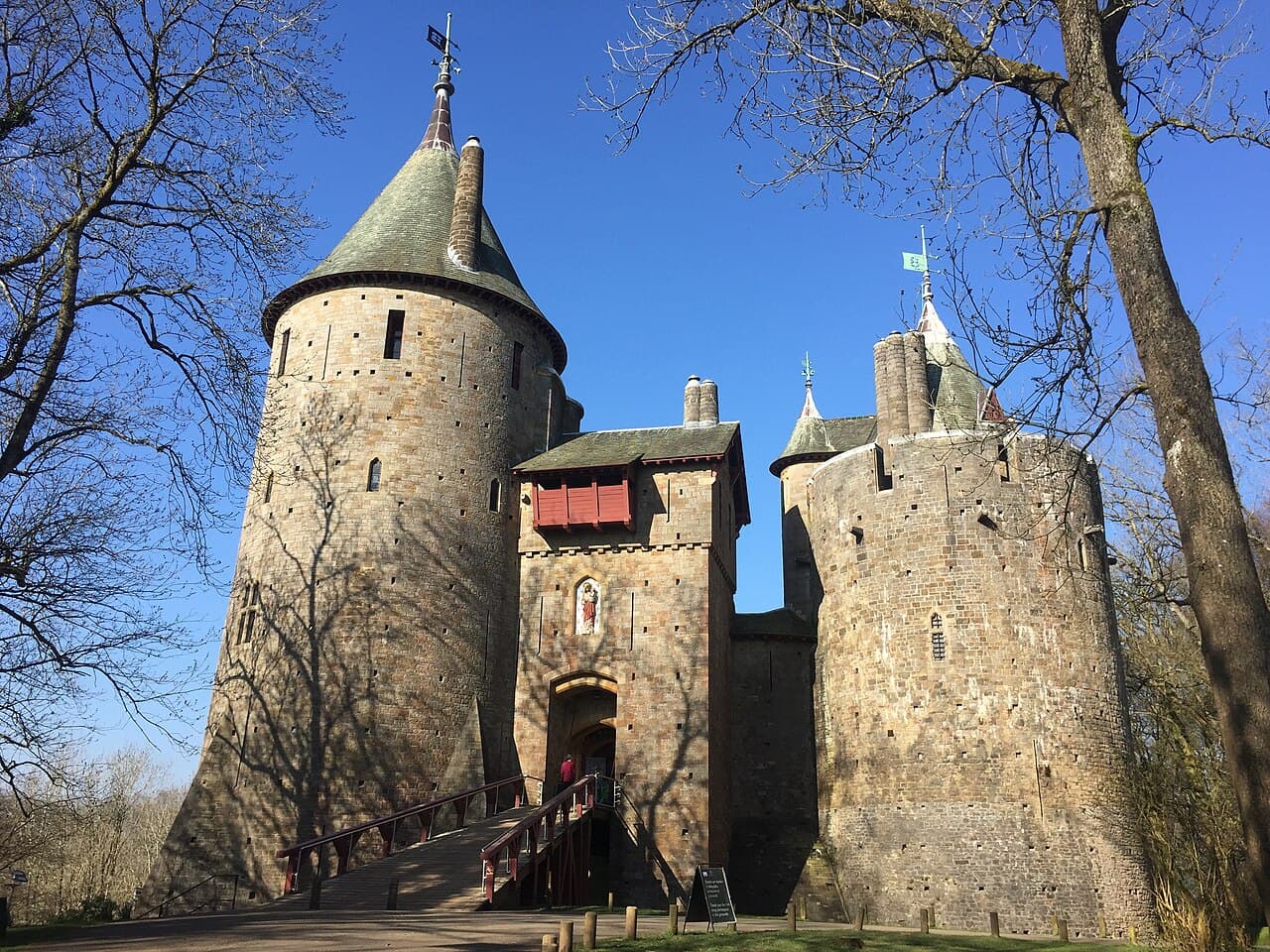
Castell Coch, meaning "Red Castle," is a striking example of 19th-century Gothic Revival architecture located above the village of Tongwynlais in Wales. This enchanting castle, with its distinctive conical roofs and fairy-tale silhouette, stands amidst the ancient beech woods of Fforest Fawr, a protected Site of Special Scientific Interest known for its rare plants and unusual geological features.
The site of Castell Coch has a long and layered history, beginning with the Normans who first constructed a castle here shortly after 1081. This initial fortress was strategically placed to protect the newly conquered town of Cardiff and to control the vital route along the Taff Gorge. However, this early castle was soon abandoned, and its earth motte later served as the foundation for a new stone fortification.
Medieval origins and strategic importance
Between 1267 and 1277, the powerful Marcher lord Gilbert de Clare erected a stone castle on the site, utilizing the earlier Norman earthworks. This medieval castle functioned as a hunting lodge and a military stronghold to assert control over his newly annexed Welsh lands. The castle's design reflected the defensive needs of the period, with robust curtain walls and towers adapted to the rugged landscape of the Taff Gorge. Unfortunately, this castle was likely destroyed during the native Welsh rebellion of 1314, a testament to the turbulent history of the region.
19th-century revival by the marquess of bute and william burges
In the 18th century, the ruins of Castell Coch became part of the estate of John Stuart, 3rd Earl of Bute, through a marriage settlement. The castle remained in the family until the 19th century when the 3rd Marquess of Bute, one of Britain's wealthiest men and an avid patron of architecture and antiquarian studies, inherited it in 1848.
Determined to revive the castle as a summer residence, the Marquess commissioned the renowned architect William Burges to reconstruct Castell Coch. Between 1875 and 1879, Burges rebuilt the exterior, drawing inspiration from detailed 19th-century studies by antiquarian George Clark. While the exterior maintained a degree of medieval authenticity, Burges adapted the three stone towers to create a dramatic and romantic silhouette reminiscent of mainland European castles such as Chillon rather than traditional British fortifications.
Burges's work extended beyond the exterior; he designed the interiors with extraordinary attention to detail. The castle's rooms are lavishly decorated with richly colored murals, intricate woodwork, and bespoke furniture. The interiors are infused with symbolism drawn from classical mythology and legendary themes, reflecting Burges's artistic vision and the Victorian fascination with medieval romanticism. Although Burges died in 1881, his team completed the interior work by 1891, leaving behind a masterpiece of High Victorian design.
Architectural features and interior design
Castell Coch's architecture is characterized by its conical roofs, turrets, and battlements that create a whimsical yet imposing profile. The castle's layout includes a gatehouse, a courtyard, and a series of chambers that were designed for comfort and aesthetic appeal rather than military utility.
Inside, visitors can admire the elaborate fireplaces, stained glass windows, and intricately carved wooden doors. The furnishings, many of which were custom designed by Burges, complement the architectural style with motifs inspired by nature, heraldry, and mythology. This harmonious blend of architecture and interior decoration makes Castell Coch a unique example of a Victorian-era fantasy castle brought to life.
Cultural significance and preservation
Despite its origins as a medieval fortress, Castell Coch is best known today as a romantic revival castle that embodies the Victorian era's idealized vision of the Middle Ages. It has been a symbol of wealth and artistic taste for over 700 years, though neither Gilbert de Clare nor the Marquess of Bute spent extensive time residing here.
In the 20th century, the castle was entrusted to the care of the state by the 5th Marquess of Bute in 1950. Today, it is managed by the Welsh heritage agency Cadw, which ensures its preservation and accessibility to the public. Castell Coch remains a beloved landmark and is frequently voted as one of Wales's favorite buildings, attracting visitors who appreciate its fairy-tale charm and architectural splendor.
Additionally, the surrounding beech woods with their rare flora and geological interest add to the castle's appeal as a destination for both history enthusiasts and nature lovers.
Visiting castell coch
Visitors to Castell Coch can explore the richly decorated interiors and enjoy panoramic views of the Taff Gorge from the castle's elevated position. The site offers a glimpse into the Victorian imagination as well as the medieval history of the Welsh Marches. Its accessibility and well-preserved condition make it a popular attraction for tourists and scholars alike.
Whether drawn by its historical significance, architectural beauty, or its story as a Victorian fantasy, Castell Coch continues to captivate and inspire all who visit.
Frequently asked questions (FAQ)
- How do I get to Castell Coch?
- Castell Coch is located in Tongwynlais, just north of Cardiff. You can reach the castle by car, with parking available on-site, or by taking public transport; the nearest train station is Taffs Well, followed by a short walk to the castle.
- What is the historical significance of Castell Coch?
- Castell Coch, known as the "Red Castle," was built in the late 19th century by the Marquess of Bute. It is an example of romantic Gothic architecture and was designed to evoke the spirit of medieval castles, serving as a picturesque retreat rather than a defensive fortress.
- When was Castell Coch built?
- The current structure of Castell Coch was constructed between 1871 and 1891, replacing an earlier 13th-century fortification. The castle was designed by architect William Burges, who aimed to create a whimsical and fairy-tale-like residence.
- Can I visit Castell Coch year-round?
- Yes, Castell Coch is open to visitors throughout the year, although opening hours may vary seasonally. It’s advisable to check the official website for the most current visiting hours before planning your trip.
- Why is Castell Coch a popular tourist attraction?
- Castell Coch attracts visitors due to its stunning architecture, rich history, and beautiful surroundings. The castle offers picturesque views of the surrounding woodlands and is a perfect spot for photography and leisurely walks.
- Is it possible to access Castell Coch with a wheelchair?
- Castell Coch has made efforts to improve accessibility, with some areas being wheelchair accessible. However, due to the castle's historical nature, some parts may have limitations, so it's best to check with staff upon arrival for the best routes.
- What are the ticket prices for Castell Coch?
- Ticket prices for Castell Coch vary, with discounts available for children, seniors, and families. It's recommended to purchase tickets online in advance to secure the best rates and avoid queues at the entrance.
- When is the best time to visit Castell Coch?
- The best time to visit Castell Coch is during the spring and summer months when the weather is pleasant and the gardens are in full bloom. However, the castle also offers a unique charm during the autumn months with colorful foliage.
- What nearby attractions can I visit while at Castell Coch?
- While visiting Castell Coch, you can explore the nearby Taff Trail for scenic walks or visit the picturesque village of Tongwynlais. Additionally, Cardiff city center is just a short drive away, offering a range of other historical sites and attractions.
Photo gallery

Information
Website
Visit websiteSources & official resources
Verify the information above using these authoritative references.
Loading map...
Visitor reviews
No reviews yet. Been here? Write the first review and help other travelers!
Write the first reviewVisited this castle? Share your experience
Your review helps other travelers and adds first-hand knowledge to our encyclopedia.