Castell Aberlleiniog
Castell Aberlleiniog is a significant Norman motte-and-bailey castle located near the village of Llangoed on the Isle of Anglesey, Wales. Constructed between 1080 and 1099 by Hugh d'Avranches, 1st Earl of Chester, this fortress played a crucial role in the Norman consolidation of power in northwestern Wales. Positioned strategically atop a steep hill overlooking the Menai Strait, it was built to command coastal communications and to counter Welsh resistance during the turbulent High Medieval period.
The castle exemplifies the typical motte-and-bailey design favored by the Normans in their early conquests, featuring a raised earthwork (the motte) crowned by a defensive structure and an enclosed courtyard (the bailey) surrounded by protective walls. Originally constructed in timber for rapid defense, the castle was later rebuilt in stone, reflecting its increasing strategic importance and the need for more durable fortifications.
Historical context and military significance
Castell Aberlleiniog was established during the Norman expansion into Welsh territories, specifically as part of Hugh d'Avranches' campaign to secure control over Gwynedd. Its location was deliberately chosen to face the Norman castle at Abergwyngregyn across the Menai Strait, facilitating visual signaling and coordination between these strongholds.
The castle's early history is marked by conflict, notably the 1094 siege led by Gruffudd ap Cynan, a Welsh prince who sought to reclaim his ancestral lands. The siege resulted in the death of 124 Norman defenders and the temporary ousting of Hugh d'Avranches' forces from Anglesey. This event underscores the contested nature of the region during the late 11th century and the resilience of Welsh resistance.
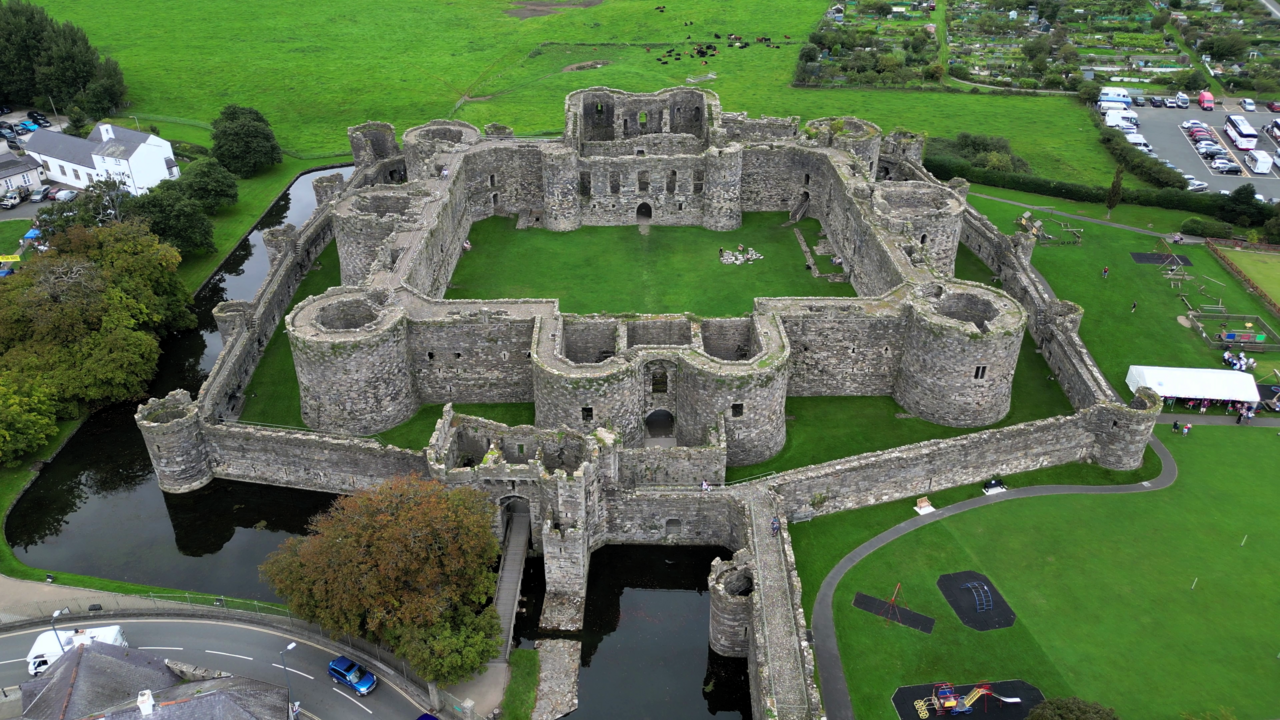
Following this period, Anglesey remained under Welsh control until the late 13th century when Edward I launched his campaigns to conquer Wales. Although it is unclear if Castell Aberlleiniog was actively used during this later period, its proximity to Beaumaris Castle—constructed in the 1290s as part of Edward's ring of fortifications—indicates its continued strategic relevance.
Architectural evolution and features
The original timber motte-and-bailey structure was typical of Norman military architecture, designed for rapid construction and effective defense. The motte was an artificially raised mound, providing a vantage point and a platform for the keep or tower.
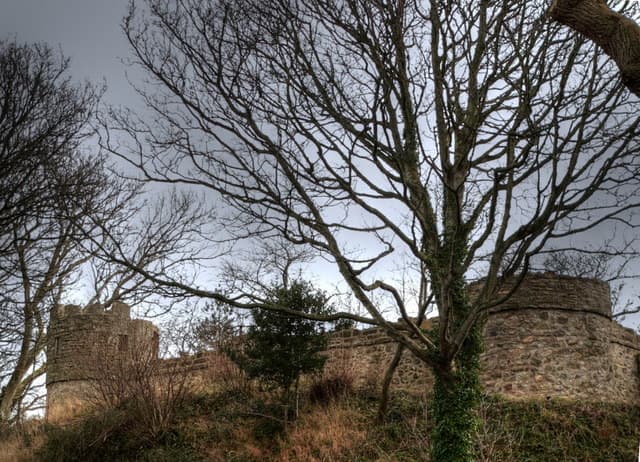
Over time, the wooden defenses were replaced by stonework, a transition that enhanced the castle's durability and defensive capabilities. The surviving stone remains include broad ramparts and a narrow curtain wall rising to a parapet, with round towers at each corner of the enclosure. These towers would have served as lookout points and defensive strongholds, allowing defenders to cover the walls with crossfire.
The castle's layout includes a courtyard surrounded by these walls, which would have housed essential buildings and provided space for troops and supplies. The steep hill on which the castle stands, approximately 25 meters above sea level, added a natural defensive advantage by making assaults more difficult.
Destruction and restoration
In the mid-17th century, Thomas Cheadle, the constable of nearby Beaumaris Castle, partially destroyed Castell Aberlleiniog, reflecting the shifting military and political landscape of the time. The castle fell into ruin but retained enough structural elements to inform later restoration efforts.
Beginning in 2008, restoration work was undertaken to stabilize the ruins and make the site accessible to the public. Today, visitors can explore the remains nestled within the Anglesey Area of Outstanding Natural Beauty, where the castle's ruins blend with the surrounding woodland. The site is often quiet and overgrown, offering a peaceful experience away from more heavily touristed locations.
Legacy and cultural importance
Castell Aberlleiniog stands as a testament to the Norman conquest and colonization of Wales. Its remains provide valuable insights into medieval military architecture and the turbulent history of Anglo-Welsh relations. The castle's strategic placement and architectural features illustrate the Normans' tactical approach to securing newly conquered territories.
Though overshadowed by larger castles like Beaumaris, Castell Aberlleiniog's historical significance lies in its role as part of a network of fortifications that shaped the medieval landscape of Anglesey. The site continues to attract visitors interested in medieval history, archaeology, and the natural beauty of the Welsh coast.
Visiting today
The castle is open to the public, with access to the ruins allowing for exploration of the motte, bailey, and surviving stone walls and towers. While the site lacks extensive visitor facilities, its serene setting and historical ambiance make it a rewarding destination for those interested in Norman castles and Welsh heritage.
Frequently asked questions (FAQ)
- How do I get to Castell Aberlleiniog?
- Castell Aberlleiniog is located in Llangoed, United Kingdom. You can reach the castle by car, and there is parking available nearby. Public transport options include local buses that connect to the surrounding areas, making it accessible for visitors.
- What is the historical significance of Castell Aberlleiniog?
- Castell Aberlleiniog, dating back to the 13th century, is a significant historical site that showcases the medieval architecture and strategic importance of castles in Wales. It was built as a defensive structure during the conflicts between the Welsh and the English. Today, it stands as a testament to the rich history of the region.
- When was Castell Aberlleiniog built?
- Castell Aberlleiniog was constructed in the early 13th century, around 1200 AD, during a period of territorial conflict and consolidation in Wales. It was originally built by the English to assert control over the area. The castle has undergone various stages of restoration and preservation to maintain its historical integrity.
- Can I enter the castle grounds?
- Yes, visitors can enter the castle grounds and explore the ruins of Castell Aberlleiniog. While some areas may be restricted for safety reasons, the open spaces provide a glimpse into its architectural features and historical context. Be sure to respect the site's heritage during your visit.
- Why is Castell Aberlleiniog a popular tourist attraction?
- Castell Aberlleiniog attracts visitors for its stunning views of the surrounding landscape and its rich historical background. It offers a unique opportunity to learn about medieval Welsh history and architecture. Additionally, the quiet, picturesque setting makes it an ideal spot for photography and leisurely exploration.
- Is it possible to visit Castell Aberlleiniog year-round?
- Yes, Castell Aberlleiniog is open to visitors throughout the year, although specific opening hours may vary by season. It’s advisable to check in advance for any seasonal events or maintenance closures. Visiting during the spring or summer provides the best weather for exploring the grounds.
- What are the ticket prices for visiting Castell Aberlleiniog?
- Entry to Castell Aberlleiniog is generally free, making it an accessible destination for all visitors. However, donations are appreciated to support the maintenance and preservation of the site. Check local tourism websites for any special events that may have associated fees.
- What are the opening hours for Castell Aberlleiniog?
- Castell Aberlleiniog typically opens at 10 AM and closes at dusk, but these hours can change based on the season. It’s a good idea to confirm the current hours through local tourism resources before planning your visit. This ensures you have ample time to explore the site.
- Are there any nearby attractions to visit while at Castell Aberlleiniog?
- Yes, there are several nearby attractions, including the beautiful beaches of Anglesey and the historic town of Beaumaris, which features Beaumaris Castle. Exploring these areas can enhance your visit to Castell Aberlleiniog, providing a fuller experience of Welsh culture and history. Plan a day trip to enjoy both the castle and surrounding sights.
Photo gallery

Information
Website
Visit websiteSources & official resources
Verify the information above using these authoritative references.
Loading map...
Visitor reviews
No reviews yet. Been here? Write the first review and help other travelers!
Write the first reviewVisited this castle? Share your experience
Your review helps other travelers and adds first-hand knowledge to our encyclopedia.