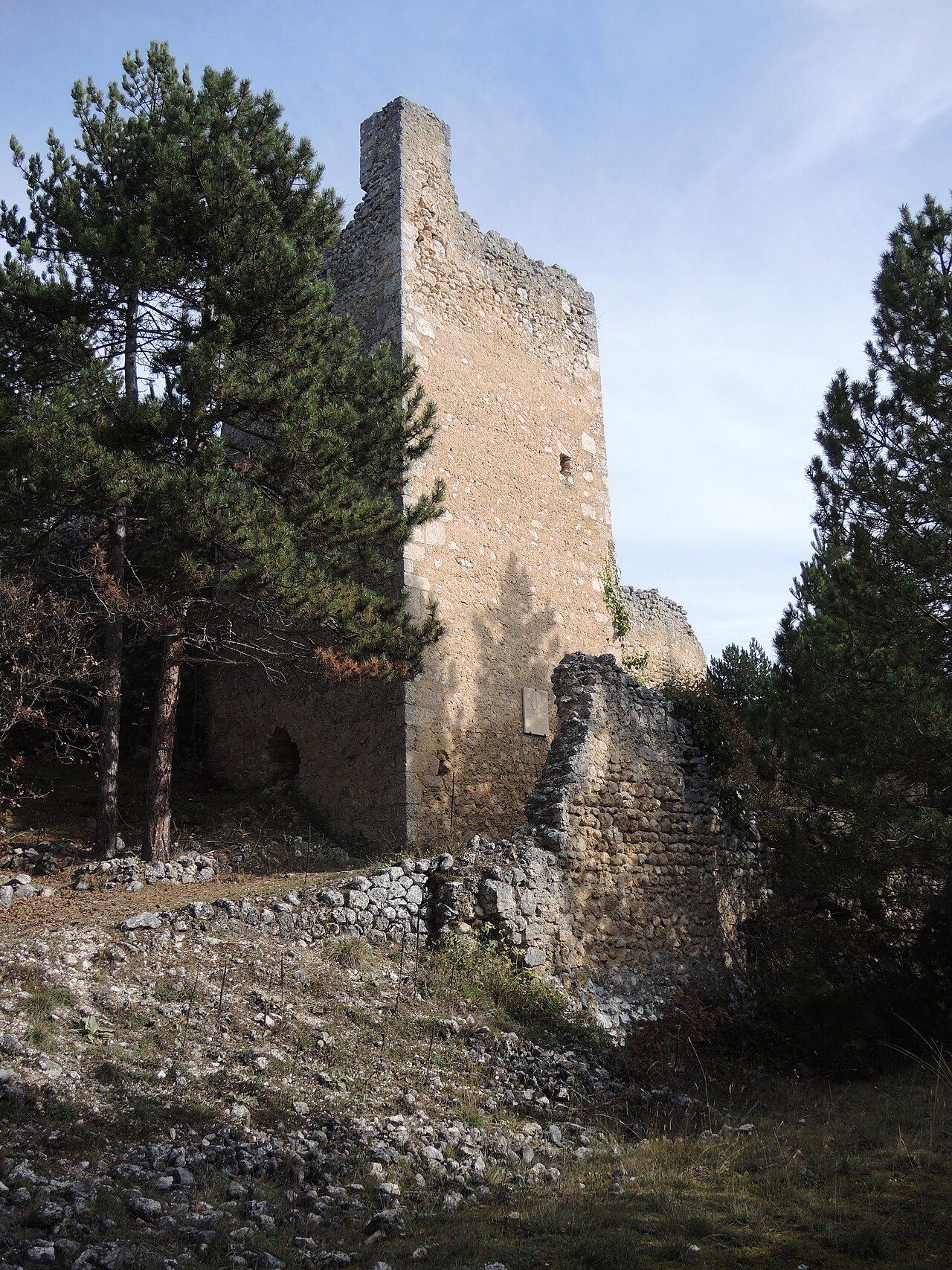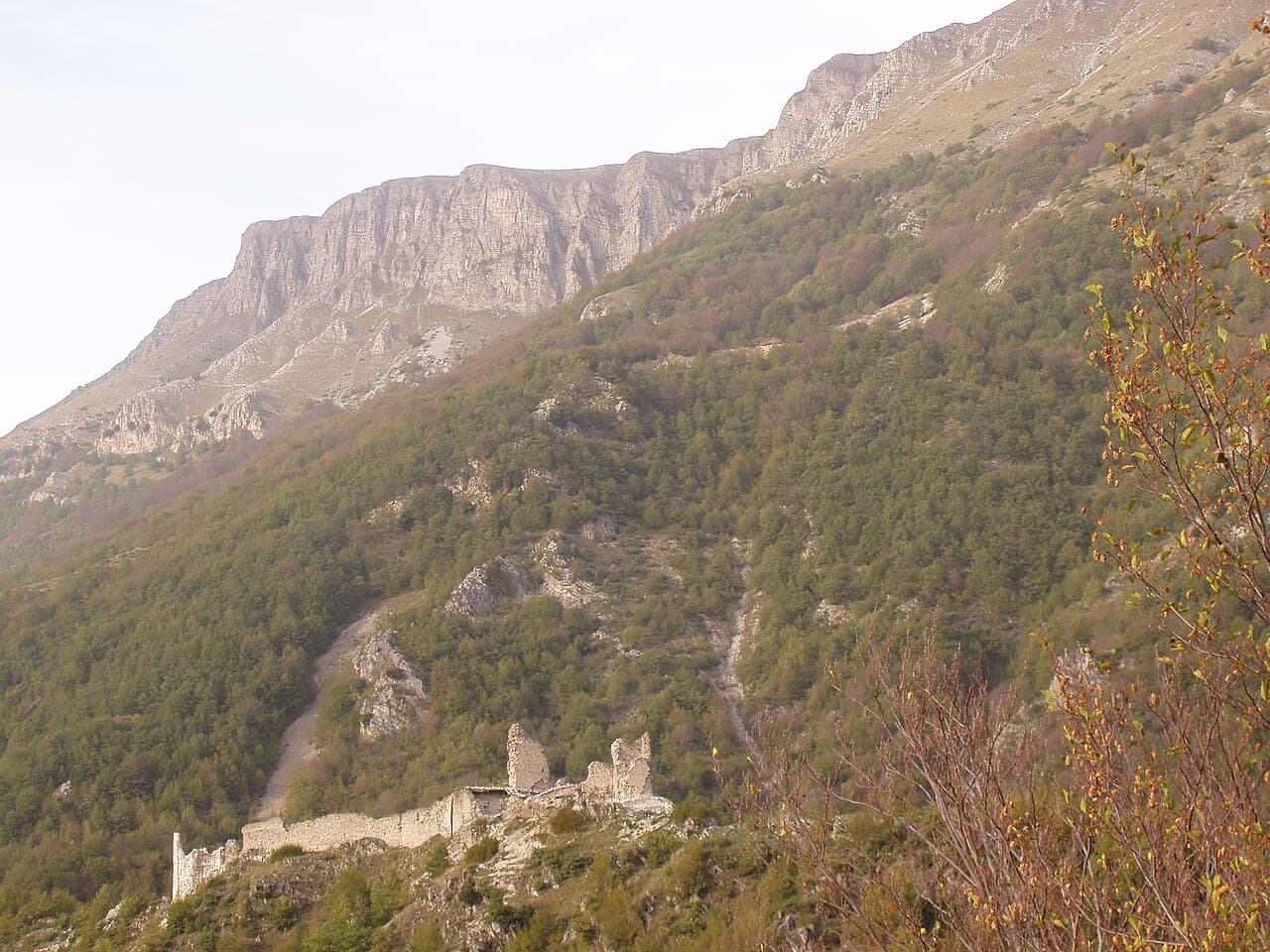
Castel Manfrino is a remarkable example of a medieval hill castle located in the municipality of Valle Castellana, within the Abruzzo region of Italy. This fortress stands on a rocky ridge at an altitude of 963 meters, commanding strategic views over the Salinello river gorge and the mountain routes connecting the Salinello valley with the Rivolta gorge. Its location between the Montagna dei Fiori and Montagna di Campli highlights its historical importance in controlling key mountain passes.
The origins of Castel Manfrino trace back to Roman times, when the site served as a military stronghold guarding a road branching from the Via Salaria near Amatrice. This ancient Roman foundation laid the groundwork for the later medieval castle, which was constructed primarily during the 12th and 13th centuries. The castle was named after Manfred of Swabia (also known as Manfred of Sicily), son of Emperor Frederick II. Manfred commissioned the castle to secure mountain routes between the towns of Ascoli Piceno and Teramo, forming a defensive network alongside nearby fortresses such as Civitella del Tronto.
Historical context and strategic significance
The castle’s history is deeply intertwined with the political and military struggles of medieval Italy. Known by various names in historical documents, including “Castello di re Manfredi,” “Castel Manfredino,” and “Castrum Maccle,” Castel Manfrino was listed in the Catalogus Baronum as part of the fief of Macclam under the jurisdiction of Ascoli. After Manfred’s death, the castle changed ownership multiple times, reflecting the turbulent conflicts of the period.
One notable figure associated with the castle is Armellino di Macchia di Giacomo, who was initially granted control but later expelled and declared a rebel. The fortress subsequently came under the command of Pietro d’Isola, an Angevin military leader who died during an assault by forces loyal to Armellino. The Angevin influence grew stronger after the defeat of Manfred and his successor Conradin, culminating in the castle’s definitive incorporation into the Angevin domains centered in Naples.
Construction and architectural developments
Between 1280 and 1281, under the reign of Charles I of Anjou, the castle underwent significant enhancements. Charles I commissioned Master Pierre d’Angicourt, a prominent military architect, to design and build a new defensive tower within Castel Manfrino. This tower featured a cistern for water collection, an air chamber for ventilation, and living quarters on the upper floors. The tower’s entrance was intentionally elevated on the south side to improve defense against attackers.
The castle’s layout extends longitudinally along a north-south axis, with outer walls approximately 120 meters long enclosing a narrow area between 8 and 20 meters wide. The walls, constructed from river stones bound with mortar, vary in thickness from 50 centimeters to one meter. The masonry is smoothed and finished on the exterior façade, reflecting the regional building traditions of the province of L’Aquila. The single entrance gate on the north side was likely once flanked by bastions, although none survive today.
Architectural features and ruins
The castle’s most prominent surviving feature is a large quadrangular tower, measuring about 10 meters on each side. This tower was built without ground-level access, enhancing its defensibility. Inside, it was divided into multiple floors connected by wooden balconies. Remnants include the first floor, a water cistern, and partial upper wall sections on the east and west faces.
Near this tower lie the foundations of additional rooms leading to a second central tower approximately 10 meters tall. The upper exterior of this tower bears a blackened area, interpreted as evidence of boiling oil being used as a defensive weapon. Supporting this interpretation, two cast iron cauldrons were discovered in the nearby Rivolta stream, likely used in the castle’s defense.
Within the castle courtyard, ruins of a small chapel with a rectangular floor plan have been identified near the southern tower. A 1277 document references a permanent chaplain at Castel Manfrino, confirming religious functions at the site. Faint fresco traces remain on the chapel walls, indicating the presence of painted decoration.
Additional structural elements include the remains of a northern tower, a central keep often called the maschio, and segments of the enclosing defensive walls. Near the Swabian keep, ruins of walls and remnants of a wooden walkway that once formed part of the battlement path have been found.
Archaeological findings and historical insights
Excavations by the Consorzio Aprutino Patrimonio Storico e Artistico of Teramo have uncovered multiple layers of occupation, revealing a long history of habitation and adaptation. Among the finds are various types of iron arrowheads, notably square-headed varieties typical of medieval warfare. Ceramic fragments dating to the 16th and 17th centuries suggest continued use or occupation into the early modern period.
Multiple flooring layers beneath the current surface illustrate the castle’s evolving structure over centuries. Coins and traces of fresco painting found inside both the towers and enclosure walls enrich the understanding of the castle’s historical phases and cultural significance.
Castel manfrino in the context of regional fortifications
Castel Manfrino’s construction style shares notable similarities with other medieval fortifications in the Abruzzo region, particularly the Castello di San Pio delle Camere in the province of L’Aquila. These similarities highlight a regional architectural tradition characterized by the use of river stone masonry, strategic hilltop locations, and defensive features such as elevated entrances and water cisterns.
As part of a broader network of castles controlling mountain passes and valleys, Castel Manfrino played a crucial role in the defense and administration of the area during the Middle Ages. Its strategic position allowed control over important trade and military routes, contributing to the power dynamics between local lords, the Angevin rulers, and neighboring city-states.
Visitor experience and preservation status
Today, the ruins of Castel Manfrino offer a compelling glimpse into medieval military architecture and regional history. The site’s partially preserved condition allows visitors to appreciate the layout of the castle, its towers, and defensive walls, while archaeological findings provide context for its historical significance.
While no full restoration has been undertaken, the visible remains, including the towers, walls, and chapel ruins, serve as important cultural heritage landmarks. The castle’s elevated position and rugged terrain make it a destination for those interested in history, archaeology, and the natural beauty of the Abruzzo mountains.
Frequently asked questions (FAQ)
- How do I get to Castel Manfrino?
- Castel Manfrino is located in the picturesque region of Italy, easily accessible by car or public transportation. If you're traveling by train, the nearest station is a short bus ride away. Consider using GPS for the best routes and enjoy the scenic drive through the Italian countryside.
- What is the historical significance of Castel Manfrino?
- Castel Manfrino dates back to the medieval era and served as a strategic fortress during various conflicts in Italy's history. Its architecture reflects the evolution of military design and local craftsmanship over the centuries. Today, it stands as a testament to the rich cultural heritage of the region.
- When was Castel Manfrino built?
- Construction of Castel Manfrino began in the 12th century and was completed in the 14th century. The castle has undergone several renovations and restorations, preserving its historical essence while adapting to modern visitor needs. This long history makes it a fascinating site for history enthusiasts.
- Can I take guided tours of Castel Manfrino?
- Yes, guided tours of Castel Manfrino are available and highly recommended for a deeper understanding of its history and architecture. Tours typically last about an hour, providing insights into the castle's past and its role in local legends. Check the castle's official website for tour availability and schedules.
- Why is Castel Manfrino popular among visitors?
- Castel Manfrino attracts visitors for its stunning views, rich history, and unique architectural features. The castle's picturesque setting and the stories behind its walls make it a must-visit destination in Italy. Additionally, it offers a glimpse into the medieval lifestyle, captivating both history buffs and casual tourists alike.
- Is it possible to host events at Castel Manfrino?
- Yes, Castel Manfrino offers facilities for hosting special events such as weddings, corporate gatherings, and cultural events. The castle’s breathtaking views and historic ambiance provide a memorable backdrop for any occasion. For more information, you can contact the castle's event management team via their website.
- What are the opening hours for Castel Manfrino?
- Castel Manfrino is open to visitors from 9 AM to 6 PM daily, with extended hours during the summer months. It's advisable to check the official website for any seasonal changes or special closures. Arriving early can help you avoid crowds and fully enjoy the site.
- What are the ticket prices for Castel Manfrino?
- Ticket prices for Castel Manfrino vary depending on the type of tour and age group, with discounts available for children and seniors. General admission tickets typically cost around €10, while guided tours may have additional fees. It's best to purchase tickets in advance online to ensure availability.
- What is the best time to visit Castel Manfrino?
- The best time to visit Castel Manfrino is during the spring (April to June) and fall (September to October) when the weather is mild and pleasant. These seasons also offer fewer crowds, allowing for a more enjoyable experience exploring the castle and its surroundings. Be sure to check for local events that may enhance your visit.
- Are there any nearby attractions to visit?
- Yes, Castel Manfrino is surrounded by beautiful landscapes and other historical sites. Nearby attractions include charming villages, scenic hiking trails, and local vineyards that offer tastings. Exploring the area can provide a richer experience of the Italian culture and history.
Photo gallery

Photo by Lucio De MarcellisThe original uploader was Luciodem at Italian Wikipedia.•CC BY-SA 3.0
Information
Loading map...
Visitor reviews
No reviews yet. Been here? Write the first review and help other travelers!
Write the first reviewVisited this castle? Share your experience
Your review helps other travelers and adds first-hand knowledge to our encyclopedia.