Castel dell'Ovo - Naples — Italy castle

Castel dell'Ovo - Naples

Castel dell'Ovo: Naples' historic seaside fortress
Naples, Campania, Italy
High Medieval (11th–13th c.)
Well Preserved

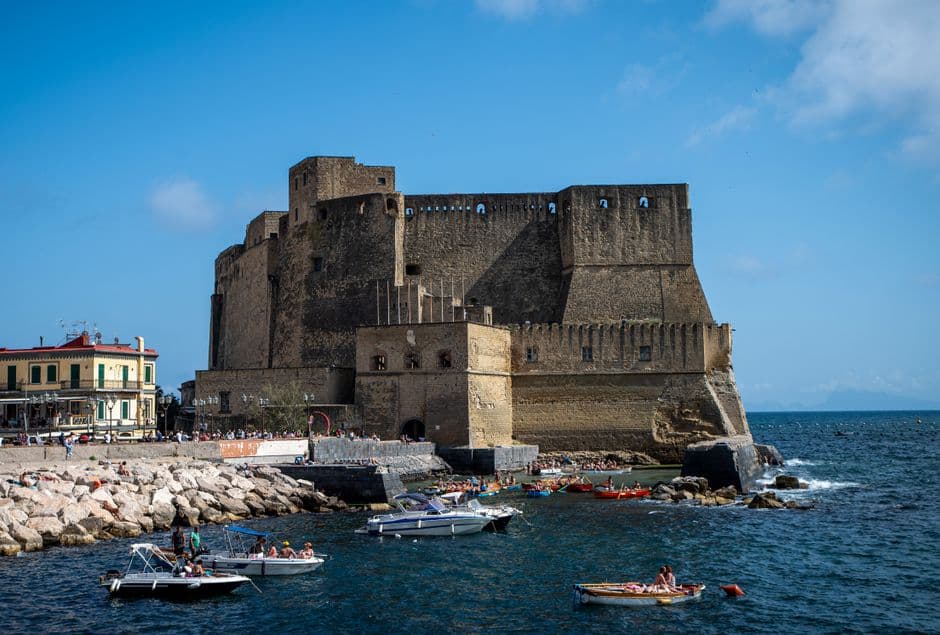
Castel dell'Ovo stands as the oldest standing fortification in Naples, Italy, prominently located on the volcanic tuff islet of Megaride in the Gulf of Naples. This castle's strategic position offers commanding views of the waterfront and surrounding sea, embodying centuries of history from ancient Greek settlement through Roman luxury, Norman fortification, and Renaissance military architecture. The castle's name, meaning "Egg Castle," derives from a medieval legend involving the Roman poet and sorcerer Virgil, who was said to have hidden a magical egg within its foundations, the breaking of which would bring disaster to Naples.

The ancient origins and early history

The site of Castel dell'Ovo was originally part of the ancient Greek settlement of Partenope, founded in the 8th century BCE by colonists from Cumae. The islet of Megaride was a natural extension of Mount Echia, connected to the mainland by a narrow rocky isthmus. In the 1st century BCE, the Roman general Lucius Licinius Lucullus acquired the area and constructed a luxurious villa known as Villa Luculliana. This villa was renowned for its exotic fruit gardens, moray farms, and an extensive library, marking the site as a place of opulence and culture.

During the mid-5th century CE, Emperor Valentinian III fortified the villa, transforming it into a defensive stronghold. It later served as the place of exile for Romulus Augustulus, the last Western Roman Emperor, in 476 CE. By the late 5th century, Basilian monks from Pannonia settled on the islet and Mount Echia, establishing a monastic community that thrived through the early medieval period. However, in the 9th and early 10th centuries, Saracen raids led local dukes to demolish the monastic complex to prevent enemy occupation, forcing the monks to relocate.

Norman construction and medieval fortifications

The first documented castle on the site, known as Arx Sancti Salvatoris, dates to 1128 and was linked to a church built by the monks. In 1140, the Norman ruler Roger II conquered Naples and initiated the construction of the castle as a defensive fortress, completed by the architect Buono. The Normans established the Torre Normandia, the first bastion flying their flags, marking the beginning of systematic fortifications on the islet.

Under the Hohenstaufen dynasty, Emperor Frederick II further fortified the castle in the early 13th century, adding significant towers including the Torre di Colleville, Torre Maestra, and Torre di Mezzo. The castle functioned as a royal residence and state prison during this period, reflecting its strategic and political importance.

With the arrival of the Angevin kings, particularly Charles I of Anjou, the royal court moved to the newly built Castel Nuovo, but Castel dell'Ovo retained its role as the seat of the Royal Chamber and State Treasury. The Angevin period saw restoration and modification of the castle, which also served as a prison for notable figures such as Conradin of Hohenstaufen and members of the royal family.

Castel dell'Ovo - Naples

Photo by Alexandru MnM

Renaissance transformations and military significance

During the 14th and 15th centuries, the castle underwent substantial renovations under the Aragonese dynasty, especially under King Alfonso V. These works enriched the royal palace, reinforced the pier, and strengthened the fortifications with lowered towers adapted to resist artillery fire. The castle's defenses were reoriented to face inland, reflecting changes in warfare technology.

The castle played a role in the Italian Wars, enduring bombardments and sieges, notably in 1503 when Spanish forces under Gonzalo Fernández de Córdoba ousted the French from Naples. Following this, the castle was extensively rebuilt with octagonal towers and thickened walls, solidifying its role as a bastioned fortress adapted to the era's firearms.

Later uses and modern history

Under Spanish viceroyalty and later Bourbon rule, Castel dell'Ovo was further fortified with batteries and drawbridges, transitioning from royal residence to military garrison and prison. It housed prisoners including philosopher Tommaso Campanella and various political detainees such as Carlo Poerio and Luigi Settembrini. The castle's military importance waned after Italian unification, and it faced neglect and proposals for demolition in the 19th century.

Restoration efforts began in 1975, preserving the castle's layered architectural heritage and stabilizing its structure. Today, Castel dell'Ovo is a cultural landmark managed by the Ministry of National Heritage and Culture. It hosts exhibitions, conferences, and is a popular tourist destination, celebrated for its scenic beauty and historic significance.

Architectural features and layout

The castle occupies an oval-shaped islet approximately 460 meters long, connected to Naples by a rocky causeway rebuilt in masonry after the original natural arch collapsed in 1370. The complex is a blend of medieval and Renaissance military architecture, featuring a series of barracks, blockhouses, batteries, and five prominent towers from different periods.

Notable towers include the Norman Torre Normandia, the Hohenstaufen additions like Torre di Colleville, and the octagonal towers from the post-1503 reconstruction. The castle is surrounded by high defensive walls and includes an internal road running the length of the fortification. Architectural elements from the Angevin and Aragonese periods, such as arcades and loggias, remain visible.

The interior houses the hall of columns, characterized by aisles supported by ancient column drums, and the church of the Savior, which gave the castle its original name. The adjacent Borgo Marinari fishing village developed in the 19th century and remains a vibrant area known for its marina and seafood restaurants.

Legend and cultural significance

The castle's evocative name, "Egg Castle," is tied to a medieval myth that the Roman poet Virgil placed a magical egg in its foundations to protect Naples. This legend has contributed to the castle's mystique and cultural identity, making it a symbol of the city's resilience and historical depth.

Visiting Castel dell'Ovo today

Visitors to Castel dell'Ovo can explore its extensive fortifications, towers, and halls that narrate centuries of Neapolitan history. The castle offers panoramic views of the Gulf of Naples and the city skyline. Its location near the Borgo Marinari makes it an ideal spot for enjoying local cuisine and maritime ambiance. The castle regularly hosts exhibitions and cultural events, enhancing its role as a living monument in Naples' urban fabric.

Frequently asked questions (FAQ)

What is Castel dell'Ovo?
Castel dell'Ovo is the oldest standing fortification in Naples, Italy, dating back to Roman times. It is located on the picturesque island of Megaride and is known for its beautiful views of the Bay of Naples and its historical significance as a strategic defense point.
When was Castel dell'Ovo built?
The construction of Castel dell'Ovo began in the 1st century AD under the Roman Emperor Augustus. Over the centuries, it has undergone various modifications and restorations, reflecting different architectural styles and historical periods.
What are the opening hours for Castel dell'Ovo?
Castel dell'Ovo is generally open to visitors from 9:00 AM to 7:30 PM, with the last admission at 6:30 PM. However, it's best to check the official website or local listings for any changes in schedule or special holiday hours.
How do I get to Castel dell'Ovo?
You can reach Castel dell'Ovo by taking public transportation, such as the metro line 2 to the Molo Beverello stop, followed by a short walk. Additionally, the castle is accessible by bus and is close to various parking facilities for those driving.
Can I enter Castel dell'Ovo for free?
Yes, visitors can access the grounds of Castel dell'Ovo free of charge. However, there may be a fee for certain exhibitions or guided tours inside the castle, so it’s advisable to check in advance.
Is it possible to visit Castel dell'Ovo with children?
Absolutely! Castel dell'Ovo is family-friendly and offers a spacious area for children to explore. The castle's rich history and stunning views provide an educational and enjoyable experience for visitors of all ages.
What is the best time to visit Castel dell'Ovo?
The best time to visit Castel dell'Ovo is during the spring and fall months when the weather is mild and pleasant. This allows for a more enjoyable exploration of the castle and its surroundings, avoiding the peak summer tourist crowds.
What nearby attractions can I visit while at Castel dell'Ovo?
While at Castel dell'Ovo, you can also explore the charming promenade of Lungomare, the historic Piazza del Plebiscito, and the Royal Palace of Naples. These attractions are within walking distance and offer a rich cultural experience.
What is the architectural style of Castel dell'Ovo?
Castel dell'Ovo showcases a blend of architectural styles, primarily medieval and Renaissance influences. Its unique structure features robust stone walls, towers, and a distinctive egg-shaped design, which contributes to its name and historical character.

Photo gallery

Castel dell'Ovo - Naples
Click to view

Photo by Margo Evardson

Castel dell'Ovo - Naples
4 photos • Click any image to view in full screen

Information

Hill Castle

Sources & official resources

Verify the information above using these authoritative references.

Loading map...

Visitor reviews

No reviews yet. Been here? Write the first review and help other travelers!

Write the first review

Visited this castle? Share your experience

Your review helps other travelers and adds first-hand knowledge to our encyclopedia.
Write a review

(5/5)

0/2000 characters

Your review will be visible after admin approval

Nearby castles

0.8 km
Castel Sant'Elmo — Italy castle

Castel Sant'Elmo

Naples, Italy

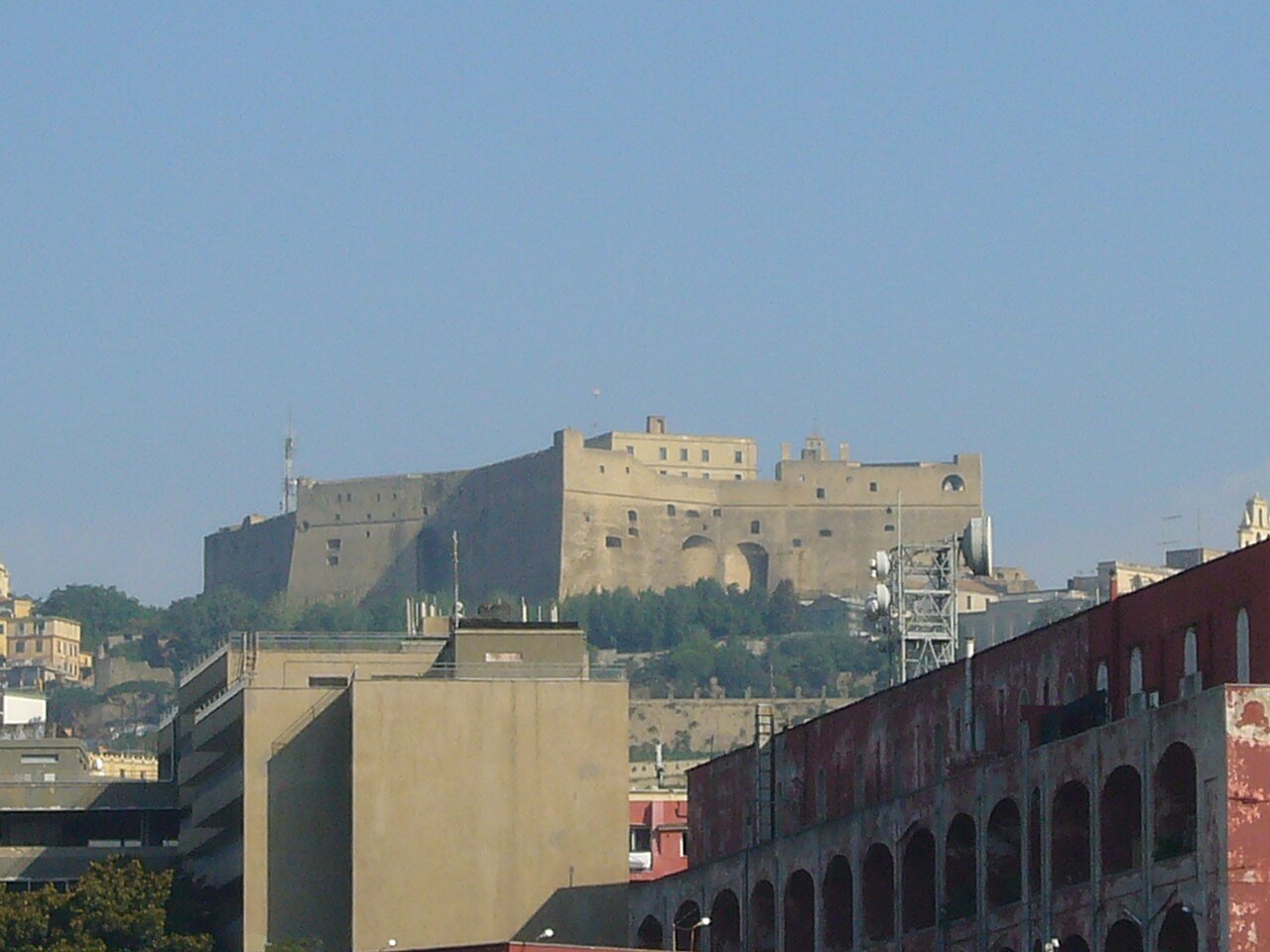
Castel Sant'Elmo is a prominent medieval fortress strategically positioned on Vomero Hill, offering commanding views over the city of Naples and its historic center. Its name originates from a former 10th-century church dedicated to Sant'Erasmo, which evolved linguistically over centuries to "Sant'Elmo." The fortress stands adjacent to the Certosa di San Martino and near the upper terminus of the Petraio, one of Naples' oldest pedestrian routes connecting the upper and lower city. Today, Castel Sant'Elmo serves as a museum, exhibition hall, and administrative offices, reflecting its cultural and historical significance. Early origins and angevin construction The earliest documented structure on the site dates to 1275, during the reign of Charles of Anjou. Originally known as Belforte, it likely functioned as a fortified residence surrounded by defensive walls, with its entrance gate flanked by two turrets. In 1329, King Robert of Naples commissioned the enlargement of the fortress based on designs by the Sienese architect Tino da Camaino. Camaino, who also oversaw construction of the adjacent Carthusian monastery of San Martino, directed the building works until his death in 1343. By 1336, the fortress was referred to as a castrum or castle, marking its evolution from a fortified residence to a military stronghold. Architectural features of the angevin fortress The Angevin fortress featured robust walls and towers, constructed primarily from volcanic tufa, a local stone providing strength and durability. A chapel dedicated to Saint Erasmus was established within the complex, lending the fortress its early religious significance. The fortress's elevated position allowed it to serve as a key defensive and surveillance point over Naples and the surrounding region. Aragonese transformation and star-shaped design The fortress suffered severe damage in the 1456 earthquake, which demolished its external walls and towers. In the 16th century, under the rule of the Aragonese dynasty, the castle was incorporated into a comprehensive defensive system designed to protect Naples' land perimeter. Don Pedro de Toledo, the first Spanish governor and cousin of the Viceroy, played a pivotal role in this fortification plan. Between 1537 and 1547, the fortress underwent a radical transformation under the direction of the military architect Pedro Luis Escriva from Valencia. He redesigned Castel Sant'Elmo into a distinctive hexagonal star-shaped fortress, a cutting-edge style of 16th-century military architecture that improved resistance to artillery attacks. This innovative design featured six pointed bastions extending approximately twenty meters from the core, with large open embrasures replacing traditional towers and buttresses. Escriva's design initially faced fierce criticism, prompting him to publish an Apologia in 1538 defending the fortress's functional and strategic merits. Defensive elements and structural details The fortress is surrounded by a moat and incorporates a double tenaille system, enhancing its defensive capabilities. The entrance is accessed via a steep inclined ramp leading to a small bridge, flanked by walls pierced with twelve defensive loopholes on each side and seven additional loopholes guarding the drawbridge. The main gate is adorned with the imperial coat of arms of Emperor Charles V, featuring the double-headed eagle, alongside a commemorative marble inscription honoring Charles V and Viceroy Pedro de Toledo. Catastrophic explosion and restoration In 1587, lightning struck the fortress's munitions depot, causing a massive explosion that destroyed the church of Saint Erasmus, the chaplain's house, and officers' quarters, and resulted in the deaths of approximately 150 people. Restoration efforts commenced between 1599 and 1601, led by the architect Domenico Fontana, who rebuilt the damaged structures while preserving the fortress's original layout. Religious and commemorative features The restored church contains notable artworks, including paintings by Luca Giordano, Antonio De Bellis, and Francesco De Maria, and a richly decorated maiolica and terracotta floor. Don Pedro de Toledo's funerary monument, dating to 1588, is housed in the church's sacristy. The church's vault features an 18th-century fresco of the Assumption of Mary, and the main altar holds a sculpture of Saint Erasmus, the fortress's patron saint. Military and prison use From the early 17th century, Castel Sant'Elmo functioned primarily as a military prison. It housed notable prisoners such as the philosopher Tommaso Campanella (1604–1608), who was branded a heretic, and the princess Giovanna di Capua. The fortress also played a role during the 1647 Neapolitan revolution, providing refuge for the viceroy Rodrigo Ponce de León and resisting siege by popular forces. Throughout the 18th century, the fortress faced sieges by Austrian and Bourbon troops, reflecting its continued strategic importance amid European conflicts. During the turbulent period of the French Revolution and the 1799 Neapolitan uprising, Castel Sant'Elmo was used to imprison Jacobin supporters and republicans, including Mario Pagano, Gennaro Serra di Cassano, and Luigia Sanfelice. The castle was briefly seized by republicans who raised the Neapolitan Republic's flag and planted a tree of liberty, symbolizing revolutionary ideals. The fortress remained a military prison until 1952, after which the prison functions were transferred to Gaeta. It subsequently housed naval personnel and their families until 1976. Modern restoration and cultural use Beginning in 1976, a comprehensive restoration project was undertaken by the provincial authority of Campania, led by the Provveditorato alle Opere Pubbliche. The restoration removed centuries of accretions, stabilized the structure, and recreated original architectural features such as galleries, parapet walkways, and underground chambers. An auditorium seating 700 was installed within the fortress's underground spaces, blending modern functionality with historical preservation. In 1982, the castle was transferred to the Soprintendenza per i Beni Artistici e Storici of Naples. The Bruno Molajoli Art History Library was established in an upper story of the former prison block, enhancing the site's cultural offerings. The former Marine headquarters now houses administrative offices, including the Catalogue Office, Photographic Archives, and the Thefts Office for Naples. Permanent art exhibits enrich the visitor experience, including a unique more than 30-foot-long railing inscribed with braille, installed in 2015 above the drill grounds on the northernmost wall near the west corner. Additional modern sculptures, such as a large metal helmet and a conical metal structure with cutouts, complement the historical environment. Architectural significance and features Castel Sant'Elmo's most distinctive feature is its six-pointed star-shaped layout, a hallmark of Renaissance military architecture designed to counter artillery assaults. Unlike traditional castles with towers and buttresses, it employs large open embrasures at its bastions, allowing defenders to mount artillery effectively. The fortress is built predominantly from volcanic tufa, which provides both strength and a characteristic appearance. The fortress's defensive perimeter includes a moat, and its water needs during sieges were met by a sophisticated cistern system beneath the parade ground, comprising two large tanks. Today, a modern water tank with a capacity of 400 cubic meters is integrated into the walls, supplying the surrounding Vomero district. The main entrance features a steep ramp and a small bridge flanked by walls with numerous loopholes for defense. The interior contains a Napoleonic-era guillotine gate near the entrance, prison cells, and halls with large windows offering panoramic views of Naples and the Bay of Naples. Outside the main fortification ring are two significant churches: the small church of Our Lady of the Pillar (1682) and the church of Saint Erasmus (1547), the latter rebuilt after the 1587 explosion. These religious structures underscore the fortress's dual military and spiritual roles throughout history. The fortress also features a piperno stone sentry box from the Bourbon period, offering vistas over the Posillipo cape, Nisida island, Miseno cape, and the volcanic Phlegraean fields, highlighting its strategic visual command of the region.

High Medieval (11th–13th c.)
Details
1.2 km
Castel Nuovo — Italy castle

Castel Nuovo

Naples, Italy

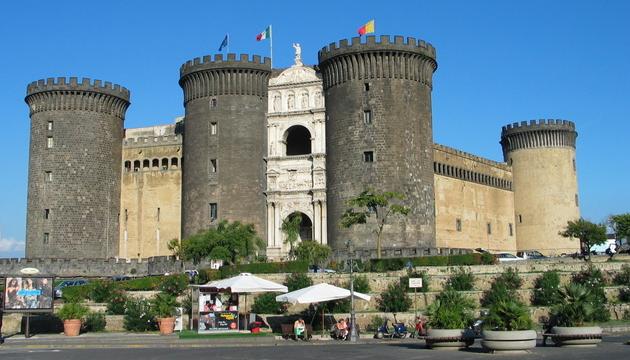
Castel Nuovo, also known as Maschio Angioino, stands as one of the most iconic and historically significant fortresses in Naples, Italy. Constructed beginning in 1279 under the reign of Charles I of Anjou, this castle was designed by the French architect Pierre de Chaule to serve as a royal residence and a formidable fortress. Its strategic position near the sea and the city center made it a vital military and political hub throughout the centuries. The castle was originally built to replace older fortifications like Castel Capuano and Castel dell'Ovo, marking the shift of the Sicilian capital to Naples after Charles I's conquest. From its inception, Castel Nuovo was not only a stronghold but also a cultural center. Under the rule of Robert of Anjou, it became a vibrant hub for artists, poets, and scholars including Giotto, Petrarch, and Boccaccio, who contributed to the castle's artistic and intellectual prestige. Architectural evolution and aragonese transformation The castle's original design reflected high medieval military architecture, featuring a square layout with robust towers and defensive walls. However, a significant transformation occurred during the reign of Alfonso V of Aragon after he captured Naples in 1443. Between 1453 and 1479, the fortress was extensively remodeled by the Catalan architect Guillem Sagrera in the Gothic-Catalan style. This renovation replaced the original square towers with five massive round towers, enhancing the castle's defensive capabilities and giving it the imposing silhouette it retains today. One of the castle's most striking features is the triumphal arch at the main entrance, constructed between 1452 and 1471 to celebrate Alfonso V's victorious entry into Naples. This Renaissance-style marble arch is richly decorated with reliefs depicting Alfonso's procession, statues of the four cardinal virtues, and a statue of Saint Michael crowning the top. The arch was crafted by renowned sculptors including Guillem Sagrera, Domenico Gagini, Isaia da Pisa, and Francesco Laurana, making it a masterpiece of Renaissance sculpture and a symbol of Aragonese power. Structural layout and defensive features Castel Nuovo has an irregular trapezoidal plan surrounded by a moat, with five main towers: San Giorgio, Mezzo, and Guardia on the landward side, and Oro and Beverello facing the sea. Four towers are faced with piperno, a volcanic stone typical of the Naples region, while one tower is clad in tuff. Each tower is topped with battlements supported by corbels and contains a cylindrical spiral staircase known as the Catalan staircase, which provided access to rooftop watch posts and defensive positions. Historical significance and cultural heritage Throughout its history, Castel Nuovo served as a royal residence for successive dynasties including the Angevins, Aragonese, French, Spanish viceroys, and Bourbons. It was the site of important historical events, such as the abdication of Pope Celestine V and the election of Pope Boniface VIII in 1294. The castle also hosted a failed conspiracy against King Ferdinand I of Aragon in 1487, after which the conspirators were executed within its walls. Under the Spanish viceroyalty (1503-1734), the castle's military functions were emphasized, leading to modifications that sometimes compromised its artistic elements. The Bourbon period saw further changes, including the addition of barracks and warehouses, which altered the castle's appearance and function. Despite these changes, the castle retained its importance as a symbol of royal authority and military strength. Artistic treasures and interior spaces The castle's interiors include the Palatine Chapel, the only surviving part of the original Angevin structure, featuring a Renaissance portal decorated by Andrea dell’Aquila and Francesco Laurana. The chapel's rose window was redesigned during the Aragonese period by Matteo Forcimanya. Although much of the original Giotto frescoes have been lost, the chapel remains a significant example of Neapolitan Renaissance art. The Hall of the Barons, once the throne room, is a large space measuring approximately 26 by 28 meters. It is covered by an eight-sided umbrella vault with pointed lunettes and a central oculus. The hall features a large fireplace, galleries for musicians, and decorative elements such as a double-sided marble portal by Domenico Gagini. The floor is tiled with white and blue majolica from Valencia, reflecting the cultural exchanges of the period. The Armory Hall reveals important archaeological remains from the Roman period beneath a glass floor, showcasing the site's long history. The Chapel of the Souls in Purgatory, added in the late 16th century, exhibits Baroque decoration and was used to administer sacraments to prisoners condemned to death. The Chapel of Saint Francis of Paola, consecrated in 1688, underwent Baroque restoration but suffered damage during World War II. Restoration and modern use In the 20th century, restoration efforts focused on isolating the castle from surrounding buildings and recovering its 15th-century appearance. These campaigns removed many later additions, revealing medieval windows, battlements, walls, and the moat. Some roofs were replaced with modern coverings to ensure structural safety. Today, Castel Nuovo is a well-preserved monument and a cultural venue hosting exhibitions, concerts, and events. It houses the Civic Museum, which contains collections from the 15th to 20th centuries, including works by followers of Caravaggio and Neapolitan Baroque artists. The castle also holds the library of the Neapolitan Society of Homeland History, featuring rare early printed books. Visitors can explore key areas such as the Armoury Hall, Palatine Chapel, Hall of Charles V, and the Sala della Loggia. Some parts remain closed due to ongoing preservation challenges, but the castle continues to be a vital link to Naples' medieval and Renaissance past.

High Medieval (11th–13th c.)
Details
2.7 km
Carmine Castle — Italy castle

Carmine Castle

, Italy

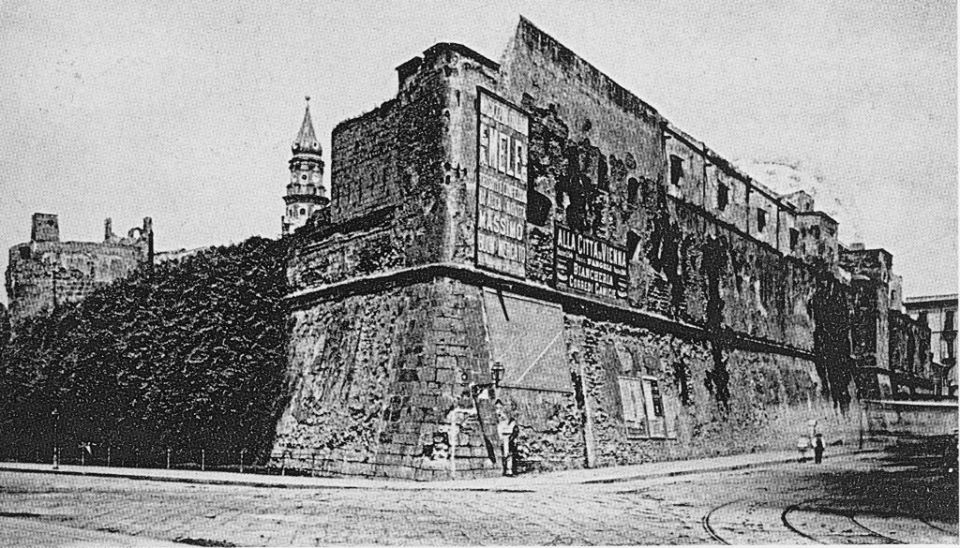
Carmine Castle (Italian: Castello del Carmine) is a historic fortress located in Naples, Italy, with origins tracing back to the 14th century. Although today it exists primarily as archaeological ruins, the castle played a significant role in the city's military defense system, particularly during the Late Medieval period and into the early modern era. Historical context and strategic importance Originally built in the 14th century, Carmine Castle was later incorporated into a broader defensive network during the 16th century when the Spanish viceroy Pedro Álvarez de Toledo undertook extensive fortification projects in Naples. Under his direction, the castle became part of the city walls and fortifications designed to protect Naples from external threats. Positioned at the south-east corner of the walled city, the fortress was strategically placed where the city walls turned north, overseeing key access points and the surrounding area. Role during the Spanish rule The castle's fortifications were enhanced as part of the Spanish efforts to secure their rule over Naples. The Spanish built walls and forts encircling the city, with Carmine Castle serving as a critical stronghold in this network. Its location allowed control over approaches from the sea and land, making it essential for the defense of the city. Military significance in the 18th century Carmine Castle retained its military value well into the 18th century, notably during the Neapolitan Republic of 1799. During this brief republican period, the castle was a key defensive position against the royalist forces loyal to King Ferdinand IV. The fortress witnessed significant conflict and sieges, underscoring its importance in the city's military history. Architectural features and layout While much of the castle has been lost, historical records and the remaining ruins provide insights into its structure. Carmine Castle originally featured typical medieval defensive elements such as thick walls, battlements, and towers. The castle's design reflected the military architectural principles of the Late Medieval period, adapted and reinforced during the Spanish occupation to resist artillery and siege warfare. Towers and walls The castle was known to have multiple towers, which served both as lookout points and defensive positions for archers and artillery. Two towers remain today as fragmentary ruins, providing a glimpse into the scale and construction techniques used. The walls connected these towers and formed a robust defensive perimeter. Integration with city fortifications Carmine Castle was integrated into the larger system of city walls, which were extended and reinforced during the Spanish period. This system included bastions, gates, and other fortresses, creating a concentric defense around Naples. The castle's location at the corner of the walls made it a vital link in this defensive chain. Decline and partial demolition By the end of the 19th century, Carmine Castle had lost its military relevance. In 1900, as part of a major urban renewal project in Naples aimed at modernizing the city and improving access to the waterfront, the castle was partially demolished to make way for a new road along the sea. This demolition significantly reduced the castle's physical presence, leaving only two towers and some fragmentary ruins. Current condition and preservation Today, Carmine Castle stands as archaeological ruins, with the remaining structures serving as historical markers of Naples' medieval and early modern military past. Efforts to preserve these remnants highlight the castle's cultural and heritage significance. Visitors can view the ruins and appreciate the castle's role in shaping the city's defensive history. Visiting Carmine Castle and its surroundings Although the castle is largely in ruins, its location within Naples offers visitors a chance to explore a site rich in history. The ruins are accessible to the public and are often included in walking tours of Naples' historic fortifications. Nearby attractions include other Spanish-era fortresses and the extensive city walls, which together tell the story of Naples' strategic importance in the Mediterranean. Accessibility and visitor information The castle ruins are open year-round, and visitors can explore the site at their own pace. While there are no extensive facilities on site, the location is easily reachable from central Naples. Informational plaques and guided tours provide context for the castle's history and architecture.

Late Medieval (14th–15th c.)
Details