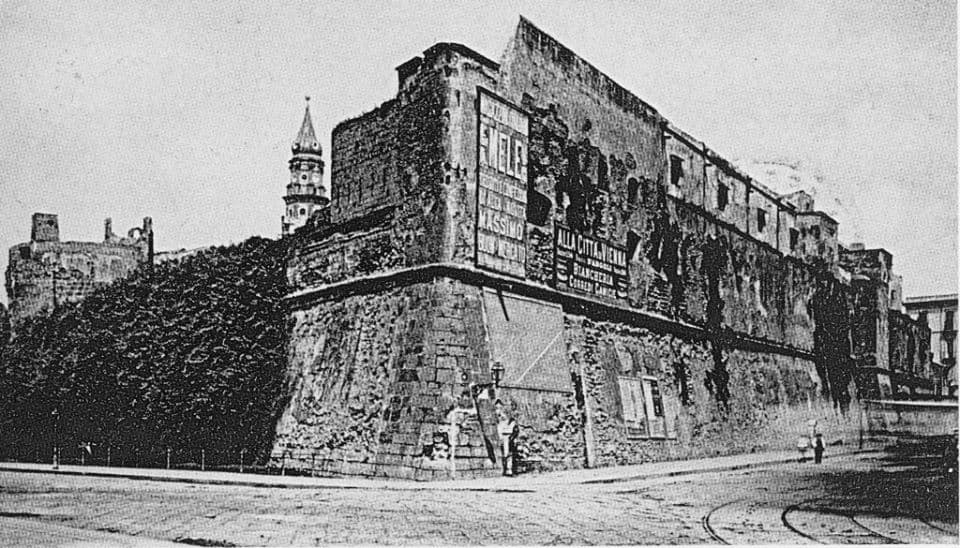
Carmine Castle (Italian: Castello del Carmine) is a historic fortress located in Naples, Italy, with origins tracing back to the 14th century. Although today it exists primarily as archaeological ruins, the castle played a significant role in the city's military defense system, particularly during the Late Medieval period and into the early modern era.
Historical context and strategic importance
Originally built in the 14th century, Carmine Castle was later incorporated into a broader defensive network during the 16th century when the Spanish viceroy Pedro Álvarez de Toledo undertook extensive fortification projects in Naples. Under his direction, the castle became part of the city walls and fortifications designed to protect Naples from external threats. Positioned at the south-east corner of the walled city, the fortress was strategically placed where the city walls turned north, overseeing key access points and the surrounding area.
Role during the Spanish rule
The castle's fortifications were enhanced as part of the Spanish efforts to secure their rule over Naples. The Spanish built walls and forts encircling the city, with Carmine Castle serving as a critical stronghold in this network. Its location allowed control over approaches from the sea and land, making it essential for the defense of the city.
Military significance in the 18th century
Carmine Castle retained its military value well into the 18th century, notably during the Neapolitan Republic of 1799. During this brief republican period, the castle was a key defensive position against the royalist forces loyal to King Ferdinand IV. The fortress witnessed significant conflict and sieges, underscoring its importance in the city's military history.
Architectural features and layout
While much of the castle has been lost, historical records and the remaining ruins provide insights into its structure. Carmine Castle originally featured typical medieval defensive elements such as thick walls, battlements, and towers. The castle's design reflected the military architectural principles of the Late Medieval period, adapted and reinforced during the Spanish occupation to resist artillery and siege warfare.
Towers and walls
The castle was known to have multiple towers, which served both as lookout points and defensive positions for archers and artillery. Two towers remain today as fragmentary ruins, providing a glimpse into the scale and construction techniques used. The walls connected these towers and formed a robust defensive perimeter.
Integration with city fortifications
Carmine Castle was integrated into the larger system of city walls, which were extended and reinforced during the Spanish period. This system included bastions, gates, and other fortresses, creating a concentric defense around Naples. The castle's location at the corner of the walls made it a vital link in this defensive chain.
Decline and partial demolition
By the end of the 19th century, Carmine Castle had lost its military relevance. In 1900, as part of a major urban renewal project in Naples aimed at modernizing the city and improving access to the waterfront, the castle was partially demolished to make way for a new road along the sea. This demolition significantly reduced the castle's physical presence, leaving only two towers and some fragmentary ruins.
Current condition and preservation
Today, Carmine Castle stands as archaeological ruins, with the remaining structures serving as historical markers of Naples' medieval and early modern military past. Efforts to preserve these remnants highlight the castle's cultural and heritage significance. Visitors can view the ruins and appreciate the castle's role in shaping the city's defensive history.
Visiting Carmine Castle and its surroundings
Although the castle is largely in ruins, its location within Naples offers visitors a chance to explore a site rich in history. The ruins are accessible to the public and are often included in walking tours of Naples' historic fortifications. Nearby attractions include other Spanish-era fortresses and the extensive city walls, which together tell the story of Naples' strategic importance in the Mediterranean.
Accessibility and visitor information
The castle ruins are open year-round, and visitors can explore the site at their own pace. While there are no extensive facilities on site, the location is easily reachable from central Naples. Informational plaques and guided tours provide context for the castle's history and architecture.
Frequently asked questions (FAQ)
- What is the historical significance of Carmine Castle?
- Carmine Castle, built in the 12th century, is an important example of medieval military architecture in Italy. It has served various purposes over the centuries, including a fortress and a royal residence, reflecting the rich history and strategic importance of the region.
- When is the best time to visit Carmine Castle?
- The best time to visit Carmine Castle is during the spring and fall months when the weather is mild and the surrounding landscapes are particularly beautiful. Additionally, these seasons tend to be less crowded, allowing for a more enjoyable experience while exploring the castle and its grounds.
- What are the opening hours for Carmine Castle?
- Carmine Castle is typically open to visitors from 9 AM to 6 PM daily, with extended hours during the peak summer months. It’s advisable to check the official website for any seasonal adjustments or special closures before planning your visit.
- Can I access Carmine Castle with a wheelchair?
- Carmine Castle is committed to accessibility, and while some areas may be challenging due to the castle's historical architecture, there are designated pathways and ramps available. It is recommended to contact the visitor services in advance to ensure a smooth experience.
- What are the ticket prices for visiting Carmine Castle?
- Ticket prices for Carmine Castle generally range from €10 for adults to €5 for children and seniors. There are often special discounts for groups and families, so be sure to check for any available promotions before your visit.
- Are there nearby attractions to visit while at Carmine Castle?
- Yes, there are several nearby attractions, including the beautiful gardens of Villa Medici and the historic town of Carmine, which features charming streets and local eateries. Exploring these areas can provide a fuller experience of the region's culture and history.
- Is it possible to take guided tours of Carmine Castle?
- Yes, guided tours are available at Carmine Castle, offering visitors insight into its history and architecture. These tours are led by knowledgeable guides and can enhance your understanding of the castle's significance and the stories it holds.
Photo gallery

Photo by Unknown authorUnknown author•Public domain
Information
Loading map...
Visitor reviews
No reviews yet. Been here? Write the first review and help other travelers!
Write the first reviewVisited this castle? Share your experience
Your review helps other travelers and adds first-hand knowledge to our encyclopedia.