Castel Capuano
Castel Capuano stands as a monumental testament to the layered history of Naples, Italy, embodying centuries of architectural evolution and sociopolitical change. Originally established in the 12th century by the Normans, the castle was strategically positioned atop the remains of a Roman gymnasium and burial grounds, highlighting its longstanding significance as a fortified site. Over time, it has transitioned from a military fortress to a royal residence, prison, and ultimately, a center of judicial administration.
Medieval origins and norman construction
The initial construction of Castel Capuano began around 1160 under the direction of architect Buono, commissioned by King William I of Sicily, known as "the Bad." This phase established the castle as a formidable hill castle with austere military architecture typical of the high medieval period. The castle's foundations incorporated remnants of a Roman gymnasium, where archaeological excavations uncovered numerous tombs and funerary artifacts such as pottery and glass, attesting to the site's ancient use as a burial ground.
Architectural features of the original fortress
The Norman design emphasized defense, with thick walls, narrow windows, and a commanding position overlooking the city. The interiors were functional rather than luxurious, serving the dual purpose of a royal residence and a military stronghold. The castle's layout was adapted to the rugged terrain, with a compact footprint that maximized defensive capabilities.
Transformations under the holy roman empire and angevin dynasty
In 1231, Emperor Frederick II initiated significant modifications to Castel Capuano, shifting its role towards a more habitable royal residence while maintaining its defensive character. Frederick II appointed a castellan and utilized the castle as a prison for political detainees, marking a pivotal change in its function.
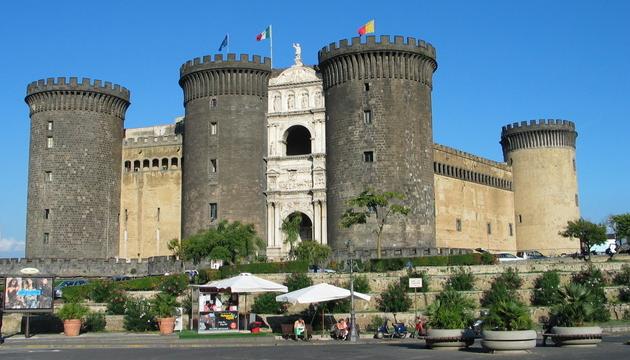
During the Angevin dynasty (late 13th to early 15th centuries), the castle's prominence as a royal residence waned after the construction of Castel Nuovo. Nevertheless, it remained an important site for the royal family and government officials. The castle endured damage during a Hungarian sack in Queen Joanna I's reign but was repaired and hosted significant events, including royal weddings and visits by notable figures such as the poet Francesco Petrarca.
Political significance and sieges
King Ladislaus resided in the castle from 1399 to 1414, and Queen Joanna II sought refuge there during conflicts with Alfonso V of Aragon. Despite Alfonso's unsuccessful siege, the castle remained a symbol of power struggles within Naples, reflecting the turbulent political landscape of the time.
Aragonese enhancements and renaissance influences
Under Aragonese rule, Castel Capuano was incorporated into the expanded city walls of Naples and ceased functioning as a military fortress. Alfonso V transformed it into a dynastic residence, commissioning decorative frescoes by Jacomart Baco and installing Flemish tapestries. His successor, Alfonso II, further enhanced the castle and nearby villas, employing architects such as Giuliano da Maiano to introduce Renaissance architectural elements.
The castle hosted prestigious weddings, including those of Frederick III of Habsburg and Eleanor of Aviz in 1452, and Sigismund I of Poland with Bona Sforza in 1517, underscoring its continued importance as a noble residence.
Judicial transformation and baroque refurbishments
Following the establishment of the Kingdom of Naples as a Spanish viceroyalty in 1503, the castle's royal residential role diminished. In 1537, Viceroy Pedro de Toledo repurposed Castel Capuano as the kingdom's principal judicial center, consolidating various courts under one roof. Architects Ferdinando Manlio and Giovanni Benincasa remodeled the interior, removing military features and converting the cellars into prisons equipped with torture chambers.
Throughout the 16th to 18th centuries, the castle underwent numerous decorative enhancements. Frescoes by Pedro de Rubiales and Belisario Corenzio adorned its walls, followed by Rococo contributions from artists like Antonio Maffei and Tommaso Alfano during the era of architect Ferdinando Sanfelice. The Bourbon period added further frescoes by Carlo Amalfi, Giovan Battista Natali, Leonardo Olivieri, and Antonio Cacciapuoti.
Notable interior spaces
The Salone della Corte d’Appello features late 18th-century frescoes depicting allegorical figures representing the kingdom's provinces. The adjacent Sala dei Busti houses marble busts of Naples' most distinguished lawyers and served as a public hearing room. Its richly painted ceiling celebrates the power of justice, painted by Ignazio Perricci and Biagio Molinaro.
The Cappella della Sommaria, a mid-16th-century chapel, contains a cycle of mannerist frescoes by Pedro de Rubiales, illustrating biblical scenes and personifications of virtues. These artworks reflect influences from masters like Michelangelo and Francesco Salviati.
19th-century renovations and modern use
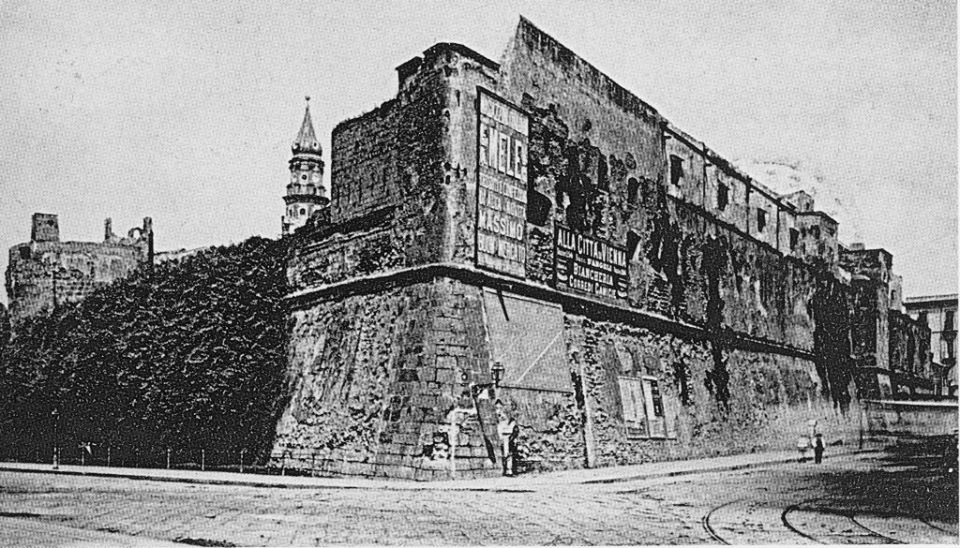
Between 1856 and 1858, architect Giovanni Riegler led a major renovation that transformed the castle's façade by removing balconies and ground-floor arches, adding windows and a sidewalk. The Salone dei Busti was redecorated by Biagio Molinaro and Ignazio Perricci. Post-Italian unification, the Bourbon coat of arms was replaced by the Savoy emblem.
Archaeological investigations in the early 20th century confirmed the castle's foundation on Roman structures and uncovered funerary artifacts, deepening understanding of its historical layers.
Today, Castel Capuano serves as the headquarters of the Scuola Superiore della Magistratura and is undergoing extensive conservation supported by European funding. Plans are underway to reopen its historic interiors to the public, highlighting its significance as a cultural and judicial landmark.
Architectural elements and artistic heritage
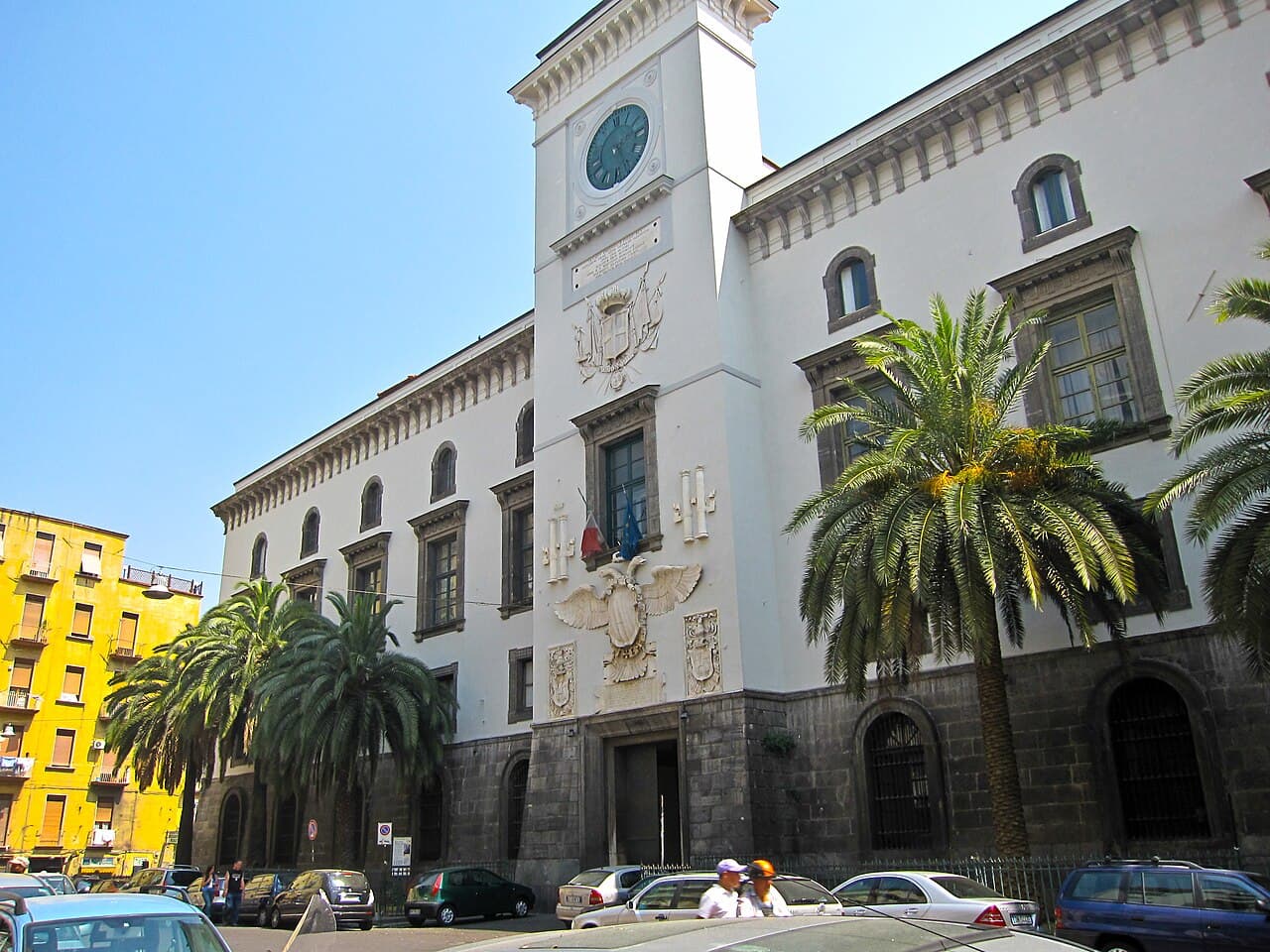
The castle's exterior is dominated by a grand portal featuring a commemorative plaque celebrating Emperor Charles V's victory at Tunis and the castle's judicial role. Above this portal is a large double-headed eagle symbolizing the Spanish royal house, sculpted by Francesco Sangallo, flanked by paired Columns of Hercules inscribed with the motto "Plus Ultra." The Savoy coat of arms and a 19th-century clock adorn the façade, reflecting its complex history.
The spacious courtyard, surrounded by a Doric colonnade portico, historically served as a gathering place for judicial proceedings. Adjacent staircases lead to the castle's interior chambers, including courtrooms and administrative offices.
At the rear, the Fontana del Formiello, originally built in 1490 and rebuilt in 1583 by Michele de Guido, exemplifies the castle's functional and decorative evolution, featuring heraldic shields of Viceroy Pedro d’Aragona.
Inside, the castle's library, once the seat of the Grand Council during the Angevin era and later the courtroom for the Gran Corte Criminale, contains nearly 80,000 volumes, including rare early modern books forming the "Fondo Antico." This collection underscores the castle's enduring role in legal and intellectual history.
Prison facilities and subterranean spaces
The castle's cellars, converted into prisons during the 16th century, housed torture chambers and dark confinement areas integral to its judicial function. These subterranean spaces reveal the castle's darker history as a center of law enforcement and punishment.
Castel capuano's legacy and cultural significance
Castel Capuano remains a powerful symbol of Naples' medieval heritage and its transformation through various ruling dynasties. Its architectural layers reflect the city's complex history, from Norman military origins to Renaissance refinement and Baroque artistic flourishes. As a judicial center, it has played a crucial role in the administration of justice for centuries.
Currently under restoration, the castle is poised to enhance public appreciation of Naples' rich cultural patrimony. Its preserved features, artistic treasures, and historical significance make it an essential destination for those interested in medieval architecture, legal history, and Italian heritage.
Frequently asked questions (FAQ)
- How do I visit Castel Capuano?
- Castel Capuano is located in Naples at Via dei Tribunali, 213. Visitors should check current opening hours as the castle is undergoing conservation work but may offer guided tours during special events.
- What is the historical significance of Castel Capuano?
- Castel Capuano is a key example of Norman military architecture in Naples, later transformed into a royal residence and judicial center, reflecting centuries of Neapolitan history.
- Can I see the frescoes inside the castle?
- Some frescoes, including those by Pedro de Rubiales and Antonio Cacciapuoti, are preserved in rooms like the Salone della Corte d’Appello and Cappella della Sommaria, though access may be limited due to restoration.
- Is Castel Capuano accessible for people with disabilities?
- Due to the castle's historic structure and ongoing restoration, accessibility may be limited. Visitors with mobility concerns should inquire in advance about available accommodations.
- When was Castel Capuano built?
- The castle was originally constructed in 1160 under Norman rule, with significant modifications during the 13th century and later periods.
- Are there any nearby attractions to visit along with Castel Capuano?
- Castel Capuano is situated in Naples' historic center, close to landmarks such as Castel Nuovo, Naples Cathedral, and the bustling Spaccanapoli street, making it ideal for a cultural itinerary.
Photo gallery

Information
Sources & official resources
Verify the information above using these authoritative references.
Loading map...
Visitor reviews
No reviews yet. Been here? Write the first review and help other travelers!
Write the first reviewVisited this castle? Share your experience
Your review helps other travelers and adds first-hand knowledge to our encyclopedia.