Castalla Castle
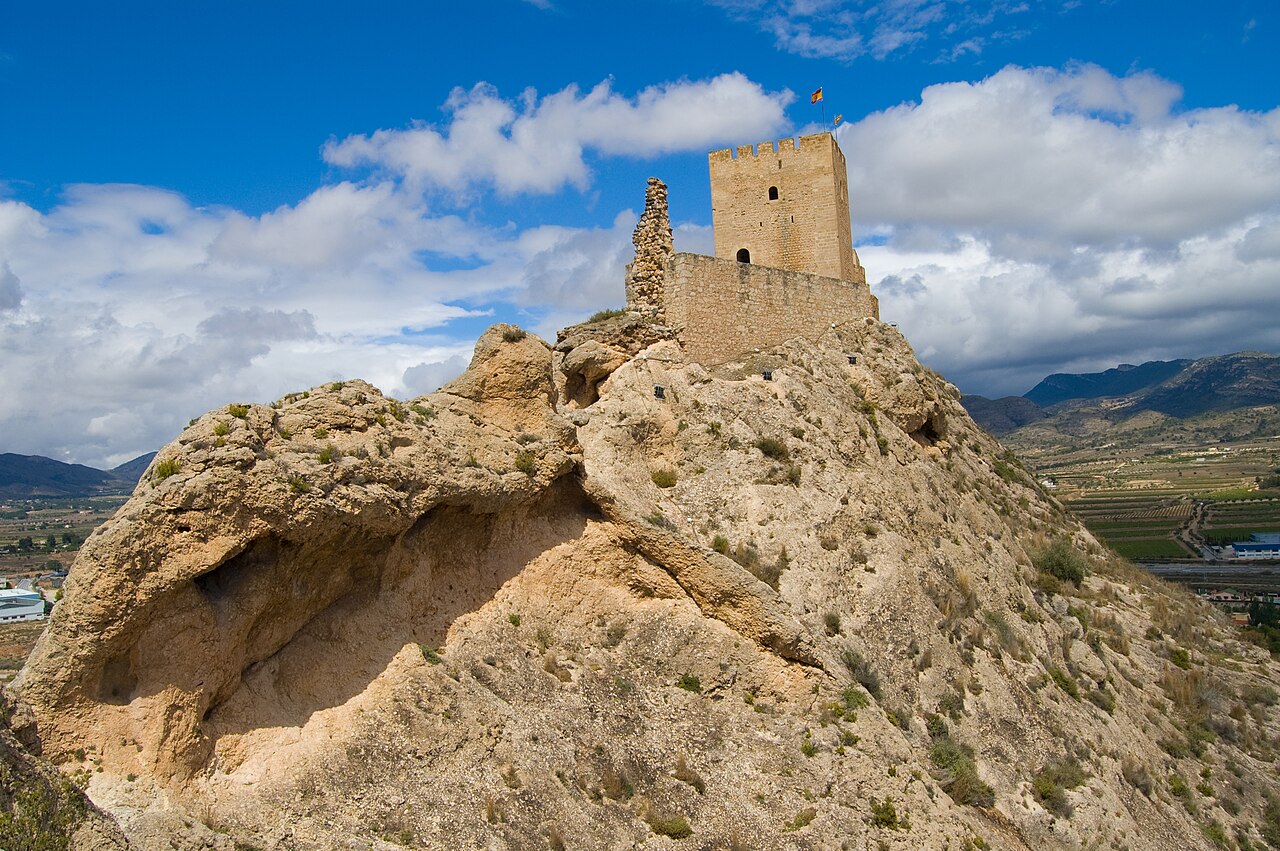
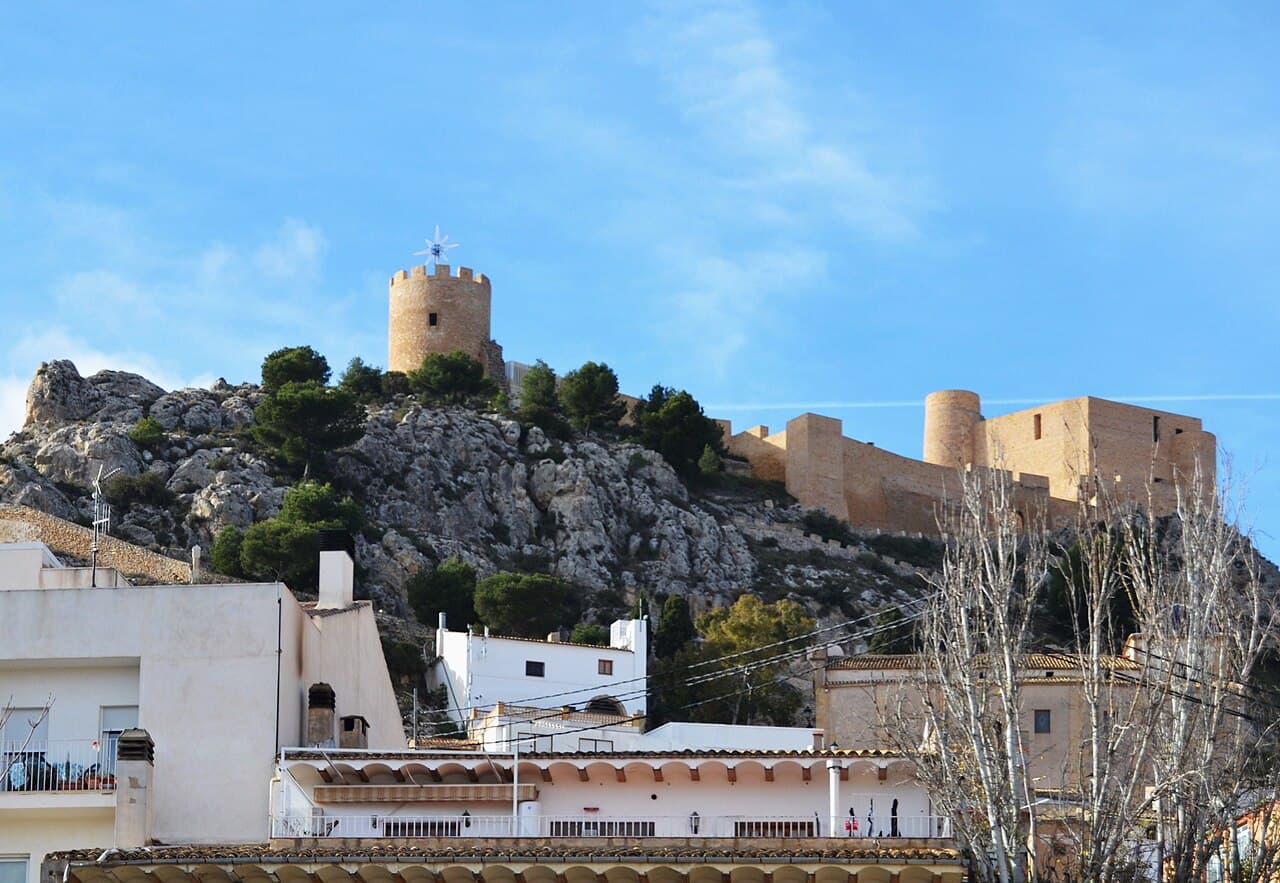
Castalla Castle stands prominently on a hill overlooking the town of Castalla and the surrounding valley in the region of Valencia, Spain. This hill castle has a rich history that traces back to its Moorish origins in the 11th century, built upon even older Neolithic and Iberian-Roman remains. The castle's strategic location made it a key defensive and administrative site throughout the High Medieval period and beyond.
The castle's initial construction was undertaken by Islamic builders, utilizing the natural elevation to establish a stronghold that controlled the surrounding territory. Following the Christian Reconquista, James I of Aragon captured Castalla Castle peacefully in 1251 as part of a treaty agreement, integrating it into the Kingdom of Valencia. This transfer marked the beginning of significant modifications and expansions under Christian rule, reflecting the castle's evolving military and residential functions.
Historical significance and ownership transitions
After the peaceful annexation by James I, the castle became a border fortress between the Kingdom of Valencia and Castile, a position that necessitated enhanced fortifications. In 1362, King Pedro IV of Aragon granted the castle and its lands to the noble Ramón de Vilanova i Lladró, establishing the barony of Castalla. This noble patronage led to the construction of a palace and the development of the Patí d’Armes (courtyard), transforming the site into a fortified noble residence.
During the 16th century, the castle's defenses were further strengthened with the addition of the Torre Grossa, a large circular watchtower built to monitor and defend against frequent pirate raids from the Mediterranean. This period also saw the completion of the main curtain walls with characteristic battlements designed for effective defense.
The castle's military importance persisted through the War of Spanish Succession (1701–1713), where it served as a supply base for supporters of Philip V. Later, during the Peninsular War, Castalla Castle witnessed two significant battles. In 1812, French forces under General Suchet captured the fortress, but it was retaken by defenders in 1813, marking a turning point in the region's liberation from Napoleonic control.
Architectural features and layout
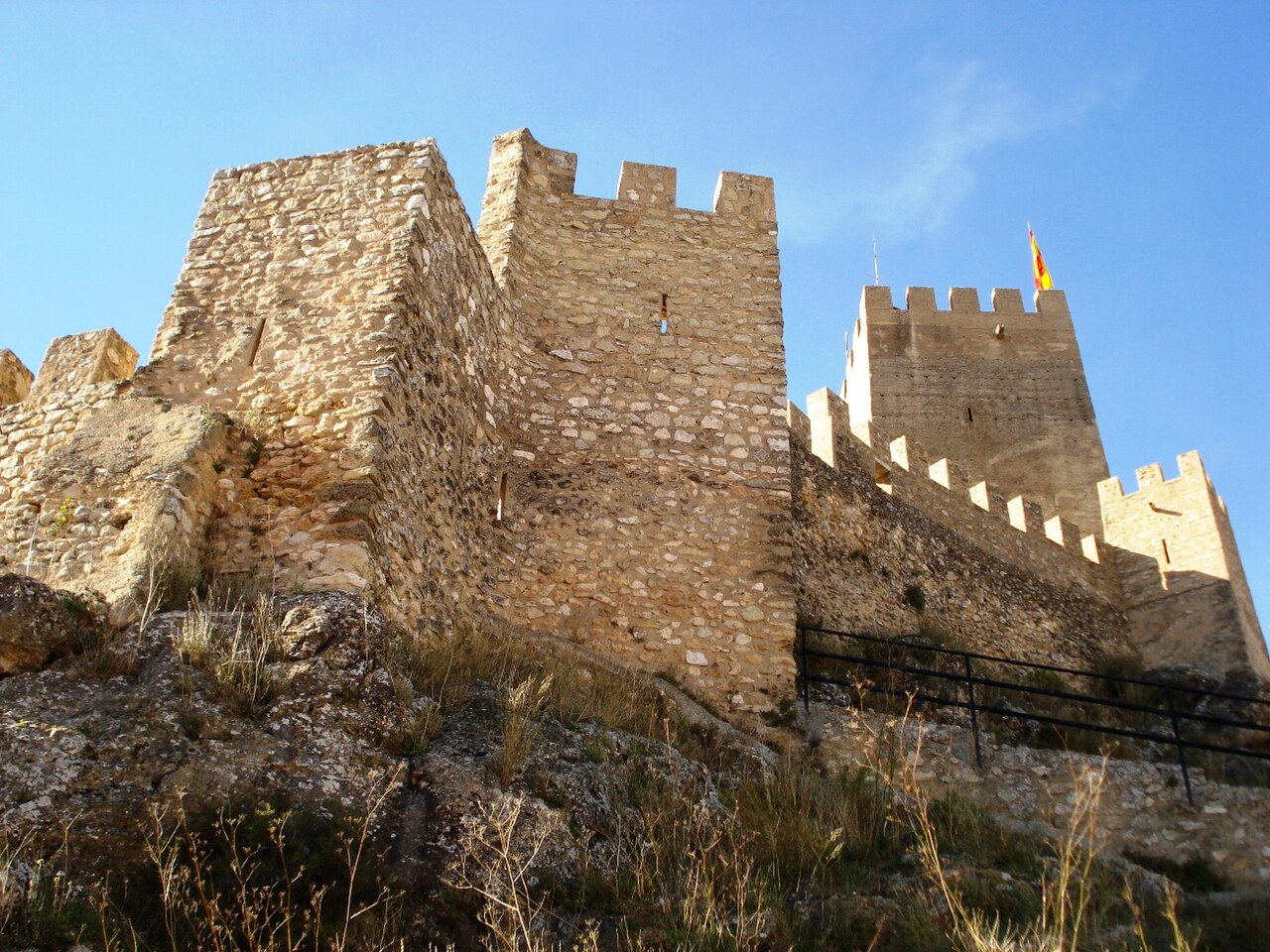
Perched at approximately 780 meters above sea level, Castalla Castle exhibits an elongated plan enclosed by robust rammed earth (tapial) walls. This traditional construction technique involved compacting layers of earth to create thick, sturdy walls, reinforced by cylindrical towers known as cubos. These towers punctuate the perimeter, providing vantage points for defense and surveillance.
The castle's interior is dominated by three main elements: the defensive walls, the imposing Torre Grossa, and the palace complex. The palace, dating from the 14th and 15th centuries, features a rectangular plan with two circular towers positioned diagonally at opposite corners. Central to the palace is a courtyard, beneath which lies a large underground cistern (aljibe) designed to collect and store rainwater, a vital resource during sieges.
The Torre Grossa, constructed in the late 16th century (dates recorded as either 1579 or 1597), serves as the castle's keep and lookout tower. Built with the same rammed earth technique as the walls, its entrance is accentuated by finely cut ashlar stones arranged in an arch with wedge-shaped voussoirs. Inside, remnants of Gothic decorative moldings adorn the chamber walls, reflecting a blend of military utility and stylistic refinement.
The outer curtain wall, completed in the latter half of the 16th century, features crenellated battlements with a distinctive tooth-like design, allowing defenders to shield themselves while engaging attackers. Additional towers and scattered structural remains within the enclosure hint at the castle's complex defensive system.
Water management and defensive innovations
The presence of the large underground cistern highlights the castle's self-sufficiency during prolonged sieges. Collecting and storing rainwater ensured the occupants had a reliable water supply, a critical feature in medieval fortress design. The integration of such resource management systems illustrates the advanced planning that went into Castalla Castle's construction and maintenance.
Later history and preservation
Following its active military use in the early 19th century, the castle was abandoned and gradually fell into ruin. Local residents dismantled parts of the structure for building materials, and the site attracted treasure hunters driven by local legends. Ownership transitions included the Marquises of Dos Aguas in the 18th century and later the local church in the early 20th century, before becoming municipal property in 1989.
In the 20th century, a notable addition was a large stone statue of Jesus Christ, erected in 1929 atop the Torre Grossa. Standing seven meters tall on a five-meter pedestal, it was a prominent landmark visible from surrounding villages. Unfortunately, this statue was destroyed during the Spanish Civil War and no longer exists.
Today, Castalla Castle is recognized as a protected cultural heritage monument under Spanish law. Its ruins provide valuable insights into the region's layered history, from its Islamic foundations through Christian reconquest, noble residence development, and military engagements spanning centuries. The surviving walls, towers, and palace remains offer a tangible connection to the castle's strategic and architectural evolution.
Visiting Castalla Castle
Visitors to Castalla Castle can explore the extensive ruins that reveal the castle's complex history and architectural ingenuity. The hilltop location provides panoramic views of the surrounding valley and town, enhancing the experience of this historic fortress. Interpretive signage and guided tours often highlight the castle's key features, including the Torre Grossa, palace courtyard, and water cistern.
The castle's combination of medieval military architecture and later modifications make it a fascinating destination for those interested in history, architecture, and Spanish heritage. Its preservation as a cultural monument ensures that future generations can continue to appreciate this emblematic site in the Valencian landscape.
Frequently asked questions (FAQ)
- How do I get to Castalla Castle?
- Castalla Castle is located on a hill above the town of Castalla in Valencia, Spain. Visitors can reach the castle by car or on foot via marked trails from the town center, offering scenic views along the way.
- What is the historical significance of Castalla Castle?
- Castalla Castle has a rich history dating back to the 11th century with Moorish origins. It played important roles during the Christian reconquest, the War of Spanish Succession, and the Peninsular War, reflecting its strategic importance over centuries.
- Can I visit the Torre Grossa at Castalla Castle?
- Yes, visitors can explore the remains of the Torre Grossa, the castle's prominent 16th-century watchtower. It offers insight into the castle's defensive architecture and panoramic views of the surrounding area.
- When is the best time to visit Castalla Castle?
- The best time to visit Castalla Castle is during the spring and autumn months when the weather is mild and the surrounding landscape is particularly beautiful for hiking and sightseeing.
- Is there an entrance fee to visit Castalla Castle?
- Visiting Castalla Castle is generally free of charge as it is an open archaeological site. However, some guided tours or special events may have associated fees.
Photo gallery

Information
Website
Visit websiteSources & official resources
Verify the information above using these authoritative references.
Loading map...
Visitor reviews
No reviews yet. Been here? Write the first review and help other travelers!
Write the first reviewVisited this castle? Share your experience
Your review helps other travelers and adds first-hand knowledge to our encyclopedia.