Banyeres Castle
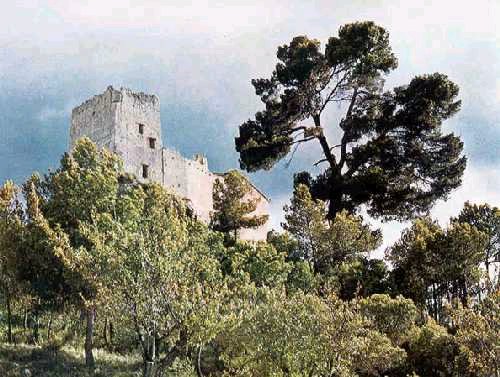
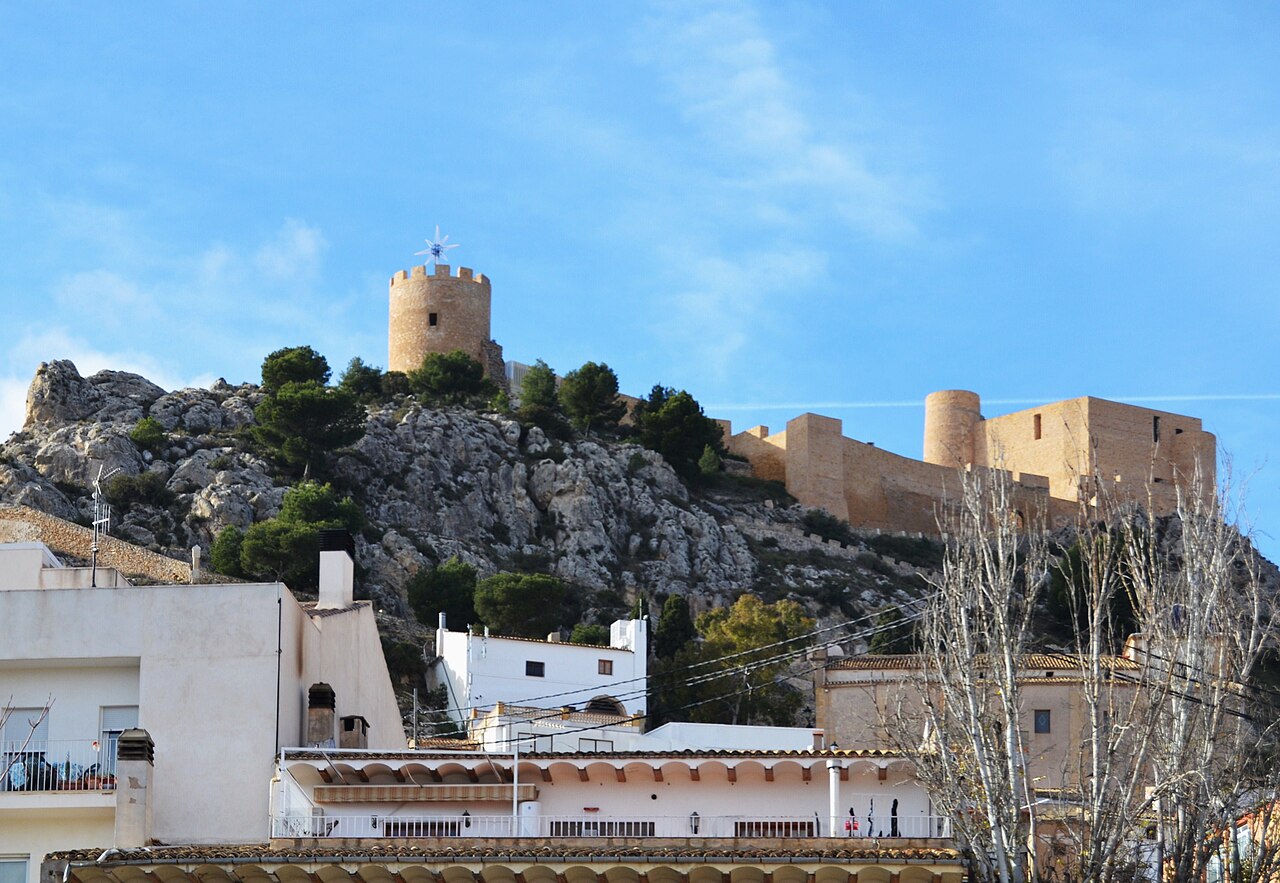
Banyeres Castle stands as a remarkable example of Almohad military architecture from the 13th century, located in the town of Banyeres de Mariola in Spain. Perched atop the Hill of the Eagle, this hill castle was strategically positioned to oversee and control the surrounding territory, reflecting the military and political priorities of the Almohad dynasty during their rule over parts of the Iberian Peninsula.
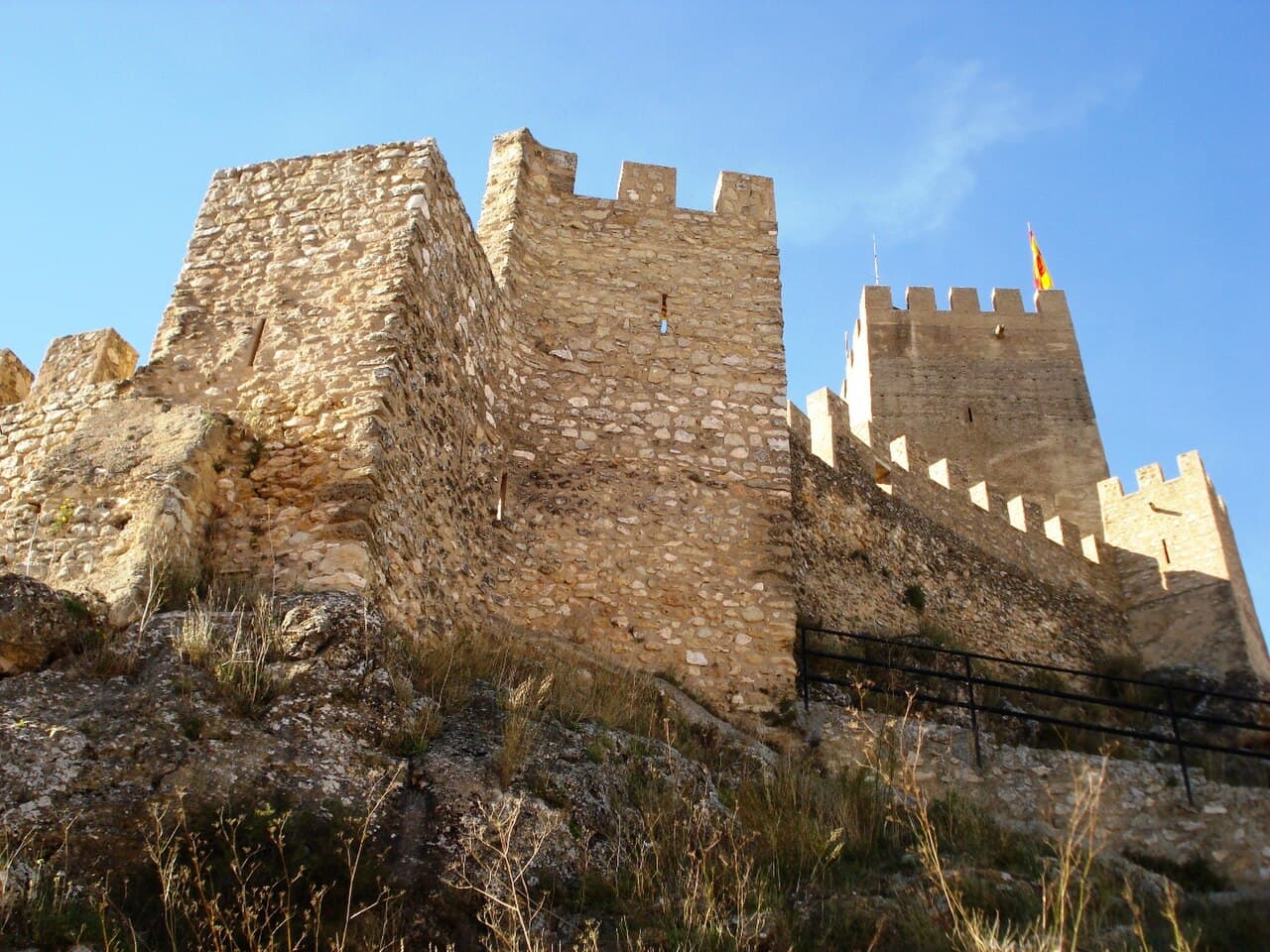
The castle's design is characterized by its irregular layout that conforms to the natural contours of the hill, a common feature in fortifications built to maximize defensive advantages. The fortress comprises two main enclosures, which together form a complex adapted to the uneven terrain. The predominant construction technique employed is rammed earth (tapia), a method favored by the Almohads for its robustness and availability of materials. This technique involved compacting layers of earth to create thick, durable walls capable of withstanding sieges and the test of time.
Architectural features and construction details
One of the castle's most prominent architectural elements is its tower keep, which rises approximately 17 meters high. This tower features a square ground plan and is constructed using the same rammed earth technique as the surrounding walls. It consists of three floors, each likely serving distinct functions such as defense, observation, and possibly residential or storage purposes. The tower's height and solid construction made it a formidable defensive stronghold and a visual symbol of authority.
The castle walls, also built from rammed earth, contain later additions such as voussoired semicircular arches, which indicate architectural modifications during subsequent periods. These arches, constructed with wedge-shaped stones, enhanced the structural integrity of gateways or openings. Additionally, arrow slits were incorporated into the walls at a later stage, reflecting evolving military technologies and the need for improved defensive capabilities.
Within the castle grounds, essential facilities include a cistern (aljibe) designed to collect and store water, crucial for sustaining the inhabitants during prolonged sieges or droughts. Adjacent to this is a chapel (ermita), which underscores the dual military and religious functions of the fortress. The presence of a chapel within the castle highlights the integration of spiritual life into the daily routines of its occupants, particularly during the later phases of the castle's use.
Historical context and significance
The construction of Banyeres Castle during the Almohad period situates it within a broader historical narrative of Muslim rule in the Iberian Peninsula. The Almohads, a North African Berber dynasty, controlled large territories in Spain during the 12th and 13th centuries, and their fortresses served as both military bastions and administrative centers.
Located strategically on the Hill of the Eagle, the castle played a vital role in the defense and control of the surrounding region. Its position allowed for surveillance over important routes and the nearby settlement, contributing to the security and governance of the area. Over time, as political control shifted and military needs evolved, the castle underwent modifications that reflect these changes, including the addition of religious structures and architectural reinforcements.
Though specific records of battles or sieges involving Banyeres Castle are scarce, its continuous occupation and architectural evolution attest to its sustained importance through the centuries. The castle influenced the urban development of Banyeres de Mariola, with the old town expanding around this fortified nucleus.
Preservation and current use
Today, Banyeres Castle is recognized as a cultural heritage site and is protected as a Cultural Interest Asset. Its remains, including the tower, walls, cistern, and chapel, have been preserved through conservation efforts that aim to maintain the site's historical integrity.
The castle now serves as the headquarters of the Banyeres festive museum (Museu Fester), linking its historical legacy with contemporary cultural life. Visitors to the site can explore the castle's architectural features and learn about its historical significance within the context of Almohad rule and the region's medieval history.
Architectural adaptations and military evolution
The castle's architecture reveals a story of adaptation, where the original Almohad design was modified to meet changing defensive requirements. The addition of arrow slits and the reinforcement of walls with stone arches illustrate a transition from purely earthen fortifications to mixed-material constructions, enhancing durability and defense against emerging siege technologies.
These adaptations also suggest the castle's role extended beyond a simple military outpost to a complex defensive and administrative center that needed to accommodate both armed defense and civilian life, including religious practices.
Significance in regional history
Banyeres Castle holds a significant place in the history of the Valencian Community and the broader Iberian Peninsula. Its Almohad origins provide insight into the Muslim architectural and military strategies during the High Medieval period. The castle is a testament to the cultural and political dynamics of medieval Spain, illustrating the intersection of Islamic and Christian influences that shaped the region's history.
As a preserved monument, it offers valuable educational opportunities for understanding medieval fortifications, construction techniques like rammed earth, and the historical context of Almohad governance and military presence in Spain.
Visitor experience and cultural importance
Visitors to Banyeres Castle can appreciate the blend of natural terrain and architectural ingenuity that characterizes the fortress. The site provides panoramic views from the tower and hilltop, connecting visitors with the landscape that shaped its strategic importance.
The castle's role as a museum enriches the cultural fabric of Banyeres de Mariola, hosting exhibitions and events that celebrate local traditions and history. This active use ensures the castle remains a living part of the community while preserving its historical and architectural legacy.
Frequently asked questions (FAQ)
- What are the visiting hours for Banyeres Castle?
- Banyeres Castle is typically open to visitors during daytime hours, often from morning until late afternoon. It is advisable to check locally or online for the current schedule as it may vary seasonally or for special events.
- How do I get to Banyeres Castle in Banyeres de Mariola?
- Banyeres Castle is located on the Hill of the Eagle overlooking Banyeres de Mariola. Visitors can reach the site by walking from the town center, following marked trails that lead up to the castle ruins.
- What is the historical significance of Banyeres Castle?
- Banyeres Castle is a significant Almohad fortress from the 13th century that illustrates the military architecture and territorial control strategies of the Almohad dynasty in medieval Spain.
- Can I visit the museum inside Banyeres Castle?
- Yes, the castle houses the Banyeres festive museum (Museu Fester), where visitors can explore exhibitions related to local cultural traditions and the castle's history.
- Is Banyeres Castle accessible for people with mobility issues?
- Due to its hilltop location and uneven terrain, access to Banyeres Castle may be challenging for visitors with mobility impairments. It is recommended to inquire in advance about accessibility options.
Photo gallery

Information
Sources & official resources
Verify the information above using these authoritative references.
Loading map...
Visitor reviews
No reviews yet. Been here? Write the first review and help other travelers!
Write the first reviewVisited this castle? Share your experience
Your review helps other travelers and adds first-hand knowledge to our encyclopedia.