Old Fort Niagara — United States of America castle

Old Fort Niagara

Old Fort Niagara: historic military fortification in New York
Late Medieval (14th–15th c.)
Well Preserved

Old Fort Niagara stands as a remarkable testament to the turbulent history of North America, showcasing centuries of military architecture and colonial conflict. Located near the mouth of the Niagara River in Youngstown, New York, this fortification has played a crucial role in the struggle for control between Native American tribes, French, British, and American forces from the 17th century through the early 20th century.

The fort's strategic position guarding the entrance to the Great Lakes made it a vital military asset during the French and Indian War, the American Revolutionary War, and the War of 1812. Today, Old Fort Niagara is a well-preserved historical site operated by the not-for-profit Old Fort Niagara Association since 1927, offering visitors a unique opportunity to step back in time and experience the rich military heritage of the Niagara Frontier.

Architectural features and fortifications

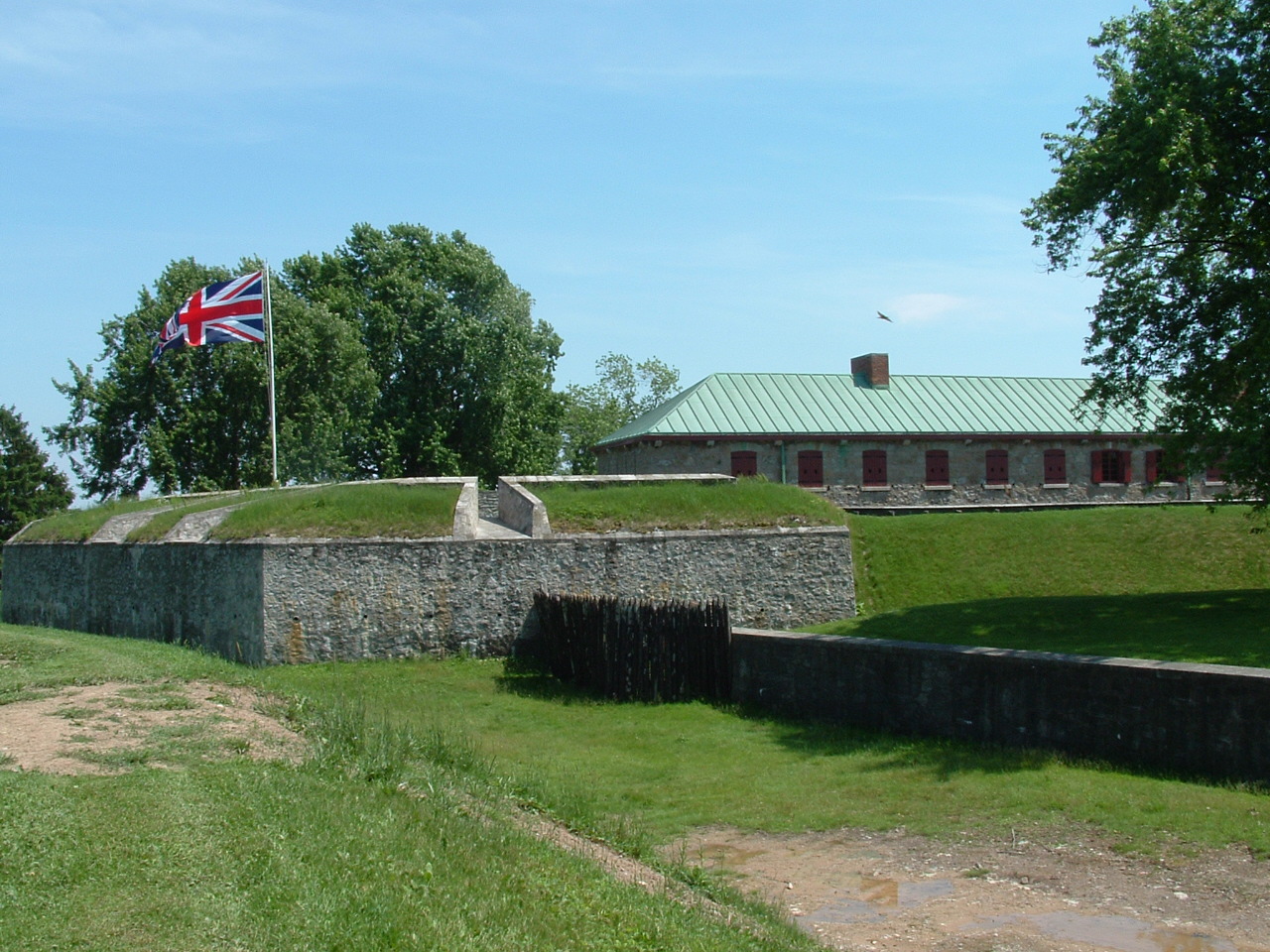
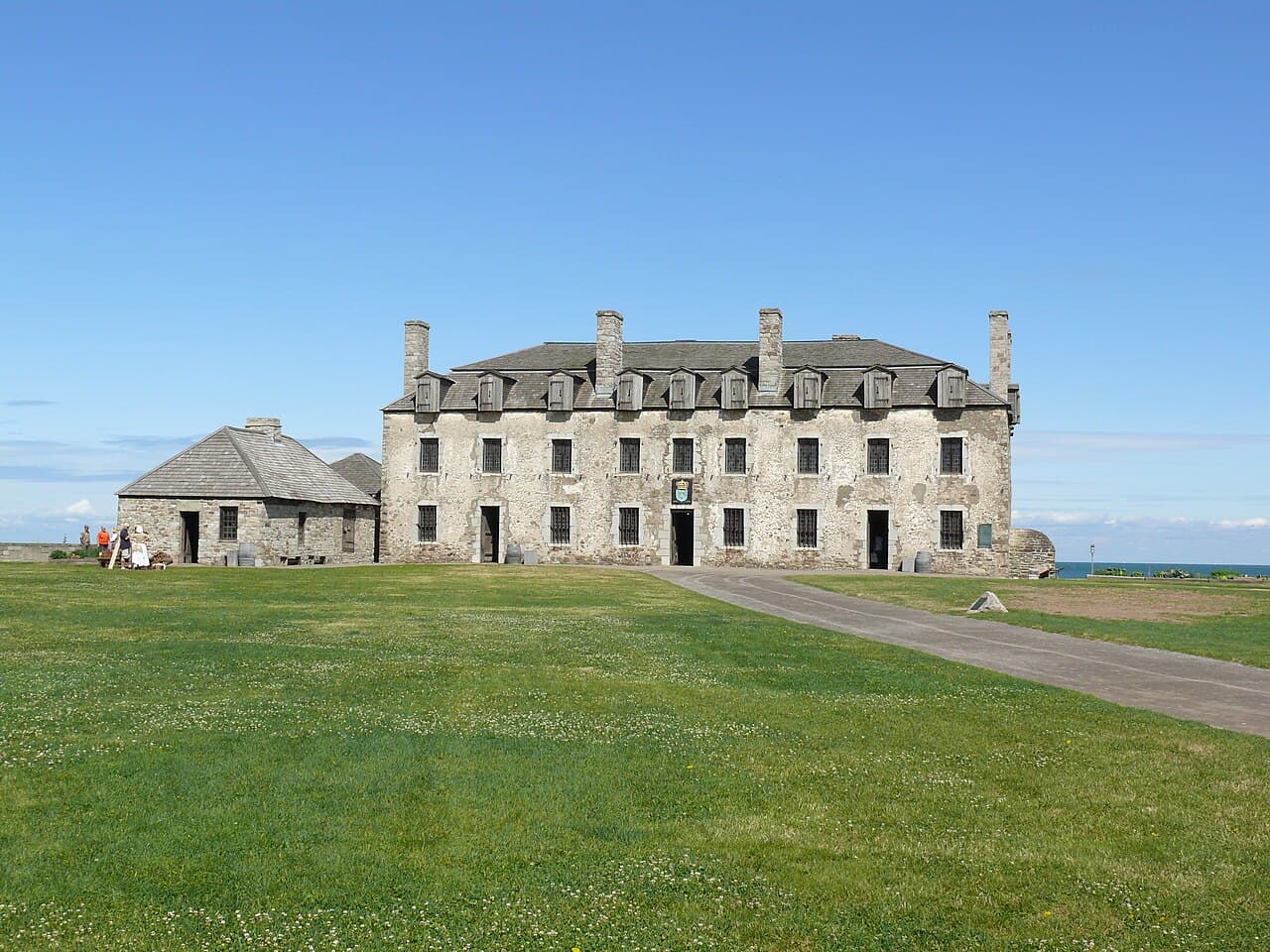
Old Fort Niagara is a classic example of a water castle and hill castle hybrid, featuring robust stone walls, bastions, and defensive earthworks designed to withstand artillery sieges. The fort's layout includes multiple 18th-century buildings constructed primarily of local limestone, including barracks, officers' quarters, powder magazines, and a commanding French Castle or keep, which is the oldest surviving structure dating back to the early 18th century.

The fort's massive walls are punctuated by bastions and gun platforms that provided overlapping fields of fire across the surrounding landscape and waterways. A deep moat and thick ramparts further enhanced its defensive capabilities. The fort's design reflects a blend of French colonial military engineering and subsequent British modifications, illustrating the evolution of fortification techniques over time.

Historical significance and military role

Early colonial period and french control

Established by the French in 1726, Fort Niagara was originally built to control access to the Great Lakes and to serve as a trading post and military headquarters. It was a key outpost in the French network of forts across the region, facilitating alliances with Native American tribes and securing French territorial claims.

British and american eras

Following the British conquest in 1759 during the French and Indian War, the fort was expanded and fortified further to serve as a critical British stronghold. It remained under British control until the end of the American Revolutionary War, when it was transferred to the United States in 1796 under the terms of the Treaty of Paris.

During the War of 1812, Old Fort Niagara was the site of significant battles and sieges, changing hands between American and British forces. The fort's original War of 1812 flag is preserved and displayed, symbolizing its pivotal role in this conflict.

Living history and visitor experience

Today, Old Fort Niagara operates as a vibrant living history museum that immerses visitors in the military and cultural heritage of the region. The fort offers guided tours, musket and artillery firing demonstrations, and interactive exhibits showcasing original artifacts from the 18th to 20th centuries.

Visitors can explore the original buildings where soldiers of various nationalities lived and worked, including Native American, French, British, and American troops. The summer months feature reenactments with authentic period costumes and demonstrations of daily life on the Niagara Frontier, providing an engaging educational experience.

The Visitor Center includes introductory exhibits and an award-winning orientation film that contextualizes the fort's history. Throughout the year, special events and living history programs highlight the fort's role in shaping the history of the United States and Canada.

Preservation and cultural heritage

Maintained by the Old Fort Niagara Association, the site is a well-preserved example of 18th-century military architecture and is recognized for its cultural and historical significance. Preservation efforts have ensured that the fort remains largely intact, allowing visitors to experience an authentic glimpse of colonial and early American military life.

The fort's location near the Niagara River and Lake Ontario also offers spectacular views and a connection to the natural landscape that was integral to its defensive strategy.

Practical information for visitors

Old Fort Niagara is located at 102 Morrow Plaza, Youngstown, New York, USA. It is open to the public with seasonal hours and offers a range of ticket options. Visitors are encouraged to check the official website or contact the fort for up-to-date information on opening times, ticket prices, and special events.

The site is accessible for visitors interested in history, architecture, and military heritage, providing educational programs suitable for all ages.

Frequently asked questions (FAQ)

What is the best time to visit Old Fort Niagara?
The best time to visit Old Fort Niagara is during the summer months when living history programs, musket and artillery demonstrations, and reenactments are held, providing the most immersive experience.
How do I get to Old Fort Niagara?
Old Fort Niagara is located in Youngstown, New York, near the mouth of the Niagara River. Visitors can reach the fort by car via local roads or by using nearby public transportation options.
What can I expect to see inside the fort?
Inside Old Fort Niagara, visitors can explore original 18th-century buildings, view military artifacts, watch musket firing demonstrations, and learn about the fort's role in various historical conflicts through guided tours and exhibits.
Is Old Fort Niagara accessible for visitors with disabilities?
The site offers some accessibility features; however, due to the historic nature of the buildings and terrain, certain areas may be challenging for visitors with mobility impairments. It is recommended to contact the fort in advance for specific accessibility information.
Are there guided tours available at Old Fort Niagara?
Yes, guided tours are offered regularly, especially during the peak season. These tours provide detailed historical context and highlight the architectural and military significance of the fort.

Photo gallery

Old Fort Niagara
Click to view

Photo by Ad Meskens•CC BY-SA 3.0

1 photo • Click any image to view in full screen

Information

Water Castle

Opening hours

Seasonal hours, check official site

Ticket prices

Varies by event and age

Current owner

Old Fort Niagara Association

Address

102 Morrow Plaza, Youngstown, NY 14174-0169 USA

Loading map...

Visitor reviews

No reviews yet. Been here? Write the first review and help other travelers!

Write the first review

Visited this castle? Share your experience

Your review helps other travelers and adds first-hand knowledge to our encyclopedia.
Write a review

(5/5)

0/2000 characters

Your review will be visible after admin approval

Nearby castles

1.3 km
Fort George (Ontario) — Canada castle

Fort George (Ontario)

Niagara-on-the-Lake, Canada

Fort George is a historic bastioned fortress located in Niagara-on-the-Lake, Ontario, Canada. Originally constructed in the 1790s by the British Army, it was built to replace the earlier Fort Niagara as a key military stronghold on the Niagara River. The fort played a significant role during the War of 1812, serving variously under British, Canadian militia, and briefly, United States Army control. Although it suffered extensive damage during the conflict, Fort George remains a prominent symbol of early Canadian military history. Construction and design of Fort George The fort was designed as a bastioned fortress, a style characterized by angular bastions projecting from the main walls, allowing for defensive artillery coverage of all approaches. Fort George features an irregular-shaped earthwork layout with six bastions strategically placed to maximize defense against attackers. The fortifications included ramparts, ditches, and glacis to provide multiple defensive layers. The original structures were primarily wooden and earthworks, typical of late 18th-century military engineering in North America. The design reflected post-Renaissance military architecture principles, emphasizing artillery defense and overlapping fields of fire. The fort's location on the Niagara River was strategic for controlling access between Lake Ontario and the interior of the continent, making it a critical point of defense against American forces. Historical significance and military use Fort George was established by the British in the 1790s to strengthen their position in the region following the American Revolutionary War. It served as the primary British military base in the Niagara frontier. During the War of 1812, the fort was the site of the Battle of Fort George in May 1813, during which American forces launched a successful assault that led to significant destruction of the fort's structures. After the battle, American troops occupied Fort George for approximately seven months. The British recaptured the fort in December 1813 but did not immediately restore it fully, as they had also regained control of Fort Niagara, which was considered a more defensible position. The fort's design flaws and damage led to its gradual replacement by Fort Mississauga in the 1820s. Despite the decline of Fort George as a frontline military installation, the site continued to be used by the military through the 19th century and up until the end of the First World War. Its strategic importance diminished as military technology and tactics evolved. Preservation and reconstruction efforts In the late 1930s, the Niagara Parks Commission undertook a significant reconstruction project to restore Fort George as a historic site. This effort aimed to preserve the fort's heritage and educate the public about its role in Canadian and North American history. The reconstructed fort opened to the public in 1940 and has since functioned as a living history museum. Today, the site includes several reconstructed buildings within the original earthworks, providing visitors with a tangible sense of 19th-century military life. The only surviving original building is the restored gunpowder magazine, which offers a direct physical link to the fort's original construction. The fort is managed by Parks Canada as part of the Fort George National Historic Site, which also encompasses Navy Hall located to the east. Educational and cultural importance Fort George serves as a key educational resource for understanding the War of 1812 and the military history of early Canada. The site hosts reenactments, guided tours, and interpretive programs that explore the fort's strategic role, the daily lives of soldiers, and the broader geopolitical conflicts of the era. It also highlights the early 20th-century historic preservation movement that saved the site from complete ruin. The fort's location in Niagara-on-the-Lake places it within a region rich in heritage tourism, complementing other historic sites and attractions. Visitors can explore the fort's bastioned walls, barracks, and parade grounds, gaining insight into the challenges of frontier defense and colonial military architecture.

Post-Renaissance (17th–18th c.)
Details
31.3 km

Tonawanda Castle

Tonawanda, United States of America

Tonawanda Castle stands as a striking red brick structure located in Tonawanda, New York, just north of Buffalo. This impressive building, often described as a castle due to its grand architectural features, serves today as a popular wedding and events venue. Its design evokes the feel of a chateau or traditional castle, thanks to its multiple towers rising five and six stories high. Architectural features and design The castle's most notable architectural elements are its tall towers, which dominate the skyline and create a commanding presence. Constructed primarily of red brick, the building showcases a robust and historic aesthetic. The towers provide a vertical emphasis typical of castle-like architecture, contributing to the venue's romantic and grand atmosphere. Although it is not a medieval fortress, the design clearly draws inspiration from European castles, blending historic charm with functional event spaces. Historical context and location Situated at 69 Delaware Street, Tonawanda, NY 14150, the castle is located in a region rich with history near the city of Buffalo. While the exact date of construction is not widely documented, the building's style and materials suggest it was built in the early 20th century, a period when castle-inspired architecture was popular for grand residences and public buildings in the United States. Its preservation and adaptive reuse as an event venue highlight the community's appreciation for architectural heritage. Current use and visitor experience Today, Tonawanda Castle operates primarily as a venue for weddings, receptions, and special events. Its castle-like ambiance offers a unique and memorable setting for celebrations, with spacious interiors and the dramatic presence of its towers enhancing the experience. Visitors and guests can enjoy the blend of historic architecture with modern amenities designed to accommodate large gatherings. Event spaces and amenities The castle features multiple event rooms and halls, each designed to complement the historic character of the building while providing practical facilities for hosting events. The combination of historic charm and functional design makes it a sought-after location for couples and event planners in the Buffalo area. Architectural significance and preservation Though not a medieval fortress, Tonawanda Castle is an example of early 20th-century American architecture inspired by European castle motifs. Its red brick construction and tall towers are significant for their visual impact and contribution to the local architectural landscape. The castle's preservation and continued use demonstrate the value placed on maintaining historic structures and adapting them for contemporary use. Visiting information While primarily an event venue, visitors interested in architecture and historic buildings may appreciate viewing the castle from the exterior. The castle's location in Tonawanda makes it accessible for those exploring the Buffalo region's historic sites.

Post-Renaissance (17th–18th c.)
Details
42.6 km
Fort Erie — Canada castle

Fort Erie

Fort Erie, Canada

Fort Erie, also known as the Fort Erie National Historic Site of Canada, is a significant 18th-century bastioned fortress located on the southern edge of the Town of Fort Erie, Ontario. It sits directly across the Niagara River from Buffalo, New York, United States. The fort was the first British fort constructed in the region following the Seven Years' War, known in the American colonies as the French and Indian War. This war ended with the Treaty of Paris in 1763, which transferred control of French territories east of the Mississippi River, including all of New France, to Great Britain. Historical context and strategic importance The construction of Fort Erie was part of a broader British strategy to secure their newly acquired territories in North America. The fort's location on the Niagara River was crucial for controlling access between Lake Erie and Lake Ontario, as well as monitoring the border between British Canada and the United States. This position made Fort Erie a key military installation during several conflicts, including the War of 1812. Architectural features and design Fort Erie is classified as a bastioned fortress, a style of fortification that became prominent in the post-Renaissance period. Bastioned fortresses are characterized by angular bastions projecting from the curtain walls, designed to provide overlapping fields of fire and eliminate blind spots around the fort's perimeter. This design was intended to withstand artillery attacks and improve defensive capabilities. The fort was originally constructed with earthworks and timber but was later reinforced with stone and brick. Its layout includes a series of bastions connected by curtain walls, a dry moat, and internal buildings such as barracks, magazines, and officers’ quarters. The fortifications reflect the military engineering principles of the 18th century, adapted to the North American frontier environment. Role in the War of 1812 Fort Erie played a pivotal role during the War of 1812 between the United States and Great Britain. It was the site of several significant battles and sieges. In 1814, American forces captured the fort and held it during a prolonged siege by British troops. The fort's defenses and strategic position made it a focal point of military operations in the Niagara region. The conflict left the fort heavily damaged, but it remained an important symbol of the military history of the area. Preservation and current status Today, the fort and its surrounding battlefield are owned and managed by the Niagara Parks Commission, an agency of the Ontario provincial government. The site is a designated National Historic Site of Canada and is open to the public for tours and educational programs. Visitors can explore the reconstructed bastions, walls, and internal structures, gaining insight into 18th and early 19th-century military architecture and history. The fort's preservation allows for an understanding of colonial military strategy, frontier defense, and the turbulent history of British-American relations in the Niagara region. Interpretive signage, guided tours, and reenactments contribute to the educational value of the site. Visitor information and cultural significance Fort Erie is a prominent cultural landmark in Ontario, attracting history enthusiasts and tourists interested in military architecture and Canadian heritage. The site hosts events commemorating its historical significance, including reenactments of battles and educational workshops. Its proximity to Buffalo, New York, also makes it accessible to international visitors. The fort's role in shaping the border region and its preservation as a historic site underscore its importance in Canadian history. It provides a tangible connection to the colonial past and the military conflicts that shaped North America.

Post-Renaissance (17th–18th c.)
Details