Carew Castle
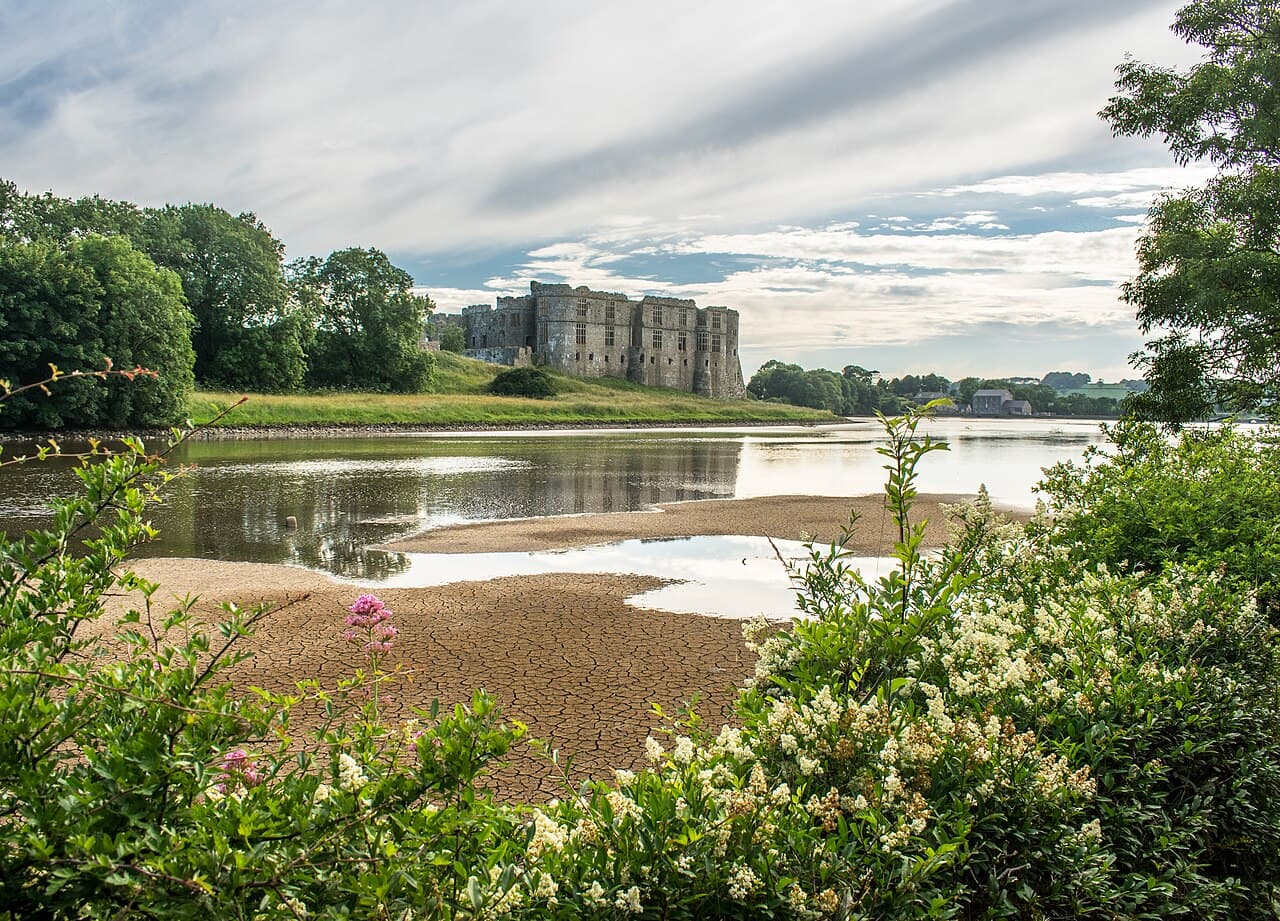
Carew Castle stands as a remarkable testament to nearly a millennium of Welsh and British history, located in the village of Carew in Wales. This historic Norman and Tudor fortress occupies a commanding position on a limestone promontory overlooking the Carew River estuary, part of the Milford Haven Waterway. The site’s strategic importance is underscored by its continuous use from the Iron Age through the medieval period and into the early modern era.
The castle’s origins trace back at least 2000 years, with archaeological evidence revealing multiple defensive walls and ditches from an Iron Age ringwork fort. This early fortification exploited the natural defensive advantages of the limestone bluff and estuarine location. In the early medieval period, the site belonged to the Welsh kingdom of Deheubarth and later became part of the Norman conquest of Pembrokeshire.
Early medieval origins and the de carew family
Around the year 1100, Gerald de Windsor was granted the manor of Carew as part of his marriage to Nest ferch Rhys, a Welsh princess of Deheubarth. Gerald, who was appointed castellan of Pembroke Castle, replaced the earlier wooden fortifications with a Norman-style wooden motte and constructed a stone keep known today as the "Old Tower." This keep is among the earliest surviving stone structures on the site, symbolizing the transition from Welsh to Norman control.
Throughout the 12th and 13th centuries, the de Carew family developed the castle extensively. William de Carew initiated the construction of stone curtain walls and a Great Hall in the mid-1100s, establishing the castle as a fortified residence. Around 1270, Nicholas de Carew expanded the defenses by enclosing the outer ward with high limestone walls and adding complex rooms and halls around the inner courtyard. This phase was influenced by the architectural innovations of the Edwardian castles built in North Wales, featuring strong defensive elements such as D-shaped towers and crenellated curtain walls.
Tudor transformation under rhys ap thomas
In the late 15th century, the castle came under the ownership of Rhys ap Thomas, a prominent Welsh nobleman who played a decisive role in supporting Henry Tudor before the Battle of Bosworth in 1485. Rhys ap Thomas transformed Carew Castle from a medieval fortress into a more comfortable and ornate Tudor residence. He added luxurious apartments with richly decorated windows and architectural features made from imported Cotswold stone, contrasting with the local Carboniferous limestone of the original structure.
A notable feature from this period is the inner doorway adorned with the coats of arms of Henry VII, his son Prince Arthur, and Arthur's wife Catherine of Aragon. This heraldic display emphasized the castle’s allegiance to the Tudor monarchy during a time of shifting political loyalties.
Rhys ap Thomas's grandson, Rhys ap Gruffudd, later fell out of favor and was executed for treason in 1531, leading to the castle reverting to royal ownership. Despite this, the Tudor modifications remain some of the most striking architectural elements of the castle today.
Elizabethan additions and civil war impact
In 1558, the castle was acquired by Sir John Perrot, a Lord Deputy of Ireland and an Elizabethan courtier. Perrot undertook significant renovations, including reconstructing the northern defensive wall into a long range of domestic rooms featuring large rectangular windows, bay windows known as oriels, and a long gallery exceeding 40 meters in length. This wing exemplifies the Elizabethan architectural style, marking the castle’s evolution from a military fortress to a stately home.
During the English Civil War in the 1640s, Carew Castle was refortified by Royalist forces despite the predominance of Parliamentarian sentiment in south Pembrokeshire. The castle changed hands multiple times, and after Parliamentarian victories, the south wall was deliberately demolished to render the castle indefensible to Royalist supporters. This damage significantly altered the castle’s original quadrangular plan.
Following the Restoration, the castle was returned to the de Carew family, who continued to occupy parts of the castle until 1686. Thereafter, the castle was abandoned and gradually fell into ruin, with much of the stone repurposed for local building projects and lime burning.
Architectural features and castle layout
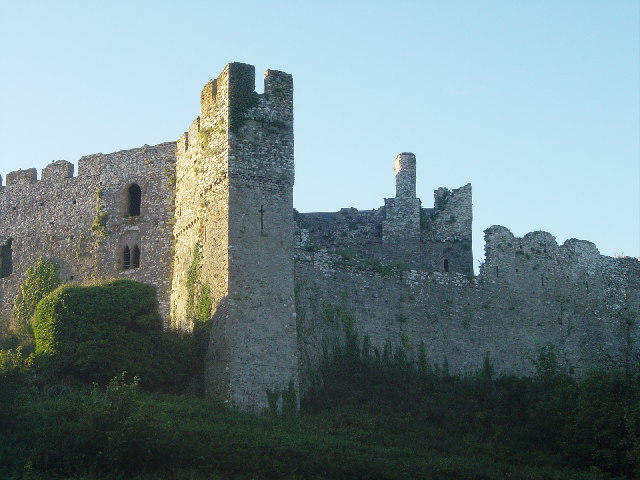
Carew Castle is primarily constructed from local Carboniferous limestone, giving the walls a distinctive pale grey hue. The castle’s layout is roughly quadrangular, with an inner courtyard surrounded on three sides by living quarters, service buildings, and defensive structures. The fourth side, originally enclosed, lost its south wall during the Civil War.
Access to the inner ward is via a dry moat crossed by a gatehouse protected by a barbican, a fortified outer gatehouse designed to impede attackers. The castle’s front features three prominent D-shaped towers integrated into crenellated curtain walls, while the rear is defended by two large round towers, emphasizing the site’s military origins.
The main entrance, dating from the early 14th century, is a robust gateway with arrow slits and gun loops for defense. It is flanked by the ruins of a three-story southeast tower and the medieval stone keep known as the "Old Tower." Adjacent to these is a late 13th-century residential block with an attached chapel tower. The chapel tower’s upper sanctuary features rib-vaulted ceilings, with a chamber above, highlighting the religious function within the castle complex.
The imposing west wing, constructed in the early 1300s, contains a large hall above vaulted cellars. This hall was remodeled during the Tudor period, including the addition of a decorated porch bearing the coats of arms of Henry VII, Prince Arthur, and Catherine of Aragon. The riverside façade of this wing is framed by two massive round towers, creating an impressive silhouette against the estuary.
The north wing, built after 1558, replaced the earlier northern curtain wall and possibly a tower. It features Elizabethan style elements such as strong horizontal divisions, large rectangular windows, oriel windows projecting outward, and a rounded east end likely resting on medieval foundations. The interior includes five rooms above cellar level and a long gallery used for social functions.
Surrounding the main castle walls, the outer ward contains earthworks constructed by Royalist defenders during the English Civil War. Foundations of medieval economic buildings survive, indicating the castle’s self-sufficiency in food production and craft activities.
Carew tidal mill and carew cross
Approximately 250 meters downstream from the castle lies Carew Tidal Mill, the only intact tidal mill in Wales and one of only four surviving in Britain. The mill harnessed tidal energy from a 22-acre millpond created by a dam first recorded in 1630. The current mill building dates from the early 19th century, with one of the two large water wheels bearing the date 1801. Although no longer operational, the mill machinery remains intact, making it a significant industrial heritage site.
Near the castle’s parking area stands the Carew Cross, an 11th-century carved Celtic cross commemorating Maredudd ap Edwin, a king of Deheubarth. The cross features intricate knotwork and loop patterns influenced by Scandinavian art, connecting the site to its early medieval Welsh heritage.
Conservation and public access
After centuries of neglect and partial ruin, Carew Castle has undergone substantial conservation efforts since the late 20th century. The site is managed by the Pembrokeshire Coast National Park Authority under lease from the de Carew family, its historic owners. Restoration funded by Cadw and other heritage bodies has stabilized the ruins and preserved key architectural features for public education and enjoyment.
Visitors today can explore the castle’s extensive remains, including the gatehouse, towers, residential quarters, chapel, and the tidal mill. The site offers a rich experience of Welsh history, from Iron Age fortifications through Norman military architecture to Tudor and Elizabethan domestic enhancements. Interpretive displays and guided tours provide insight into the castle’s multifaceted past and its role in regional and national history.
Frequently asked questions (FAQ)
- How do I get to Carew Castle?
- Carew Castle is located in Carew, Pembrokeshire, United Kingdom. It is accessible by car, with parking available on-site. Visitors can also reach the castle via public transport, with local bus services connecting to nearby towns.
- What is the historical significance of Carew Castle?
- Carew Castle dates back to the 12th century and has played a crucial role in Welsh history. It was a strategic stronghold during various conflicts and has witnessed significant events, including the English conquest of Wales. Today, it stands as a testament to medieval architecture and heritage.
- When was Carew Castle built?
- Carew Castle was originally constructed in 1100, and its architecture has evolved over the centuries. The castle showcases a mix of medieval and later styles, reflecting the various phases of its development. It is one of the best-preserved castles in Wales.
- Can I visit Carew Castle year-round?
- Yes, Carew Castle is open to visitors throughout the year, although opening hours may vary by season. It's advisable to check the official website for the latest information on opening times and any seasonal events. Special tours may be available during peak tourist seasons.
- Why is Carew Castle a popular tourist destination?
- Carew Castle attracts visitors for its impressive architecture, rich history, and beautiful surroundings. It offers breathtaking views of the surrounding landscape and the nearby Carew River. Additionally, the castle often hosts events and activities, making it an exciting destination for families and history enthusiasts alike.
- Is it possible to access Carew Castle with a wheelchair?
- Yes, Carew Castle is committed to accessibility and offers facilities for wheelchair users. While some areas may have limited access due to the historical nature of the site, there are pathways and services in place to assist visitors with mobility challenges. It's recommended to contact the castle in advance for specific accessibility inquiries.
- What are the ticket prices for Carew Castle?
- Ticket prices for Carew Castle vary, with discounts available for children, students, and seniors. Admission typically includes access to the castle grounds and exhibitions. Visitors are encouraged to purchase tickets online in advance to secure their entry and take advantage of any special offers.
- What is the best time to visit Carew Castle?
- The best time to visit Carew Castle is during the spring and summer months when the weather is mild and gardens are in full bloom. These seasons also offer a variety of events and activities for visitors. However, autumn can provide a quieter experience with beautiful fall colors.
- What nearby attractions can I visit after Carew Castle?
- After visiting Carew Castle, you can explore the picturesque village of Carew, including the Carew Tidal Mill and the stunning Pembrokeshire Coast National Park. Other nearby attractions include the historic town of Tenby and the scenic beaches of West Wales, making it easy to plan a full day of exploration.
Photo gallery

Information
Website
Visit websiteSources & official resources
Verify the information above using these authoritative references.
Loading map...
Visitor reviews
No reviews yet. Been here? Write the first review and help other travelers!
Write the first reviewVisited this castle? Share your experience
Your review helps other travelers and adds first-hand knowledge to our encyclopedia.