Manorbier Castle
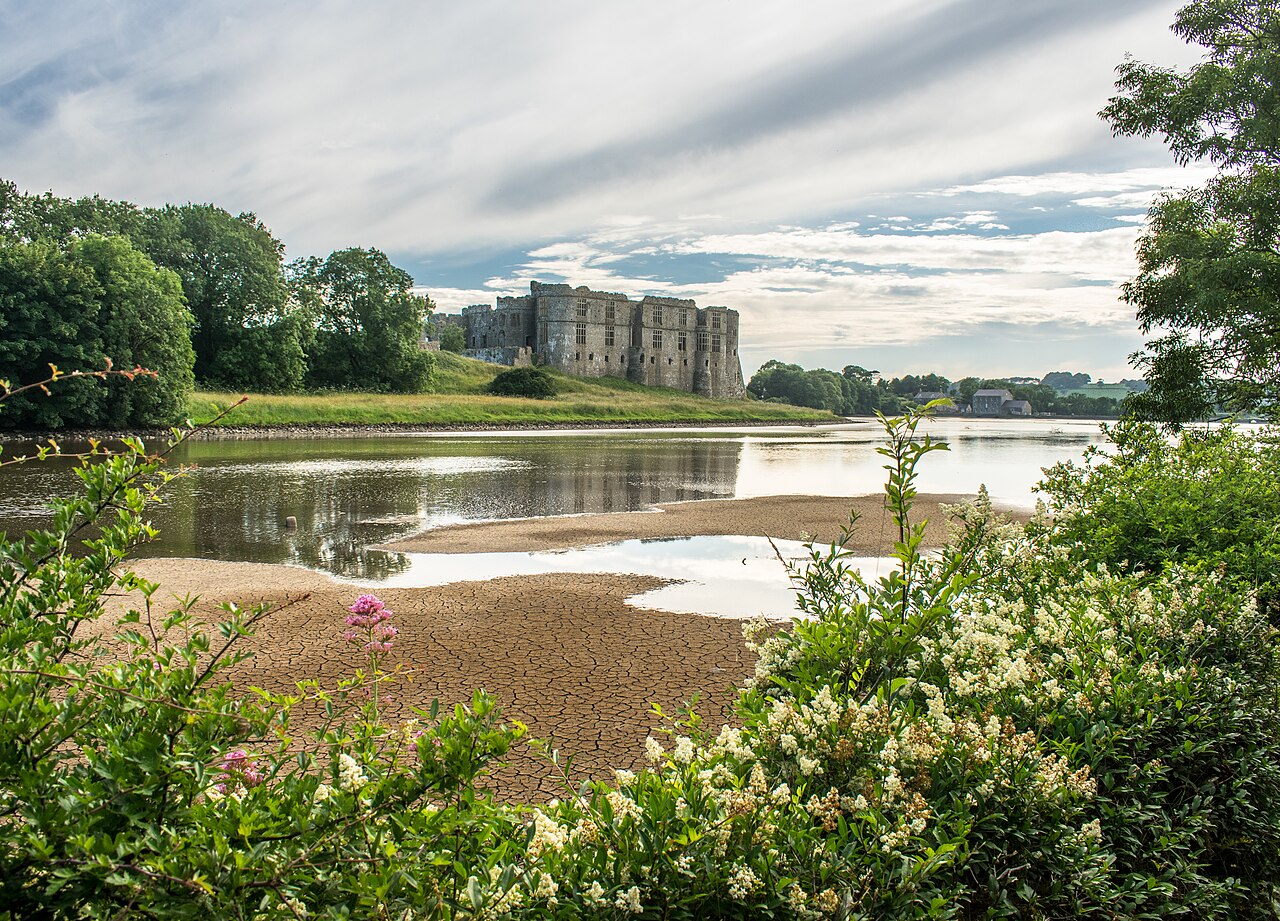
Manorbier Castle stands as a remarkable example of Norman military architecture on a natural coastal promontory in Manorbier, Wales. Founded in the late 11th century by the Norman knight Odo de Barri, this hill castle initially featured a motte-and-bailey design with a wooden keep and earth embankments. The strategic location provided commanding views over the surrounding landscape and the sea, emphasizing its defensive and administrative importance during the early Norman conquest of Wales.
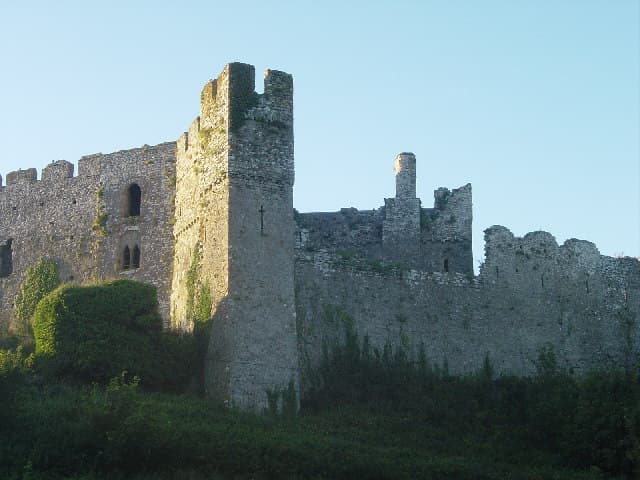
During the early 12th century, Odo's son, William de Barri, transformed the castle by replacing the wooden structures with robust limestone curtain walls quarried locally. This transition marked the evolution of Manorbier into a durable stone fortress, reflecting the growing stability of Norman rule. Over the following centuries, the castle was expanded with a rectangular inner ward fortified by curtain walls, complemented by a mix of round and square towers that enhanced its defensive capabilities.
Architectural features and layout
Fortifications and defensive structures
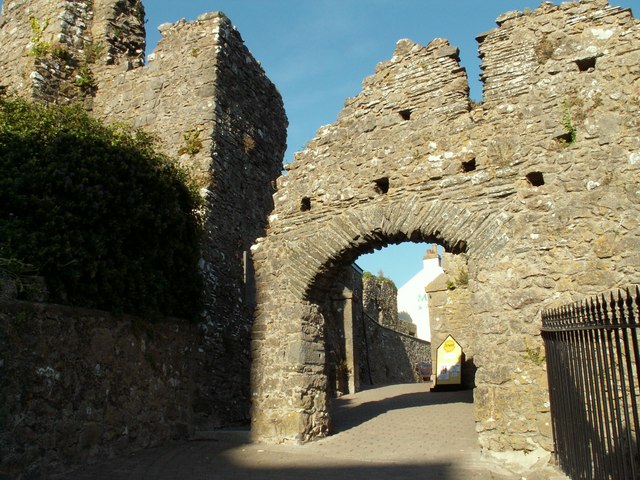
The castle's layout is defined by a rectangular enclosure fortified with curtain walls that incorporate both round and angular towers. The southeast tower is notably round, while the northeast tower presents an angular form. These towers provided vantage points for surveillance and defense against attackers. The main entrance is secured by a tower gateway equipped with a portcullis, roof embrasures, and a formidable iron and wood door, demonstrating the castle's strong defensive design.
A postern gate on the seaward side allowed discreet access to the beach, facilitating supply and communication by sea. Unlike many contemporary castles, Manorbier lacks a barbican, but its defenses were reinforced by a neck ditch separating the inner and outer wards, connected by a bridge. Surrounding earthworks formed an outer ward, enhancing the castle's protective perimeter.
Domestic buildings and chapel
Within the curtain walls, the domestic ranges constructed in the 1140s housed essential facilities such as kitchens, private apartments, and a Great Hall. Originally designed with narrow arrow slits for defense, these openings were later enlarged into windows, indicating a shift towards comfort and residential use over purely military function.
The castle's chapel, dating from around 1260, is distinguished by its elaborate vaulting and decorative plasterwork. Surviving fragments of medieval frescoes provide valuable insights into the religious and cultural life within the castle during the Middle Ages.
Historical context and significance
Founding and early development
Manorbier Castle's foundation in 1093 followed the Norman conquest of South Wales. Odo de Barri, granted the land, established the initial fortification to secure Norman control. His son, William de Barri, played a crucial role in upgrading the site to a stone castle, signifying the consolidation of Norman power in the region.
Notable figures and events
The castle is famously associated with Gerald of Wales (Geraldus Cambrensis), born there in 1146. Gerald was a prominent medieval scholar and churchman who praised Manorbier as "the most delightful place in all Wales," reflecting the castle's status as a comfortable noble residence as well as a fortress.
Manorbier experienced only limited military action. A notable incident occurred in 1327 when Richard de Barri attacked the castle during a family succession dispute. Much later, in 1645, during the English Civil War, Parliamentarian forces captured the castle. To prevent its reuse by Royalist forces, the castle was deliberately slighted, causing significant damage to its defenses.
Ownership and decline
The de Barri family's tenure ended around 1359, after which the castle passed through various owners, including royal possession by the late 15th century. Queen Elizabeth I sold the property to the Bowen family in the early 17th century. The Bowens supported King Charles I but abandoned Manorbier after its capture by Parliamentarians. The castle was sold in 1670 to the Phillips family but gradually fell into ruin over the subsequent centuries.
Restoration and modern use
In 1880, tenant J.R. Cobb undertook significant restoration work, repairing walls and buildings to stabilize the site. These efforts preserved much of the castle's structure, allowing it to survive as an important historical monument.
Today, Manorbier Castle is privately owned but open to the public. Visitors can explore the castle ruins, the surrounding gardens, a dovecote, and a mill, all of which contribute to understanding the castle's historical self-sufficiency. Part of the castle has been adapted as a holiday cottage, and the grounds serve as a popular wedding venue, blending heritage preservation with contemporary use.
The castle's striking coastal setting has also made it a favored filming location, featured in productions such as the BBC's "Chronicles of Narnia" series and the 2003 film "I Capture the Castle." This modern cultural role complements its rich medieval heritage and architectural significance.
Architectural legacy and cultural importance
Manorbier Castle exemplifies the evolution of Norman military architecture in Wales, showcasing the transition from early wooden fortifications to enduring stone castles. Its combination of defensive features, domestic comfort, and religious structures offers a comprehensive view of medieval castle life.
The preservation of original elements, such as the medieval frescoes in the chapel and the well-maintained curtain walls and towers, provides valuable insights for historians and visitors alike. The castle's integration into the natural coastal landscape enhances its dramatic visual impact and underscores its strategic importance.
As a heritage site, Manorbier Castle continues to educate and inspire, representing a tangible link to the Norman conquest and medieval history of Wales.
Frequently asked questions (FAQ)
- How do I visit Manorbier Castle?
- Manorbier Castle is open to the public, offering access to the castle ruins, gardens, dovecote, and mill. Visitors should check the official website or local tourist information for current opening hours and any entrance fees.
- What is the historical significance of Manorbier Castle?
- Manorbier Castle is a notable Norman fortress founded in the 11th century, associated with the de Barri family and medieval scholar Gerald of Wales. It played a role in regional defense and witnessed events such as the English Civil War.
- Can I host events at Manorbier Castle?
- Yes, parts of Manorbier Castle and its grounds are used as a wedding venue. The castle also offers holiday cottage accommodations, blending historical ambiance with modern hospitality.
- What architectural styles are visible at Manorbier Castle?
- The castle primarily exhibits <strong>Romanesque</strong> architectural features, including robust limestone curtain walls and characteristic Norman towers. Later modifications reflect evolving defensive and domestic needs.
- Is Manorbier Castle accessible for visitors with mobility issues?
- Due to its medieval construction and coastal location, some areas of Manorbier Castle may be challenging for visitors with mobility impairments. It is recommended to contact the site in advance for specific accessibility information.
Photo gallery

Information
Sources & official resources
Verify the information above using these authoritative references.
Loading map...
Visitor reviews
No reviews yet. Been here? Write the first review and help other travelers!
Write the first reviewVisited this castle? Share your experience
Your review helps other travelers and adds first-hand knowledge to our encyclopedia.