Cardoness Castle
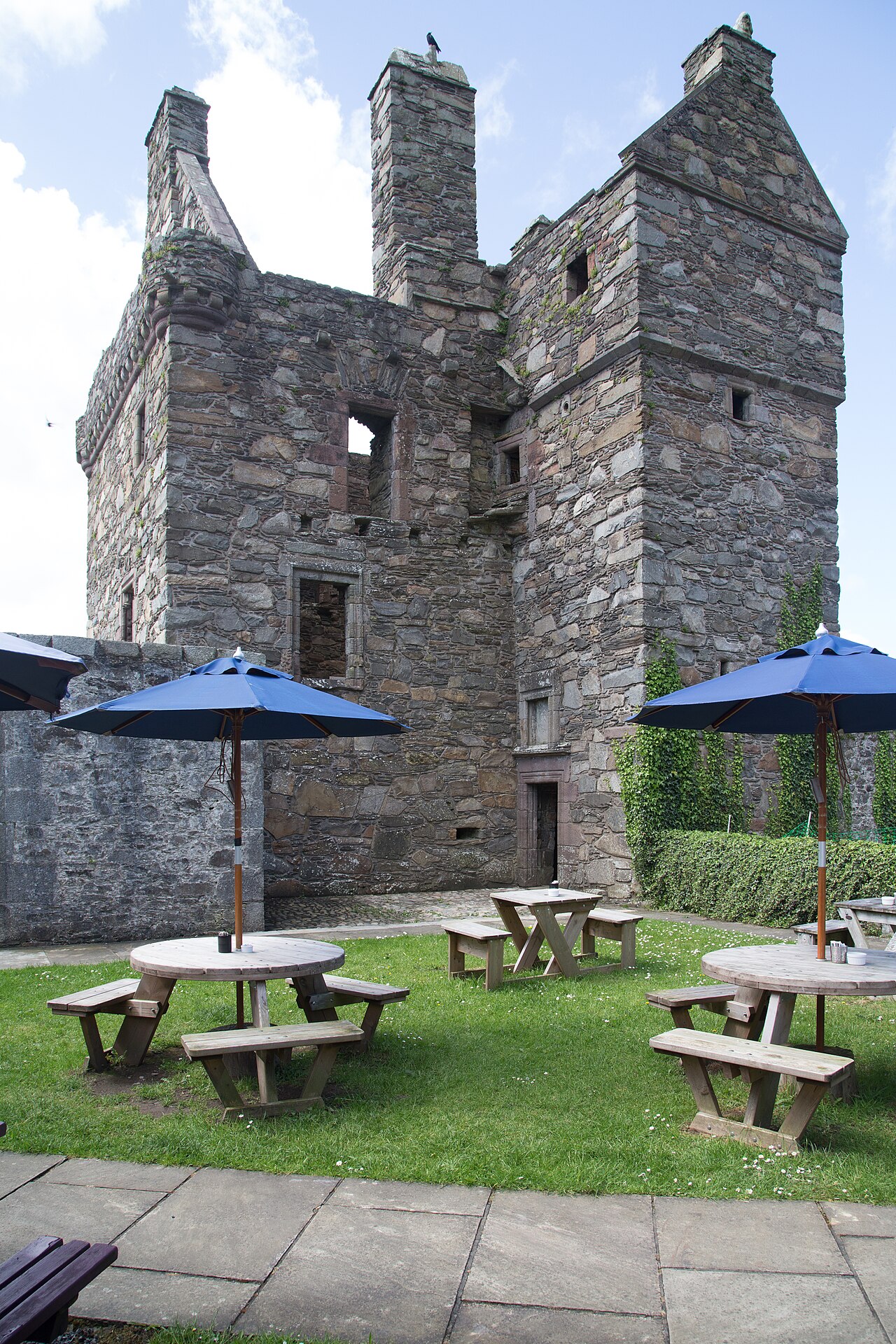
Cardoness Castle stands as a remarkable example of a late medieval Scottish tower house, located just southwest of Gatehouse of Fleet in Kirkcudbrightshire. Built in the 15th century by the MacCulloch family, the castle embodies the architectural and historical characteristics typical of noble residences designed for both defense and domestic life during this turbulent period in Scottish history.
The lands surrounding Cardoness have a rich medieval heritage dating back to around 1170, when King Malcolm IV granted the territory of Anwoth to David fitz Teri, a lord from Cumbria. David established an early fortification with a motte-and-bailey castle at nearby Boreland, setting the stage for the region’s strategic importance. The Cardoness estate itself was later associated with the Cardoness family, with documentary evidence from the early 13th century linking them to local disputes and royal charters, highlighting the estate's significance in medieval Scotland.
The macculloch family and the construction of the tower house
By the mid-15th century, the MacCulloch family of Myreton had acquired the Cardoness lands, likely through marriage alliances. They constructed the present six-storey tower house, a structure that reflects the defensive needs and social status of Scottish lairds during the late medieval period. This tower house was strategically sited on a rocky outcrop, which at high tide was surrounded by the waters of the Solway Firth, providing a natural defensive advantage until coastal changes occurred in the 19th century.
Architectural features and defensive elements
The castle’s robust construction includes walls approximately 2.5 meters thick, built to withstand attacks and the emerging threat of early firearms. Notably, the walls are pierced by inverted keyhole-shaped gun loops, narrow openings designed to allow defenders to fire muskets while remaining protected. The main entrance is located on the south side, secured by an oak door and an iron gate. Above this entrance is a murder hole, an opening through which defenders could attack assailants attempting to breach the door. Adjacent to the entrance is a guardroom, emphasizing the castle’s defensive planning.
The interior layout is typical of Scottish tower houses, with the lowest floors primarily used for storage. These include two vaulted cellars with separate entrances, once divided by a now-lost partition wall. Carved into the east wall of the lower levels is a prison pit, indicating the castle’s role in local law enforcement and detention. The second floor houses the main hall, a large space used for social gatherings, dining, and administrative functions. Above this are the private chambers for the laird and his family, reflecting the dual military and domestic purposes of the tower.
Historical conflicts and ownership changes
The MacCullochs were known for their frequent disputes with neighboring families, most notably the Gordons of Ardwall. These feuds culminated in a notorious event in 1690, when Sir Godfrey MacCulloch fatally shot William Gordon of Buck o'Bield. Sir Godfrey fled to France but was eventually captured in Edinburgh and executed by beheading on the Maiden, a Scottish execution device similar to the guillotine.
After this violent episode, Cardoness Castle was abandoned and passed through the hands of several prominent families, including the Gordons, Maxwells, Stewarts, and Murray-Baillies. The estate was mortgaged and changed ownership multiple times before being placed under state care in 1927. It has been protected as a scheduled monument since 1928 and is currently maintained by Historic Environment Scotland.
Military significance and English intelligence reports
During the 16th century, Cardoness Castle attracted the attention of English spies. In the 1560s, an English agent reported to Queen Elizabeth I on the castle’s military capacity, noting that it could be captured unexpectedly with a force of 200 men and held by 100. This intelligence was part of preparations for a planned invasion of Scotland that ultimately never occurred, underscoring the strategic importance of Cardoness in the border conflicts of the era.
Castle remains and restoration
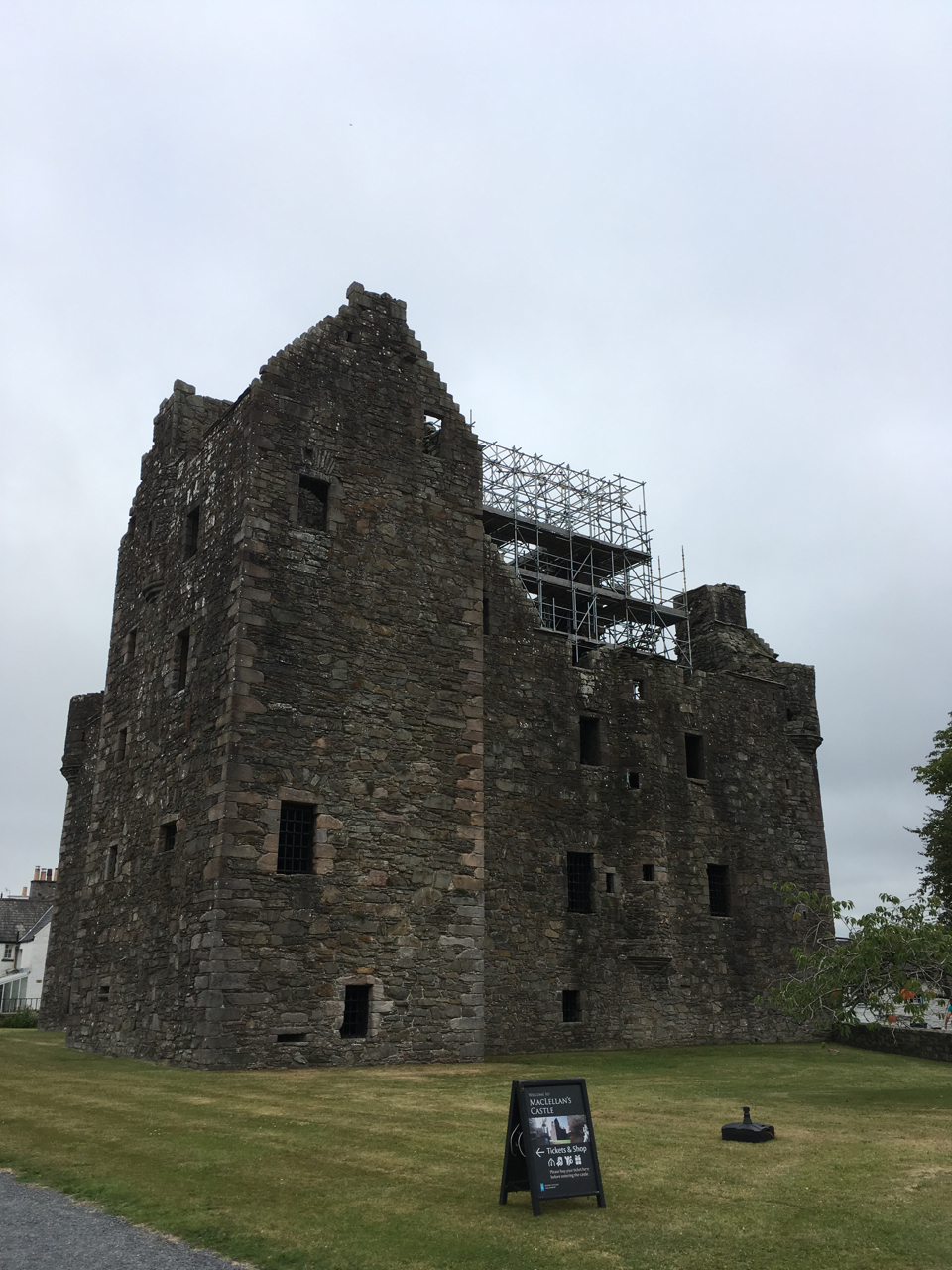
Today, Cardoness Castle remains a well-preserved example of a Scottish tower house from the late medieval period. The castle’s six-storey structure still dominates the landscape, offering insight into the construction techniques and defensive strategies of the time.
The courtyard to the south of the tower is surrounded by several ancillary buildings, which were likely used as kitchens, stables, and storage facilities. These outbuildings were reconstructed during restoration efforts in the 1920s, helping to preserve the castle’s historical context. Interestingly, the tower lacks a battlemented parapet, a feature that may have been removed during 16th-century renovations to the upper floors.
The castle’s thick stone walls, gun loops, murder hole, and prison pit clearly demonstrate its dual function as a fortified residence and a center of local authority. Its location on a rocky promontory that was once surrounded by tidal waters further enhanced its defensibility. Managed by Historic Environment Scotland, Cardoness Castle is open to the public, offering visitors a tangible connection to Scotland’s medieval past.
Visitor experience and cultural significance
Visitors to Cardoness Castle can explore the tower’s interior, including the vaulted cellars, main hall, and private chambers, gaining a vivid sense of life in a late medieval Scottish stronghold. The castle’s well-preserved defensive features provide a fascinating study of military architecture, while the surrounding landscape enriches the historical atmosphere.
As a scheduled monument, Cardoness Castle is recognized for its cultural and historical importance, representing the legacy of Scottish nobility and the turbulent history of the borderlands. Its preservation allows for ongoing education and appreciation of Scotland’s architectural heritage.
Frequently asked questions (FAQ)
- When was Cardoness Castle built and by whom?
- Cardoness Castle was built in the 15th century by the MacCulloch family of Myreton, who constructed the current tower house on the site.
- What are the main defensive features of Cardoness Castle?
- The castle features thick stone walls approximately 2.5 meters thick, inverted keyhole-shaped gun loops for musket fire, a murder hole above the entrance, and a prison pit carved into the east wall.
- Is Cardoness Castle open to the public for visits?
- Yes, Cardoness Castle is managed by Historic Environment Scotland and is open to the public, offering access to its interior and grounds.
- What historical events are associated with Cardoness Castle?
- The castle is linked to local feuds between the MacCullochs and Gordons, notably the 1690 murder of William Gordon by Sir Godfrey MacCulloch, who was later executed.
- How did Cardoness Castle's location contribute to its defense?
- Situated on a rocky outcrop once surrounded by tidal waters of the Solway Firth, the castle’s location provided a natural defensive barrier against attackers.
Information
Sources & official resources
Verify the information above using these authoritative references.
Loading map...
Visitor reviews
No reviews yet. Been here? Write the first review and help other travelers!
Write the first reviewVisited this castle? Share your experience
Your review helps other travelers and adds first-hand knowledge to our encyclopedia.