Cardigan Castle
Cardigan Castle is a prominent hill castle situated in Cardigan, Wales, overlooking the scenic River Teifi. Its origins trace back to the High Medieval period, with the earliest fortifications established in the late 11th century as a Norman motte-and-bailey castle. The castle's strategic location near a river crossing made it a key military and administrative center throughout the medieval era, witnessing numerous sieges, ownership changes, and architectural transformations that reflect the turbulent history of Wales and the Norman conquest.
The original motte-and-bailey castle was constructed around 1093 by Roger de Montgomery, a powerful Norman baron who founded the town of Cardigan. This early wooden fortification was located approximately a mile from the current castle site. Over the following decades, the castle changed hands multiple times between Welsh princes and Norman lords, illustrating the contested nature of the Welsh Marches during this era.
The early Norman and Welsh conflicts
By the early 12th century, the castle came under the control of King Henry I, who granted it to Gilbert Fitz Richard. His son, Gilbert de Clare, held the castle during a period marked by intense conflict between Welsh forces and the Normans. The Battle of Crug Mawr in 1136 was a significant Welsh victory, yet the castle itself remained in Norman hands, defended by Robert fitz Martin.
In 1166, the castle was captured by the Welsh prince Rhys ap Gruffydd, who undertook a major rebuilding program. By 1171, he had replaced the original timber defenses with formidable stone walls, marking a transition to a more permanent and imposing fortress. Rhys ap Gruffydd's reign is also notable for cultural achievements, including hosting the first recorded eisteddfod in 1176, a festival celebrating Welsh poetry and music, which took place within the castle grounds.
Medieval power struggles and architectural evolution
Following Rhys ap Gruffydd's death in 1197, the castle's ownership became a focal point of contention among Welsh princes and Norman or English lords. Figures such as Llywelyn the Great and William Marshal were involved in the castle's repeated capture and recapture during the early 13th century. Llywelyn seized the castle in 1215, but control fluctuated until 1244, when Earl Gilbert of Pembroke undertook a comprehensive rebuilding of the castle and the town's defensive walls.
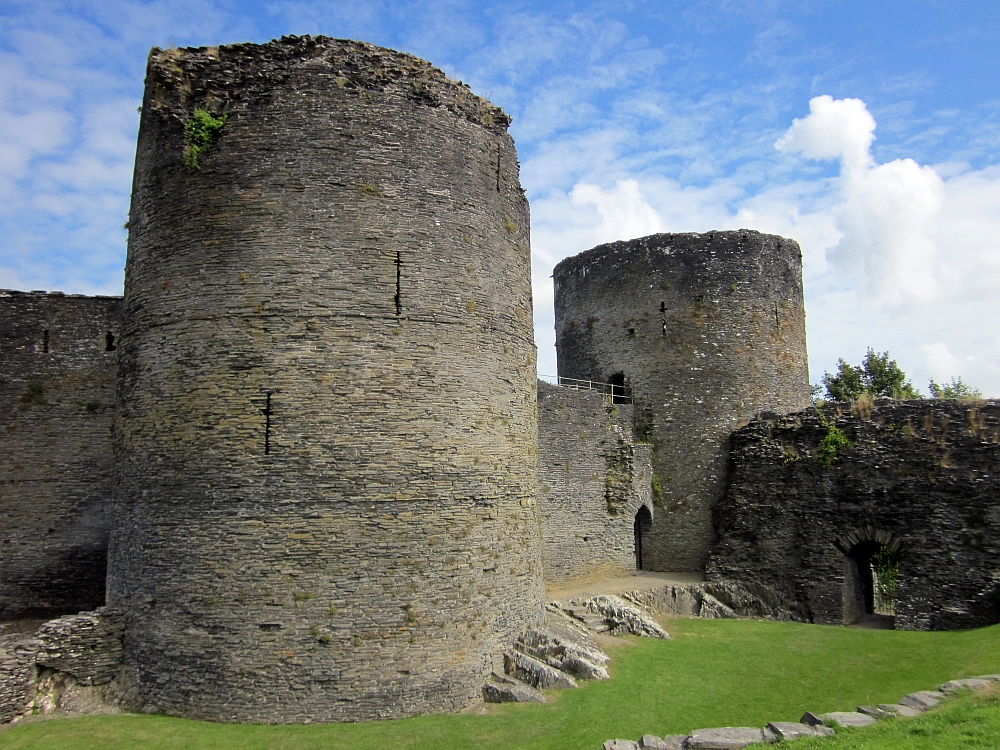
This mid-13th century reconstruction produced the stone curtain walls and round towers that remain visible today. The walls were constructed using local stone and featured robust masonry techniques typical of High Medieval military architecture. The two round towers on the eastern side served as defensive positions for archers, providing flanking fire along the curtain walls and enhancing the castle's defensive capabilities.
Later medieval significance and decline
Cardigan Castle continued to serve as a military stronghold through the Middle Ages. However, it suffered severe damage during the English Civil War in the 1640s, which marked the beginning of its decline as a fortress. After the war, the castle's role shifted primarily to that of a prison throughout the 18th century, reflecting its reduced military importance.
Georgian transformation and 19th-century developments
Between 1805 and 1808, the castle underwent a significant transformation when John Bowen, the then-owner, constructed Castle Green House within the medieval walls. This two-storey Georgian manor incorporated part of the medieval north round tower into its rear elevation, blending historic fabric with early 19th-century architectural styles. The front range was expanded in 1827, further establishing the castle as a residential and domestic site rather than a military fortress.
The surrounding formal pleasure gardens and kitchen garden were also developed during this period, reflecting Georgian and Victorian tastes in landscape design. These gardens are now recognized for their historic significance and are listed as Grade II on the Cadw/ICOMOS Register of Parks and Gardens.
20th and 21st-century restoration and public use
Despite periods of neglect during the 20th century, the castle retained its historic and cultural importance. During the Second World War, a small observation pillbox was added on the castle's ring wall, demonstrating the site's continued strategic relevance.
In 2003, local authorities acquired Cardigan Castle and initiated extensive restoration efforts. These works focused on stabilizing the medieval stone walls and refurbishing Castle Green House to preserve the site's architectural heritage. The restoration enabled the castle to serve new public functions, combining heritage preservation with community engagement.
The castle reopened to the public in 2015, featuring a heritage center with educational facilities, a restaurant, event spaces including an open-air concert area, and accommodation options such as bed-and-breakfast and self-catering units. These developments have revitalized Cardigan Castle as a cultural hub, celebrating its rich history and architectural legacy.
Architectural features and surviving remains
The surviving medieval fabric of Cardigan Castle primarily consists of the southern curtain wall and two round towers on the eastern side. These elements exemplify High Medieval defensive architecture with their thick stone walls and strategic positioning for defense and surveillance.
Earlier structures from the 12th century, including the original motte-and-bailey and Rhys ap Gruffydd's stone castle, have not survived above ground. The central keep and internal buildings from these phases are now lost, with no visible remains.
The integration of the Georgian Castle Green House within the medieval walls is a distinctive feature, illustrating the castle's evolution from a military fortress to a domestic residence. The house's architecture reflects Georgian design principles, emphasizing symmetry and proportion, while incorporating medieval stonework.
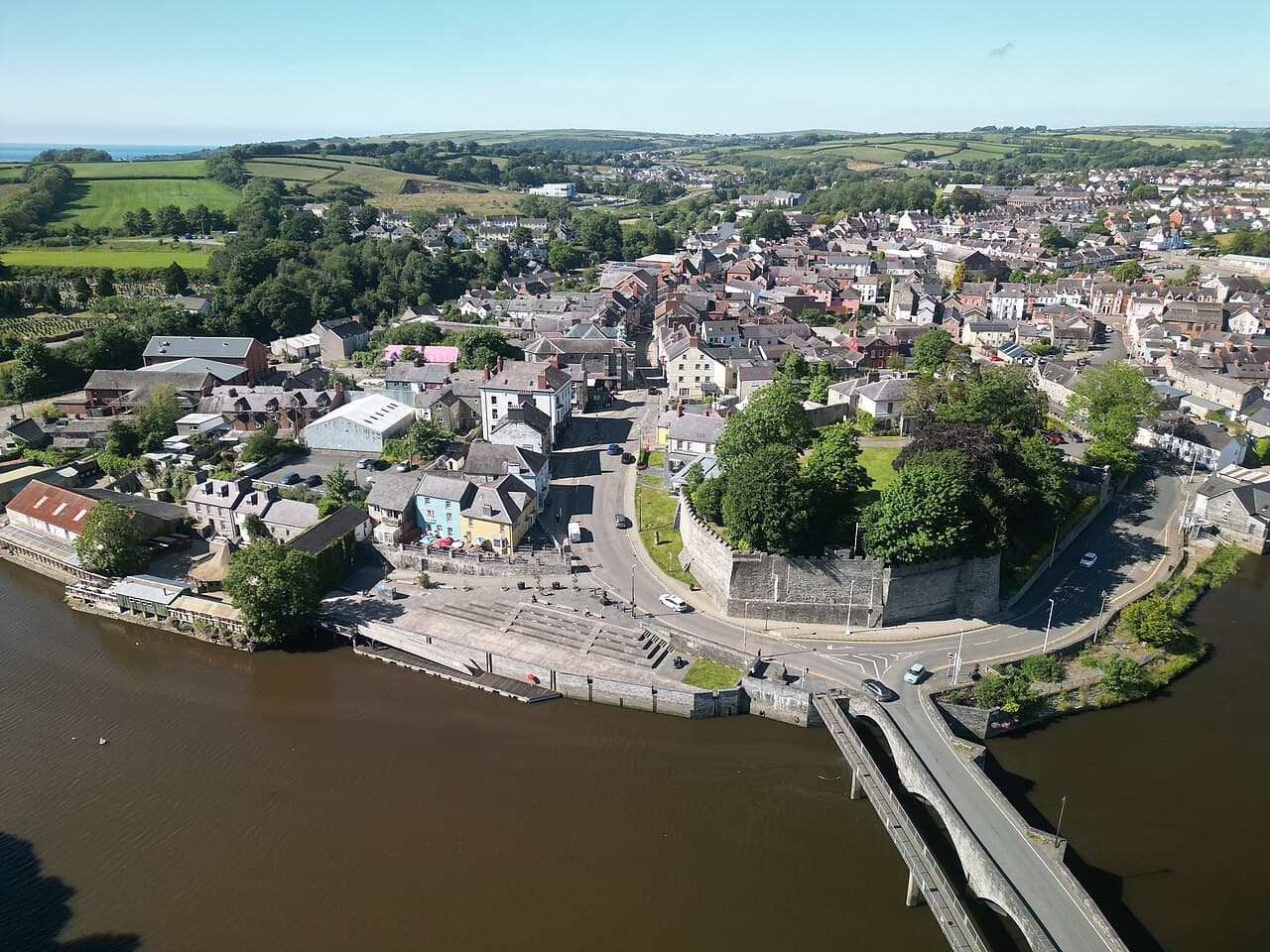
The castle's location on a hill overlooking the River Teifi and near a historic bridge built in 1728 underscores its strategic importance in controlling river traffic and access to the town. The surrounding gardens enhance the site's aesthetic appeal and provide a historical landscape context.
Visitor experience and cultural significance
Today, Cardigan Castle offers visitors a unique blend of medieval history and Georgian elegance. The heritage center provides insights into the castle's complex past, while the gardens and event spaces create a vibrant cultural environment. The castle's restoration and adaptive reuse demonstrate the value of preserving historic sites for contemporary community benefit.
Cardigan Castle's story embodies the broader narrative of Welsh history, from Norman conquest through medieval Welsh princes to modern heritage conservation. Its architectural layers and historical events make it a significant landmark in Wales, attracting scholars, tourists, and locals alike.
Frequently asked questions (FAQ)
- How do I get to Cardigan Castle?
- Cardigan Castle is located in the heart of Cardigan, Wales, and is easily accessible by car or public transport. If you're driving, there is parking available nearby, and if you prefer public transport, local buses regularly connect Cardigan with surrounding towns.
- What is the historical significance of Cardigan Castle?
- Cardigan Castle dates back to the 11th century and played a crucial role in Welsh history, particularly during the conflicts between the Welsh and the Normans. It served as a royal stronghold and is closely associated with the establishment of Welsh independence, making it a site of great cultural importance.
- When was Cardigan Castle built?
- The initial construction of Cardigan Castle began in 1093, making it one of the oldest castles in Wales. Over the centuries, it has undergone various renovations and expansions, reflecting different architectural styles and historical periods.
- Can I visit Cardigan Castle with a wheelchair?
- Yes, Cardigan Castle is committed to accessibility for all visitors. The site features ramps and accessible paths, ensuring that wheelchair users can explore much of the castle and its grounds comfortably.
- Why is Cardigan Castle a popular tourist attraction?
- Cardigan Castle attracts visitors for its rich history, stunning architecture, and beautiful gardens. Additionally, it hosts various events and exhibitions throughout the year, making it a vibrant cultural hub in the region.
- Is it possible to take guided tours of Cardigan Castle?
- Yes, guided tours of Cardigan Castle are available and provide an in-depth look at its fascinating history and architecture. These tours are led by knowledgeable guides who can share captivating stories and insights about the castle's past.
- What are the opening hours for Cardigan Castle?
- Cardigan Castle is typically open from 10 AM to 5 PM, but hours may vary seasonally or during special events. It's always a good idea to check the official website for the most current opening times before your visit.
- What are the ticket prices for visiting Cardigan Castle?
- Ticket prices for Cardigan Castle generally range from £5 to £10, with discounts available for children, seniors, and families. Admission fees contribute to the preservation and maintenance of this historic site.
- When is the best time to visit Cardigan Castle?
- The best time to visit Cardigan Castle is during the spring and summer months when the weather is pleasant, and the gardens are in full bloom. Additionally, many events and activities are scheduled during this time, enhancing the overall experience for visitors.
- What nearby attractions can I explore after visiting Cardigan Castle?
- After visiting Cardigan Castle, you can explore the beautiful Cardigan Bay, the picturesque town of Cardigan, and the stunning coastline of Pembrokeshire. Other nearby attractions include the Cilgerran Castle and the scenic hiking trails of the Pembrokeshire Coast National Park.
Photo gallery

Information
Website
Visit websiteSources & official resources
Verify the information above using these authoritative references.
Loading map...
Visitor reviews
No reviews yet. Been here? Write the first review and help other travelers!
Write the first reviewVisited this castle? Share your experience
Your review helps other travelers and adds first-hand knowledge to our encyclopedia.