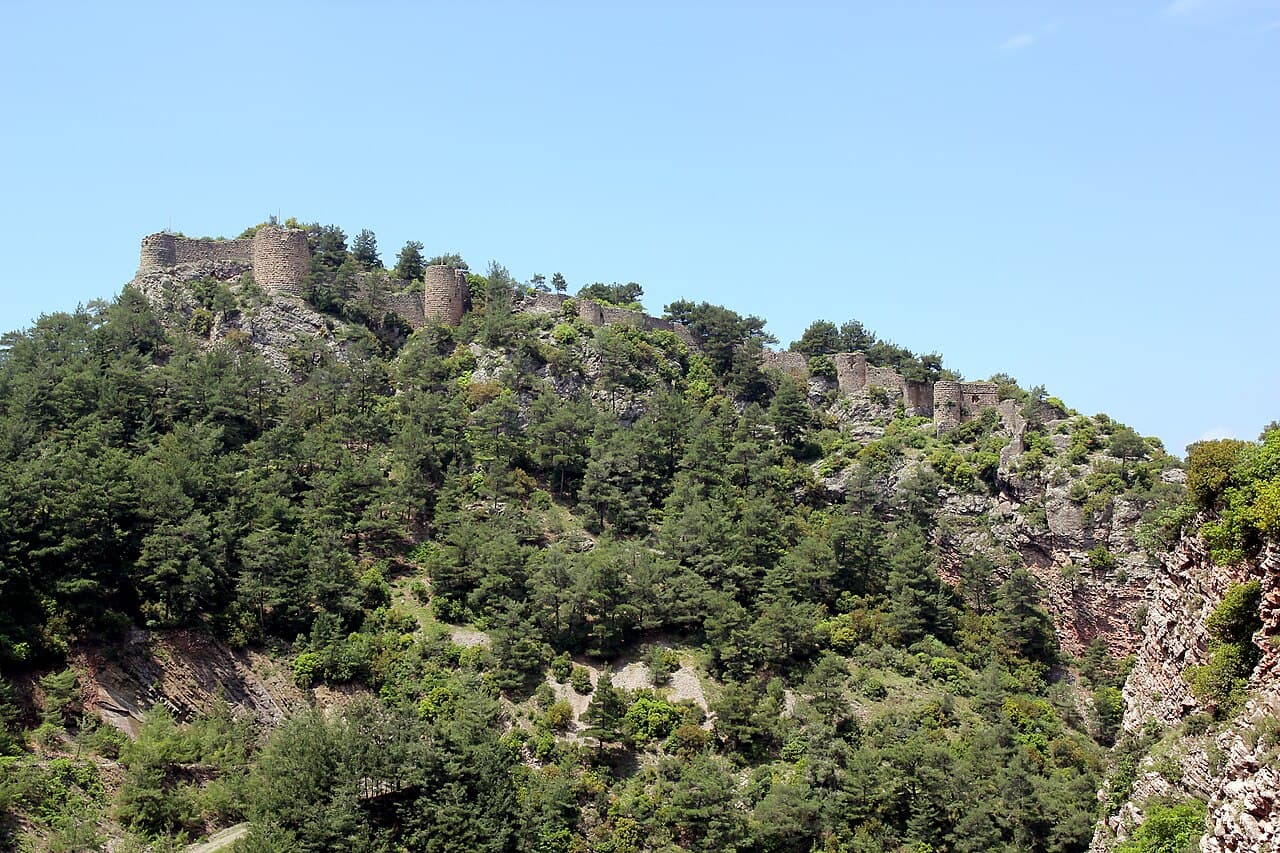
Servantikar
Sarvandikar castle, also known as Sarvanda k'ar in Armenian and Savranda Kalesi in Turkish, is a prominent medieval hill castle located in the historical region of the Armenian Kingdom of Cilicia, within present-day Osmaniye Province, Turkey. Approximately 115 kilometers east of Adana, this fortress played a significant role in the defense and administration of the region during the Middle Ages.
Historical background and significance
The castle's origins trace back to the High to Late Medieval period, when the Armenian Kingdom of Cilicia was a key political and military power in the region. Known as the Frankish castle of Savranda during the Crusader era, Sarvandikar was strategically positioned to control vital routes and protect the kingdom's borders against invading forces.
Throughout its history, Sarvandikar witnessed various phases of occupation and control, including periods under Armenian, Frankish, and later Turkish dominions. Its location on a hilltop provided a commanding view of the surrounding landscape, which was crucial for surveillance and defense.
Architectural features and layout
Sarvandikar is classified as a hill castle, constructed primarily for military purposes with natural topographical advantages. The castle's design incorporates robust stone walls adapted to the uneven terrain, with defensive structures such as battlements, towers, and that allowed defenders to repel attackers effectively.
The fortress includes multiple courtyards and chambers that served administrative and residential functions. The use of local stone materials and masonry techniques reflects the architectural styles prevalent in the Armenian Kingdom of Cilicia during the medieval period.
Defensive elements
Key defensive features of Sarvandikar include its thick curtain walls and strategically placed towers for archers and lookouts. The castle's elevated position allowed for natural defense, supplemented by man-made fortifications such as moats or ditches in some areas, although specific details about these are limited.
Current condition and preservation
Today, Sarvandikar stands as partially preserved ruins. While much of the original structure has succumbed to the ravages of time and historical conflicts, significant portions of the walls and towers remain intact. These remnants provide valuable insights into medieval military architecture and the historical context of the Armenian Kingdom of Cilicia.
Conservation efforts have been sporadic, and the site is not extensively developed for tourism, but it remains an important cultural and historical landmark within the region.
Visiting Sarvandikar castle
Visitors to Sarvandikar can explore the ruins and appreciate the castle's commanding position overlooking the surrounding landscape. Due to its remote location and limited facilities, it is advisable to plan visits carefully, ideally with local guides familiar with the history and terrain.
The castle is accessible via road from Osmaniye and Adana, though infrastructure is basic. There are no formal visitor centers or ticketing systems currently in place.
Nearby historical sites
The region around Sarvandikar hosts several other medieval sites related to the Armenian Kingdom of Cilicia, including fortresses, churches, and settlements that collectively offer a broader understanding of the area's medieval heritage.
Frequently asked questions (FAQ)
- How do I get to Servantikar Castle?
- Servantikar Castle is located in Turkey, easily accessible by car or public transportation. The nearest major city is Antalya, from which you can take a bus or hire a taxi to reach the castle.
- What is the historical significance of Servantikar Castle?
- Servantikar Castle dates back to the 12th century and served as a strategic fortress during various historical conflicts. Its well-preserved architecture reflects the blend of different cultural influences that have shaped the region over the centuries.
- When was Servantikar Castle built?
- Servantikar Castle was constructed in the 12th century during the height of the Byzantine Empire. It has since undergone several renovations, preserving its historical features while adapting to modern visitor needs.
- Can I take guided tours of Servantikar Castle?
- Yes, guided tours are available at Servantikar Castle, providing visitors with in-depth knowledge of its history and architecture. These tours typically last around one hour and can be booked on-site or in advance.
- Why is the architecture of Servantikar Castle notable?
- The architecture of Servantikar Castle is notable for its robust stone walls and intricate design elements that showcase the engineering skills of its builders. The castle features a unique blend of Byzantine and Ottoman styles, making it a fascinating study for architecture enthusiasts.
- Is it possible to visit Servantikar Castle year-round?
- Yes, Servantikar Castle is open to visitors year-round, although hours may vary seasonally. It is advisable to check the official website for the most current information regarding opening times and any special events.
- What are the ticket prices for visiting Servantikar Castle?
- Ticket prices for Servantikar Castle are quite reasonable, with discounts available for students and seniors. Children under a certain age may enter for free, making it an affordable destination for families.
- What is the best time to visit Servantikar Castle?
- The best time to visit Servantikar Castle is during the spring and fall months when the weather is mild and comfortable for exploring. Summer can be quite hot, while winter may bring cooler temperatures, so plan your visit accordingly.
- What nearby attractions can I visit after exploring Servantikar Castle?
- After visiting Servantikar Castle, you can explore nearby attractions such as the ancient city of Perge and the beautiful beaches of Antalya. These sites offer a rich blend of history and natural beauty, making for a full day of sightseeing.
Photo gallery

Information
Loading map...
Visitor reviews
No reviews yet. Been here? Write the first review and help other travelers!
Write the first reviewVisited this castle? Share your experience
Your review helps other travelers and adds first-hand knowledge to our encyclopedia.


