Carbisdale Castle
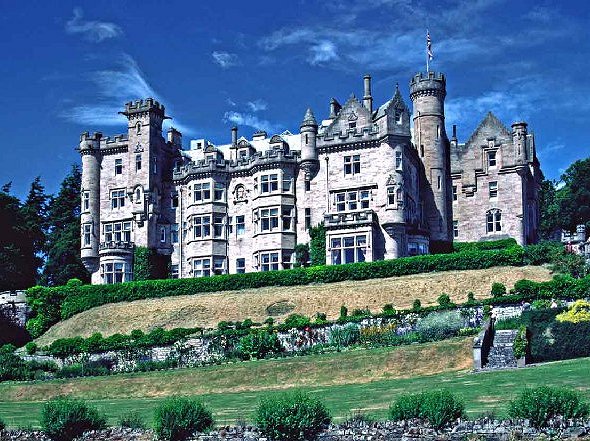
Carbisdale Castle stands prominently on a hill overlooking the Kyle of Sutherland in the Scottish Highlands. Constructed between 1905 and 1917 for the Duchess of Sutherland, this castle combines modern architectural techniques with historic stylistic elements. Its location offers commanding views across the surrounding landscape, emphasizing its role as both a residence and a symbol of status.
Architectural features and design
The castle is notable for having exactly 365 windows, symbolizing one for each day of the year. A distinctive feature is its clock tower, which intriguingly has clocks on only three sides; the side facing Sutherland deliberately lacks a clock, a unique architectural quirk. Inside, the castle contains a great staircase with a secret door concealed beneath it. This hidden entrance was ingeniously operated by rotating one of the statues, although the mechanism is no longer functional.
The castle's interiors once housed a significant collection of artworks dating back to 1680, alongside exquisite Italian marble statues. These collections reflected the refined tastes of its early 20th-century owners and contributed to the castle's cultural value.
Historical significance and wartime role
In 1933, Colonel Theodore Salvesen, a wealthy Scottish businessman of Norwegian descent, acquired Carbisdale Castle. During World War II, the castle gained international importance as a refuge for King Haakon VII of Norway and his son, Crown Prince Olav (later King Olav V), fleeing the Nazi occupation of Norway. It served as a secure location for the Norwegian royal family and a venue for critical wartime meetings.
One of the most notable events held at Carbisdale Castle was the Carbisdale Conference on 22 June 1941, where King Haakon VII agreed that Russian forces entering Norwegian territory during the war would withdraw after hostilities ceased. This agreement was honored when the Red Army entered Norway in October 1944, capturing numerous towns but subsequently withdrawing in accordance with the treaty.
Post-war transformation and current use
Following Colonel Salvesen's death, his son, Captain Harold Salvesen, inherited the castle. He generously donated the castle's contents and estate to the Scottish Youth Hostels Association. Since 2 June 1945, Carbisdale Castle has operated as a youth hostel, providing accommodation and an opportunity for visitors to experience a historic castle setting in the Highlands.
Location and cultural context
Carbisdale Castle is located in the Highland region of Scotland, not England as sometimes mistakenly recorded. The castle's position above the Kyle of Sutherland places it within a landscape rich in Scottish history and natural beauty. Its architecture reflects early 20th-century castle revival trends, blending functionality with ornamental design.
Visitor experience and legacy
Today, visitors to Carbisdale Castle can explore its historic halls and grounds while appreciating its unique architectural features. The castle's legacy as a wartime refuge adds a layer of historical depth, connecting it to broader European events of the 20th century. Its transformation into a youth hostel ensures continued public access and preservation of its heritage.
Architectural style and construction period
Carbisdale Castle was built during the modern period, incorporating elements of traditional Scottish baronial architecture with modern construction methods. Its style is eclectic but primarily reflects the romanticized revival of medieval Scottish castles popular in the early 1900s.
Notable architectural details
- The 365 windows symbolize the days of the year, a feature often associated with grand houses and castles seeking to represent completeness and grandeur.
- The clock tower with clocks on three sides only is a distinctive architectural statement, possibly symbolic or practical in nature.
- The secret door beneath the great staircase adds intrigue and reflects the castle's design for privacy and security.
Historical figures associated with the castle
- Duchess of Sutherland: Original patron and commissioner of the castle's construction.
- Colonel Theodore Salvesen: Owner who provided refuge to Norwegian royalty during WWII.
- King Haakon VII of Norway and Crown Prince Olav: Wartime guests who used the castle as a safe haven.
- Captain Harold Salvesen: Donor of the castle to the Scottish Youth Hostels Association.
Frequently asked questions (FAQ)
- How do I visit Carbisdale Castle today?
- Carbisdale Castle currently operates as a youth hostel managed by the Scottish Youth Hostels Association, offering accommodation to members and visitors. Booking in advance is recommended to secure a stay in this historic setting.
- What is the historical significance of Carbisdale Castle during World War II?
- During World War II, Carbisdale Castle served as a refuge for King Haakon VII of Norway and Crown Prince Olav, hosting important wartime meetings including the 1941 Carbisdale Conference concerning Soviet troop movements in Norway.
- Can visitors explore the secret door and hidden features inside Carbisdale Castle?
- While the secret door beneath the great staircase is no longer operational, visitors can learn about this intriguing feature as part of the castle's history during tours or stays at the youth hostel.
- Why does the clock tower have only three clocks?
- The clock tower of Carbisdale Castle uniquely has clocks on three sides, deliberately omitting the side facing Sutherland. This architectural choice remains a distinctive and symbolic feature of the castle.
- Is Carbisdale Castle located in England or Scotland?
- Carbisdale Castle is located in the Highland region of Scotland, not England. It overlooks the Kyle of Sutherland in the Scottish Highlands.
Information
Current owner
Scottish Youth Hostels Association
Loading map...
Visitor reviews
No reviews yet. Been here? Write the first review and help other travelers!
Write the first reviewVisited this castle? Share your experience
Your review helps other travelers and adds first-hand knowledge to our encyclopedia.