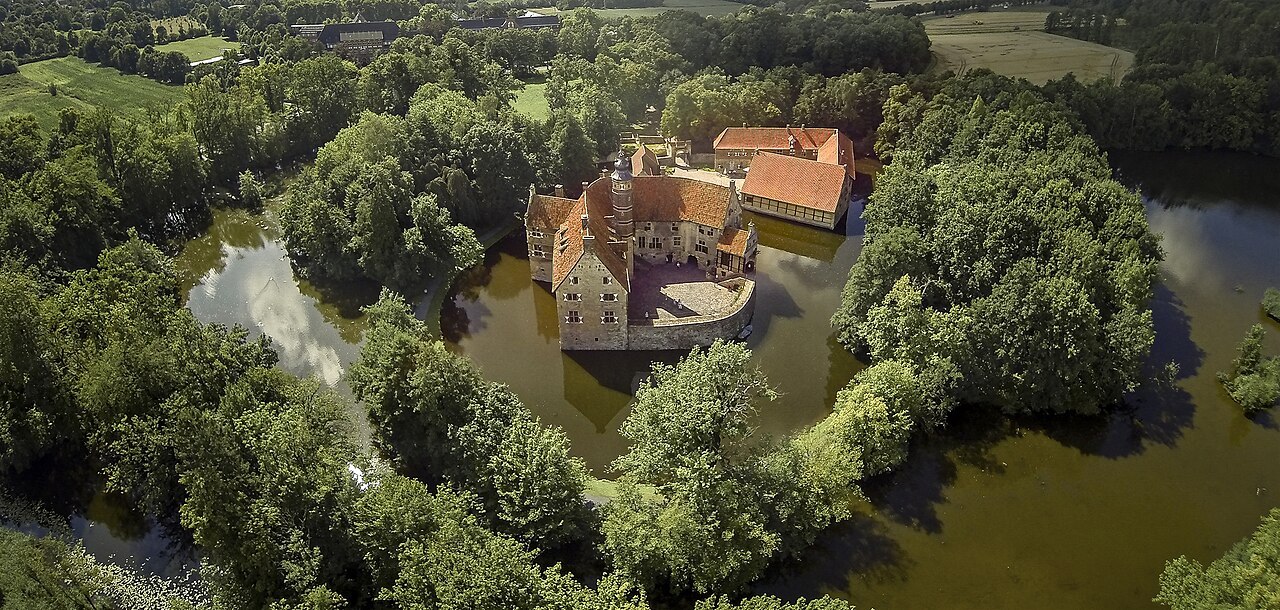
Cappenberg Castle
Cappenberg Castle, located in Selm, Germany, is a significant historic site that originated as a High Medieval fortress before becoming a prominent Premonstratensian monastery. The castle's history is deeply intertwined with the powerful Counts of Cappenberg, a family related to the Salian and Staufer dynasties. These counts played a notable role during the Investiture Controversy, particularly Count Gottfried von Cappenberg, who, after military actions in 1121, renounced his worldly titles and founded the monastery within the castle grounds in 1122.
Medieval origins and foundation of the monastery
The castle was originally the seat of the Counts of Cappenberg, who wielded considerable influence in Westphalia. During the conflict between secular and ecclesiastical powers in the early 12th century, Count Gottfried and his brother Otto supported Duke Lothar von Supplinburg against Emperor Heinrich V. Their military campaign led to the destruction of much of Münster, including the burning of its old cathedral. Facing potential imperial retribution, Gottfried made a decisive turn by donating much of his estates to Norbert of Xanten, founder of the Premonstratensian Order, and entering monastic life himself. This act led to the establishment of the Premonstratensian monastery at Cappenberg Castle, marking a transformation from a noble residence to a religious institution.
Monastic development and architectural evolution
Following its foundation, the monastery quickly prospered, accumulating wealth and influence in the region. The surviving abbey church offers glimpses into the medieval ecclesiastical architecture that once characterized the site. Adjacent to the monastery, Gottfried also established a nunnery for his wife Ida and sisters Gerberga and Beatrix, reflecting the site's dual religious and familial significance.
The original medieval structures suffered extensive damage during the Thirty Years' War, a devastating conflict that affected much of Central Europe in the 17th century. In the early 18th century, from 1708 onwards, the castle complex was rebuilt in the Baroque style, resulting in the current three-winged layout that dominates the site today. This reconstruction preserved the castle's religious function until its secularization.
Secularization and later ownership
After nearly seven centuries as a monastic institution, the monastery was dissolved in 1803 during the widespread secularization processes in Germany. The estate then became property of the Prussian crown. It experienced changes in sovereignty, including periods under French and Duchy of Berg rule, before returning to Prussian control in 1815.
In 1816, the estate was purchased by the former Prussian Minister of State, Baron vom Stein. He undertook renovations that saved the castle from decline. The estate remained in the hands of the von und zum Stein family until their extinction, after which it passed to the Counts of Kanitz in 1926.
20th century to present: preservation and cultural use
During World War II, Schloss Cappenberg served as a safe repository for art treasures, protecting them from Allied bombing raids. Post-war, the castle entered a new phase as a cultural and historical site. In 1985, the Landschaftsverband Westfalen-Lippe and the local authority of Kreis Unna leased parts of the castle to establish a museum.
Today, the castle hosts a variety of art exhibitions and concerts, contributing to regional cultural life. The museum includes archives related to Freiherr vom Stein, who lived at the castle from 1824 to 1831, as well as the archives of the former monastery. The former abbey church houses a remarkable gilt bronze portrait bust of Emperor Frederick Barbarossa dating from around 1160, a rare medieval artifact.
Schloss Cappenberg is also part of the Industry Heritage Trail, linking it to broader narratives of regional history and industrial development. Its well-preserved Baroque architecture and medieval heritage make it a popular destination for visitors interested in history, architecture, and art.
Architectural features and layout
The castle complex today primarily reflects its Baroque reconstruction with three main wings arranged around a courtyard, a typical layout for monastic estates of the period. Despite later modifications, traces of the original medieval structures remain, including parts of the abbey church and some defensive elements from the castle's earlier days.
The castle's setting in the Westphalian landscape adds to its historical ambiance, with gardens and parkland surrounding the main buildings. The integration of monastic, residential, and defensive architectural elements illustrates the castle's multifaceted role through the centuries.
The abbey church and notable artifacts
The former abbey church stands as a central architectural and historical feature. It retains elements from the medieval period, though much was altered during the Baroque rebuilding. Inside, the gilt bronze portrait bust of Emperor Frederick Barbarossa is a highlight, notable for its age and craftsmanship. This artifact connects the castle to the broader imperial history of the Holy Roman Empire.
Archives and collections
The castle houses important archives, including documents related to the von Stein family and the monastery's long history. These collections provide valuable insights into regional governance, monastic life, and cultural developments over several centuries.
Frequently asked questions (FAQ)
- What are the opening hours of Cappenberg Castle?
- Cappenberg Castle is open to visitors from Tuesday to Sunday, with opening hours varying by season. Typically, the castle opens at 10 AM and closes at 6 PM during the summer months, while winter hours may be shorter. It’s advisable to check their official website for any seasonal changes or special events.
- Is there an entrance fee to visit Cappenberg Castle?
- Yes, there is an entrance fee to explore Cappenberg Castle. Ticket prices are generally affordable, with discounts available for children, students, and seniors. Group rates may also apply, so it’s worth inquiring ahead of your visit.
- When was Cappenberg Castle built?
- Cappenberg Castle dates back to the 12th century, showcasing a rich history that reflects the architectural styles of various periods. Initially constructed as a fortress, it has undergone several renovations over the centuries, making it a fascinating site for history enthusiasts. The castle's evolution is evident in its diverse architectural features.
- Can I take guided tours of Cappenberg Castle?
- Yes, guided tours are available for visitors who want to learn more about the castle's history and architecture. These tours are led by knowledgeable guides and provide deeper insights into the castle's significance. It’s recommended to check the schedule and book in advance, especially during peak tourist seasons.
- Why is Cappenberg Castle historically significant?
- Cappenberg Castle is historically significant due to its role as a noble residence and its connections to the region's feudal past. The castle has been a witness to important historical events and influences in the area. Its well-preserved architecture and artifacts offer a glimpse into medieval life and governance.
- What is the best time to visit Cappenberg Castle?
- The best time to visit Cappenberg Castle is during the spring and early autumn when the weather is mild and the gardens are in full bloom. This allows visitors to enjoy the beautiful surroundings and partake in outdoor activities. Additionally, visiting during these seasons often means fewer crowds, enhancing your experience.
- Is Cappenberg Castle accessible for visitors with disabilities?
- Cappenberg Castle strives to be accessible to all visitors, including those with disabilities. The grounds offer paths and facilities designed to accommodate various mobility needs. However, it’s recommended to contact the castle in advance for specific accessibility inquiries to ensure a comfortable visit.
- Are there any nearby attractions to visit while at Cappenberg Castle?
- Yes, there are several nearby attractions that complement a visit to Cappenberg Castle. The beautiful surrounding park offers scenic walking trails, and other historical sites in the area can enhance your trip. Local cafés and restaurants also provide great options for a meal or a break after exploring the castle.
Loading map...
Visitor reviews
No reviews yet. Been here? Write the first review and help other travelers!
Write the first reviewVisited this castle? Share your experience
Your review helps other travelers and adds first-hand knowledge to our encyclopedia.